Engineering Wire Mesh Belts for Heat Treatment and Oven Lines
Learn how to select and maintain wire mesh belts for high-temperature ovens and heat treatment lines, focusing on alloy selection, weave types, and thermal expansion.
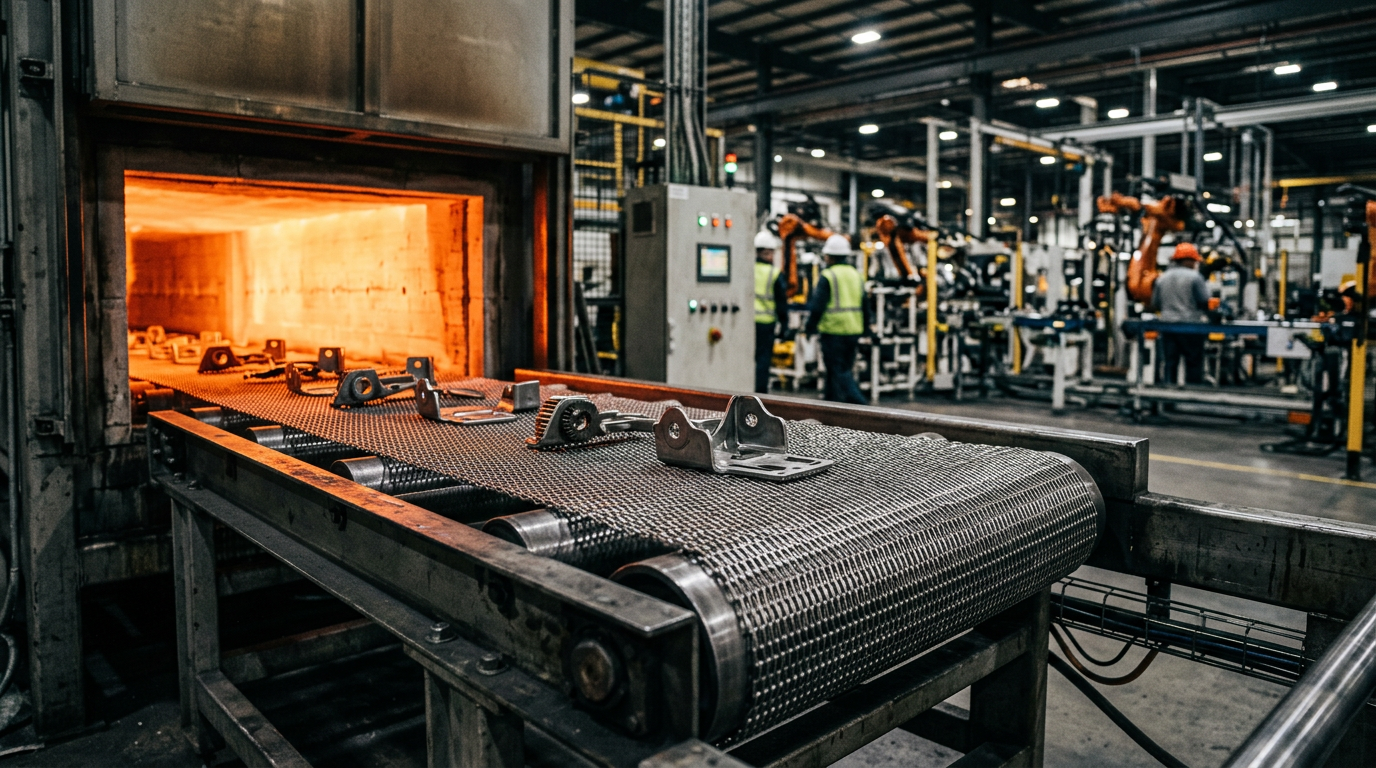
In high-temperature industrial processing, wire mesh belts are the primary medium for conveying products through environments ranging from 200°C to over 1,100°C, providing the necessary open-area ratio of 20% to 85% to ensure uniform airflow and heat distribution. Selecting the correct weave and alloy—such as AISI 314 for extreme heat or AISI 304 for food-grade baking—is critical to preventing thermal fatigue and ensuring a service life that often exceeds 5,000 operational hours in continuous annealing or brazing applications.
Engineering Foundations of Wire Mesh Belts
Wire mesh belts, often referred to as metal conveyor belts, are engineered structures designed to withstand mechanical loads while subjected to intense thermal cycling. Unlike polymer belts, which typically fail above 100°C, wire mesh solutions utilize high-nickel and high-chrome alloys to maintain structural integrity. The design focuses on the balance between open area (for heat penetration) and belt strength (to prevent elongation).
Material Selection and Metallurgy
The performance of a wire mesh belt in an oven line is dictated by its metallurgical composition. According to AISI standards, the most common alloys include:
- Type 304 Stainless Steel: Suitable for temperatures up to 400°C. Frequently used in industrial baking and food processing due to its corrosion resistance and cost-effectiveness.
- Type 316 Stainless Steel: Offers better resistance to chlorides; often used in chemical heat treatments up to 450°C.
- Type 314 Stainless Steel: A high-silicon, high-chromium alloy designed specifically for high-temperature oxidation resistance, capable of handling up to 1,150°C.
- Inconel 601/600: Nickel-chromium alloys used in the most demanding brazing and sintering furnaces where temperatures consistently exceed 1,100°C and atmospheric stability is required.
Essential Belt Weave Types for Thermal Processes
The geometry of the weave determines how the belt handles tension and how the product sits on the surface. Choosing the wrong weave can lead to "necking" (narrowing of the belt) or tracking issues.
1. Balanced Weave (Standard)
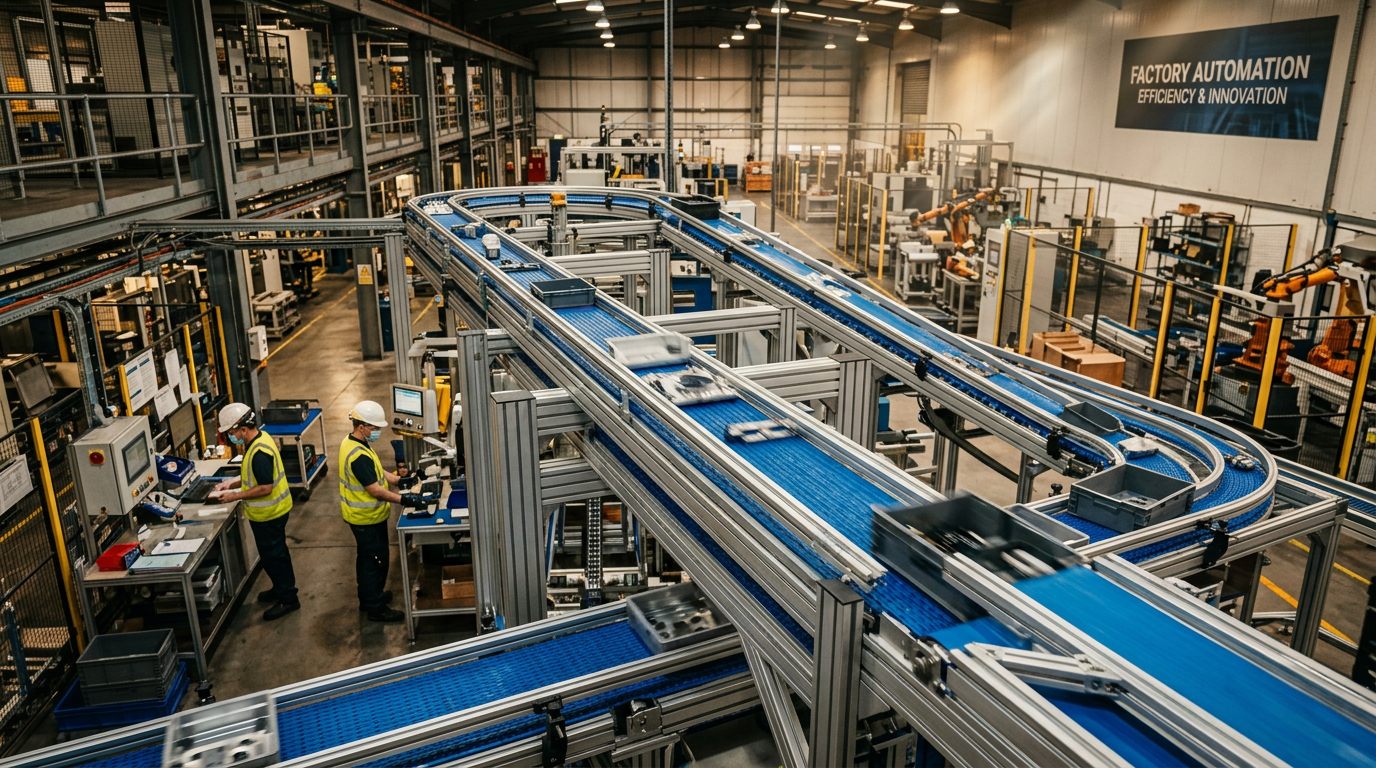
The balanced weave consists of alternating left and right-hand spirals joined by a crimped or straight connector rod. This is the "workhorse" of the industry. Because the spirals counteract each other, the belt has a natural tendency to run straight. In modular conveyor systems, this weave is preferred for its high strength-to-weight ratio.
2. Compound Balanced Weave (Cord Weave)
This design features a very tight, dense mesh where multiple spirals and cross-rods are nested together. It creates a smooth, flat surface ideal for conveying small parts that might fall through a standard weave, such as fasteners or small electronic components in a soldering oven.
3. Flat Wire Belts
Commonly seen in cooling lines and bread baking ovens, these belts offer an extremely high open area (up to 85%). This allows for maximum air circulation, which is critical for moisture removal and rapid cooling.
| Feature | Balanced Weave | Compound Balanced | Flat Wire Belt |
|---|---|---|---|
| Max Temperature | 1,150°C | 1,100°C | 600°C |
| Open Area % | 40% - 70% | 1% - 10% | 70% - 85% |
| Product Size | Medium to Large | Small/Granular | Large |
| Primary Use | General Heat Treat | Sintering/Baking | Cooling/Washing |
| Strength Tier | High | Very High | Moderate |
Design Considerations for Oven Lines
When integrating wire mesh belts into a production line, engineers must account for thermal expansion. A steel belt will physically grow in length as it enters the heating zone.
Thermal Expansion and Tensioning
A 30-meter belt operating at 1,000°C can expand by several centimeters. If this expansion isn't managed by a gravity take-up system or a sophisticated pneumatic tensioner, the belt will lose its tracking or suffer from "catenary sag," leading to mechanical interference with the furnace floor.
Drive Systems and Friction
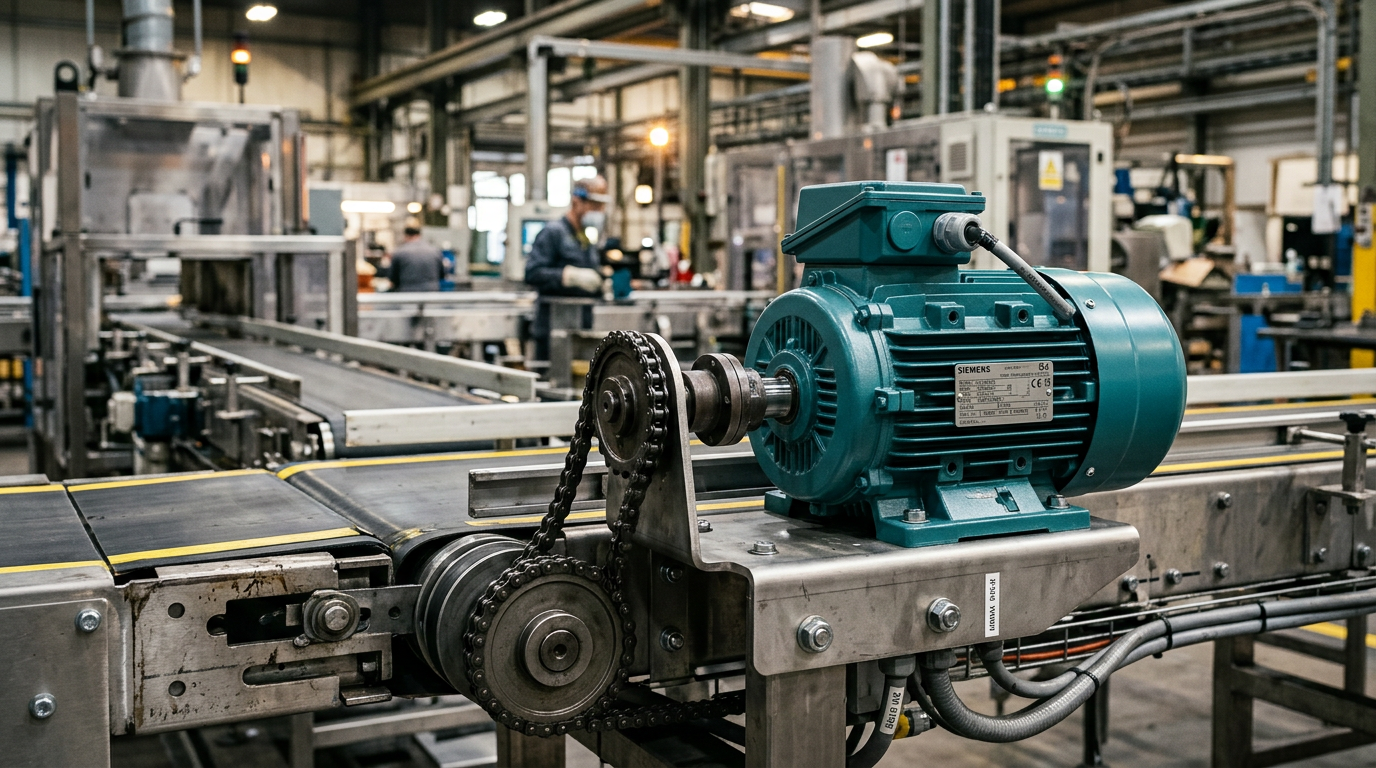
In many oven applications, the belt is driven by a friction drum. The coefficient of friction changes as the temperature rises. For heavier loads, positive drive systems—where the belt has a reinforced chain edge—are used to ensure zero-slip operation. When designing these systems, Easy Conveyors provides the modular expertise needed to bridge the gap between standard transport and high-temperature process zones, ensuring that the transition between different conveyor types is seamless and maintains product orientation.
Easy Conveyors stocks the conveyor components discussed here — ready to ship across Europe.
Failure Modes in High-Temperature Environments
Understanding how these belts fail is key to preventive maintenance.
- Thermal Fatigue: Repeated heating and cooling cycles cause the crystalline structure of the metal to change, eventually leading to micro-cracks in the wire.
- Oxidation and Scaling: In oxygen-rich environments at high heat, the metal forms a scale. If the alloy isn't properly matched to the temperature, this scale can flake off, contaminating the product or weakening the wire diameter.
- Creep Rupture: This is the slow deformation of the metal under constant stress at high temperatures. Over time, the belt will elongate beyond the capacity of the take-up system.
Maintenance and Best Practices
To maximize the ROI of a wire mesh belt, a rigorous maintenance schedule is required.
- Tracking Alignment: A misaligned belt in a furnace will rub against the side walls, causing rapid wear on the edges and potentially damaging the furnace refractory lining.
- Cleaning: In food applications, carbon buildup (carbonization) on the belt can become a fire hazard or a food safety issue. Ultrasonic cleaning or specialized brushes are often employed.
- Lubrication: Standard oils will vaporize or burn in an oven. Use only high-temperature synthetic lubricants or dry-film lubricants (like graphite or molybdenum disulfide) on the drive chains and bearings.
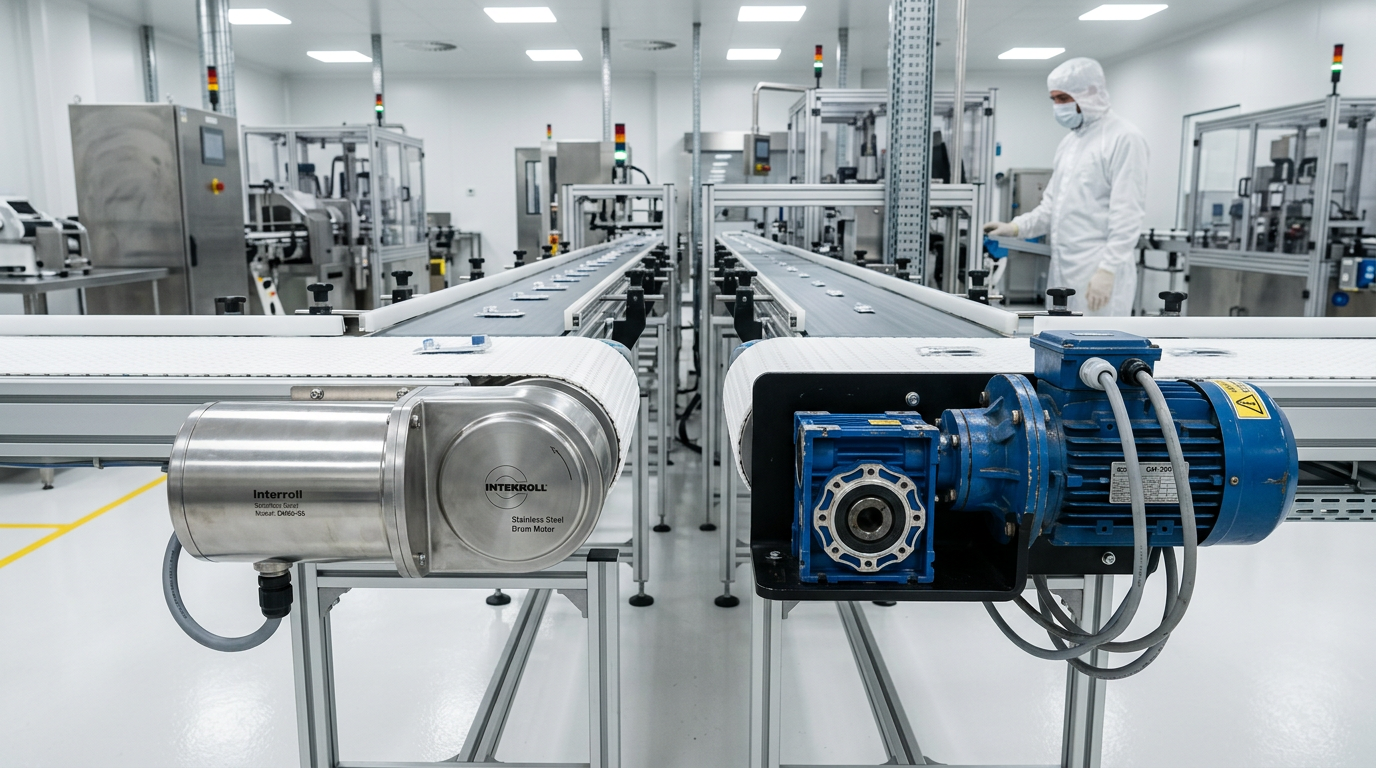
For automated lines, integrating sensors to monitor belt speed and tension is a modern requirement. Many plants now utilize VFD (Variable Frequency Drive) soft-start tuning to prevent sudden torque spikes that could snap a brittle, heat-treated wire mesh. Proper drum motor selection is also vital for the drive end of the conveyor, ensuring the motor can withstand the ambient radiant heat from the oven mouth.
Hygiene and Compliance
In the food industry, wire mesh belts must comply with FDA and EHEDG guidelines. The "clean-in-place" (CIP) capability of a wire mesh belt is superior to many other conveyor types because the open structure allows cleaning agents and steam to penetrate all surfaces. In pharmaceutical heat-tunnel applications, the ability to sterilize the belt at high temperatures is a built-in advantage of the material itself.
Sizing Rules of Thumb
- Load Capacity: Always calculate the "hot strength" of the belt, not the room-temperature strength. Metal strength drops significantly above 500°C.
- Support Rails: Use longitudinal support wear strips (often made of specialized ceramics or high-temp alloys) every 150mm to 300mm to prevent the belt from sagging under load.
- Speed: Typical oven speeds range from 0.5 to 10 meters per minute; excessive speed can increase the rate of thermal fatigue due to faster cooling cycles upon exiting the oven.
By focusing on the intersection of metallurgy, weave geometry, and thermal dynamics, operations managers can ensure their heat treatment and oven lines operate with maximum uptime and minimal energy waste. Choosing the right components today prevents the costly emergency shutdowns of tomorrow.
Frequently Asked Questions
What is the best material for a belt operating at 1,000°C?
AISI 314 is the industry standard for extreme temperatures up to 1,150°C due to its high silicon content which provides superior oxidation resistance. Type 304 is usually limited to 400°C.
How do you account for belt expansion in a 50-meter furnace?
Thermal expansion is managed using a gravity take-up tower or pneumatic tensioning system that allows the belt to grow in length as it heats up without losing tracking or tension.
Why is 'balanced weave' preferred over other mesh styles?
Balanced weave is the most common because it features alternating left and right spirals that prevent the belt from pulling to one side, ensuring straight tracking.
What are the main causes of wire mesh belt failure?
Common causes include thermal fatigue from rapid cycling, improper tensioning leading to creep rupture, and oxidation (scaling) caused by an incorrect alloy-to-temperature match.