Drum Motor vs Gearmotor Selection for Belt Conveyor Drives
Learn how to choose between drum motors and external gearmotors based on space, hygiene (IP69K), efficiency, and maintenance requirements for industrial conveyors.
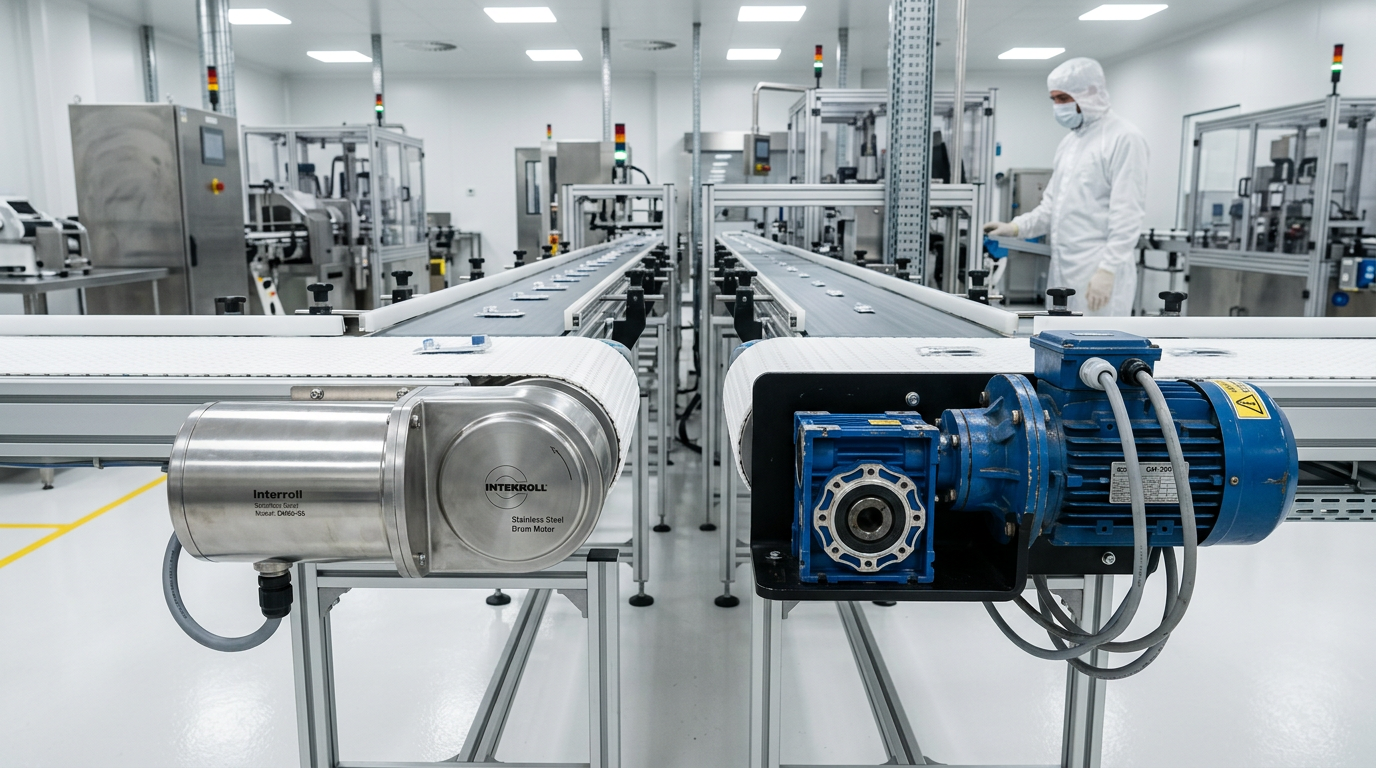
Deciding between a drum motor vs gearmotor selection depends primarily on the environment and space constraints, as drum motors offer up to 35% space savings and IP69K protection for hygienic zones, while external gearmotors provide 20-30% lower initial procurement costs and easier maintenance access for heavy industrial applications.
Efficiency and Mechanical Design
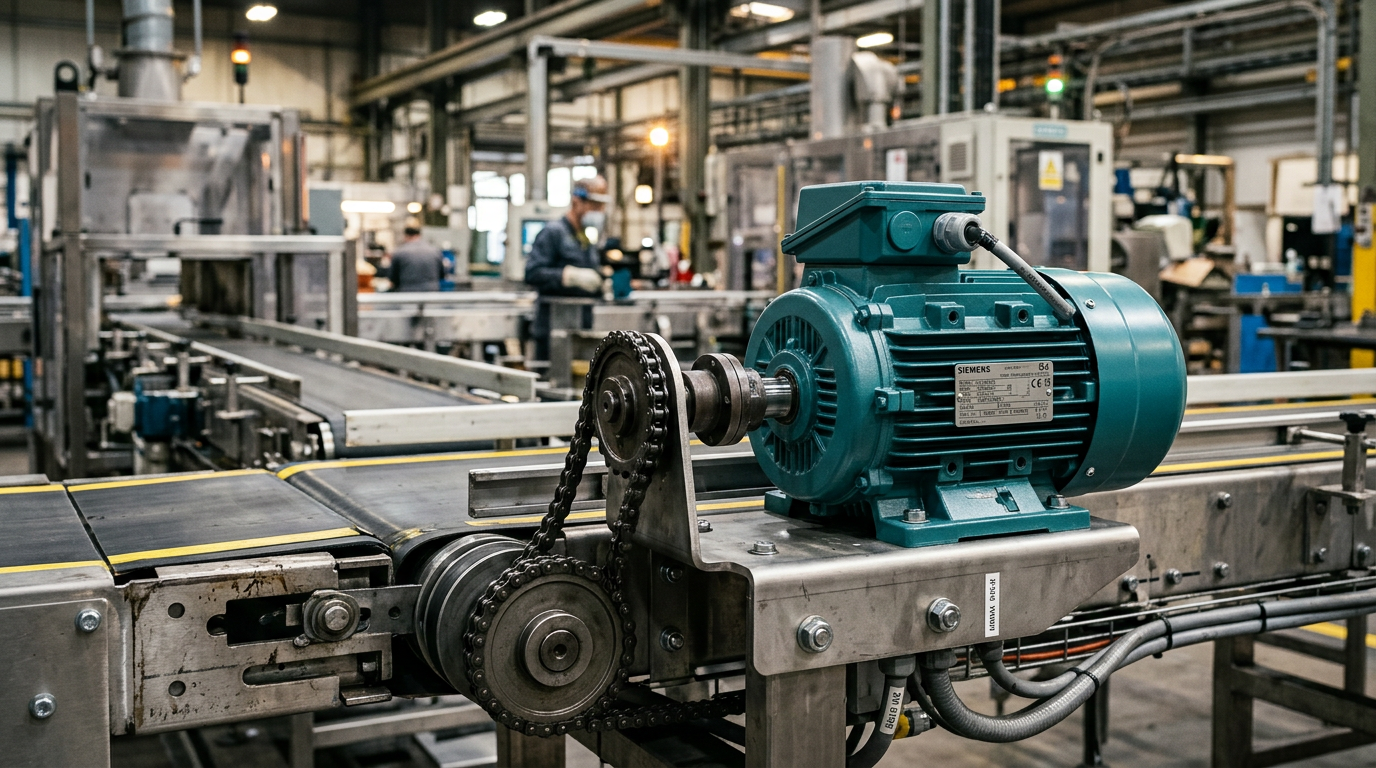
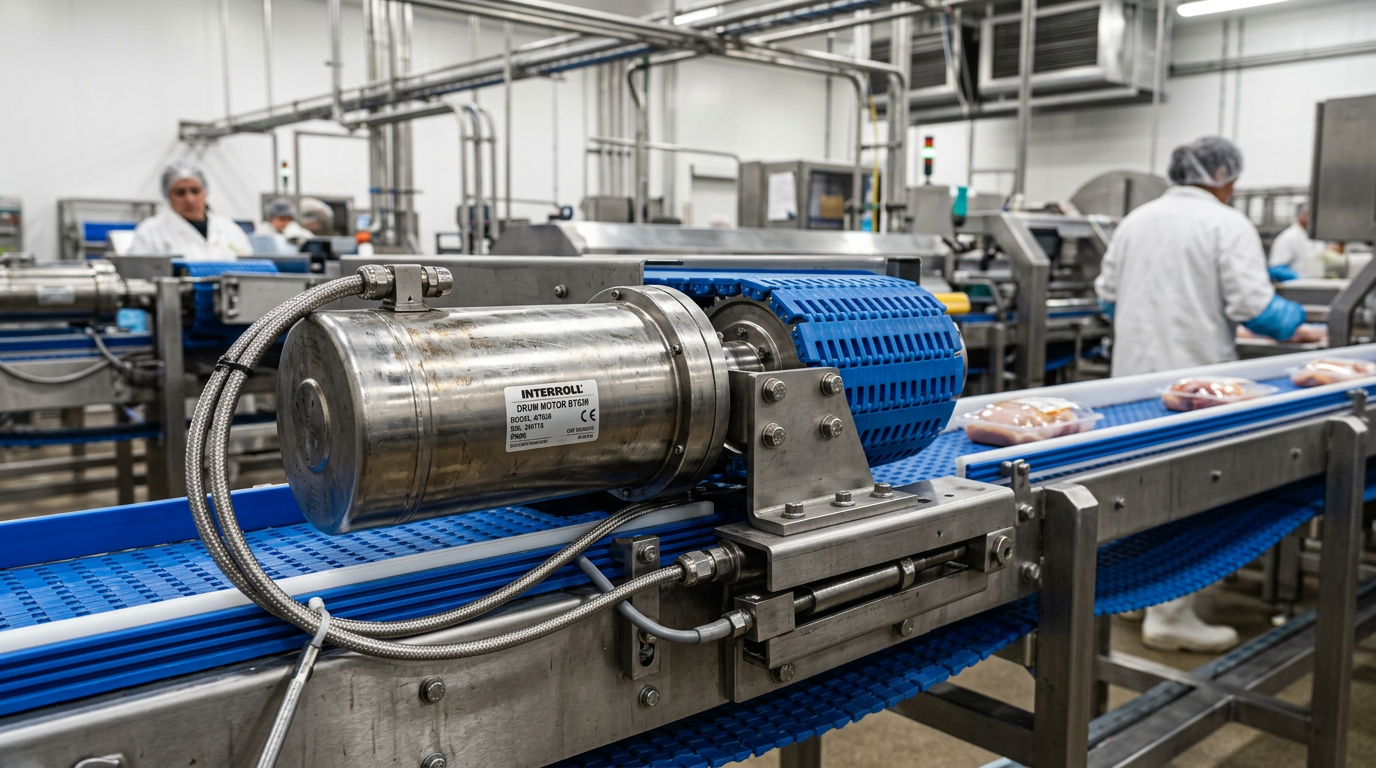
The fundamental difference between these two drive technologies lies in their integration. A drum motor (or motorized pulley) houses the motor, gearbox, and bearings inside a sealed cylindrical shell. In contrast, a conventional gearmotor consists of a motor and gearbox mounted externally to the conveyor frame, driving the head pulley via a coupling or chain drive.
From an energy perspective, drum motors are often more efficient at the point of use. Because the motor is directly coupled to the load without external transmission components like sprockets or chains, mechanical losses are minimized. High-efficiency permanent magnet synchronous motors (PMSM) used in modern drum motors can reach efficiency levels exceeding IEC 60034-30-1 IE4 or IE5 standards.
Heat Dissipation Dynamics
A critical selection factor is thermal management. External gearmotors dissipate heat into the ambient air via cooling fins and integrated fans. Drum motors, however, typically rely on the conveyor belt itself to act as a heat sink. If a drum motor is used with a modular plastic belt or in a high-friction application without adequate belt contact, the risk of overheating increases. Engineers must ensure the motor is rated for "no-belt" operation if the application involves frequent idling.
Comparing Technical Specifications
When evaluating these systems, it is essential to look at the protection ratings and mechanical life cycles.
| Feature | Drum Motor | External Gearmotor |
|---|---|---|
| Space Requirement | Ultra-compact (Internal) | High (Protrudes from frame) |
| Ingress Protection | Up to IP69K | Typically IP55 - IP66 |
| Efficiency Class | IE3 to IE5 (PMSM) | IE2 to IE4 |
| Maintenance | Oil change every 10k-50k hrs | Periodic lubrication/chain tension |
| Sanitary Design | Excellent (EHEDG/FDA) | Moderate (Requires covers) |
| Initial Cost | Higher ($$$) | Lower ($$) |
Hygienic and Wash-down Environments
In food processing and pharmaceutical sectors, the drum motor is often the gold standard. The sealed nature of the drive eliminates external grease points and "cages" where bacteria can proliferate. According to EHEDG guidelines, equipment must be easy to clean at a microbiological level. Drum motors, especially those made from 304 or 316 stainless steel, withstand high-pressure wash-downs and aggressive chemicals better than standard painted gearboxes.
Conversely, external gearmotors in food zones require expensive stainless steel housings or specialized antimicrobial coatings to meet compliance. For those designing high-hygiene lines, Easy Conveyors provides modular components that integrate seamlessly with both drive types, though they often recommend drum motors for strictly regulated sanitary zones.
Easy Conveyors stocks the conveyor components discussed here — ready to ship across Europe.
Maintenance and Serviceability
The "total cost of ownership" (TCO) debate often hinges on downtime.
- Gearmotor Maintenance: If a motor fails, a technician can swap it out in minutes without tensioning or removing the conveyor belt. Spare parts are generally standardized and stocked by local distributors.
- Drum Motor Maintenance: If the internal components fail, the entire drive pulley must be removed from the conveyor frame. This requires loosening the belt, which can lead to significant downtime. However, because the unit is hermetically sealed against dust, water, and grit, the mean time between failures (MTBF) is often much higher than that of an exposed drive.
Selection Criteria: Torque and Loading
For heavy-duty applications, such as bulk handling of minerals or large automotive parts, the external gearmotor remains dominant. Large gearboxes can dissipate the massive heat generated by high-torque starts more effectively. Furthermore, standardizing on a specific NEMA or IEC frame size across a plant simplifies the spare parts inventory for the maintenance department.
For precise speed control and dynamic indexing, both systems can be paired with Variable Frequency Drives (VFDs). However, drum motors with synchronous technology offer superior torque at low speeds without the need for external cooling fans, which is a common failure point for external motors running at low frequencies.
Environmental Considerations
- Aqueous/Wet: Choose IP69K drum motors.
- Dusty/Abrasive: Drum motors are sealed against ingress; however, external gearmotors are easier to shield with physical barriers.
- Extreme Temperatures: External motors are preferred for high-heat environments (ovens) to keep the electrical windings away from the heat source. For cold storage, drum motors are excellent as the internal heat of the motor keeps the lubricant at an ideal viscosity.
When considering "drum motor selection" for a new project, engineers should also evaluate the "conveyor drive sizing" requirements. Over-sizing a drum motor can lead to efficiency drops, while under-sizing leads to premature seal failure due to excessive heat. Always refer to manufacturers like Interroll or SEW-Eurodrive for specific torque curves and thermal limit charts.
Conclusion
The choice is rarely binary but rather a balance of priorities. Use a drum motor when space is at a premium, hygiene is mandatory, or a sleek, aesthetic design is required. Opt for a gearmotor when the budget is tight, maintenance accessibility is the priority, or the environment involves extreme thermal loads. By integrating these drives into a well-designed modular system, manufacturers can achieve the optimal balance of throughput and reliability.
Frequently Asked Questions
What is the main difference between a drum motor and a gearmotor?
A drum motor contains the motor and gearbox inside the pulley, saving space and improving hygiene. A gearmotor is mounted externally, making it easier to service but requiring more space.
Are drum motors better for food-grade applications?
Yes, drum motors are ideal for wash-down areas because they can be rated to IP69K and lack external crevices where bacteria can grow.
How do drum motors dissipate heat?
Usually, the belt acts as the heat sink. If the conveyor runs without a belt for extended periods, the motor can overheat unless it is specifically rated for 'no-belt' operation.
Is a drum motor more expensive than a gearmotor?
While drum motors are more expensive upfront, they often reduce TCO through lower energy consumption, reduced cleaning time, and higher ingress protection.
Does a drum motor offer better energy efficiency?
In many cases, yes. The direct drive eliminates sprockets and chains, and PMSM drum motors often reach IE4 or IE5 efficiency levels.