Optimizing Production Flow with Aluminium Profile Conveyor Frames
Aluminium profile conveyor frames offer unparalleled modularity for line balancing. Learn how T-slot systems enable rapid reconfiguration and optimize throughput.
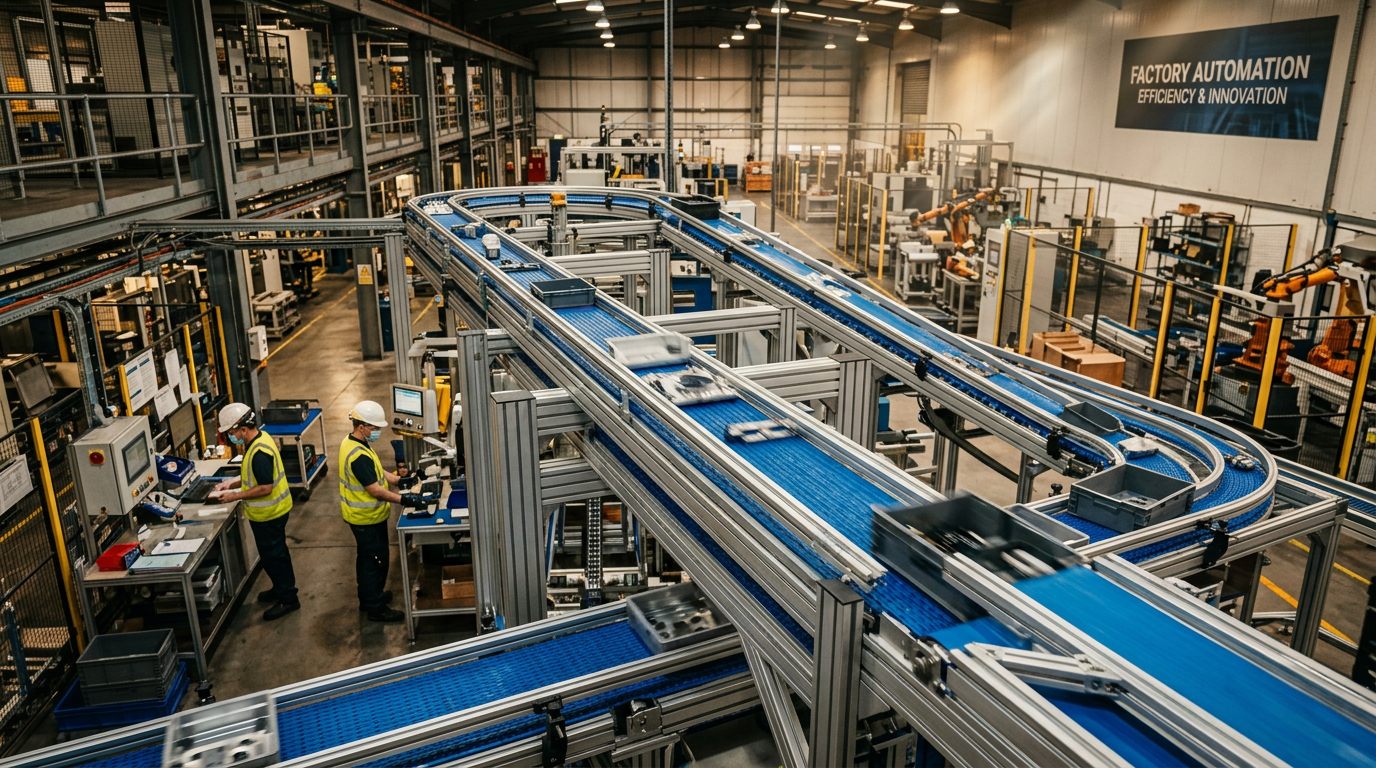
Aluminium profile conveyor frames enable line balancing by providing a modular, T-slot-based infrastructure that reduces reconfiguration downtime by up to 50% compared to welded steel alternatives. These systems typically utilize EN AW-6063 T6 aluminium alloys, offering a high strength-to-weight ratio that facilitates rapid adjustments to conveyor pitch, height, and orientation to eliminate bottlenecks in high-speed production environments.
The Role of Aluminium Profiles in Line Balancing
Line balancing is the process of aligning the cycle times of each workstation in a production line to ensure a smooth flow of materials. In modern manufacturing, particularly in e-commerce fulfillment and automotive sub-assembly, the ability to physically move or extend a conveyor segment is critical. Aluminium profile conveyor frames serve as the "mechanical backbone" for this agility.
Unlike traditional welded structures, aluminium profiles utilize standardized T-slots. This allows engineers to mount sensors, pneumatic stops, and diverters anywhere along the frame without drilling or welding. When a bottleneck is identified at a specific station, the modular nature of the frame allows for the rapid integration of accumulation zones or buffer segments. For instance, Easy Conveyors utilizes these modular principles to provide systems that can be lengthened, shortened, or re-routed with minimal specialized tools, ensuring that the physical layout never becomes the limiting factor in cycle time optimization.
Engineering Advantages of Aluminium vs. Steel
Choosing the right material for the conveyor frame impacts not only the initial cost but the long-term OEE (Overall Equipment Effectiveness) of the facility. While stainless steel is mandatory for high-hygiene food zones, aluminium profiles are the standard for secondary packaging and assembly.
| Feature | Aluminium Profile (6063-T6) | Welded Carbon Steel |
|---|---|---|
| Weight | ~2.7 g/cm³ (Lightweight) | ~7.8 g/cm³ (Heavy) |
| Assembly Method | Bolt-together / T-Slot | Welding / Grinding |
| Modularity | High (infinite adjustment) | Low (requires cutting/welding) |
| Corrosion Resistance | Excellent (Anodized) | Poor (requires paint/powder) |
| Lead Time | Short (off-the-shelf) | Long (custom fabrication) |
Structural Integrity and Standards
Aluminium profiles used in conveyor frames must adhere to specific mechanical standards to ensure they can handle the dynamic loads of moving products. Most high-quality profiles are extruded according to ISO 2768-1 for general tolerances. The T-slot design must also account for the "pull-out strength" of the fasteners, which is critical when mounting heavy drive units or vertical lifters.
Using Modular Frames to Resolve Bottlenecks
To achieve perfect line balancing, the conveyor system must be able to adapt to three specific operational needs:
1. Variable Speed and Pitch Control
Line balancing often requires changing the spacing between products (pitch). Aluminium frames allow for the easy mounting of secondary drive motors or encoders. If a downstream process slows down, an upstream segment can be converted into a "slug" building zone by simply sliding a new motor mount along the T-slot and updating the VFD soft-start tuning parameters.
2. Integration of Buffering Zones
If Station A produces 10 units per minute but Station B only processes 8, a buffer is required. Modular aluminium frames facilitate the quick addition of side-rails and overhead sensors to create "FIFO" (First-In, First-Out) lanes. Because the frames are lightweight, they can be suspended from ceilings or mounted on heavy-duty casters to be rolled into place as needed.
3. Rapid Height Adjustments
In manual assembly lines, ergonomic height is a variable that affects cycle time. Aluminium profiles allow for telescopic leg sets. By adjusting the frame height to match the worker's ergonomic "golden zone," facilities can see a measurable improvement in individual station throughput, contributing to a more balanced overall line.
Easy Conveyors stocks the conveyor components discussed here — ready to ship across Europe.
Maintenance and Long-term Stability
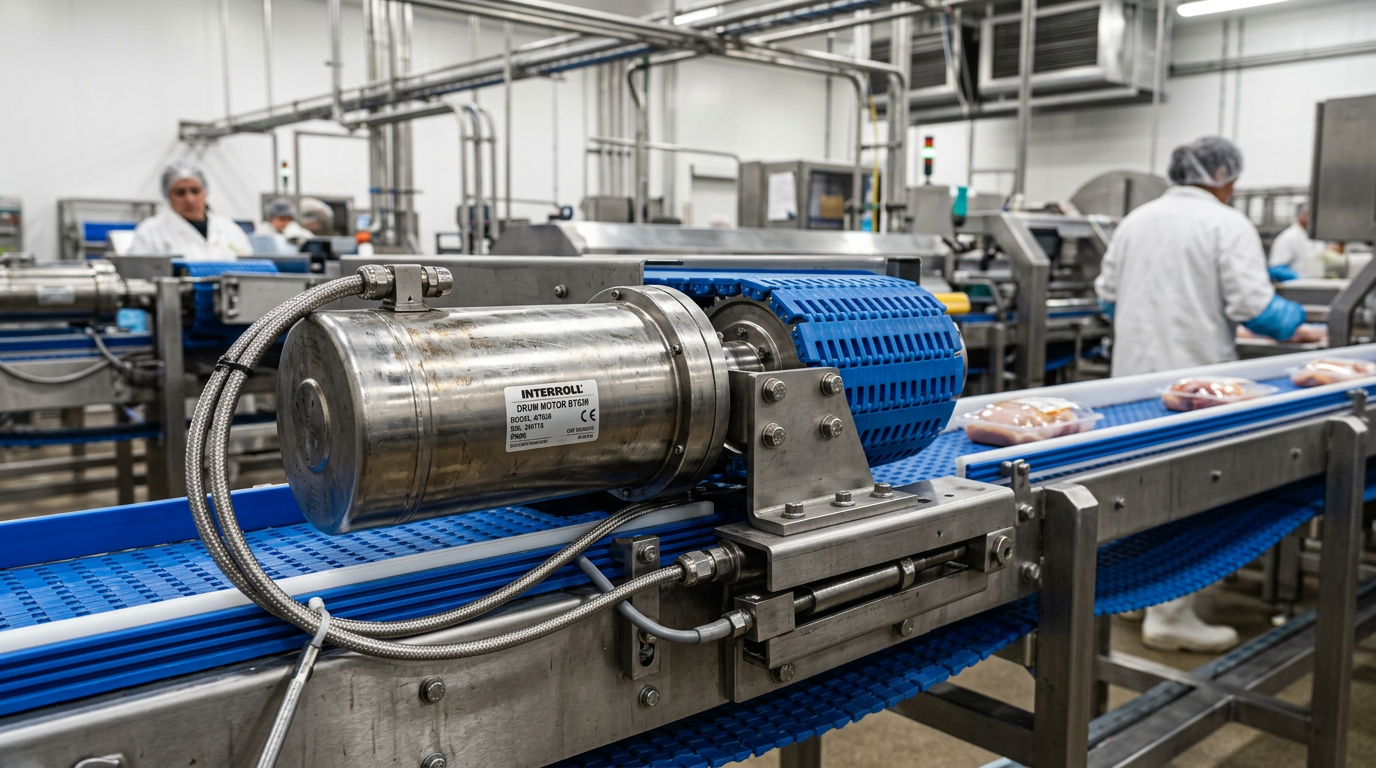
A common concern with bolted aluminium frames is "vibration loosening." However, modern fastening technology, including serrated lock nuts and T-bolts, ensures that the frame remains rigid even under the high-frequency vibrations of a drum motor selection running at 60Hz.
Regular inspection of the frame's alignment is essential. Anodized aluminium surfaces have a low coefficient of friction, but if the frame becomes misaligned due to floor settling, the belt may track poorly. Modular frames allow for micro-adjustments of the end-rollers and return guides to correct tracking without needing to rebuild the entire support structure.
Technical Considerations for Heavy Loads
While aluminium is versatile, engineers must calculate the deflection of the profile under load. The Moment of Inertia ($I$) of the profile section determines how much the conveyor will sag. For long spans between supports (over 3000mm), it is standard practice to use "heavy duty" profiles with thicker wall sections or to integrate steel reinforcement plates within the T-slots. According to VDMA guidelines for materials handling, the deflection should not exceed 1/500th of the span length to maintain belt integrity and prevent premature wear on the drive components.
Sustainability and Lifecycle Costs
The transition toward circular economies in manufacturing favors aluminium. At the end of a production line’s lifecycle, aluminium profiles are 100% recyclable and retain a high scrap value. Furthermore, the ability to reuse the profiles in a different configuration for a new product launch significantly lowers the Total Cost of Ownership (TCO) compared to steel frames that would otherwise be scrapped.
Integrating high-efficiency components, such as IE3-rated motors (IEC 60034-30-1), onto these frames ensures that the line balancing is not only mechanically efficient but also energy-efficient. This holistic approach to modular design allows manufacturers to remain competitive in an environment where product lifecycles are shrinking and customization demands are rising.
Frequently Asked Questions
How do aluminium profiles improve conveyor reconfiguration time?
Aluminium frames use T-slot fasteners instead of welds, allowing for components to be moved, added, or removed in minutes rather than hours or days.
What is the maximum span for an aluminium conveyor frame?
For spans over 2.5–3 meters, engineers should use 'heavy' series profiles or add mid-span supports to keep deflection within the VDMA-recommended 1/500th of the span.
Can aluminium profiles be used in food-grade environments?
Yes, by using anodized finishes and stainless steel fasteners, aluminium frames are suitable for dry food packaging, though welded stainless steel is preferred for high-pressure washdown zones.
How do you prevent bolts from loosening in modular aluminium frames?
Standard T-slot fasteners with serrated locking features or specialized vibration-proof nuts are used to prevent loosening in high-cycle automation environments.