Optimizing Wire Mesh Belts for Heat Treatment and Oven Lines
Wire mesh belts enable continuous conveyance in temperatures up to 1,200°C. Learn about alloy selection, thermal expansion management, and oven line design.
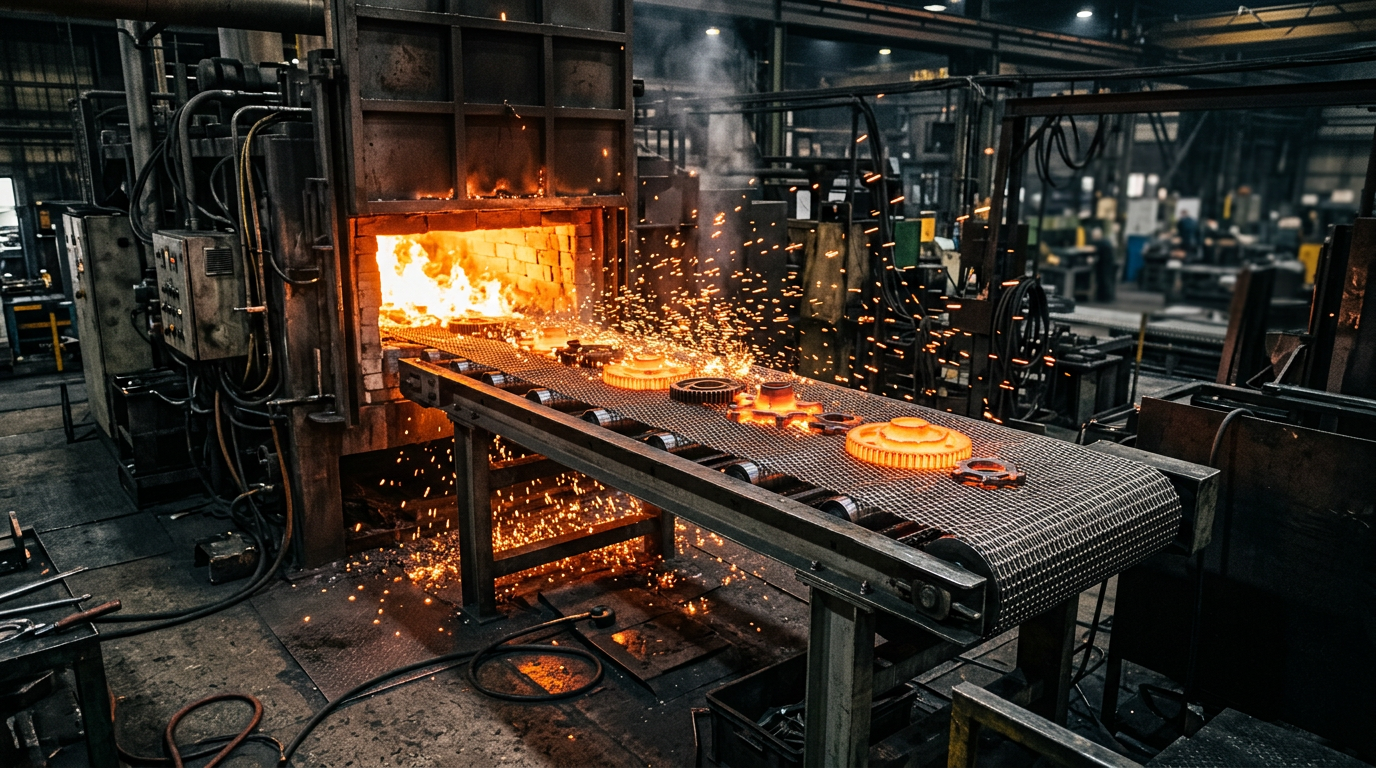
For high-temperature industrial processes, metal wire mesh belts are the standard conveyance medium, capable of operating at continuous temperatures up to 1,200°C while maintaining dimensional stability and facilitating airflow. Unlike polymer-based modular belts which typically fail above 100°C, these metal systems use specific alloys like AISI 314 or Inconel to resist oxidation and creep in annealing, tempering, and baking applications.
Material Science of Wire Mesh Belts
The selection of a wire mesh belt begins with the metallurgy of the wire itself. Because these belts are often subjected to rapid thermal cycling, the coefficient of thermal expansion must be balanced against the mechanical load requirements.
- Stainless Steel 304/316: Common for food processing and light drying where temperatures do not exceed 400°C. They offer excellent corrosion resistance but lose structural integrity as they approach annealing temperatures.
- AISI 314 Stainless Steel: A high-silicon, high-chromium alloy designed specifically for heat resistance. It forms a protective oxide scale that prevents further atmospheric corrosion up to approximately 1,000°C.
- Specialty Alloys (Inconel/Nichrome): Used in heavy-duty heat treatment furnaces. These alloys minimize "green rot" and carburization when exposed to reducing atmospheres.
When designing these systems, engineers must account for the ISO 21484 standards regarding the safety and performance of industrial furnaces. The thermal expansion of a 50-meter belt can exceed 500mm when heating from ambient to 800°C; therefore, weighted take-up units or pneumatic tensioning systems are mandatory to prevent belt surging or tracking issues.
Mechanical Configurations and Weave Types
The "weave" or pattern of the mesh determines both the belt’s strength and its ability to carry specific product geometries.
- Balanced Weave: The most common industrial choice, consisting of alternating left and right-hand spirals joined by a crimped connector. This design neutralizes the tendency of the belt to pull to one side.
- Compound Balanced Weave (CB): A tight, dense weave where multiple spirals and cross-rods are compressed together. This is ideal for small parts (like fasteners or bearings) in heat treatment lines where a flat, stable surface is required.
- Self-Stacking Belts: Often used in spiral freezers or proofing ovens, these belts feature side-links that allow the belt to support the tier above it, eliminating the need for a complex internal support structure.
| Feature | Balanced Weave | Compound Balanced | Rod Reinforced |
|---|---|---|---|
| Max Temp Range | Up to 1,100°C | Up to 1,000°C | Up to 1,200°C |
| Air Permeability | High (50-70%) | Low (10-20%) | Medium (30-50%) |
| Load Capacity | Medium | High | Very High |
| Typical Use | General Baking/Drying | Small Parts Heat Treat | Heavy Forging/Sintering |
| Price Tier | Baseline | Premium (+40%) | Industrial High (+60%) |
Integrating Drive Systems in High-Heat Zones
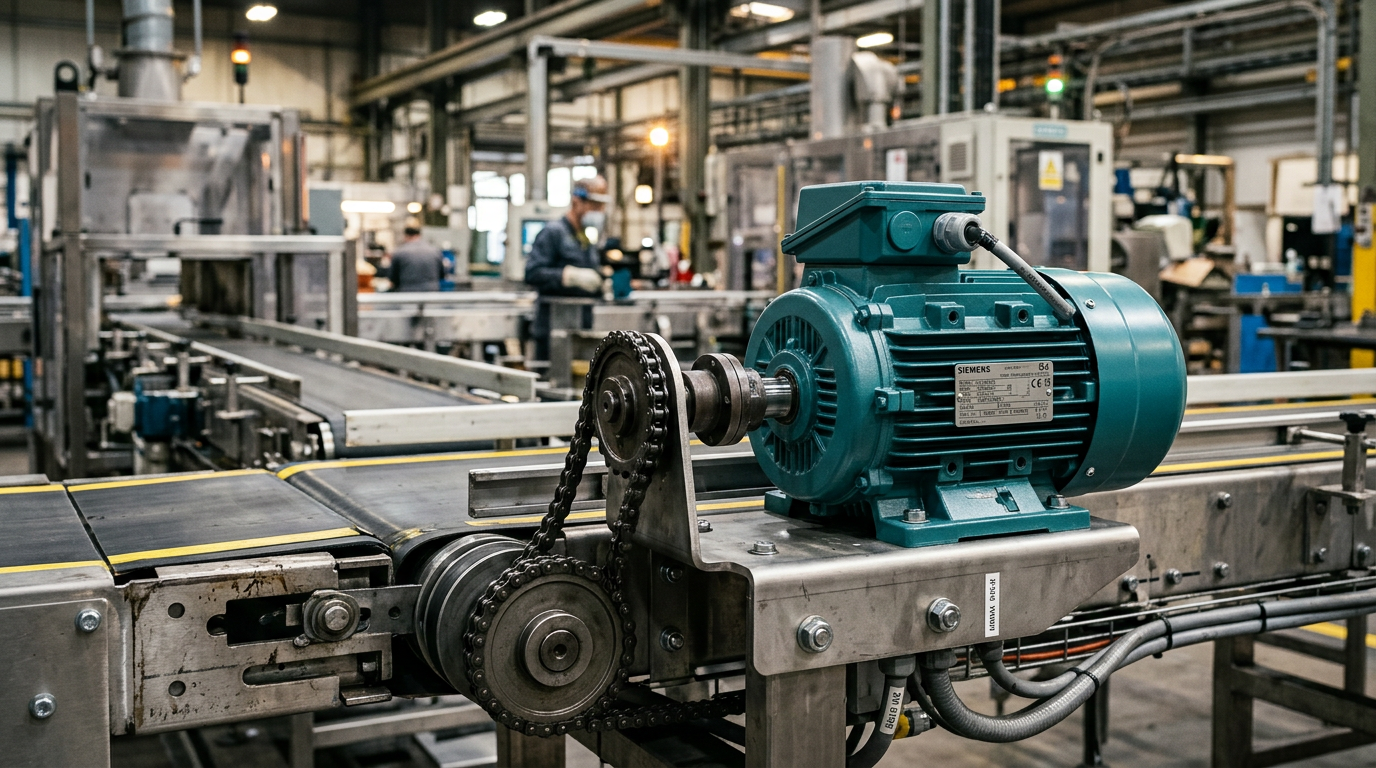
Driving a wire mesh belt in an oven environment presents unique challenges. Standard friction drives can slip as the metal expands and the coefficient of friction drops. To combat this, many systems utilize positive-drive sprockets that engage with the mesh or side-chains.
In these configurations, the drive motor is almost always located outside the heated chamber. Using long drive shafts and high-temperat
Easy Conveyors stocks the conveyor components discussed here — ready to ship across Europe.
ure bearings is standard. For sophisticated lines requiring precise speed control—such as those synchronizing with robotic pick-and-place units—VFD soft-start tuning is essential to prevent "chatter" or mechanical shock during the transition from static to kinetic friction.
For modularity in the cooler sections of the plant, such as the packaging or sorting areas following the oven discharge, Easy Conveyors provides the necessary aluminum or stainless steel modular systems to transition products away from the high-heat zones efficiently.
Operational Challenges: Creep and Oxidation
Two primary failure modes dominate wire mesh belt life cycles: Creep and Oxidation.
Creep is the slow, permanent deformation of the metal under constant stress at high temperatures. To maximize belt life, engineers should minimize the belt tension ($T_1$) by using heavy-duty rollers and ensuring the belt is not over-tensioned at ambient temperatures. According to NEMA standards for industrial heating, the allowable stress on a belt drops by nearly 90% as it moves from 200°C to 900°C.
Oxidation occurs when the metal reacts with the furnace atmosphere. In "clean" atmospheres, a protective oxide layer forms. However, in "reducing" atmospheres (used to prevent oxidation of the parts being treated), the belt itself can lose its protective layer, leading to rapid thinning of the wire and eventual breakage. Regular inspection of the wire diameter and "scaling" is a critical maintenance task.
Design Considerations for Oven Lines
When specifying a belt for an oven line, consider the "open area" percentage. A higher open area allows for better convection and faster heat transfer to the product, which can reduce the required oven length and energy consumption. However, this must be balanced against the "product marking" or "sag" that occurs if the mesh is too open for the product weight.
Proper hygienic wash-down design is also relevant if the oven is used for food processing (e.g., a continuous tortilla or pizza oven). In these cases, the wire mesh must be constructed from food-grade stainless steel compliant with FDA 21 CFR standards, and the conveyor frame must be designed without "dead zones" where organic matter can accumulate and carbonize.
Maintenance and Tracking
Tracking a metal belt in a furnace is notoriously difficult because heat-induced warping of the conveyor frame can shift the pulley alignment.
- Internal Tracking: Use of crowned pulleys or guide-rails.
- External Tracking: Using "sensing "paddles" that trigger a pneumatic cylinder to pivot the return roller, forcing the belt back to center.
- Lubrication: Avoid standard greases. Use graphite-based or molybdenum disulfide lubricants designed for high-temperature evaporation without leaving abrasive residues.
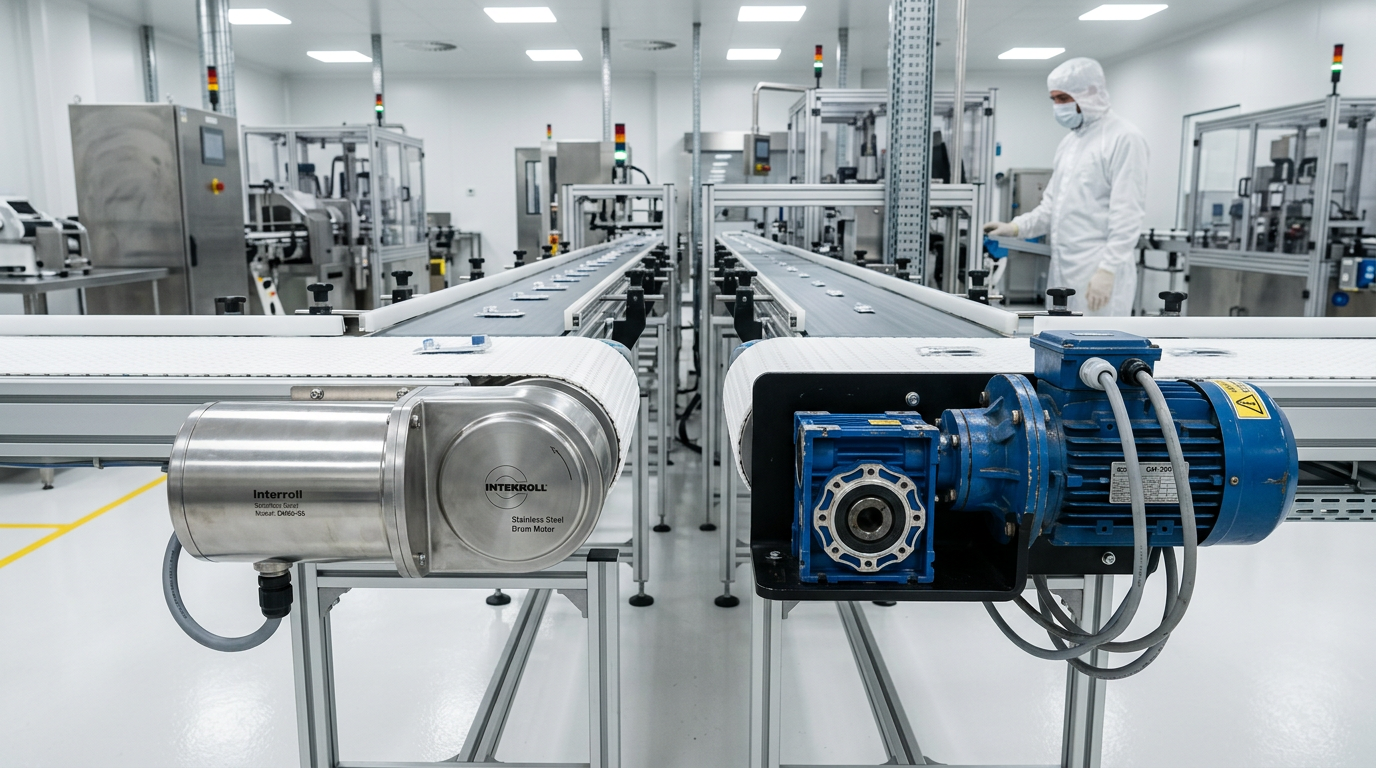
For plants moving toward Industry 4.0, integrating sensors to monitor belt stretch (via inductive proximity sensors on the take-up unit) can provide predictive data on when a belt is reaching its creep limit, allowing for scheduled replacement during planned shutdowns rather than emergency failures. Appropriate drum motor selection for the outfeed sections can also simplify the overall footprint of the line by eliminating external motor mounts and guards.
Frequently Asked Questions
Why is AISI 314 stainless steel preferred for oven belts over 304?
AISI 314 is preferred because its high silicon content (approx. 1.5-3%) promotes the formation of a stable, heat-resistant oxide layer that prevents further degradation at temperatures up to 1,150°C.
How do you handle thermal expansion in a 50-meter furnace belt?
Thermal expansion can cause a belt to grow significantly in length. If not managed by a weighted take-up or automatic tensioner, the belt will lose traction on the drive pulley or jump off its tracks.
What is the significance of 'Open Area' in mesh belt selection?
The 'Open Area' determines the volume of air that can pass through the belt. For convection ovens, an open area of 60% or higher is ideal to ensure uniform cooking and energy efficiency.
How do you detect 'creep' in a metal conveyor belt?
Creep is permanent elongation. It is monitored by measuring the position of the gravity take-up unit. Once the take-up reaches its lowest point, the belt must be shortened or replaced.
Can wire mesh belts be positively driven?
While friction drives are common for light loads, positive drives (using sprockets) are recommended for high-heat or heavy-load applications to prevent slipping as the metal's friction coefficient changes with temperature.