Wire Mesh Belts in Heat Treatment and Oven Lines: An Engineering Guide
Wire mesh belts for heat treatment must withstand up to 1,200°C. Learn how to select the right metallurgy, weave patterns, and drive systems for oven lines.
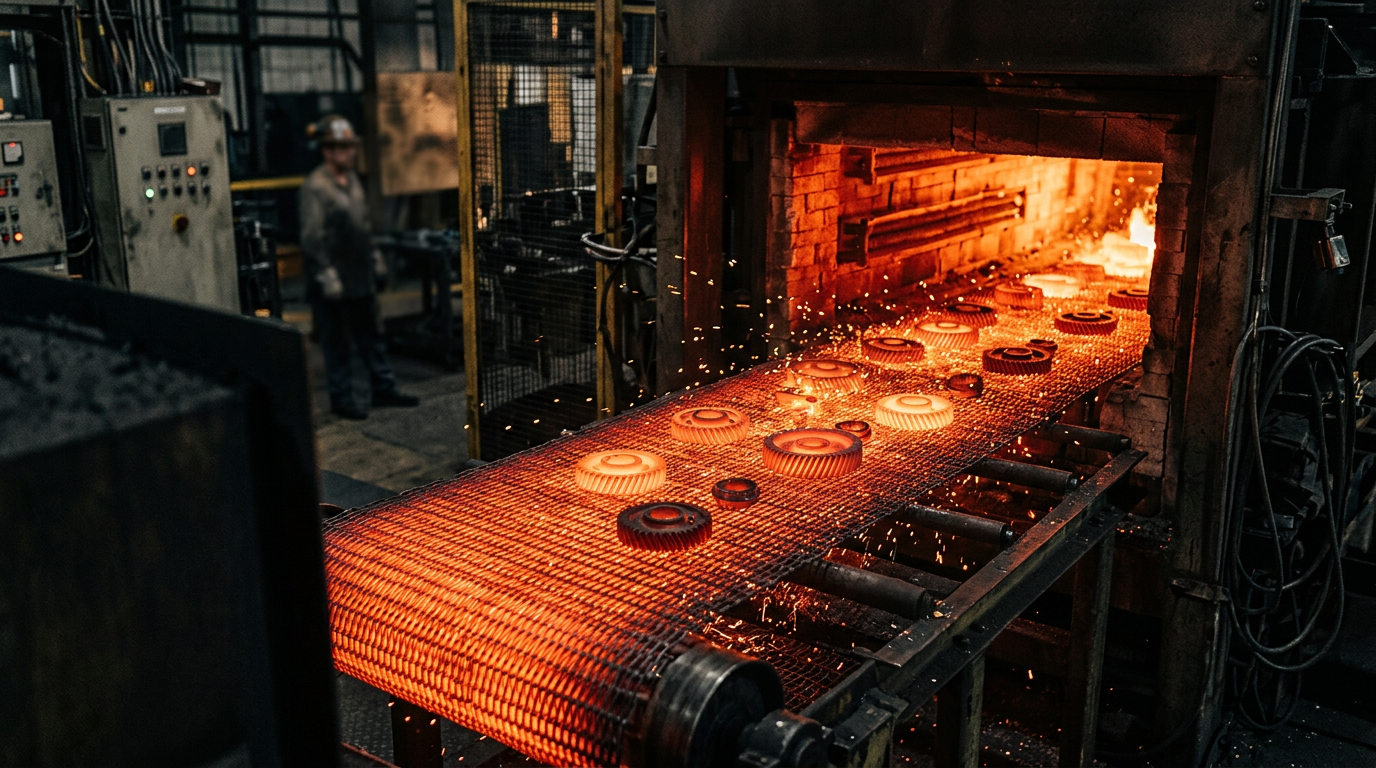
In high-temperature industrial processing, wire mesh belts are the primary mechanical conveyance solution, capable of operating at sustained temperatures between 400°C and 1,200°C (750°F to 2,200°F). These belts are engineered using specific metallurgy—ranging from carbon steels to high-nickel superalloys—to balance thermal expansion, tensile strength, and oxidation resistance. Selecting the correct weave and alloy is critical to preventing common failure modes like "zipper" fatigue or belt elongation, which can reduce uptime by up to 40% in heat treatment facilities.
The Role of Metallurgy in Wire Mesh Belt Selection
The environment of a heat treatment furnace is aggressive, characterized by rapid thermal cycling, high mechanical loads, and potentially corrosive atmospheres (carburizing, nitriding, or oxidizing). Therefore, the choice of material is the most significant factor in belt longevity.
Stainless Steels and High-Alloy Options
Standard 304 and 316 stainless steels are often sufficient for food-grade drying or cooling lines where temperatures remain below 450°C. However, for specialized heat treatment, engineers typically specify:
- Type 314 Stainless Steel: This alloy contains higher silicon content, which improves resistance to oxidation and carburization at temperatures up to 1,000°C.
- Nichrome (Ni-Cr) Alloys: Alloys like 80/20 Nickel-Chrome provide exceptional stability at the highest temperature ranges (1,100°C+), resisting the formation of scale that could contaminate the product.
Material Performance Comparison
| Material Grade | Max Temp (°C) | Oxidation Resistance | Best Use Case |
|---|---|---|---|
| Carbon Steel | 400°C | Low | Basic drying/cooling |
| SS 304 / 316 | 450°C - 600°C | Medium | Food processing, wash-down |
| SS 314 | 1,000°C | High | Brazing, sintering, annealing |
| Inconel 601 | 1,150°C+ | Excellent | High-heat forging, chemicals |
Common Weave Types for Oven Lines
The mechanical structure of the wire mesh—its "weave"—determines how the belt handles weight and how air flows through it. In oven lines, air circulation (convection) is vital for uniform heating.
Balanced Weave
The balanced weave is the most frequently used design in modular conveyor systems for ovens. It consists of alternating left and right-hand spirals joined by a crimped connecting rod. This symmetry ensures the belt tracks straight and resists "creeping" to one side under load.
Compound Balanced Weave (Cord Weave)
For small fasteners, bearings, or delicate parts that might fall through a standard mesh, a compound balanced weave offers a dense, smooth surface. The tight spacing restricts airflow but provides the structural stability required for heavy-duty sintering applications.
Flat Wire Belts
Often seen in cooling tunnels and bakery ovens, flat wire belts maximize open area (up to 85%), allowing for rapid thermal exchange. However, they are generally limited to lower-stress applications compared to spiral-woven belts.
Easy Conveyors stocks the conveyor components discussed here — ready to ship across Europe.
Design Challenges: Thermal Expansion and Tracking
When a 20-meter furnace belt heats from ambient to 900°C, physical expansion is significant. Designing for this "growth" is a hallmark of professional automation engineering.
- Catenary Take-up: Unlike standard modular belts used in room-temperature logistics, oven belts require substantial catenary sag or weighted take-up units to manage the extra belt length generated by thermal expansion.
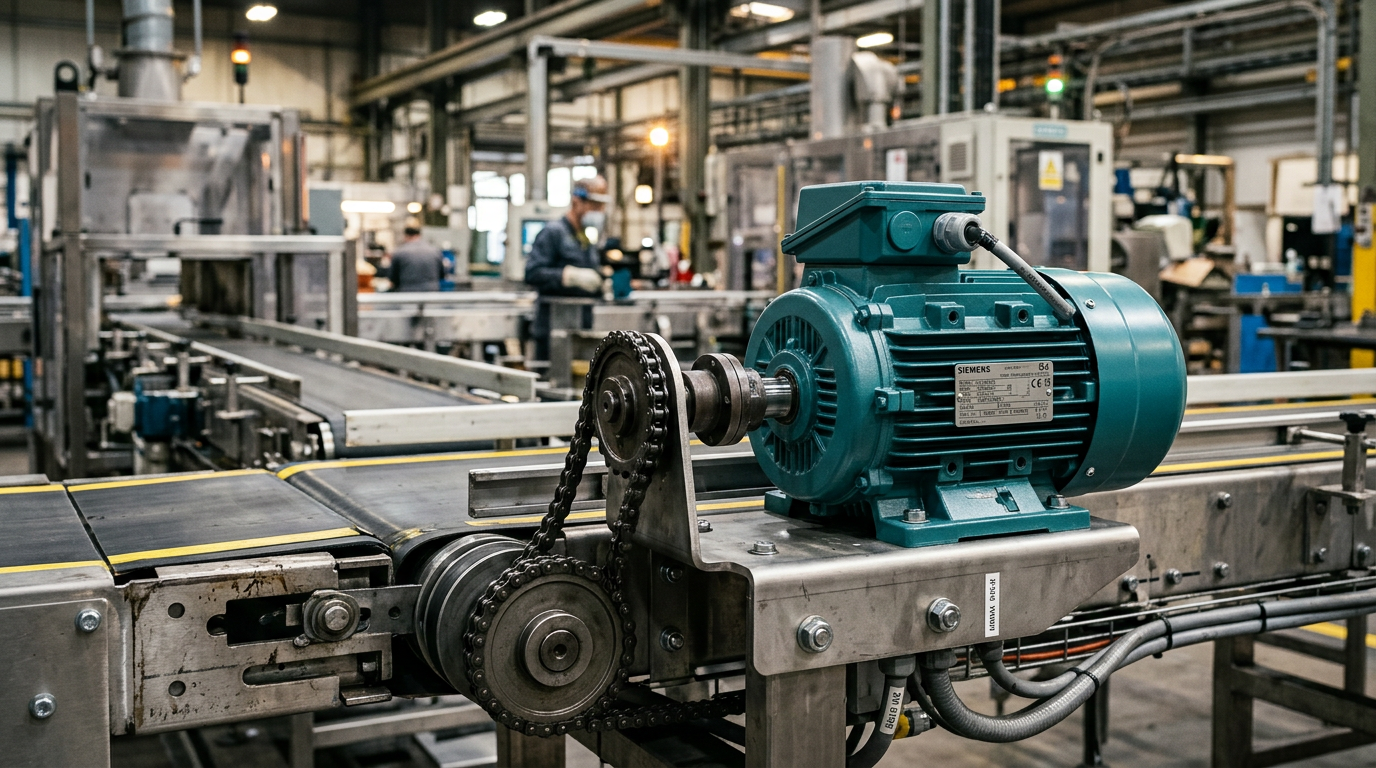
- Drive Dynamics: In heat treatment, the drive is usually located at the discharge end (pulling the belt through the furnace). Friction drives are common, but for high-precision timing or heavy loads, sprocket-driven "Chain Edge" belts are preferred. These integrate a roller chain into the mesh edge, ensuring positive drive and perfect synchronization with the rest of the line.
When integrating these components into a broader production environment, partnering with a modular specialist like Easy Conveyors ensures that the transition from high-heat zones to standard ambient handling zones is seamless and technically sound.
Maintenance and Failure Modes in Heat Treatment
Preventing premature failure in wire mesh belts involves more than just selecting the right steel. It requires rigorous monitoring of "creep"—the slow, permanent deformation of the metal under constant stress and high heat.
- Fatigue Cracking: Caused by repeated bending over small-diameter pulleys. Engineers should follow the "30:1 Rule" (pulley diameter should be 30 times the wire thickness) to minimize stress.
- Carburization: In carbon-rich furnace atmospheres, the belt can absorb carbon, becoming brittle and prone to snapping. Regular "burn-off" cycles or choosing high-nickel alloys can mitigate this.
- Variable Loading: If a belt is loaded unevenly, the center will expand at a different rate than the edges, leading to "bowing." Even product distribution is essential for belt health.
Integration with Industrial Automation
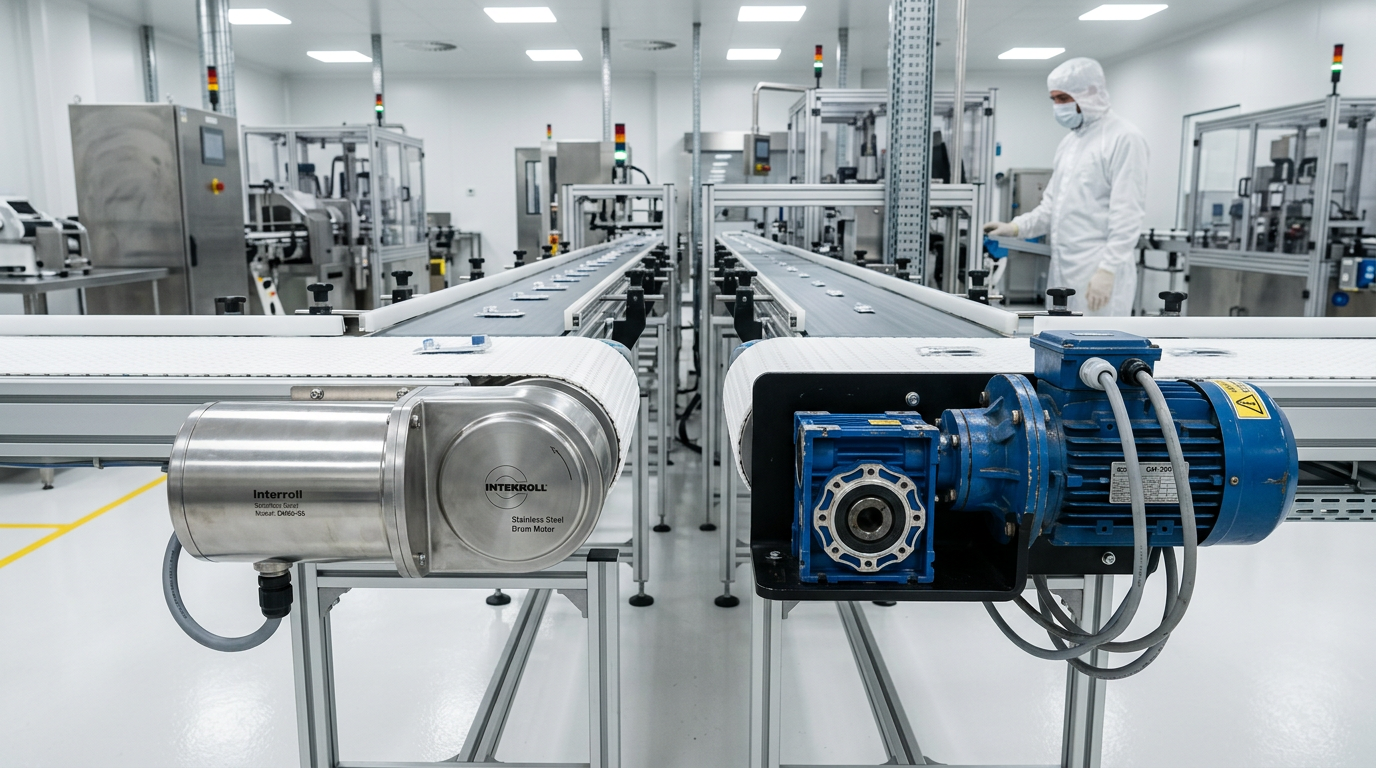
Modern heat treatment lines are increasingly automated. Integration involving VFD soft-start tuning is critical for wire mesh belts to avoid the sudden tension spikes that occur during motor startup. Because metal belts have low elasticity, a "hard start" can stretch the spirals beyond their elastic limit. Furthermore, hygienic wash-down design principles must be applied to the entry and exit points if the treatment involves chemicals or oils that could degrade the conveyor frame over time. Selecting the right drum motor vs gearmotor configuration also plays a role; while gearmotors are common for heavy heat zones, internal drum motors may be used on the cool-down conveyors for space efficiency.
Frequently Asked Questions
What is the '30:1 Rule' in wire mesh belt design?
The 30:1 rule suggests that the drive pulley diameter should be at least 30 times the diameter of the mesh wire to prevent metal fatigue and cracking.
Why is Type 314 stainless steel preferred over Type 304 for ovens?
Type 314 is preferred because its higher silicon content creates a protective oxide layer that resists carburization and scaling better than Type 304 or 316.
How does a balanced weave improve belt tracking?
A balanced weave uses alternating left and right-hand spirals to counteract lateral movement, ensuring the belt tracks straight without complex guiding systems.
Can wire mesh belts handle heavy loads in high heat?
Yes, but they require weighted take-up systems or deep catenary loops to absorb the significant belt length increase caused by thermal expansion.
What is 'creep' in the context of furnace belts?
Creep is the slow, permanent deformation of a metal belt under stress at high temperatures. It is managed through proper alloy selection and preventing over-tensioning.