Efficiency at the Drive: Implementing IE3 and IE4 Motors in Conveyors
Upgrade to IE3 and IE4 efficiency motors for conveyor drives to reduce energy waste by 15%. Learn about IEC 60034-30-1 standards and TCO optimization.
Switching to IE3 or IE4 efficiency class motors on conveyor drives can reduce energy consumption by up to 15% compared to older IE1/IE2 models, directly impacting the Total Cost of Ownership (TCO) in 24/7 material handling environments. Under the IEC 60034-30-1 standard, IE4 "Super-Premium" motors represent the current peak of induction motor technology, offering significant thermal advantages and longer service life.
The Evolution of Motor Efficiency Standards
The global shift toward energy efficiency in industrial automation is driven by both regulatory mandates and the economic reality of rising electricity costs. The International Electrotechnical Commission (IEC) defines efficiency classes for single-speed, three-phase, cage-induction motors. Traditionally, many conveyor systems operated on IE1 (Standard) or IE2 (High Efficiency) motors. However, current EU and North American regulations have made the transition to IE3 (Premium Efficiency) and IE4 (Super-Premium Efficiency) the new industrial baseline.
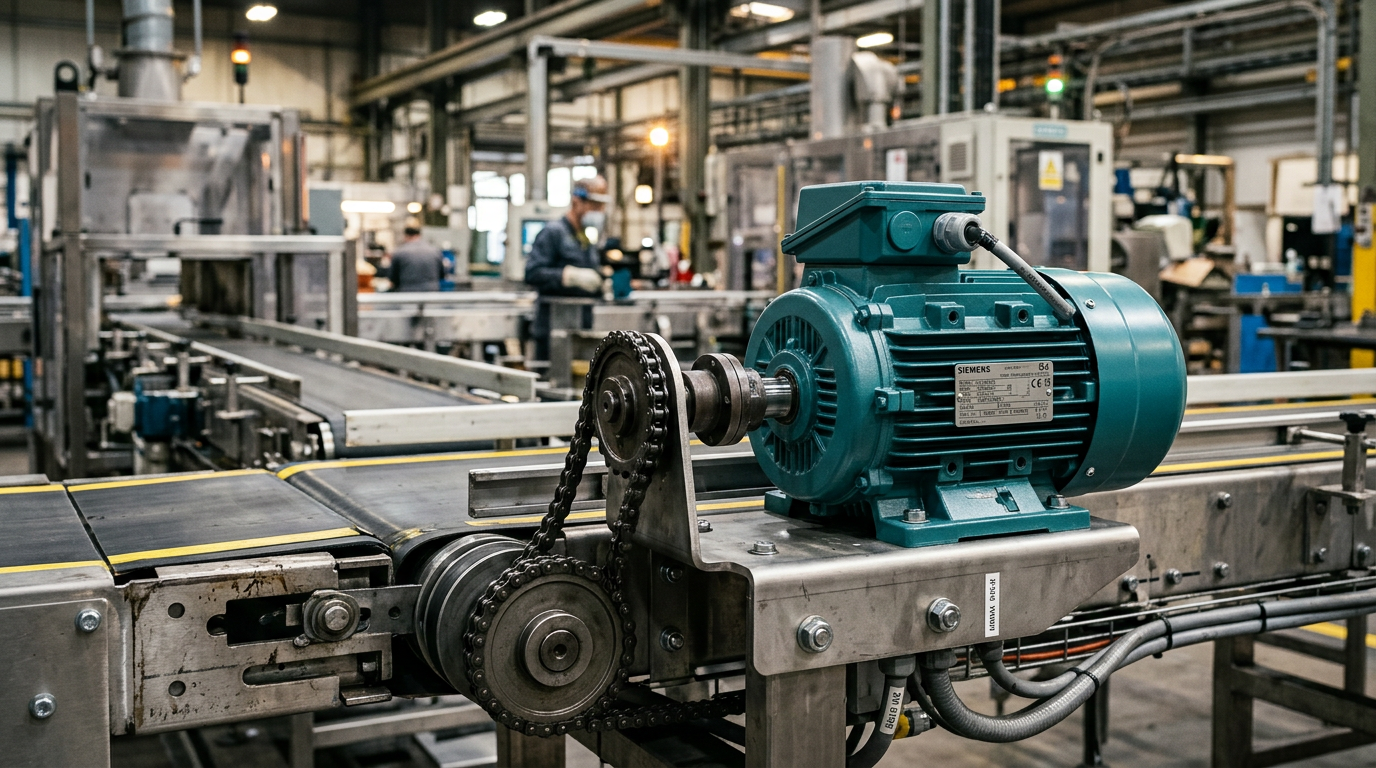
In a typical modular conveyor system, the motor and gearbox assembly (the drive head) is the primary energy consumer. When operating hundreds of meters of belt across a distribution center or food processing plant, even a 2-3% difference in nominal efficiency between an IE3 and IE4 motor results in thousands of Euros in annual savings.
Understanding IE3 vs. IE4 Performance
The performance gap between these classes is achieved through superior materials and design. IE4 motors utilize higher-quality magnetic steel, optimized windings, and improved cooling fan designs to minimize internal losses (stator copper loss, rotor aluminum loss, and friction).
| Feature | IE2 (High) | IE3 (Premium) | IE4 (Super-Premium) |
|---|---|---|---|
| Efficiency (7.5kW) | ~88.1% | ~90.1% | ~92.6% |
| Heat Dissipation | High | Moderate | Low |
| Service Life | Standard | Extended | Maximum |
| Starting Torque | High | Moderate-High | High (with VFD) |
| ROI Period | N/A | 12-24 Months | 18-36 Months |
Why IE4 Matters for Modular Conveyors
Modular conveyor systems, such as those provided by Easy Conveyors, often operate in variable load conditions. While the nominal efficiency of a motor is measured at full load, IE4 motors maintain a "flatter" efficiency curve. This means they remain highly efficient even when the conveyor is only partially loaded, which is frequent in e-commerce and packaging applications.
Thermal Advantages and Reliability
One of the most overlooked benefits of IE3 and IE4 motors is their thermal profile. Because they are more efficient, they convert less electrical energy into waste heat. A motor running cooler is a motor that lasts longer. For every 10°C reduction in operating temperature, the insulation life of the motor windings effectively doubles. In the context of "hygienic wash-down design" where motors may be shrouded or located in confined spaces, the lower heat output of an IE4 motor reduces the risk of premature bearing failure and grease degradation.
Integrating IE3/IE4 with Variable Frequency Drives (VFDs)
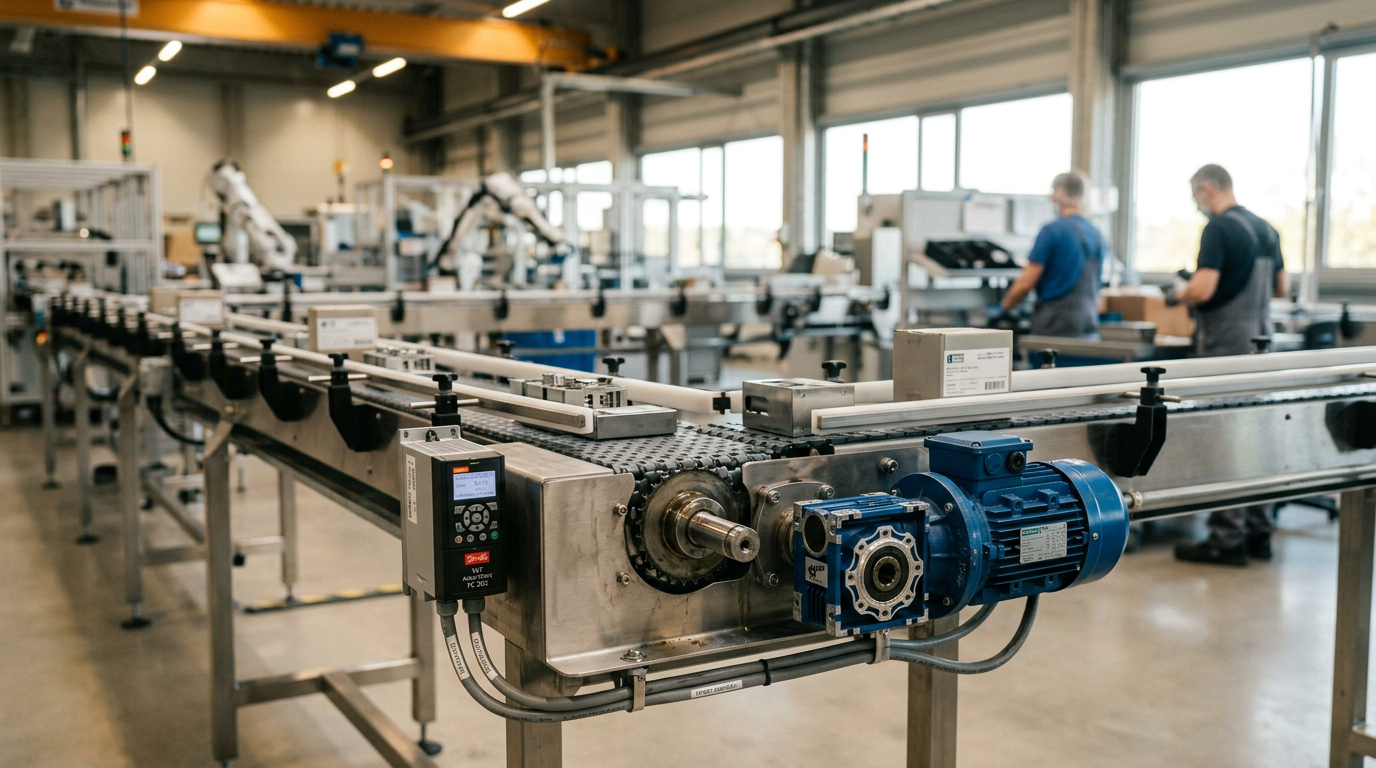
To extract the maximum value from high-efficiency motors, they must be paired with modern automation components. While an IE4 motor is efficient on its own, its performance is optimized when controlled by a Variable Frequency Drive (VFD).
- Soft-Start Tuning: High-efficiency motors often have higher starting currents (inrush) than older models. Using "VFD soft-start tuning" prevents mechanical shock to the modular belt and reduces peak demand charges from the utility.
- Dynamic Load Adjustment: A VFD can slow the conveyor speed during gaps in product flow, further compounding the energy savings provided by the IE4 motor.
- Torque Management: IE4 permanent magnet motors or synchronous reluctance motors require specific VFD algorithms to maintain optimal torque-to-current ratios.
Easy Conveyors stocks the conveyor components discussed here — ready to ship across Europe.
Total Cost of Ownership (TCO) Calculation
When selecting a drive for a new conveyor installation, the purchase price of the motor typically represents only 5% to 10% of its total lifetime cost. The remaining 90%+ is spent on electricity.
Engineers should prioritize IE4 motors in applications characterized by:
- High Annual Operating Hours: Any system running more than 3,000 hours per year.
- High Electricity Costs: Facilities located in regions with high industrial energy tariffs.
- High Ambient Temperatures: Where reduced motor heat improves the reliability of surrounding sensors and electronics.
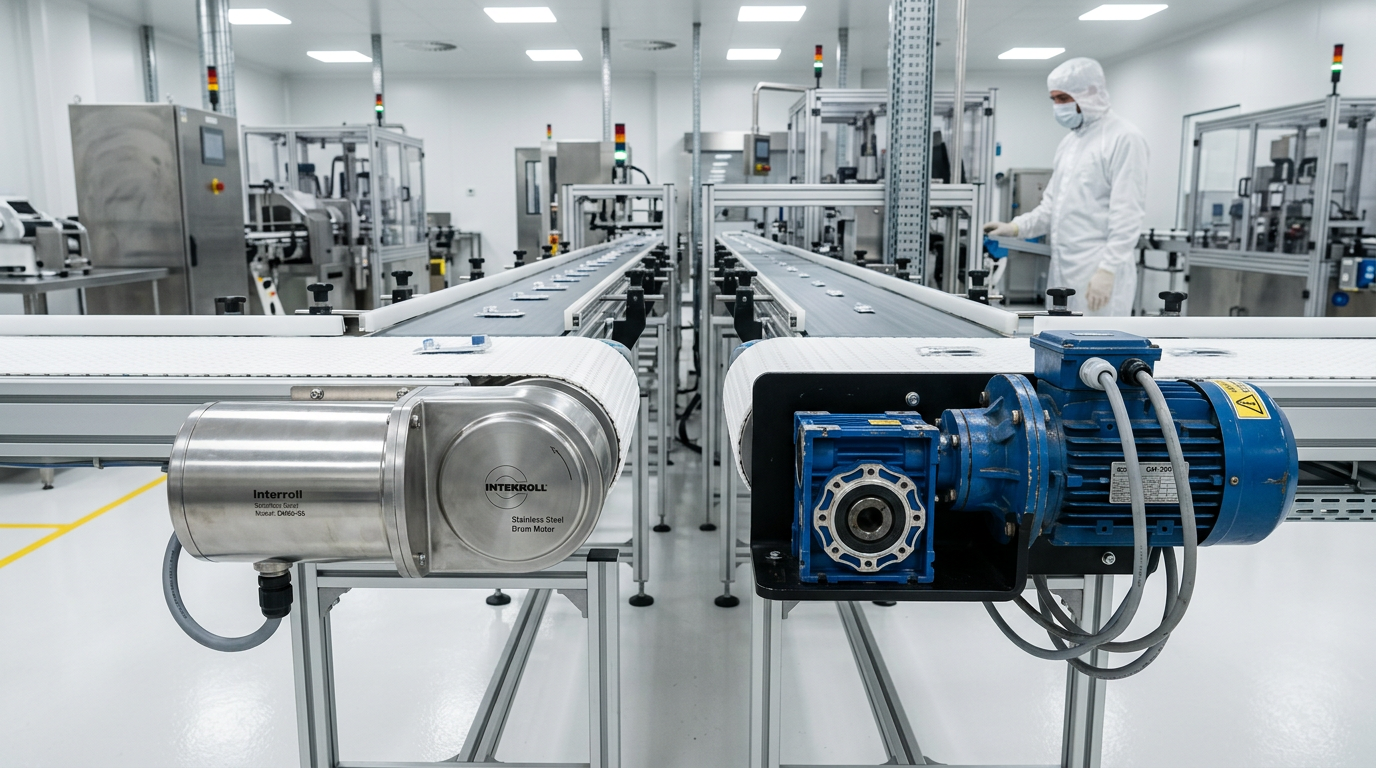
In "drum motor selection" for food-grade systems, the integration of IE4-level efficiency into the compact, oil-cooled housing of a drum motor presents a specific engineering challenge. Permanent magnet motors are increasingly used in these scenarios to achieve IE4 efficiency within the tight physical constraints of the conveyor roller.
Technical Considerations for Retrofitting
Retrofitting an existing conveyor line with IE3 or IE4 motors is not always a "drop-in" replacement. Because high-efficiency motors contain more active material (copper and steel), they can sometimes be slightly longer or larger than their IE1 counterparts. Furthermore, the higher starting current of an IE3/IE4 motor may require upgrading the contactors or circuit breakers if a VFD is not being utilized.
When planning a migration, consult with experts like Easy Conveyors to ensure the mechanical interface—specifically the "drum motor vs gearmotor" mounting dimensions—remains compatible with your existing frame.
Conclusion
The transition to IE3 and IE4 motors is no longer a luxury for sustainability-minded firms; it is a technical necessity for competitive manufacturing. By reducing energy waste, lowering thermal stress, and extending component life, these motors serve as the backbone of modern, efficient conveyor systems. When combined with intelligent control through VFDs and optimized conveyor layouts, the path to a high-efficiency facility becomes clear.
Frequently Asked Questions
What is the main difference between IE3 and IE4 motors?
IE3 motors are 'Premium Efficiency,' while IE4 are 'Super-Premium.' IE4 motors generally reduce energy losses by an additional 15-20% compared to IE3 models, which is significant for 24/7 operations.
Do I need to change my electrical switchgear when upgrading to IE4?
Yes, IE3 and IE4 motors tend to have higher starting currents (inrush). In older systems, you may need to adjust circuit breaker settings or install a VFD to manage the startup phase.
What is the typical ROI for an IE4 motor upgrade?
Typically, the ROI for an IE4 motor in a continuous operation conveyor is between 1.5 to 3 years, depending on local energy costs and the duty cycle.
Is an IE4 motor better for high-temperature environments?
Absolutely. IE4 motors generate significantly less heat, which is vital for food processing or pharmaceutical environments where high ambient temperatures can affect product quality or conveyor belt life.