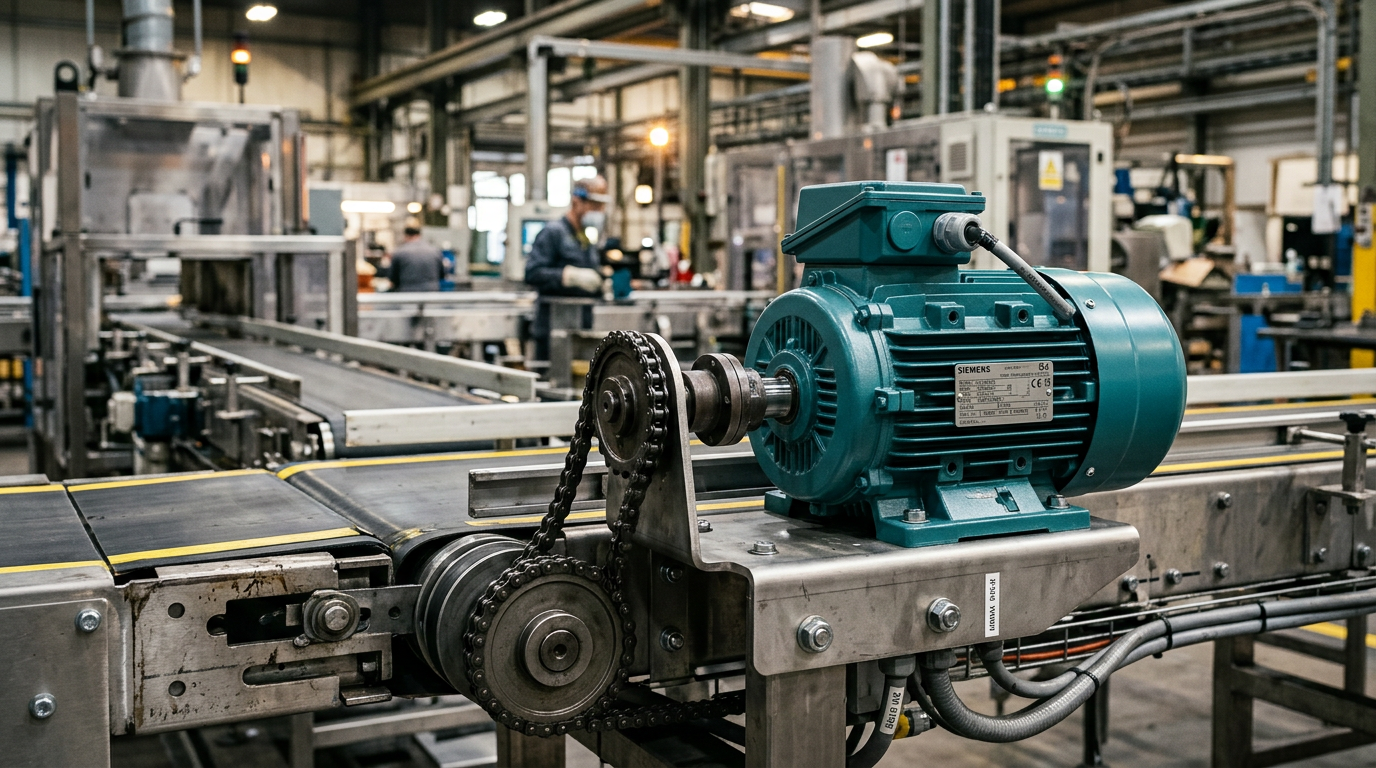
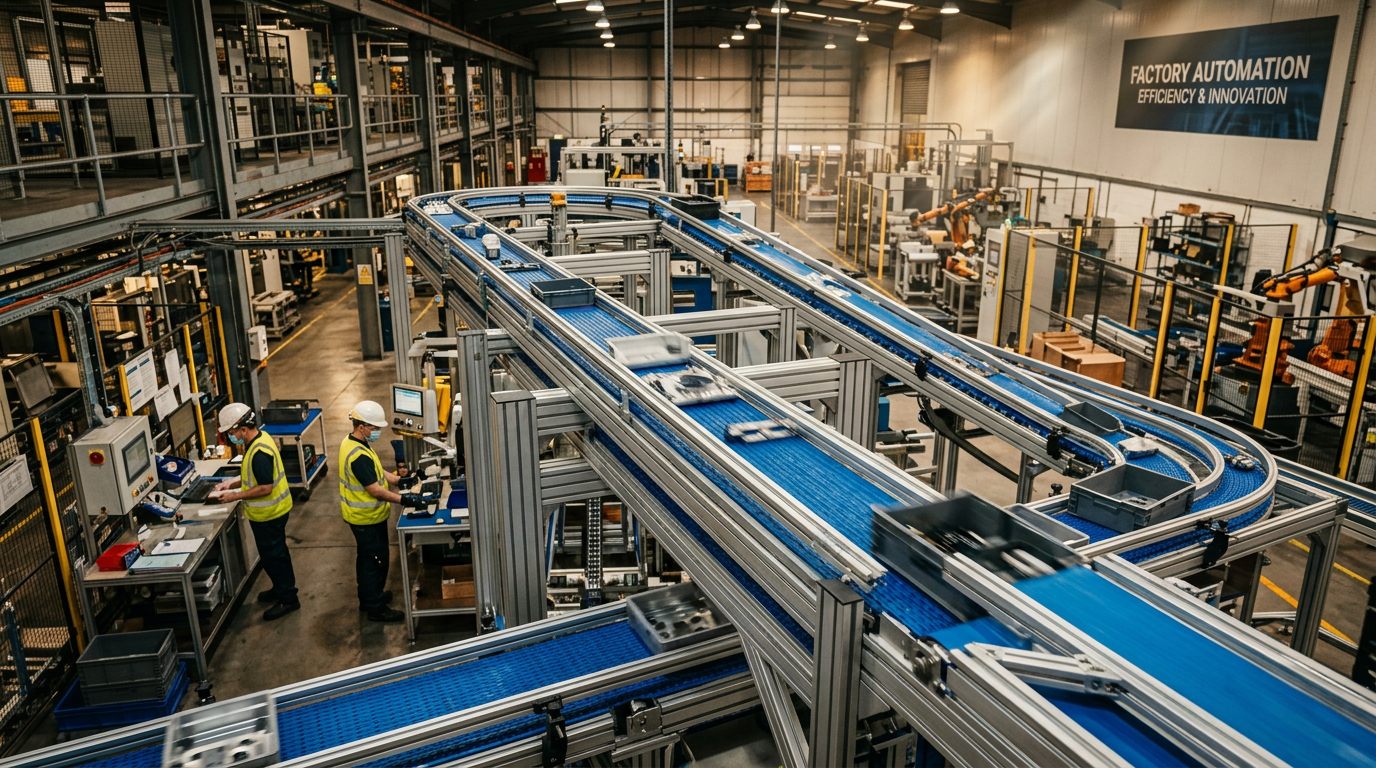
Maximizing ROI with IE3 and IE4 Energy-Efficient Motors on Conveyor Drives
Technical guide to IE3 Premium and IE4 Super-Premium motors for conveyor drives. Learn about efficiency standards, ROI calculations, and VFD integration.
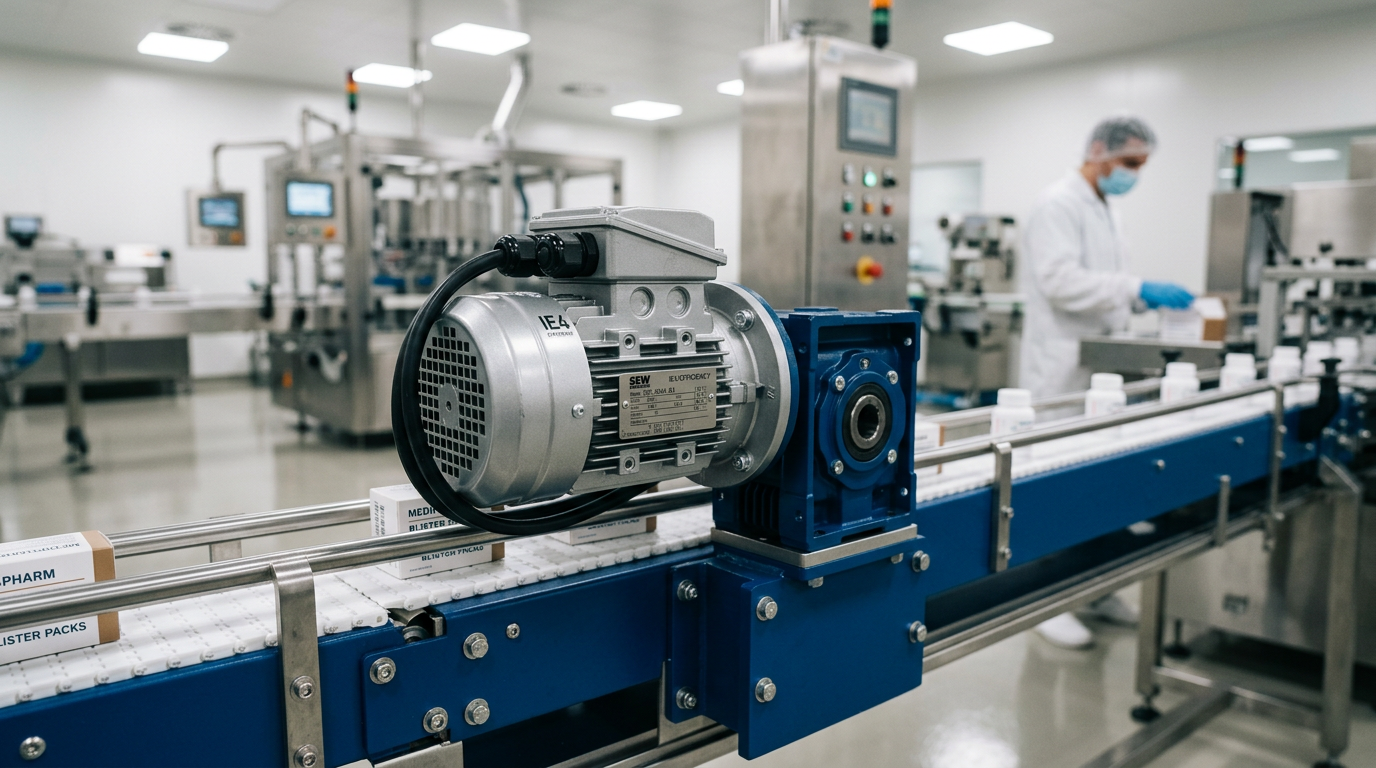
Upgrading to energy-efficient IE3 and IE4 motors on conveyor drives can reduce total drive system energy consumption by 15% to 40% when combined with high-efficiency gearing, significantly lowering the Total Cost of Ownership (TCO) over a typical 10-year service life. According to the internal energy efficiency standards IEC 60034-30-1, an IE4 "Super-Premium" motor reduces energy losses by approximately 15% compared to an IE3 "Premium" model, making it a critical specification for continuous-duty industrial automation.
Navigating the IE Efficiency Landscape
In the context of modern material handling, the move from standard efficiency motors to high-efficiency classes is no longer just an environmental choice—it is a regulatory and economic necessity. The IEC 60034-30-1 standard defines the efficiency levels for single-speed, three-phase, cage-induction motors.
- IE1: Standard Efficiency
- IE2: High Efficiency
- IE3: Premium Efficiency (Mandatory for most motors 0.75 kW to 1000 kW in the EU since 2021)
- IE4: Super-Premium Efficiency (Required for motors between 75 kW and 200 kW in the EU as of July 2023)
For conveyor systems operating 24/7 in distribution centers or food processing plants, the motor represents a small fraction of the initial purchase price—often less than 5%—but accounts for over 90% of the lifetime cost. Consequently, the transition to IE4 motors represents the most effective way to combat rising electricity prices.
Technical Advantages of IE3 and IE4 Motors in Conveyors
Modern IE3 and IE4 motors are not merely "re-rated" versions of older designs. They feature significant structural and electromagnetic improvements:
- Reduced Heat Generation: Because higher efficiency means fewer losses are converted into heat, these motors run cooler. This extends the lifespan of the winding insulation and bearings.
- Higher Copper Content: Larger conductors reduce resistance losses in the stator.
- Advanced Magnetic Materials: Higher-grade laminations in the rotor and stator minimize eddy current and hysteresis losses.
- Optimized Fan Design: Since the motor runs cooler, the cooling fan can be smaller and more aerodynamic, reducing windage losses.
When integrating these motors into modular systems, engineers often work with partners like Easy Conveyors to ensure that the mechanical load—such as belt friction and roller resistance—is optimized to match the motor’s peak efficiency curve.
The Role of VFDs and System Efficiency
While the motor efficiency (IE class) is vital, the IES (International Efficiency of Systems) class — defined by IEC 61800-9-2 — considers the combination of the motor and the Variable Frequency Drive (VFD).
Using a VFD with an IE4 motor allows for "VFD soft-start tuning," which prevents the high mechanical stress of across-the-line starting. In conveyor applications, where loads fluctuate based on throughput, VFDs allow the motor to run at reduced speeds while maintaining optimal torque, further compounding energy savings.
Motor Efficiency Comparison Table
| Feature | IE2 (High) | IE3 (Premium) | IE4 (Super-Premium) |
|---|---|---|---|
| Energy Loss Reduction | Baseline | ~15% vs IE2 | ~15% vs IE3 |
| Typical Payback Period | N/A | 12–18 Months | 18–36 Months |
| Heat Emission | High | Moderate | Very Low |
| Typical Technology | Induction | Induction | Permanent Magnet / SynRM |
| Efficiency (e.g. 7.5kW) | 88.1% | 90.4% | 92.6% |
Easy Conveyors stocks the conveyor components discussed here — ready to ship across Europe.
Implementation Challenges: Dimensions and Torque
Engineers must account for "physical growth" when moving from IE1/IE2 to IE3/IE4. To achieve higher efficiency, manufacturers often use more active material (copper and steel), which can result in:
- Larger Frame Sizes: An IE4 motor might require a larger frame than an IE2 motor of the same power rating.
- Inrush Current: High-efficiency motors often exhibit higher starting currents, which may require resizing contactors or fine-tuning VFD parameters.
- Different Inertia: The heavier rotors of IE4 induction motors may impact the dynamic response of the system in high-frequency start-stop applications.
Selecting the Right Drive for the Application
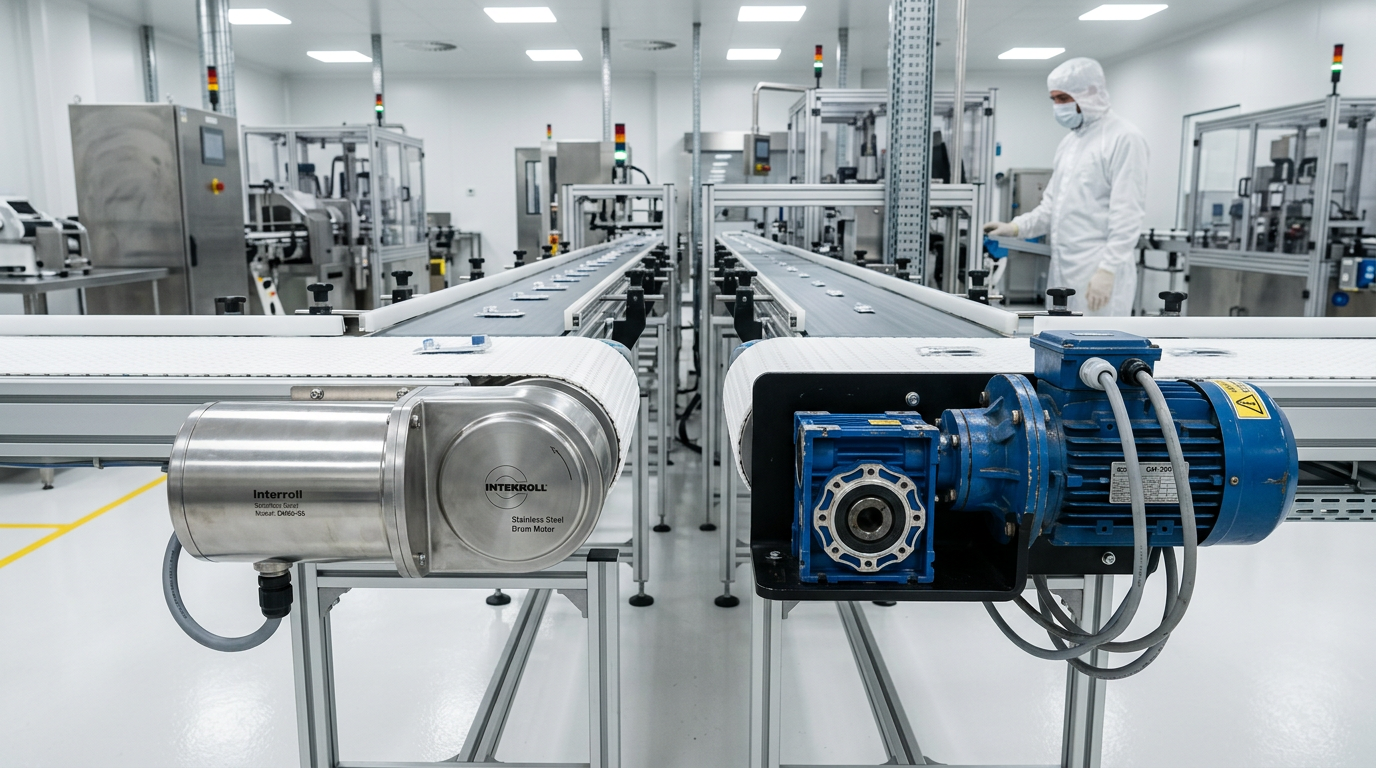
In "material handling hardware selection," the choice between a traditional gearmotor and a drum motor is influenced by efficiency requirements.
- External Gearmotors: Easier to cool and maintain, standard IE3/IE4 motors are readily available.
- Drum Motors: Highly efficient due to the lack of external drive chains or belts, which can lose 5-10% of energy through friction. High-end drum motor selection often involves integrated permanent magnet motors that exceed IE4 requirements.
Cost-Benefit Analysis and ROI
The ROI for moving to IE4 is strongest in applications with high annual operating hours ($>4,000$ hours/year). For example, a 7.5 kW motor running 16 hours a day for 300 days a year at an energy cost of €0.20/kWh will consume approximately €7,200 in electricity annually. An IE4 motor (92.6% efficiency) vs. an IE3 motor (90.4% efficiency) saves roughly €160 per year per drive. Across a facility with 200 conveyor drives, this equates to €32,000 in annual savings.
When combined with "hygienic wash-down design" in food industries, the energy savings are complemented by the reduced downtime associated with the robust seals and stainless steel housings often found on premium IE4 drive units.
Future-Proofing with IE5 and Ultra-Premium Efficiency
The industry is already looking toward IE5 (Ultra-Premium). These motors often utilize Synchronous Reluctance (SynRM) technology or Permanent Magnet (PM) designs. Unlike standard induction motors, SynRM motors do not have rotor windings, eliminating rotor heat losses entirely. This makes them ideal for the high-torque, low-speed requirements typical of heavy-pallet conveyors and long-distance sortation lines.
Maintaining peak efficiency also requires attention to the mechanical transmission. A high-efficiency IE4 motor loses its value if paired with an inefficient worm gearbox. Instead, engineering teams should specify helical or bevel-helical gearboxes, which offer transmission efficiencies of 94-98%. Combining an IE4 motor with an efficient gearbox and a modern VFD creates a "best-in-class" drive system that meets the strictest environmental regulations (ISO 50001).
By standardizing on IE3 or IE4 components, manufacturers not only comply with global mandates like those from NEMA and CEN/CENELEC, but they also build resilience against rising energy volatility. Whether building a new sortation center or retrofitting an existing packaging line, the drive motor is the most critical lever for operational efficiency.
Frequently Asked Questions
What is the difference between IE3 and IE4 motors?
IE3 (Premium) is the standard for most industrial applications, while IE4 (Super-Premium) offers ~15% lower energy losses than IE3. IE4 is often required for larger motors (75kW+) and is the preferred choice for 24/7 continuous duty cycles to maximize ROI.
Can I directly swap an IE2 motor for an IE4 on an existing conveyor?
Yes, IE4 motors are often physically larger or longer than IE2/IE3 versions because they require more active material (copper/steel) to reduce losses. This may require modifications to the conveyor chassis or mounting brackets.
Why are SynRM motors becoming popular for conveyors?
Synchronous Reluctance (SynRM) and Permanent Magnet (PM) technologies allow motors to reach IE4 and IE5 efficiency levels even at partial loads, whereas standard induction motors see efficiency drops when slowed down by a VFD.
Do IE4 motors require specific VFD settings?
Most IE4 motors are compatible with VFDs, but because they have lower internal losses and higher starting currents, the VFD parameters (like ramp times and torque boost) must be precisely tuned to prevent overcurrent trips.