Engineering Guide: Wire Mesh Belts in Heat Treatment and Oven Lines
Expert guide on wire mesh belts for industrial ovens and heat treatment. Learn about high-temp alloys, weave patterns, and how to manage thermal expansion.
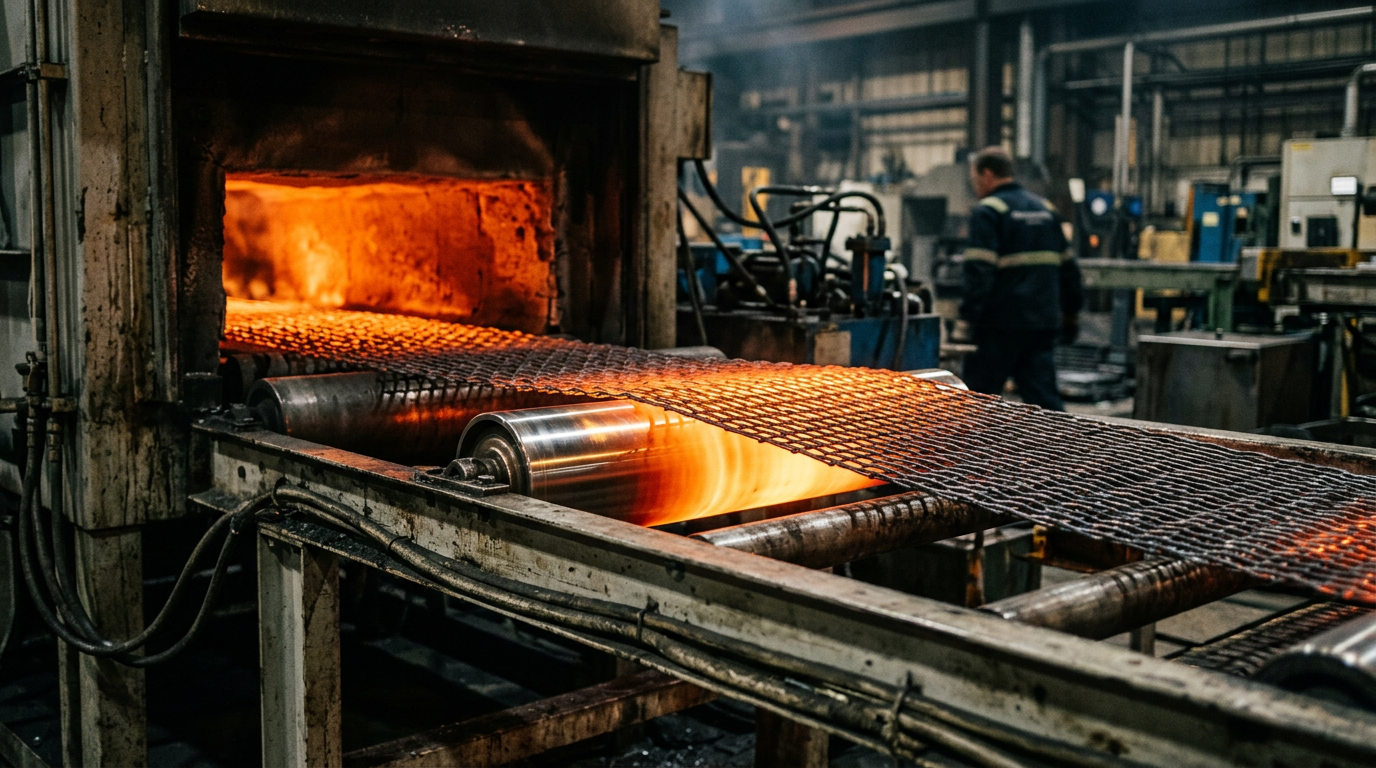
Wire mesh belts for heat treatment and oven lines are engineered to withstand extreme temperatures ranging from 150°C to over 1,200°C by utilizing high-nickel and chromium alloys like AISI 314 or Inconel 601. Selecting the correct weave—such as Balanced Weave or Compound Balanced Weave—is critical to preventing thermal belt elongation and ensuring a tracking accuracy within ±5mm during continuous 24/7 service.
The Engineering Behind High-Temperature Performance
Unlike standard synthetic belts used in ambient packaging environments, wire mesh belts function as structural components within a furnace or industrial oven. At temperatures exceeding 500°C, physical properties of common steel begin to shift; yield strength drops, and the risk of "creep" (permanent deformation under constant stress) increases.
To combat this, manufacturers utilize specific metallurgical compositions. Stainless steels like Grade 304 are suitable for moderate temperatures up to 400°C, often found in industrial baking or drying applications. However, for metallurgy processes like brazing or sintering, heat-resistant alloys such as Type 310 or 314 are required to resist oxidation and scaling. These alloys form a protective oxide layer that prevents the wire from thinning and snapping under tension.
Critical Weave Patterns for Oven Stability
The geometry of the wire mesh determines its load capacity, airflow efficiency, and tracking behavior. In heat treatment, three primary patterns dominate:
- Balanced Weave: Consists of alternating left and right-hand spirals joined by crimped connectors. This is the most common design because it neutralizes tracking stresses. If the belt starts to drift, the opposing spirals counteract the force, keeping the belt centered.
- Compound Balanced Weave (CB Series): A high-density weave where multiple spirals and cross-rods are nested together. This creates a very smooth, flat surface—perfect for small components that might fall through a standard weave, or for unstable products like glass containers.
- Self-Stacking / Link Belts: Driven by side chains or sprockets, these are used when positive drive is required to prevent slippage in high-torque environments like heavy casting movements.
Material Comparison Table: High-Temp Alloys
| Alloy Type | Max Operating Temp | Oxidation Resistance | Common Application |
|---|---|---|---|
| AISI 304 | 400°C | Moderate | Food Drying, Cooling |
| AISI 316L | 450°C | High (Acidic) | Chemical Processing |
| AISI 314 | 1,150°C | Excellent | Sintering, Annealing |
| Inconel 601 | 1,250°C | Superior | Aerospace Heat Treat |
Managing Thermal Expansion and Belt Tension
One of the most complex challenges in oven design is managing the change in belt length as it heats up. A stainless steel belt can expand by several centimeters over a 30-meter run when heated to 800°C.
Engineers must implement a "take-up" system—typically a gravity-weighted or pneumatic tensioner—at the return end of the conveyor. Failure to account for this expansion leads to "surging" or "buckling," where the belt loses contact with the drive drum and begins to pulse, potentially damaging the product or the internal furnace lining.
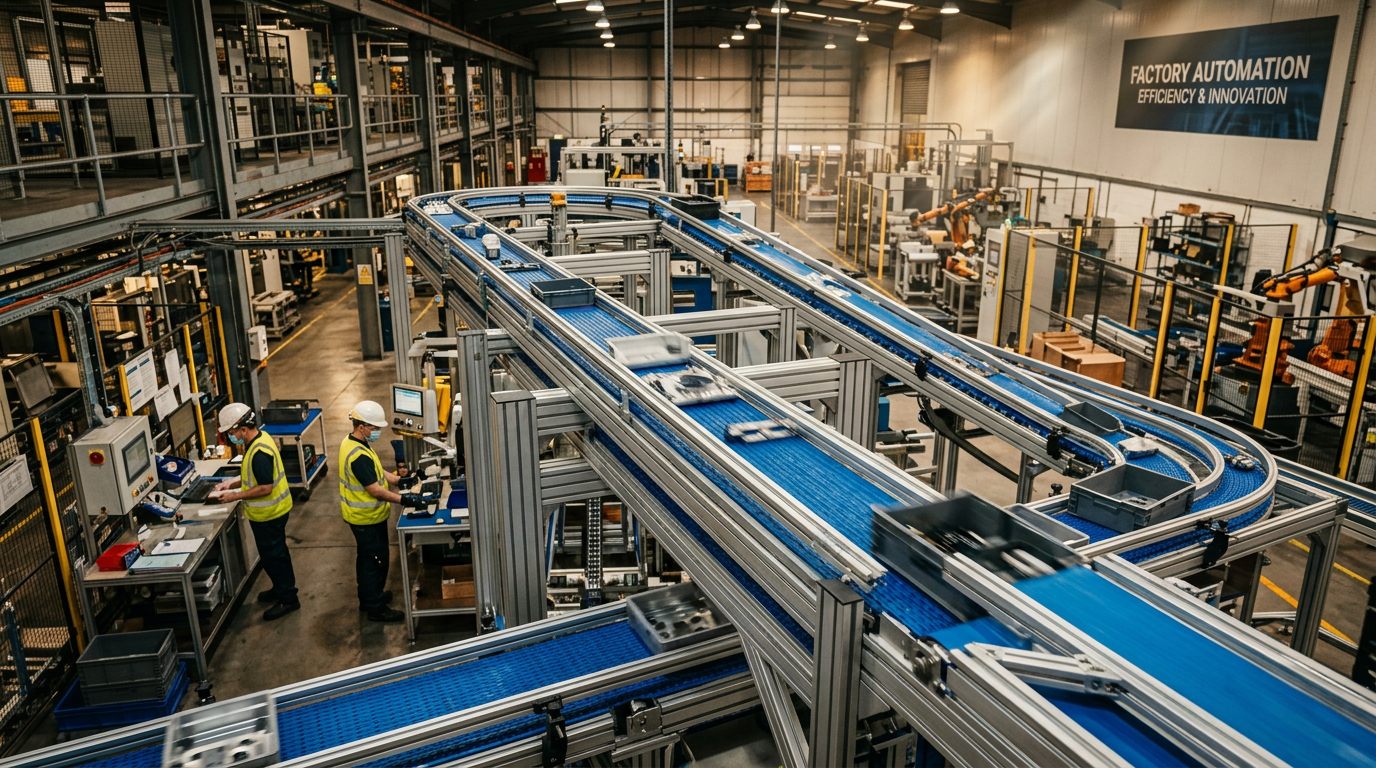
When integrating these high-temp components into a larger production facility, modularity remains key. For the transport sections leading into and out of the high-heat zones, Easy Conveyors provides the structural framework and modular handling systems that bridge the gap between the specialized furnace mesh and the standard packaging line.
Easy Conveyors stocks the conveyor components discussed here — ready to ship across Europe.
Maintenance and Failure Modes in Heat Treatment
The lifespan of a wire mesh belt in a heat treatment line is usually measured in "cycles" rather than years. Common failure modes include:
Thermal Fatigue
Repeated heating and cooling cycles cause the metal grains to expand and contract. Over time, this brittle-ductile transition leads to microscopic cracks at the knuckles of the weave. Monitoring for "necking" in the cross-rods is a primary indicator that the belt is nearing the end of its fatigue life.
Carbon Pick-up (Carburization)
In atmospheres used for case hardening, the belt may absorb carbon from the furnace environment. This makes the mesh extremely brittle. If a "clinker" or dropped part jams the belt, a carburized belt will snap instantly rather than stretching.
Monitoring Drive and Tracking
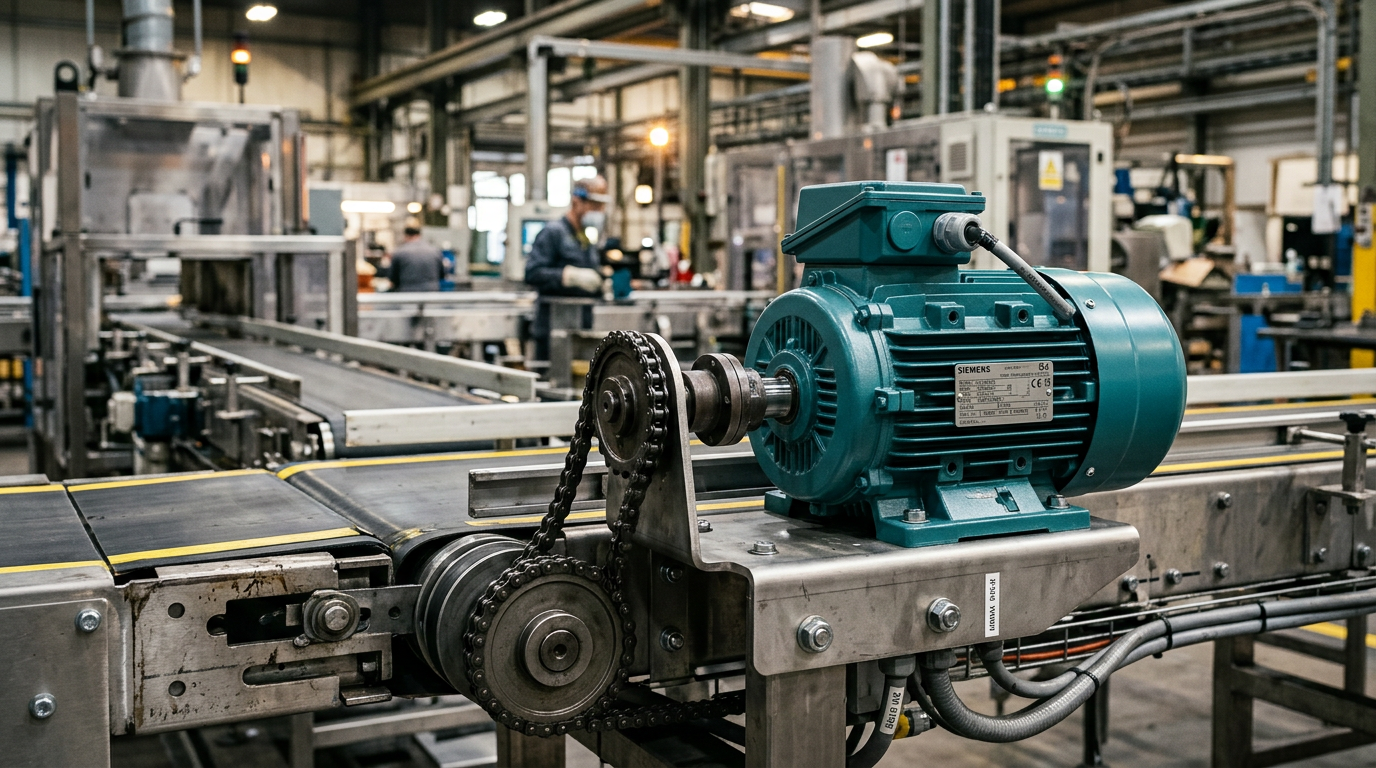
Regular inspection of the drive sprockets is vital. In high-heat zones, the sprocket teeth can wear down, leading to "jumping" where the belt skips a tooth. This mechanical shock can lead to immediate belt failure. Integrating a VFD soft-start tuning routine helps minimize the initial torque spike during cold starts, which is when the belt is most vulnerable to mechanical stress.
Hygienic Considerations for Food Ovens
In industrial baking and protein cooking, the mesh belt must meet European hygienic standards (EHEDG). Open-weave designs are preferred here to allow for high-velocity hot air impingement, ensuring the product is cooked evenly on both sides. Furthermore, the belt must be compatible with hygienic wash-down design protocols, meaning it must resist corrosion from caustic cleaning agents used to strip away burnt-on organic matter.
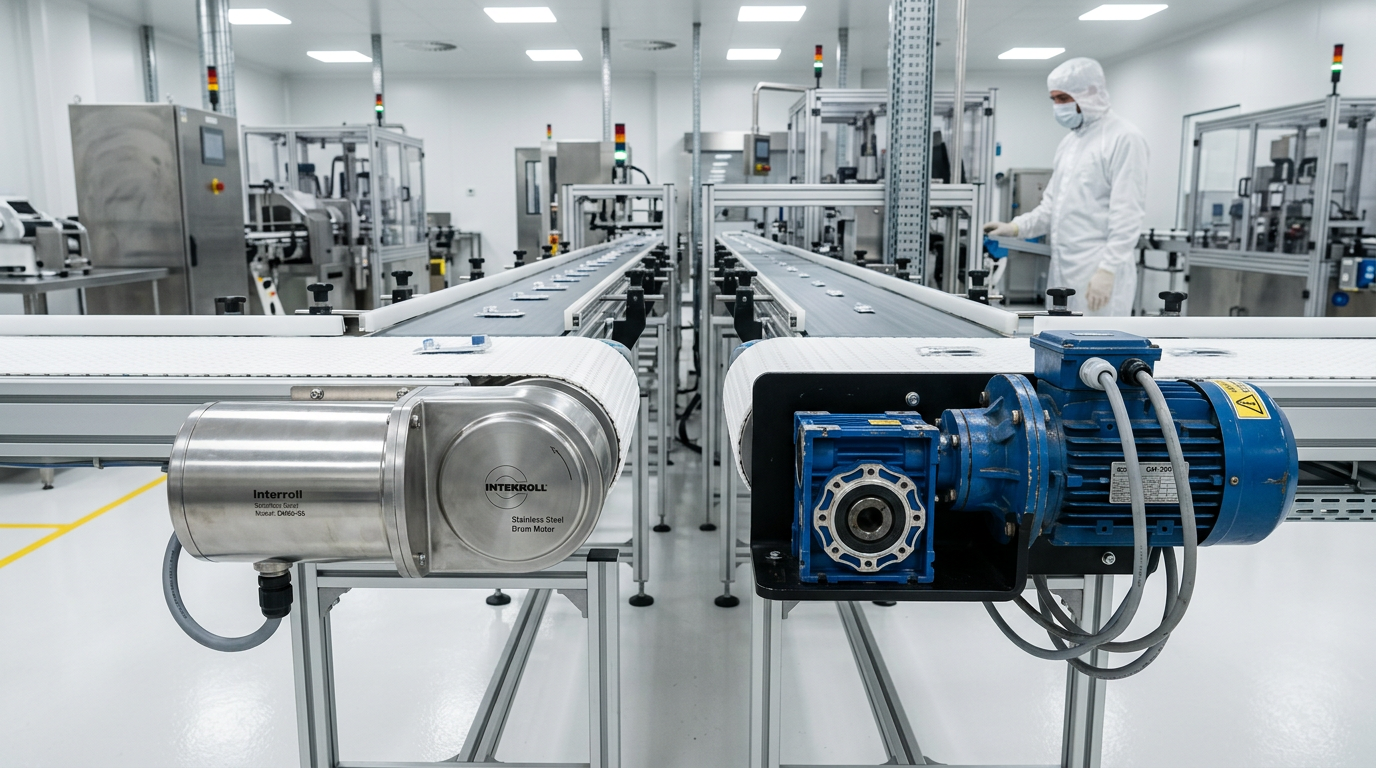
For applications requiring precise product orientation through an oven, engineers often look toward specialized drum motor selection to ensure a sealed, oil-free drive system that won't leak lubricants into the food-grade heating zone.
Sizing and Selection Criteria
To specify a wire mesh belt for a new oven line, four data points are non-negotiable:
- Product Loading: How many kg/m² will the belt carry?
- Atmosphere: Is it oxidizing, reducing, or vacuum? (This dictates the alloy).
- Drive Type: Friction drive (smooth rollers) or positive drive (sprockets)?
- Temperature Profile: Does the belt stay hot, or does it exit the oven and cool down on every revolution?
By meticulously matching the alloy and weave to the thermal profile, plant managers can extend belt life by 30-50%, significantly reducing the "Total Cost of Ownership" (TCO) for critical thermal processing lines.
Frequently Asked Questions
What is the best mesh pattern for high-temperature tracking stability?
Balanced weave belts are typically the best choice for heat treatment because they use alternating spiral directions to cancel out side-way movement, ensuring the belt tracks straight.
Why use AISI 314 over standard 304 stainless steel in furnaces?
AISI 314 or Inconel alloys are used for temperatures above 1,000°C because they form a stable oxide layer that prevents the metal from scaling and losing structural integrity.
How do you prevent a conveyor belt from sagging when it gets hot?
Thermal expansion is managed using gravity-based or pneumatic take-up units that provide constant tension as the belt length increases during the heating phase.
What are the early warning signs of wire mesh belt failure?
Typical failure signs include 'necking' (thinning) of cross-rods, excessive elongation that exceeds the take-up range, and jagged edges on the mesh knuckles.