Optimizing Industrial Performance with IE3 and IE4 Motors on Conveyor Drives
Upgrading conveyor drives to IE4 motors can slash energy consumption by up to 30%. Learn about TCO, VFD compatibility, and the transition from IE3 to IE5 standards.
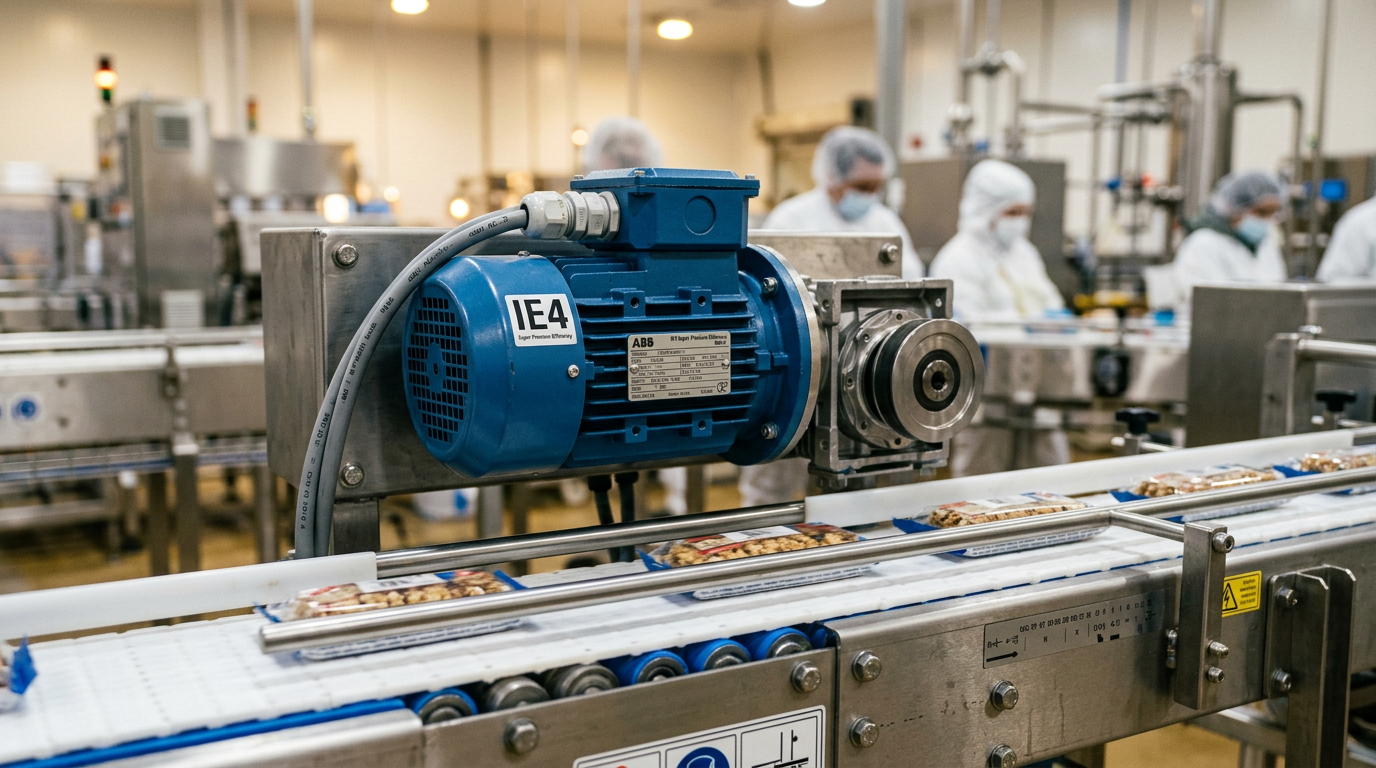
Implementing IE3 and IE4 motors on conveyor drives can reduce electrical consumption by 15% to 30% compared to legacy IE1 or IE2 systems, particularly in continuous-duty applications like logistics and food processing. By 2026, shifting to IE4 (Super Premium Efficiency) and IE5 (Ultra Premium Efficiency) levels has become the industry benchmark for meeting stringent EU and North American carbon footprint mandates.
The Evolution of Motor Efficiency Standards
The international standard IEC 60034-30-1 defines the efficiency classes for single-speed, three-phase, cage-induction motors. While IE1 (Standard Efficiency) and IE2 (High Efficiency) were once commonplace, modern industrial environments are rapidly transitioning to IE3 (Premium Efficiency) and IE4 (Super Premium Efficiency). In the context of a modular conveyor system, the "drive" is often the single largest consumer of energy.
For plant engineers, the shift is not merely about compliance; it is about the Total Cost of Ownership (TCO). While an IE4 motor may have a 15-25% higher purchase price than an IE3 equivalent, the energy costs typically account for over 95% of the motor's lifetime expenses. In a 24/7 sortation center, the payback period for an IE4 motor over an IE3 can be as short as 18 to 24 months.
Technical Comparison: IE2 vs. IE3 vs. IE4
The jump from IE2 to IE4 involves significant engineering refinements. These include the use of higher-quality magnetic steel, thinner laminations to reduce eddy current losses, improved cooling fan designs, and optimized copper winding density.
| Feature | IE2 (High) | IE3 (Premium) | IE4 (Super Premium) |
|---|---|---|---|
| Typical Efficiency (7.5kW) | ~88.1% | ~90.4% | ~92.6% |
| Relative Heat Loss | Baseline (100%) | ~20% Reduction | ~35-40% Reduction |
| Motor Technology | Induction | Induction / PM | PM / SynRM |
| Lifecycle TCO | High (Energy Waste) | Moderate | Lowest |
| IP Rating Range | IP54 - IP55 | IP55 - IP66 | IP55 - IP69K |
Synchronous Reluctance vs. Permanent Magnet
While IE3 motors are predominantly standard AC induction motors, IE4 and the emerging IE5 classes often utilize Synchronous Reluctance (SynRM) or Permanent Magnet (PM) technology. SynRM motors are particularly popular for conveyor applications because they do not use rare-earth magnets, making them more sustainable and easier to maintain while maintaining IE4 efficiency even at partial loads.
Impact on Conveyor Drive Design
Integrating a high-efficiency motor into a conveyor system requires more than just swapping a bolt pattern. The physical characteristics of IE3 and IE4 motors can differ from their predecessors.
1. Thermal Management and Service Life
Because IE4 motors generate significantly less internal heat, the insulation (typically Class F) is under less stress. This results in a longer bearing life and extended grease intervals. In wash-down environments, such as those found in food and beverage production, the lower surface temperature of an IE4 motor reduces the risk of "baking" organic debris onto the motor housing, simplifying the hygienic cleaning process.
2. Drive Sizing and Torque Characteristics
Modern IE4 motors often exhibit different torque-speed curves. When selecting a motor for a heavily loaded incline conveyor, engineers must ensure the starting torque is sufficient. However, the high efficiency at partial loads is where these motors shine. In many modular conveyor systems, the motor spends 70% of its time running at 50-60% load. Unlike IE2 motors, whose efficiency drops off a cliff at partial loads, IE4 motors maintain a flat efficiency curve.
3. VFD Compatibility and Soft-Start Tuning
To extract the maximum benefit from an IE4 motor, it should be paired with a modern Variable Frequency Drive (VFD). Easy Conveyors emphasizes the importance of a "system-wide" approach, where the VFD is tuned specifically for the motor's magnetic profile. Utilizing "VFD soft-start tuning" prevents the mechanical shock loads that can damage modular plastic belts and link chains, while also reducing the peak current draw during the conveyor’s acceleration phase.
Easy Conveyors stocks the conveyor components discussed here — ready to ship across Europe.
Application Use Cases
High-Volume Logistical Sortation
In a facility running 6,000 hours per year, a single 1.5kW motor swap from IE2 to IE4 can save approximately 1,200 kWh annually. Multiply this by 200 drive units in a typical distribution center, and the energy savings exceed 240,000 kWh per year. This scale of savings is why global e-commerce leaders have mandated IE4 motors for all new conveyor installations.
Hygienic Food Processing
In the food industry, efficiency is often coupled with the need for stainless steel or epoxy-coated housings. Many IE4 motors are now available in TENV (Totally Enclosed Non-Ventilated) configurations. Because they generate less heat, they no longer require a cooling fan—a notorious harbor for bacteria and dust. This makes "hygienic wash-down design" and IE4 efficiency a perfect synergy for the "clean room" requirements of pharma and food packaging.
Critical Considerations for Retrofitting
When upgrading an existing conveyor line, several "hidden" factors must be addressed:
- Inrush Current: High-efficiency motors often have higher starting (inrush) currents than legacy motors. Ensure the circuit breakers and contactors are rated for these IE3/IE4 starting characteristics.
- Mechanical Compatibility: Some IE4 motors use a larger frame size (e.g., jumping from an 80 to a 90 frame) to accommodate the extra copper and laminations. Check the spatial clearances around the conveyor's drive station.
- Gearbox Pairing: A motor is only as efficient as the gearbox it drives. Pairing an IE4 motor with an inefficient worm gearbox (60-70% efficiency) is a waste of resources. Aim for helical or bevel-helical gearboxes (95%+ efficiency) to ensure the energy savings reach the belt.
The Future: Moving Toward IE5
As of 2026, IE5 "Ultra-Premium Efficiency" units are entering the market via Permanent Magnet technology. These motors reduce losses by an additional 20% compared to IE4. While currently reserved for specialty applications, the lessons learned from the IE3 and IE4 transition—such as the importance of proper "drum motor selection" and precise load matching—will remain the foundation for future industrial automation.
By focusing on the drive-train efficiency, manufacturers not only decrease their carbon footprint but also improve the reliability of their material handling infrastructure. The transition to IE4 is no longer an "option" for the sustainable factory; it is the core component of modern operational excellence.
Frequently Asked Questions
What is the main difference between IE3 and IE4 motors?
While IE3 motors are standard premium induction motors, IE4 motors use advanced materials and often Synchronous Reluctance (SynRM) or Permanent Magnet (PM) technology to reduce energy losses by another 15-20% compared to IE3.
Can I replace an old IE2 motor directly with an IE4 motor?
Usually, yes. However, some IE4 motors may have slightly different frame dimensions or higher inrush currents. It is vital to check the technical datasheet for 'frame size' and 'starting current' (Ia/In) before swapping.
What is the typical ROI for upgrading to IE4 motors?
In 24/7 operations, the payback period for the price difference between IE3 and IE4 is typically 1.5 to 2 years, depending on local electricity rates.
Do IE4 motors work well at partial loads?
Yes, IE4 motors maintain high efficiency even when running at 50% load, whereas older IE1 or IE2 motors see a significant drop in efficiency when not running at their rated nameplate capacity.
Is a VFD required for an IE4 motor?
While IE4 motors can run across-the-line, using a VFD is highly recommended to optimize the energy savings and control the high inrush currents typical of ultra-high efficiency designs.