Engineering Guide: Wire Mesh Belts in Heat Treatment Lines
Explore the engineering requirements for wire mesh belts in high-temperature heat treatment, including alloy selection, thermal expansion, and modular integration.
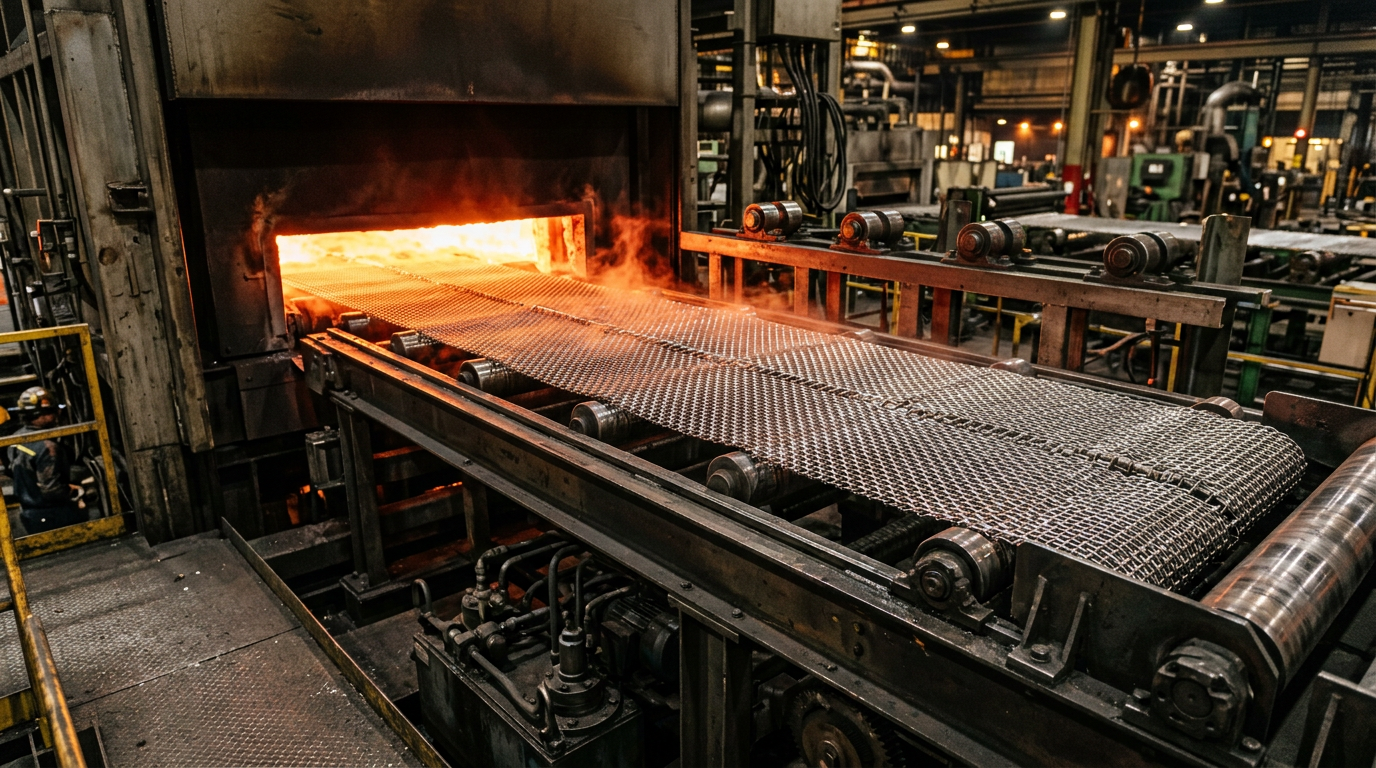
Wire mesh belts for heat treatment are specialized metal conveyor systems designed to transport industrial components through high-temperature environments, ranging from 150°C to over 1,100°C, while maintaining structural integrity and air permeability. These belts are essential in thermal processing because they allow for uniform heat distribution and controlled cooling across the entire surface area of the product.
Key Takeaways for Plant Engineers
- Material Selection is Critical: Selection depends on the specific atmosphere (oxidizing vs. reducing) and peak operating temperatures.
- Permeability Matters: Open mesh designs facilitate air circulation and drainage, ensuring consistent quenching and tempering results.
- Dynamic Loading: Calculating the "hot strength" (creep resistance) of the belt is more important than its ambient temperature tensile strength.
- Thermal Expansion: Modular designs must account for significant belt elongation at temperatures exceeding 600°C.
Engineering Challenges in High-Temperature Environments
Designing a conveyor system for heat treatment is fundamentally different from standard material handling. In thermal processing—such as annealing, sintering, brazing, or hardening—the physical properties of the conveyor belt change dynamically.
The primary challenge is creep, the tendency of a solid material to move slowly or deform permanently under the influence of persistent mechanical stresses. In heat treatment lines, the weight of the parts combined with the tension required to drive the belt can lead to premature failure if the belt is not specified correctly. Furthermore, rapid temperature cycles can lead to thermal fatigue, causing the wire to become brittle and crack.
Types of Wire Mesh Belts for Thermal Processing
The geometry of the mesh dictates its strength, flexibility, and suitability for specific parts.
Balanced Weave Belts
Balanced weave is the most frequently used design in heat treatment. It consists of alternating left-hand and right-hand spiral wires joined by a crimped or straight connecting rod.
- Advantages: It tracks straight, has excellent strength-to-weight ratios, and offers high flexibility.
- Applications: General annealing and tempering of automotive components.
Compound Balanced Weave (CBW)
Also known as Cordweave, this design features a very dense mesh. Multiple spirals and cross rods are nested together to create a smooth, flat surface with very small openings.
- Advantages: Ideal for supporting small parts (like fasteners or bearings) that would fall through standard mesh. It also provides high heat retention.
- Applications: Sintering and powder metallurgy.
Flat Wire Belts
Constructed from flat metal strips connected by round rods.
- Advantages: Extremely high open area (up to 85%), which allows for maximum airflow.
- Applications: Industrial baking, drying, and low-temperature quenching.
Metallurgy: Choosing the Right Alloy
The "wire" in wire mesh is rarely simple carbon steel when heat treatment is involved. Engineers must select alloys based on the chemical atmosphere of the furnace.
- Type 304/316 Stainless Steel: Suitable for temperatures up to 400°C. Often used in food-grade heat treatment or drying.
- Chrome-Nickel Alloys (T-314): Contains higher silicon content to provide better resistance to oxidation and "green rot" in reducing atmospheres. Operates reliably up to 1,000°C.
- Inconel 600/601: High-nickel alloys designed for extreme environments. These offer superior resistance to carburization and nitriding, making them the standard for heavy-duty brazing and sintering lines.
- Nichrome V: Excellent for applications reaching 1,200°C where high creep resistance is mandatory.
Easy Conveyors stocks the conveyor components discussed here — ready to ship across Europe.
Integrating Wire Mesh with Modular Systems
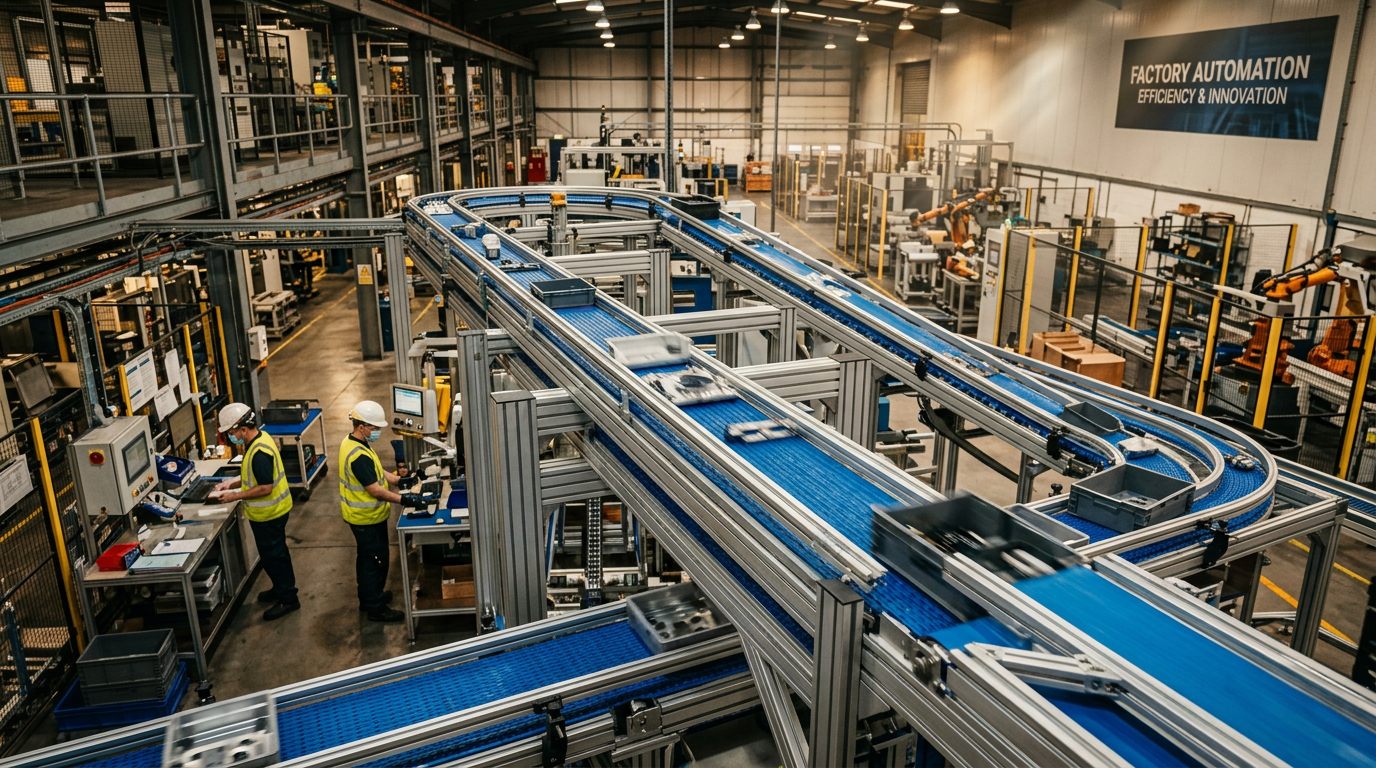
While the furnace section requires specialized metal belts, the surrounding material handling—bringing parts to the furnace and moving them to the next stage—often relies on modular flexibility. Easy Conveyors specializes in these modular transitions, ensuring that the heavy-duty, high-heat sections of a line interface seamlessly with standard aluminum or stainless steel modular conveyors.
The transition zone is where most efficiency is lost. If the wire mesh belt does not transfer parts smoothly to a cooling conveyor or a wash station, part damage or "logjams" can occur. Using modular side frames and standardized drive components allows plant managers to replace sections of the line without a total overhaul.
Operational Best Practices for Longevity
To maximize the ROI of a wire mesh belt in a heat treatment line, maintenance teams should focus on three critical areas:
1. Proper Tensioning
Unlike plastic belts, metal mesh belts expand significantly when heated. A belt that is tight at room temperature may become dangerously slack at 800°C, leading to surging or jumping on the drive sprockets. Automatic weighted take-ups are preferred over screw-type tensioners to compensate for this thermal expansion in real-time.
2. Tracking and Alignment
Metal belts are prone to "walking" to one side of the furnace. If the belt rubs against the furnace refractory or side walls, the edges will fray, leading to total belt failure. It is essential to use flanged rollers or electronic tracking sensors at the discharge end.
3. Atmosphere Control
The furnace atmosphere interacts chemically with the belt. For example, in carbonizing furnaces, the belt can absorb carbon, making it brittle. Maintaining a stable dew point and gas mixture not only ensures the quality of the treated parts but also protects the metallurgical integrity of the belt itself.
Future Trends: Energy Efficiency and Lightweighting
With soaring energy costs in Europe and North America, there is an increasing demand for "low-mass" wire mesh belts. Every kilogram of metal belt that enters the furnace consumes energy to reach operating temperature. Modern manufacturers are developing thinner, high-tensile wires that offer the same load-bearing capacity with 20% less mass. This reduction in "dead load" translates directly into lower kilowatt-hour consumption per ton of processed product.
Additionally, the integration of IoT sensors to monitor belt stretch and vibration is becoming standard. By predicting a belt break before it happens, plant managers can schedule replacements during planned downtime, avoiding the catastrophic costs of a furnace cooling down unexpectedly.
Conclusion
Wire mesh belts are the unsung heroes of the thermal processing industry. From the precision required in aerospace brazing to the high-volume demands of automotive fastener hardening, these belts must withstand thermal shocks that would melt or warp standard conveying equipment. By choosing the correct weave, alloy, and tensioning system—and ensuring a seamless transition to modular factory automation—engineers can build heat treatment lines that are both reliable and energy-efficient.
Frequently Asked Questions
What is the best material for a belt operating at 1,000°C?
For temperatures above 600°C, alloys like Type 314 stainless steel or Inconel 601 are required due to their oxidation resistance and high creep strength.
Which mesh weave is best for general heat treatment?
Balanced weave belts are the most common due to their straight-tracking properties and ability to handle high tension without distorting.
How do you handle belt expansion in a furnace?
Metal undergoes significant thermal expansion. For example, a 30-meter belt can expand by several centimeters when heated to 800°C; weighted take-up units are used to maintain constant tension.
What is 'creep' in the context of conveyor belts?
Creep is the slow, permanent deformation of the belt material under stress at high temperatures. It eventually leads to belt thinning and breakage.
Can wire mesh belts be used in quenching tanks?
Yes, many high-speed quenching lines use wire mesh belts to allow oil or water to drain rapidly from parts as they emerge from the furnace.