VFD Tuning and Soft-Start Strategies for Modular Conveyors
Master VFD tuning for modular conveyors. Learn S-curve acceleration, torque boost settings, and soft-start strategies to extend belt life and reduce mechanical stress.
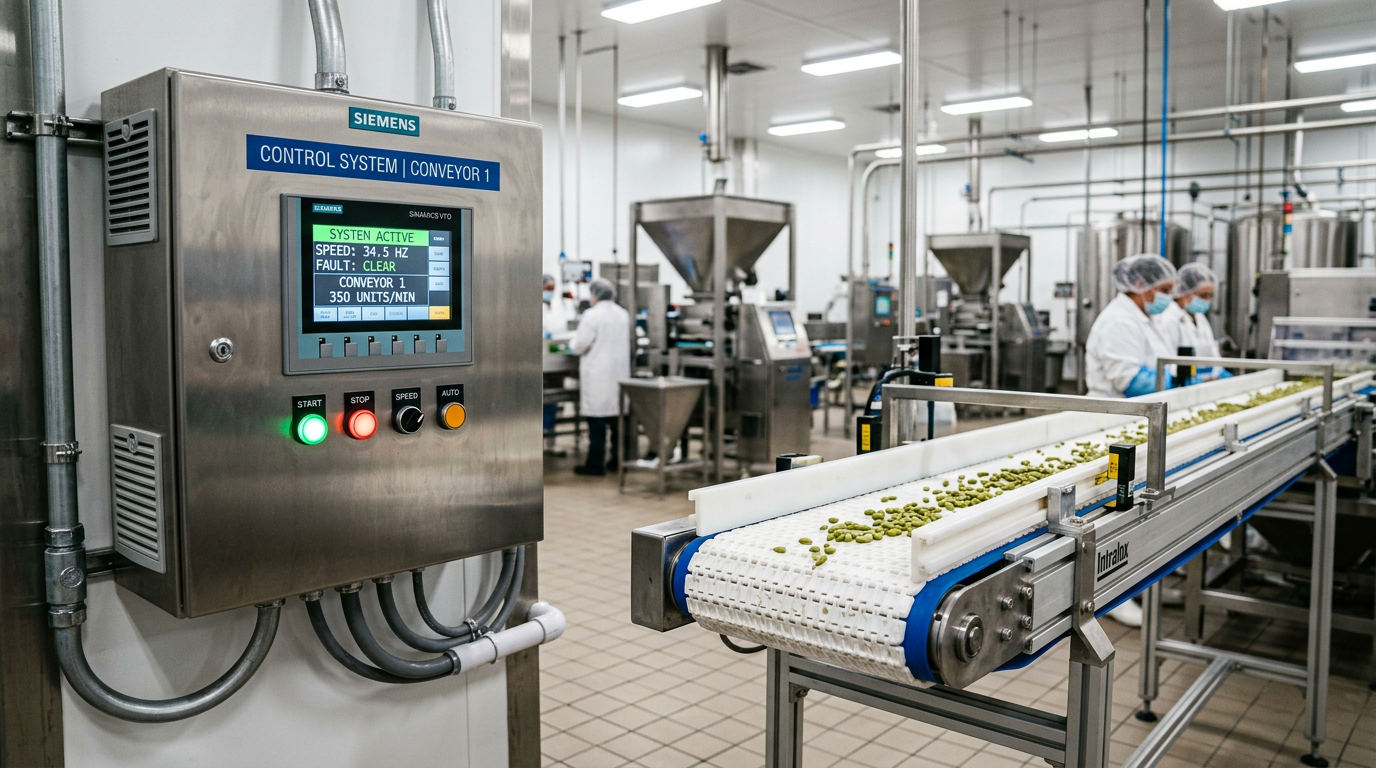
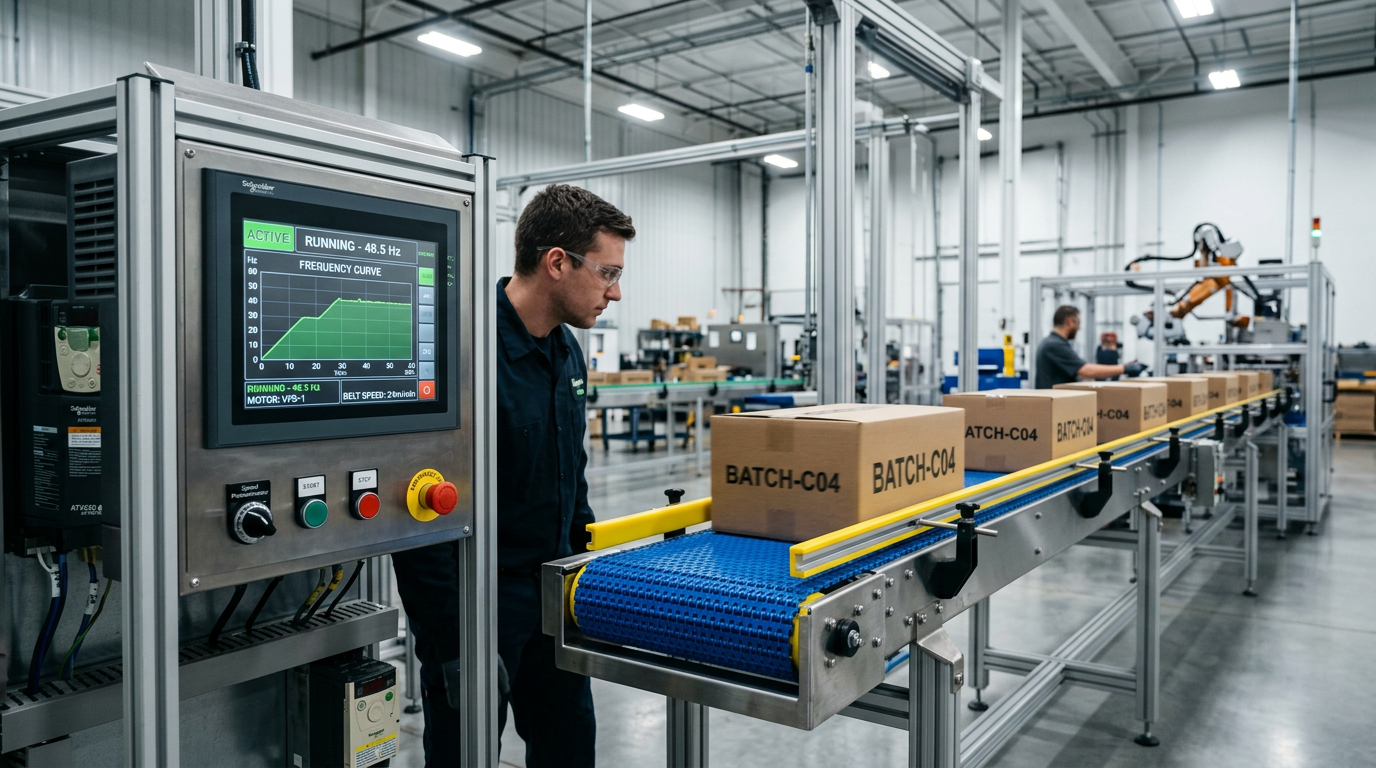
To achieve optimal performance in modular conveyor systems, VFD tuning should prioritize a starting torque of at least 150% of the rated motor torque while utilizing an S-curve acceleration profile with a ramp time of 1.5 to 3.0 seconds to prevent belt surging and mechanical fatigue. Proper commissioning of Variable Frequency Drives (VFDs) ensures that the transition from static friction to kinetic movement is managed without exceeding the 5% allowable stretch limit of modular plastic belts.
The Critical Role of VFDs in Modular Conveyor Longevity
Modular conveyors, characterized by their sprocket-driven plastic link belts, face unique mechanical stresses that differ from traditional friction-driven rubber belts. Because the connection between the belt and the drive is positive (mechanical engagement), abrupt starts do not result in belt slip; instead, they result in high instantaneous shock loads on the sprocket teeth and the hinge pins.
Implementing advanced VFD tuning is not merely about speed control; it is about protecting the mechanical integrity of the system. Without a soft-start strategy, the "catenary sag"—the loose section of the belt underneath the conveyor—can whip violently, leading to mistracking or catastrophic pin failure.
Understanding Soft-Start Strategies: Linear vs. S-Curve
The most common mistake in automation commissioning is relying on a standard linear acceleration ramp. While a linear ramp is better than an "across-the-line" start, it does not account for the "jerk" (the rate of change of acceleration) at the beginning and end of the ramp.
The Superiority of the S-Curve
For modular systems, an S-Curve acceleration profile is essential. The S-curve softens the transition at the start (to overcome static friction gradually) and at the end (to prevent product tipping when reaching full speed).
- Initial Softening: Reduces the initial "snap" that causes sprocket wear.
- Final Softening: Prevents inertia-based product sliding, crucial for high-speed bottling or packaging lines.
Comparing Control Methods for Modular Belts
| Feature | Volts/Hertz (V/f) | Open-Loop Vector | Closed-Loop Vector |
|---|---|---|---|
| Torque at 0 Hz | Low (Poor) | High (Excellent) | Maximum (Precise) |
| Speed Regulation | ±2-3% | ±0.5% | ±0.01% |
| Complexity | Low | Medium | High (Requires Encoder) |
| Modular Use Case | Simple transport | Incline/Heavy loads | Indexing/Positioning |
| Efficiency Class | IE2/IE3 | IE3/IE4 | IE4/IE5 |
For the majority of applications, Open-Loop Vector Control is the sweet spot. It provides enough "starting grunt" to move a fully loaded modular belt from a standstill without the cost and wiring complexity of a motor encoder.
Key Tuning Parameters for Conveyor Optimization
Successfully tuning a VFD for a modular system requires more than just setting the "Acceleration Time." Engineers must dive into several Tier-2 parameters.
1. Torque Boost and Current Limits
Modular belts often have a high breakaway torque, especially after a weekend shutdown when the plastic hinges may have "set" or if the ambient temperature is low. Setting a manual torque boost (typically 2-5% of voltage) helps the motor overcome this initial resistance. However, the current limit should be capped at 150% of the motor’s nameplate FLA (Full Load Amps) to prevent thermal damage during a jam.
2. DC Injection Braking vs. Dynamic Braking
When a conveyor stops, the belt's inertia can cause it to over-travel.
- DC Injection Braking: Good for holding a belt in place at a stop, but can cause motor heating if used excessively.
- Dynamic Braking: Uses a braking resistor to dissipate heat. This is preferred for high-cycle "stop-and-go" modular systems where the belt must stop precisely within ±5mm.
3. Carrier Frequency (Switching Frequency)
High carrier frequencies (above 8 kHz) reduce audible motor noise but increase electrical noise (EMI) and heat in the VFD. For industrial environments, a carrier frequency of 4 kHz to 6 kHz is typically the optimal balance for long-term reliability of the motor insulation.
Easy Conveyors stocks the industrial automation discussed here — ready to ship across Europe.
Integrating Engineering Expertise
When designing complex layouts involving merges, diverges, or heavy-duty inclines, the synergy between the drive settings and the mechanical frame is paramount. Easy Conveyors provides modular systems designed specifically for high-efficiency drive integration, ensuring that the sprocket geometry and belt tensile strength are matched to the torque curves provided by modern VFDs. Their focus on reducing friction in the wear strips allows for lower torque settings, which directly extends the life of the motor and the VFD components.
Advanced Strategies: Load Sharing and Multi-Drive Sync
In long-distance modular conveyors, it is common to use a "head and tail" drive configuration or multiple drives on a single long run. Tuning these requires a Master-Slave (Leader-Follower) setup.
The Master drive usually operates in speed control mode, while the Slave drive operates in Torque Control or utilizes a "Droop" function. Droop control allows the slave motor to slow down slightly if it senses it is pulling more than its fair share of the load, preventing the two drives from "fighting" each other and stretching the belt.
Protecting the System: Warning Signs of Poor Tuning
If the VFD is not tuned correctly, the hardware will signal the failure before the software does:
- Sprocket "Jumping": Often caused by an acceleration ramp that is too aggressive, causing the belt to lift off the drive teeth.
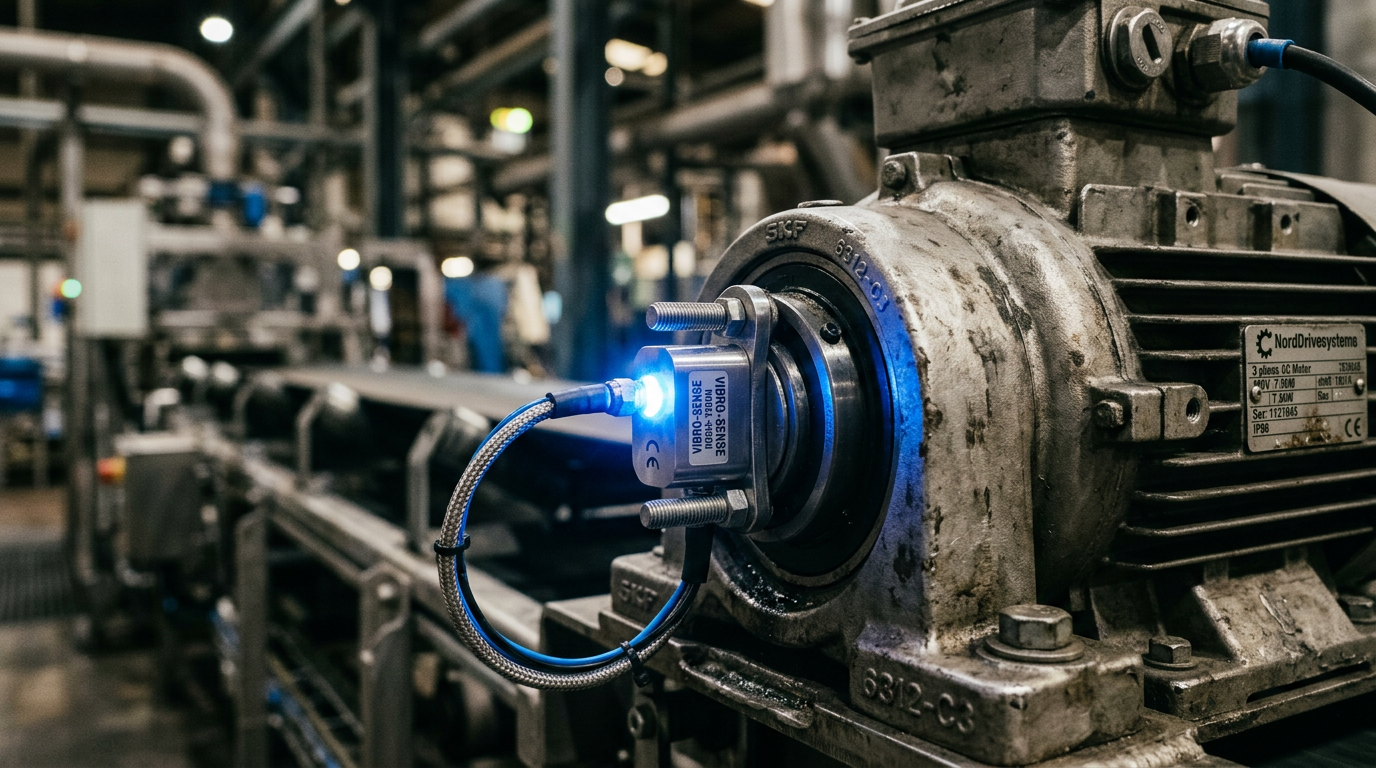
- Motor Hum without Movement: Indicates insufficient starting torque or incorrect V/f pattern settings.
- Overvoltage Trips on Stop: Usually means the deceleration ramp is too short for the load's inertia, requiring a longer ramp or a braking resistor.
For engineers looking to further optimize their systems, exploring topics like "VFD soft-start tuning" and "drum motor selection" can provide additional insights into the nuances of modern drive technology. Correct "hygienic wash-down design" should also be considered when mounting VFDs, ensuring that enclosures match the IP66 or IP69K requirements of the conveyor environment.
Conclusion
VFD tuning transform a modular conveyor from a simple transport tool into a precision machine. By implementing S-curve profiles, selecting Open-Loop Vector control, and carefully managing torque boost parameters, facilities can realize a significant reduction in TCO (Total Cost of Ownership) through decreased energy consumption and extended mechanical component life. Always perform an "Auto-Tune" (either static or dynamic) upon initial installation to ensure the VFD accurately models the motor’s internal resistance and inductance for maximum efficiency.
Frequently Asked Questions
Why is an S-curve better than a linear ramp for modular belts?
The S-curve adds a second-order polynomial transition to the beginning and end of the speed ramp. This prevents the 'jerk' that causes modular belt pins to snap and prevents lightweight products from tipping due to sudden inertia changes.
What is the best motor control mode for modular conveyors?
Open-loop vector control (sensorless vector) is ideal. It provides high torque at low speeds to overcome the static friction of a loaded modular belt without requiring the complexity of an encoder.
What is the recommended acceleration time for a standard modular conveyor?
For most packaging and transport lines, a ramp rate of 1.5 to 3.0 seconds is standard. Heavier loads or high-speed bottling lines may require 5.0 seconds to maintain product stability.
What should I do if my motor hums but won't start the belt?
Check your Torque Boost (Ir compensation) and the Start Frequency. Increasing the starting torque or decreasing the start frequency can help the motor ‘bite’ through the static friction.
How do I synchronize two VFDs on the same long conveyor?
Use 'Droop Control' or set the Slave drive to 'Torque Follower' mode. This ensures both motors share the load equally rather than one pulling the other, which prevents uneven belt wear.