VFD Tuning and Soft-Start Strategies for Modular Conveyors
Master VFD tuning for modular conveyors. Learn soft-start strategies, S-curve optimization, and IE3 motor pairing to reduce mechanical wear and energy use.
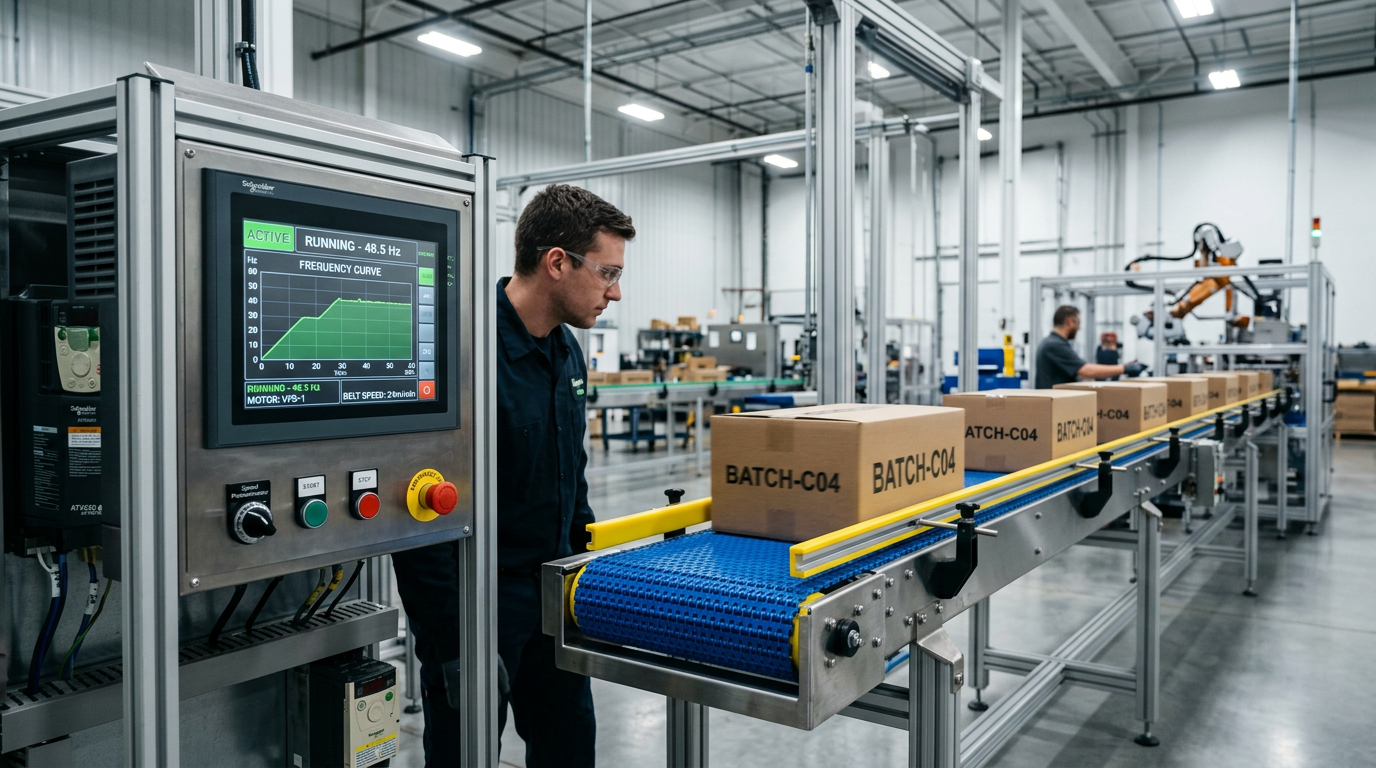
Optimizing conveyor performance requires a delicate balance between starting torque and mechanical stress, where a Variable Frequency Drive (VFD) typically reduces mechanical shock by 70-80% compared to across-the-line starting. Effective VFD tuning for modular conveyors involves setting acceleration ramps between 1.5 and 3.0 seconds to prevent belt surging while utilizing S-curve profiles to eliminate the "jerk" at the beginning and end of the speed transition.
The Physics of Soft-Starting Modular Belts
Modular plastic belts and slat conveyors have a unique mechanical characteristic: they are drive-positive but have a high degree of "play" or catenary sag. When a motor starts abruptly (Direct-On-Line or DOL), the instantaneous torque causes a shockwave to travel through the belt. This leads to pin wear, sprocket jumping, and product tipping.
By implementing VFD-based soft-start strategies, we transition from a linear voltage/frequency jump to a controlled ramp. The primary goal is to overcome static friction (stiction) without exceeding the tensile strength limits of the modular links.
Key Parameter Settings for Conveyor VFDs
The following table outlines the standard starting parameters for a 0.75kW to 2.2kW motor driving a standard modular conveyor:
| Parameter | Standard Value | Industrial Impact |
|---|---|---|
| Acceleration Time | 2.0 - 5.0 Seconds | Reduces peak belt tension by up to 50% |
| Deceleration Time | 1.0 - 3.0 Seconds | Prevents product pile-ups at transfers |
| S-Curve (Jerk Limit) | 20% - 40% | Smoothes transitions, reducing mechanical vibration |
| V/f Pattern | Squared/Custom | Optimized for constant torque applications |
| Boost Torque | 2% - 5% | Overcomes initial friction in cold environments |
Advanced Tuning: V/f Control vs. Sensorless Vector
While simple V/f (Voltage-to-Frequency) control is sufficient for basic transport, high-precision modular systems often require Sensorless Vector Control (SVC). SVC allows the drive to calculate the motor's rotor position without an encoder, providing full torque even at near-zero speeds.
- V/f Control: Best for simple transport where speed regulation isn't critical. It’s cost-effective and easy to set up.
- Sensorless Vector: Crucial for conveyors with varying loads (e.g., a packaging line that transitions from empty to full). It maintains a constant belt speed regardless of the weight on the modules.
When designing complex layouts with tight transfers, partnering with a specialist like Easy Conveyors ensures that the mechanical drive components are paired correctly with the VFD's electrical capabilities for a seamless European-standard installation.
Implementing S-Curves and Jerk Limitation
Linear acceleration is a mathematical ideal, but in the physical world, the "snap" at the start of a linear ramp is what causes modular belt pins to fatigue. Using an S-curve profile adds a quadratic curve to the beginning and end of the acceleration phase.
- Phase 1 (Start of S): The drive slowly increases frequency to take the "slack" out of the modular belt.
- Phase 2 (Linear): The drive moves into the main acceleration phase at the programmed rate.
- Phase 3 (End of S): The drive gently levels off to the target frequency, preventing the belt from "surging" forward due to stored elastic energy.
Easy Conveyors stocks the industrial automation discussed here — ready to ship across Europe.
Energy Efficiency and IE3 Motor Integration
Modern modular conveyors are increasingly specified with IE3 premium efficiency motors. Tuning a VFD for an IE3 motor requires attention to the motor's lower internal resistance. You must perform an "Auto-tune" (stationary or rotating) during commissioning. This allows the VFD to map the motor’s specific inductance and resistance, ensuring that the VFD soft-start tuning doesn't result in over-current faults or excessive heat dissipation.
Proper energy-saving functions, such as "Flux Optimization," can be enabled on the VFD. This reduces the voltage when the conveyor is running at a constant speed with a light load, frequently cutting energy consumption by an additional 5-10% beyond the savings of the VFD itself.
Troubleshooting Common VFD Start-Up Issues
Overcurrent During Acceleration (OC)
If the drive trips on overcurrent during the start, the acceleration ramp is likely too short, or the "Torque Boost" is set too high. Incremental adjustments to the ramp—adding 0.5 seconds at a time—usually resolve the issue.
Belt Surging or "Hunting"
If the conveyor speed appears to oscillate, the Gain (P-gain) of the speed loop is likely too high. This is common in sensorless vector modes. Reducing the proportional gain or increasing the integral time will stabilize the belt speed.
Heat Build-up at Low Speeds
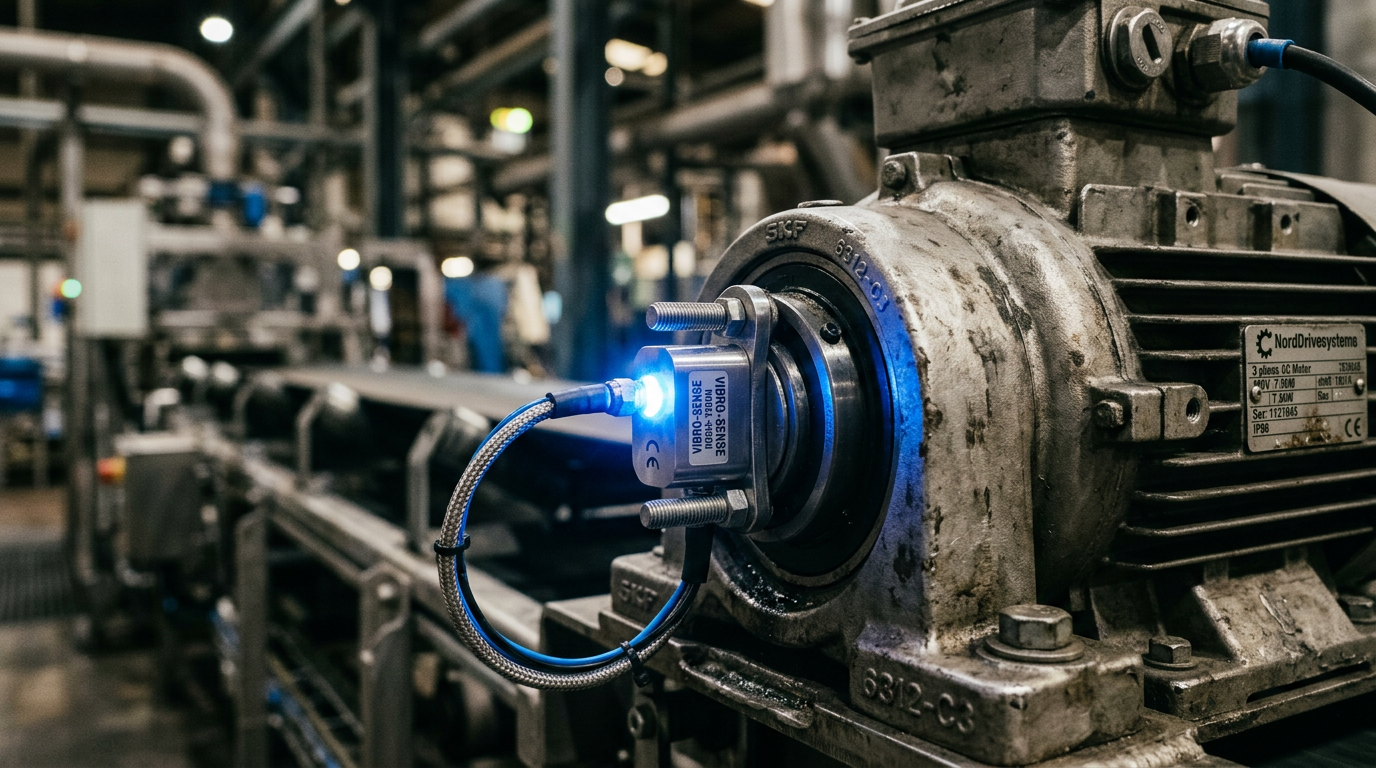
Modular conveyors running at very low speeds (below 15Hz) for long periods may suffer from motor overheating, as the internal fan isn't spinning fast enough. In these cases, an external cooling fan or a drum motor selection rated for low-frequency operation is required to maintain industrial reliability.
Communication and PLC Integration
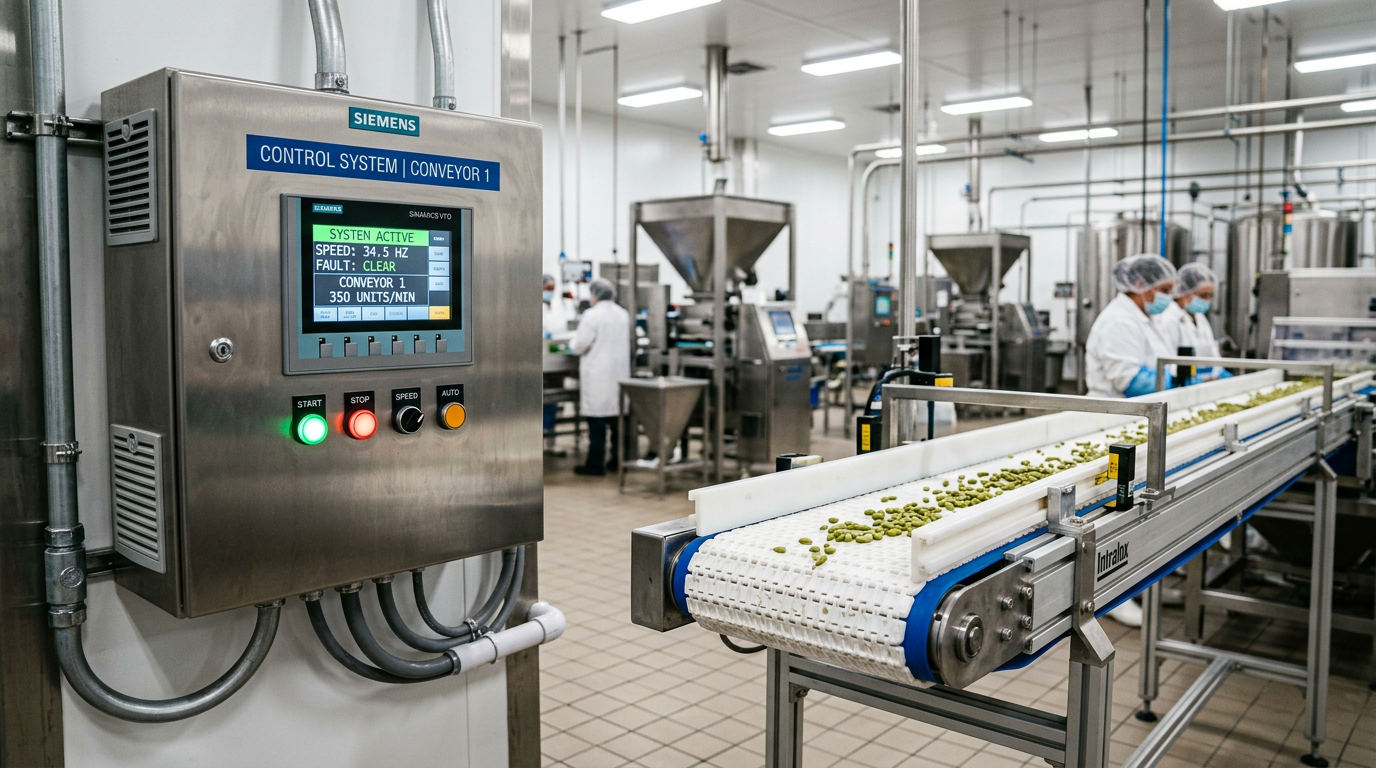
In modern Industry 4.0 environments, VFDs are rarely standalone. They communicate via Profinet, EtherCAT, or EtherNet/IP. Tuning now involves setting "Soft-Stop" commands via the PLC to ensure that if an E-stop is triggered, the conveyor decelerates in a controlled manner (where safety regulations allow) to prevent product damage. Integrating VFD soft-start tuning with a central control system allows for dynamic ramp adjustments based on product type—for example, a slower ramp for glass bottles and a faster ramp for corrugated boxes.
By following these strategies, engineers can extend the life of their modular conveyor systems, reduce downtime caused by belt breakage, and achieve the precise material flow required for high-speed automation.
Step-by-step
- 1
Perform Motor Auto-tune
Enter motor nameplate data (kW, Amps, RPM) into the VFD and run a stationary auto-tune to map winding resistance.
- 2
Set Acceleration Ramp
Configure a 2.0-second acceleration time to mitigate the initial mechanical tension on the modular belt pins.
- 3
Enable S-Curve Profiling
Set the jerk limitation or S-curve parameter to 30% to smooth the transition into and out of full speed.
- 4
Adjust Torque Boost
Increase the starting torque boost by 1% increments if the conveyor fails to break static friction when fully loaded.
- 5
Verify Deceleration Linkage
Set the deceleration ramp to 1.5 seconds to prevent product sliding during a controlled stop.
Frequently Asked Questions
Why is an S-curve better than a linear ramp for modular belts?
An S-curve adds rounded corners to the acceleration ramp, preventing the 'jerk' that causes modular belt pins to snap or product to tip during start/stop.
What is the recommended acceleration time for a standard modular conveyor?
For most modular plastic belts, a ramp between 1.5 and 3.0 seconds is ideal to overcome friction without overstressing the belt material.
How does torque boost help conveyor start-up?
Torque boost provides extra voltage at low frequencies to overcome static friction. It should be set between 2% and 5% to avoid motor overheating.
Can I run my modular conveyor at 10Hz indefinitely?
Standard motors lose cooling efficiency below 20Hz. If running lower, you must use an independent blower fan or an inverter-rated motor.
Why is VFD auto-tuning necessary for IE3 motors?
Auto-tuning allows the VFD to measure the specific electrical characteristics of the motor, which is critical for the lower resistance found in IE3/IE4 motors.