Tool-less Belt Change Designs that Boost OEE on Modular Conveyors
Tool-less belt change designs can reduce conveyor maintenance downtime by up to 80%. Learn how quick-release mechanisms and tip-up tails maximize OEE and hygiene.
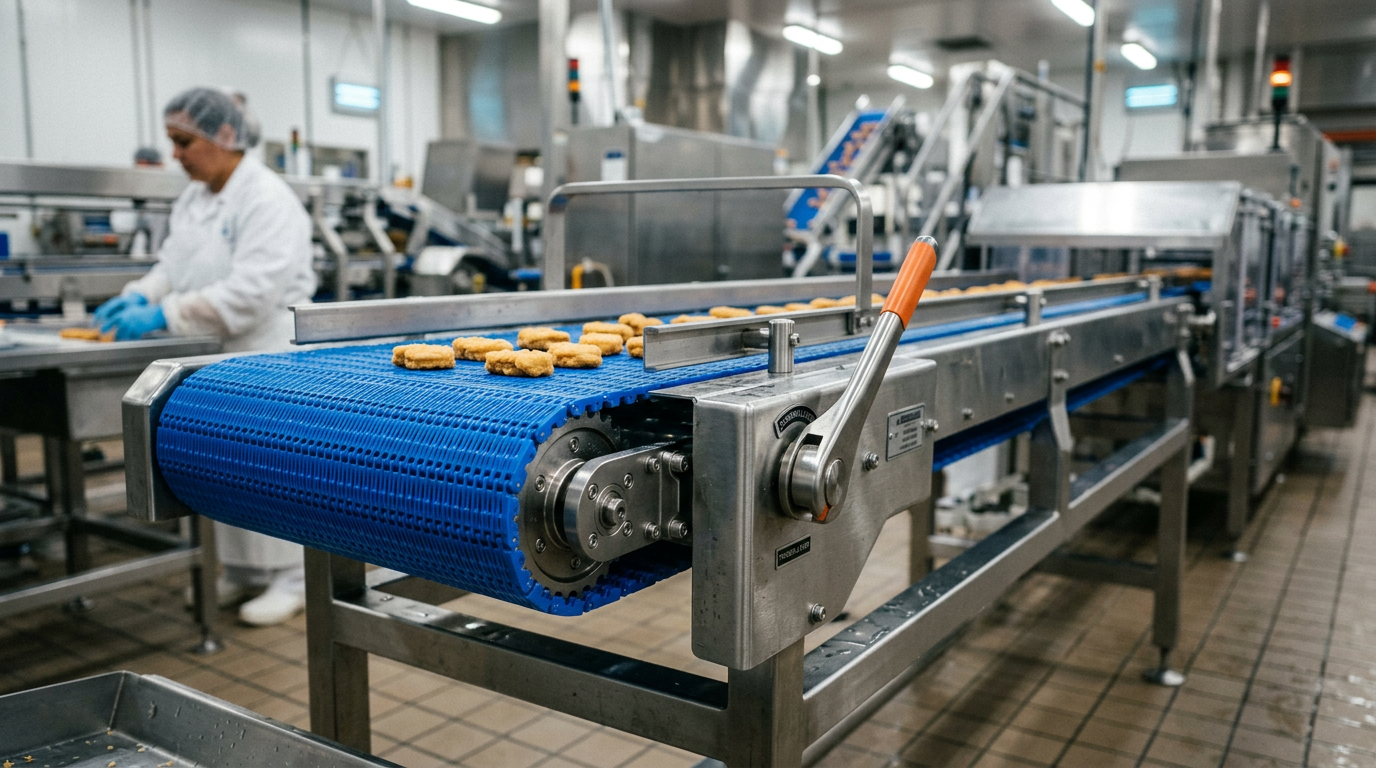
Tool-less belt change designs can reduce conveyor maintenance downtime by up to 80%, typically allowing a full modular belt replacement in under 15 minutes compared to the 60-90 minutes required for traditional bolted assemblies. These systems utilize quick-release tensioners, lift-up rollers, and tool-free pin extraction to maximize Overall Equipment Effectiveness (OEE) by minimizing the "Availability" loss associated with sanitation and mechanical repair.
The Relationship Between Maintenance Speed and OEE
Overall Equipment Effectiveness (OEE) is calculated by multiplying Availability, Performance, and Quality. In high-volume environments like food processing or e-commerce fulfillment, the "Availability" metric is most frequently compromised by planned maintenance and unplanned belt failures. Traditional conveyor architectures require mechanical tools (wrenches, screwdrivers, or specialized pullers) to slacken the belt, remove guards, and extract hinge pins.
By implementing tool-less belt change designs, facilities shift the maintenance paradigm. Instead of a specialized technician performing a 90-minute changeover, a line operator can often perform the task in a fraction of the time. This "Total Productive Maintenance" (TPM) approach directly recovers lost production time, which, in a 24/7 facility, can equate to thousands of Euros in reclaimed throughput per year.
Core Engineering Principles of Tool-less Conveyors
To achieve a tool-free environment, several modular conveyor components must be redesigned from the ground up.
1. Quick-Release Tensioners
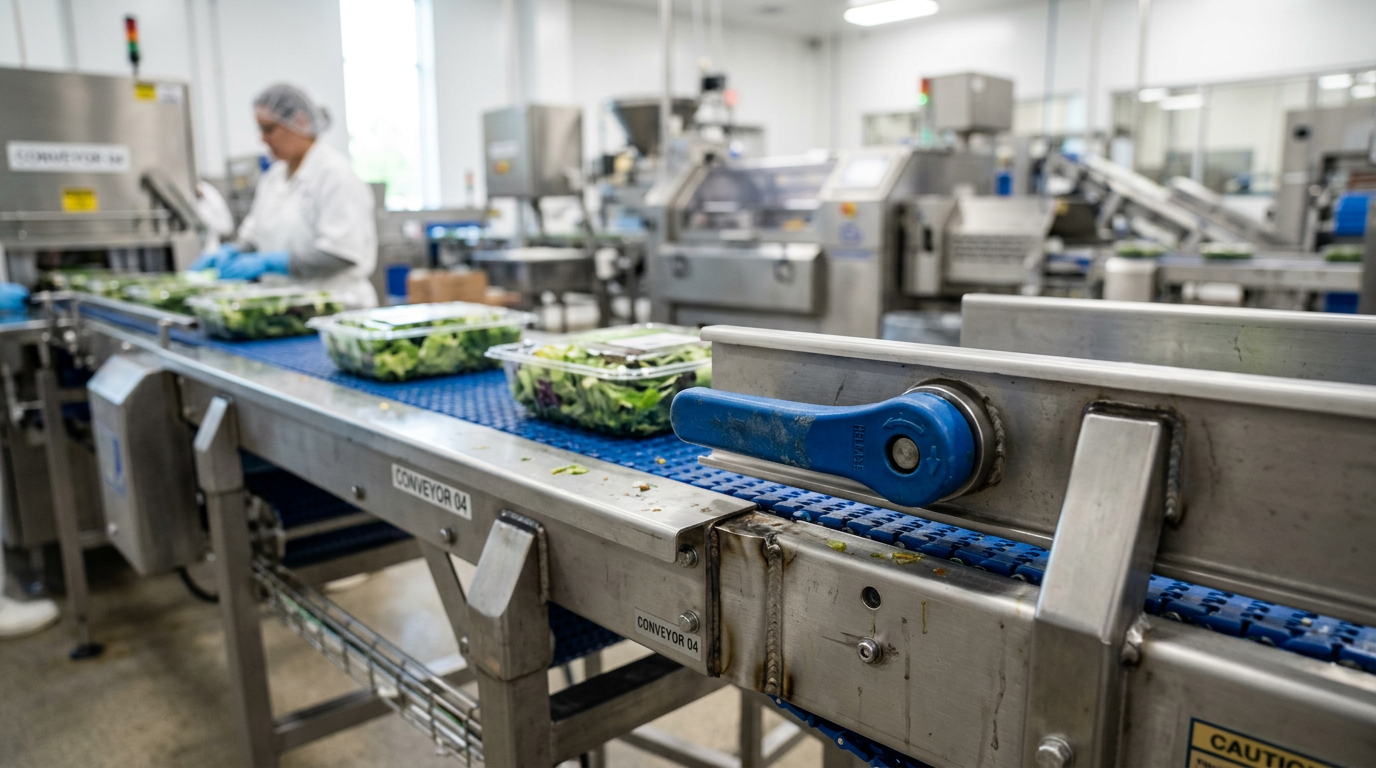
Standard conveyors use threaded take-up units to maintain belt tension. Tool-less designs replace these with cam-lever or spring-loaded tensioning systems. By flipping a single lever, the operator immediately creates enough slack to lift the belt or remove a module. According to VDMA standards for machinery safety and efficiency, these systems must also ensure that the belt remains tracked correctly once re-tensioned.
2. Tip-up End Tails and Lift-up Rollers
Sanitation is the primary driver for belt removal in food-grade environments. Modern modular systems often feature "tip-up" tails where the entire drive or idler end can be pivoted upward. This provides immediate access to the internal frame and the underside of the belt without removing the belt from the sprockets. When combined with tool-less wear strips, the entire conveyor "skeleton" can be exposed for high-pressure washdown in minutes.
3. Tool-free Pin Extraction
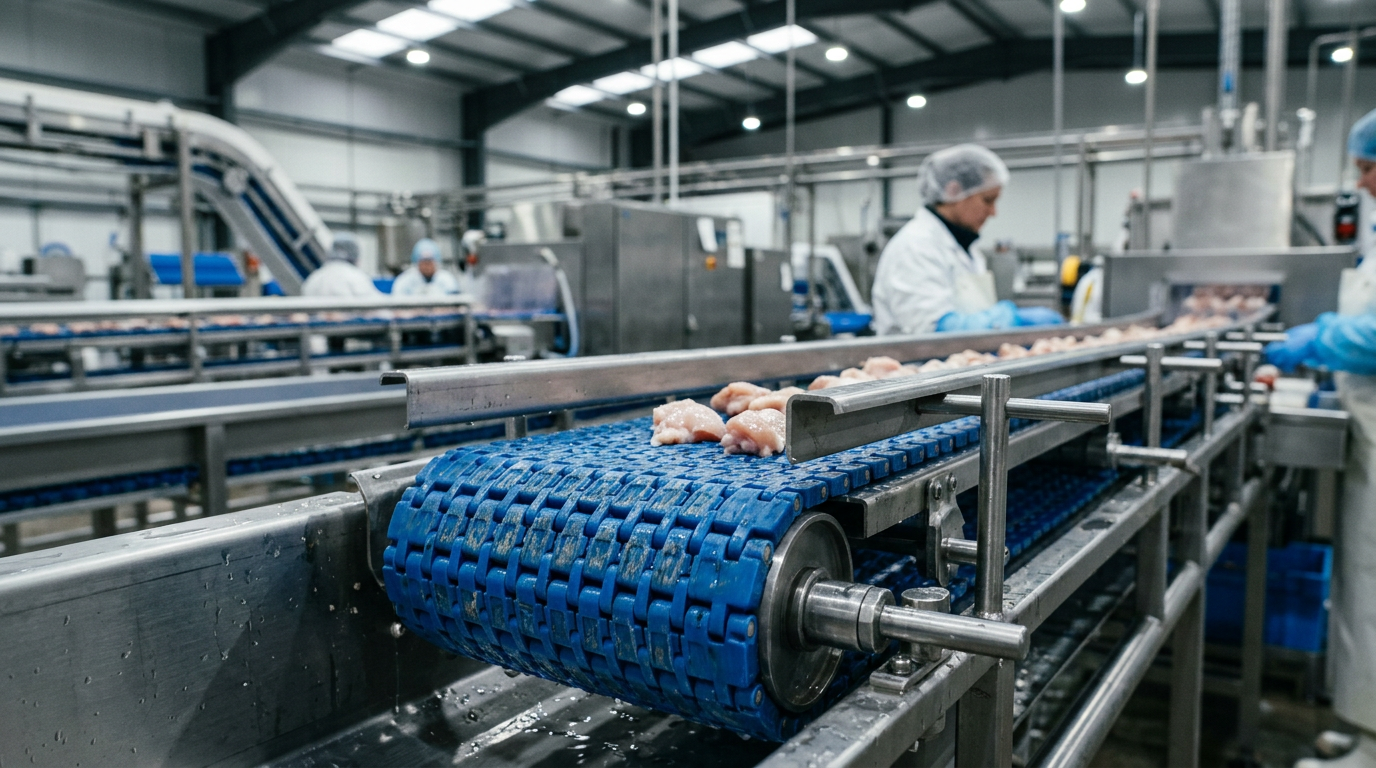
The weakest link in modular belt maintenance is often the hinge pin. Standard pins require a punch and hammer to remove. Tool-less modules utilize "active" locking mechanisms or "headed" pins that can be released by hand or with a simple plastic thumb-tool. This eliminates the risk of metal-on-metal contamination in food environments, a critical factor for EHEDG compliance.
Comparison: Traditional vs. Tool-less Modular Designs
| Feature | Traditional Modular Conveyor | Tool-less Modular Design |
|---|---|---|
| Average Belt Change Time | 60–120 Minutes | 10–20 Minutes |
| Tool Requirement | Full toolkit (Wrenches, Hammers) | None or Hand-operated Lever |
| Hygiene Rating | Standard (Crevices near bolts) | High (Flush surfaces, EHEDG compliant) |
| Skill Level Required | Skilled Maintenance Technician | Trained Line Operator |
| Impact on OEE | High Downtime Penalty | Minimal Availability Loss |
| Cost Tier | Standard | Premium (15-25% higher initial cost) |
Easy Conveyors stocks the modular systems discussed here — ready to ship across Europe.
Strategic Implementation in High-Growth Sectors
Food and Beverage (Hygiene Focus)
In the food industry, "clean-in-place" (CIP) is rarely sufficient for high-risk proteins or dairy. The ability to completely remove a belt without tools allows for "clean-out-of-place" (COP) protocols where belts are submerged in sanitizing tanks. European specialist Easy Conveyors provides modular systems that integrate these quick-release features, ensuring that food safety does not come at the expense of OEE.
E-commerce and Logistics (Repair Focus)
In a distribution center, a snagged belt can halt a sorter that processes 10,000 parcels per hour. Tool-less designs allow floor supervisors to replace a damaged 1-meter section of a modular belt immediately, rather than waiting for a maintenance team to arrive with a tool cart. This falls under the "Performance" aspect of OEE, ensuring the line returns to rated speed faster.
Maintenance and Design Trade-offs
While the benefits to OEE are clear, engineers must consider certain trade-offs:
- Initial Investment: Tool-less components, such as cam-actuated tensioners, are more complex to manufacture than a simple threaded rod.
- Component Wear: Spring-loaded systems must be checked regularly to ensure the spring rate hasn't degraded, which could lead to belt slippage.
- Weight Limits: Some tool-less quick-release mechanisms have lower load ratings than their bolted counterparts. For heavy-duty automotive pallet handling, traditional fasteners may still be required to meet ISO 12100 safety factors for mechanical strength.
Enhancing Reliability through Modular Components
Integrating tool-less belts is only one part of the OEE equation. To maximize the lifespan of these "easy-change" systems, engineers should also focus on hygienic wash-down design to prevent debris buildup that could jam tool-free levers. Additionally, selecting the correct drum motor can further reduce maintenance, as these sealed units eliminate the need for chain and sprocket lubrication, removing another set of tools from the floor.
When sizing these systems, consider the "Mean Time to Repair" (MTTR). If your current MTTR for a belt failure is over 60 minutes, the ROI on a tool-less upgrade is typically achieved within the first 12 months of operation through saved labor and recovered production margin.
Future Trends: Smart Tensioning
The next evolution of tool-less design involves "smart" tensioners. These systems use sensors to monitor belt stretch and automatically adjust tension via pneumatic or electric actuators. This move toward industrial automation means that "tool-less" eventually becomes "human-less," where the conveyor self-corrects to maintain optimal OEE without any manual intervention. For now, the transition to manual tool-free designs remains the most cost-effective way for most manufacturers to boost their availability scores.
Frequently Asked Questions
How much time can tool-less designs save during a belt change?
On average, tool-less designs reduce belt changeover time from 60-90 minutes to under 15 minutes, depending on conveyor length.
Are tool-less conveyors suitable for heavy-duty industrial loads?
Most tool-less systems are designed for light-to-medium duty applications. For extreme heavy-duty loads (e.g., >2000kg), traditional bolted tensioners are often preferred for mechanical rigidity.
Do tool-less designs improve food safety?
Yes, tool-less designs are highly recommended by EHEDG as they eliminate threaded fasteners where bacteria can grow and allow for better access during washdown.
What is the maintenance requirement for tool-free mechanisms?
While the belt removal is tool-free, periodic inspections of springs, cam levers, and wear strips should be performed every 3-6 months.
Can I retrofit my existing modular conveyor to be tool-less?
Yes, many modular frames can be retrofitted with quick-release tensioner kits and tip-up tail assemblies without replacing the entire conveyor.