The Impact of Tool-less Belt Change Designs on Modular Conveyor OEE
Learn how tool-less belt change designs can reduce MTTR by 80% and boost OEE by up to 7% on modular conveyor systems through quick-release and captive pin technology.
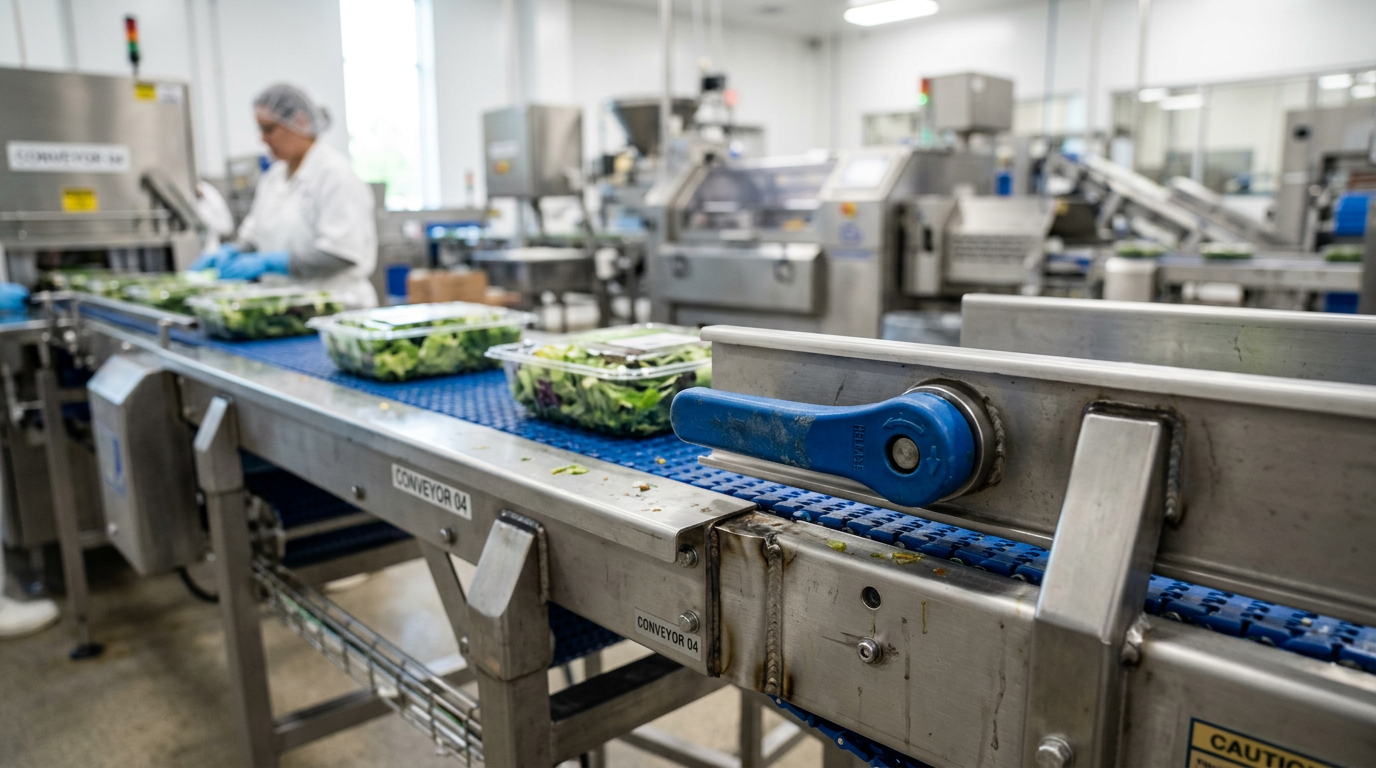
Implementing tool-less belt change designs on modular conveyors can reduce Mean Time to Repair (MTTR) by up to 80% compared to traditional fastener-reliant systems, directly contributing to an Overall Equipment Effectiveness (OEE) increase of 3% to 7% in high-volume production environments. By utilizing quick-release tensioners, captive hinge pins, and swing-out frame supports, operators can perform sanitation or belt replacements in under 10 minutes without specialized mechanical training or external tools.
The Role of Tool-less Design in Modern OEE Strategies
Overall Equipment Effectiveness (OEE) is the gold standard for measuring manufacturing productivity, calculated by multiplying Availability, Performance, and Quality. In industries like food processing, pharmaceuticals, and e-commerce, the "Availability" component is frequently compromised by planned and unplanned downtime. Traditional modular conveyors often require wrenches, screwdrivers, or specialized drift punches to remove hinge pins or adjust tensioning units.
Tool-less designs eliminate these bottlenecks. According to ISO 14159:2002 safety standards for the design of machinery, reducing the complexity of maintenance tasks also minimizes the risk of human error, such as over-tensioning a belt or losing fasteners in a food production stream. By integrating features like "lift-and-clean" rails and snap-in modules, manufacturers can transform a multi-hour maintenance overhaul into a routine task performed during a standard shift change.
Engineering Features of Tool-less Modular Conveyors
The transition to a tool-less architecture involves several key mechanical innovations that work in tandem to simplify belt handling.
1. Quick-Release Tensioning Systems
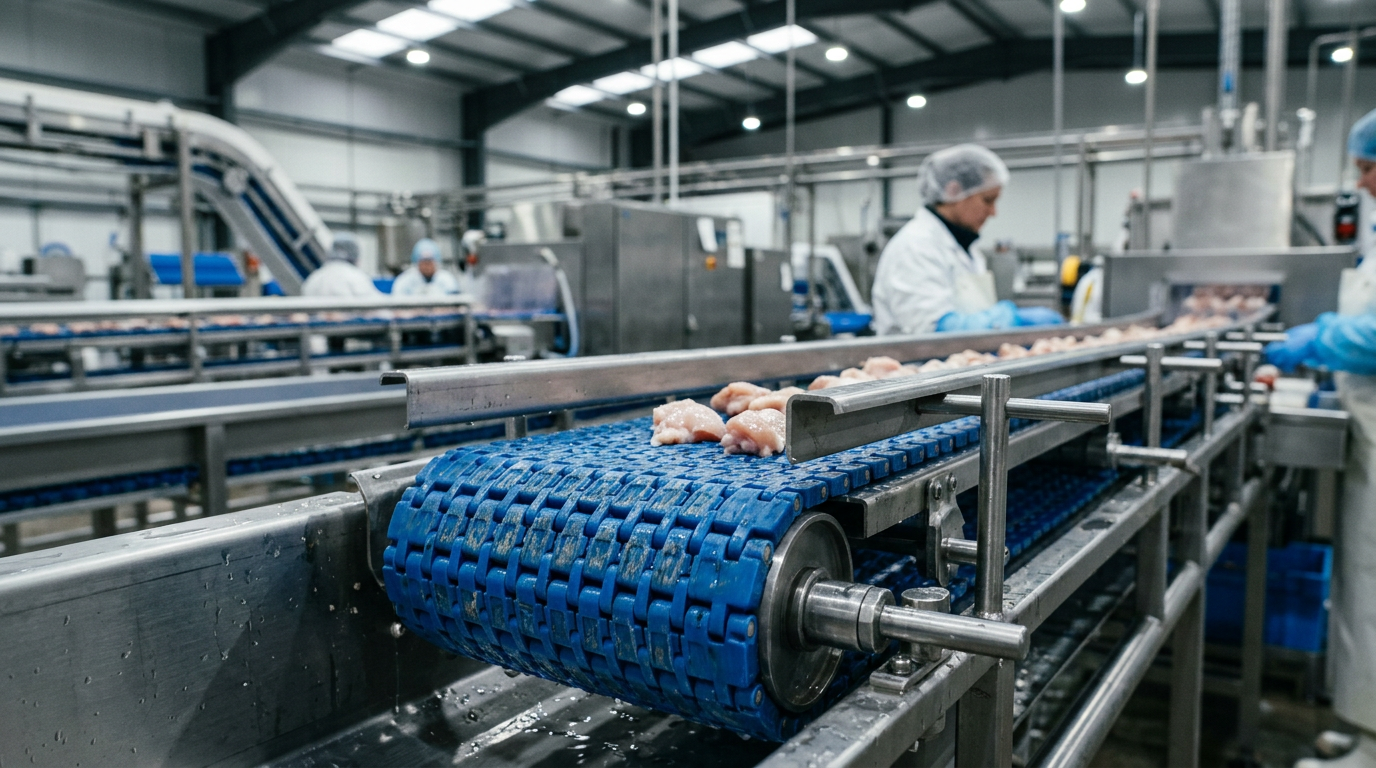
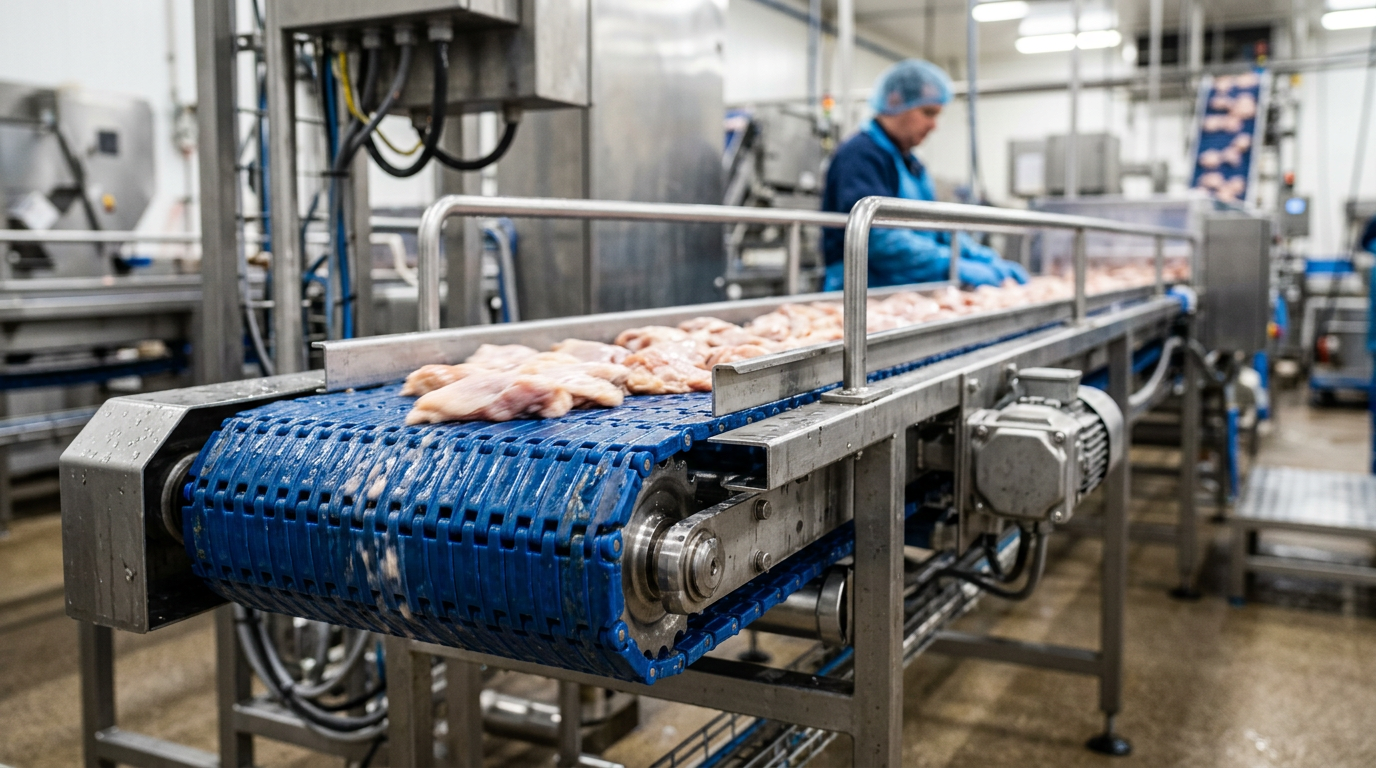
Standard conveyors often use threaded rods to move the idle end pulley. A tool-less design replaces these with cam-levers or pneumatic cylinders. A single flip of a lever collapses the center distance of the conveyor, providing immediate slack in the modular belt. This allows for rapid inspection of the wear strips or deep cleaning of the frame.
2. Captive Hinge Pin Technology
One of the primary failure points during belt changes is the loss of small hinge pins. Advanced modular belts now feature "plug-and-play" pins that click into place or are retained by the module geometry itself. Intralox and other industry leaders have pioneered designs where pins can be pushed out with a finger or a simple plastic peg, ensuring that no metal-to-metal contact occurs, which is critical for food safety.
3. Tip-up Tails and Swing-out Supports
To remove a belt entirely, the frame must often be accessed from the side. Modular systems designed for high OEE utilize swing-out motor mounts and tip-up tails. These features allow the operator to lift the entire end section of the conveyor, creating a gap large enough to slide the belt off the side of the frame without dismantling the drive assembly.
Comparing Tool-less vs. Traditional Conveyor Maintenance
| Feature | Traditional Bolted Design | Tool-less Modular Design | Impact on OEE |
|---|---|---|---|
| Belt Removal Time | 45–90 Minutes | 5–12 Minutes | High Availability Gain |
| Required Skill | Mechanical Technician | General Operator | Reduced Labor Cost |
| Risk of Contamination | High (dropped fasteners) |
Easy Conveyors stocks the modular systems discussed here — ready to ship across Europe.
| Zero (no loose parts) | Improved Quality/Safety | | Sanitation Access | Limited (requires disassembly) | Full (flip-up components) | Faster Changeovers | | Tool Requirement | Wrench/Socket sets | None (integrated levers) | Simplified Workflow |
Impact on Food Safety and Hygienic Wash-down
In the food industry, tool-less designs are not just about speed; they are a requirement for compliance with EHEDG guidelines. When a belt can be easily lifted, the "dead zones" where bacteria accumulate become accessible. For companies looking to optimize their lines, Easy Conveyors offers modular systems that prioritize these hygienic, tool-free interactions, ensuring that wash-down cycles are both thorough and rapid.
Integrating tool-less features also aligns with the "clean-in-place" (CIP) philosophy. When the belt can be slackened without tools, the spray headers can reach the underside of the modules and the sprocket teeth more effectively, reducing the volume of water and chemicals required for a hygienic wash-down design.
Maintenance Best Practices for Tool-less Systems
While these systems simplify operations, they require specific maintenance protocols to ensure longevity:
- Cam-Lever Lubrication: Even though tools aren't needed, the pivot points of quick-release levers should be checked for debris to prevent seizing.
- Pin Retention Check: During every belt change, inspect the captive pin mechanism to ensure the plastic retention clips have not become brittle or worn.
- Sprocket Alignment: Tool-less systems often allow for faster drive-sprocket access. Ensure that when the belt is re-tensioned, the sprockets remain centered to avoid lateral tracking issues, which is a common cause of premature modular belt wear.
Scaling OEE through Modular Standardization
For large-scale facilities, the true power of tool-less design is realized through standardization. When every conveyor in a facility uses the same quick-release logic, training time for new staff is decimated. Furthermore, spare parts inventory is simplified. By selecting modular components that adhere to IEC standards for automation and motor efficiency, such as IE3 or IE4 classes, plants can combine mechanical speed with electrical efficiency to maximize the total return on investment.
Strategies like "drum motor selection" for tool-less frames further enhance OEE by removing external motor shrouds that traditionally require tools to remove. A drum motor, being internal to the drive roller, complements the tool-less ethos by reducing the overall parts count of the conveyor system.
Conclusion: The Future of Maintenance-Free Conveying
The move toward tool-less belt change designs is a cornerstone of "Industry 4.0" maintenance strategies. By empowering operators to handle routine belt tasks, specialized maintenance teams are freed to focus on high-value preventative tasks, such as VFD soft-start tuning or predictive vibration analysis. As labor markets remain tight, the ability to maintain high OEE without a fleet of specialized technicians becomes a competitive necessity rather than a luxury.
Frequently Asked Questions
How much time can tool-less designs save during a belt replacement?
A tool-less belt change typically takes 5 to 12 minutes, whereas a traditional bolted system can take 45 to 90 minutes depending on the length and accessibility.
Are tool-less conveyor designs safe for food-grade environments?
Yes, tool-less designs are highly recommended for food grade environments because they eliminate the risk of loose nuts, bolts, or washers falling into the product stream.
Can I retrofit my existing conveyors with tool-less features?
In most cases, yes. Many manufacturers offer 'lift-and-clean' kits and quick-release tensioner retrofits that can be installed on existing modular conveyor frames.
What are the primary components of a tool-less modular conveyor?
Common features include cam-action tension levers, tip-up tails, swing-out motor mounts, and captive hinge pins that don't require tools for insertion or removal.