Optimizing Modular Plastic Belt Conveyors for High-Care Food Production
Modular plastic belt conveyors are essential for high-care food production, offering EHEDG-compliant designs, positive-drive reliability, and 30% faster cleaning cycles.
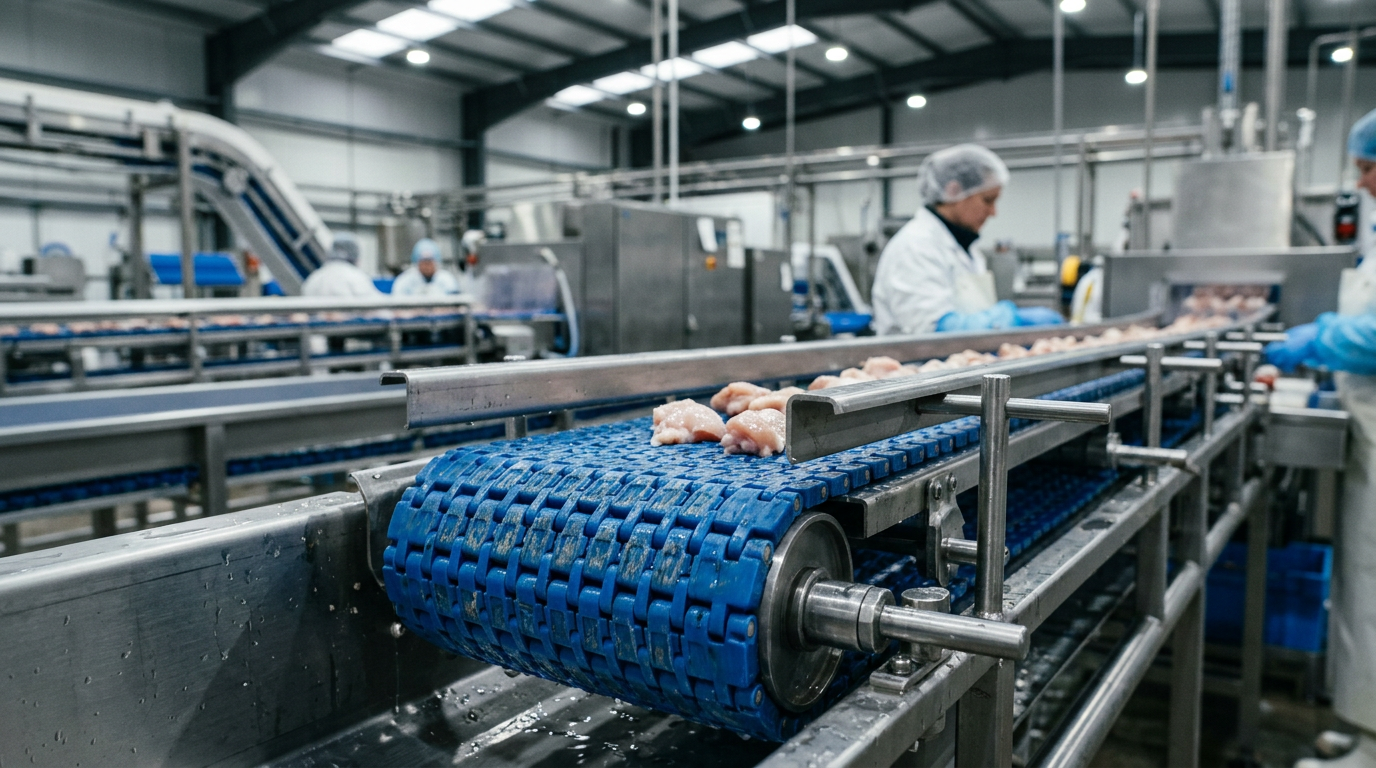
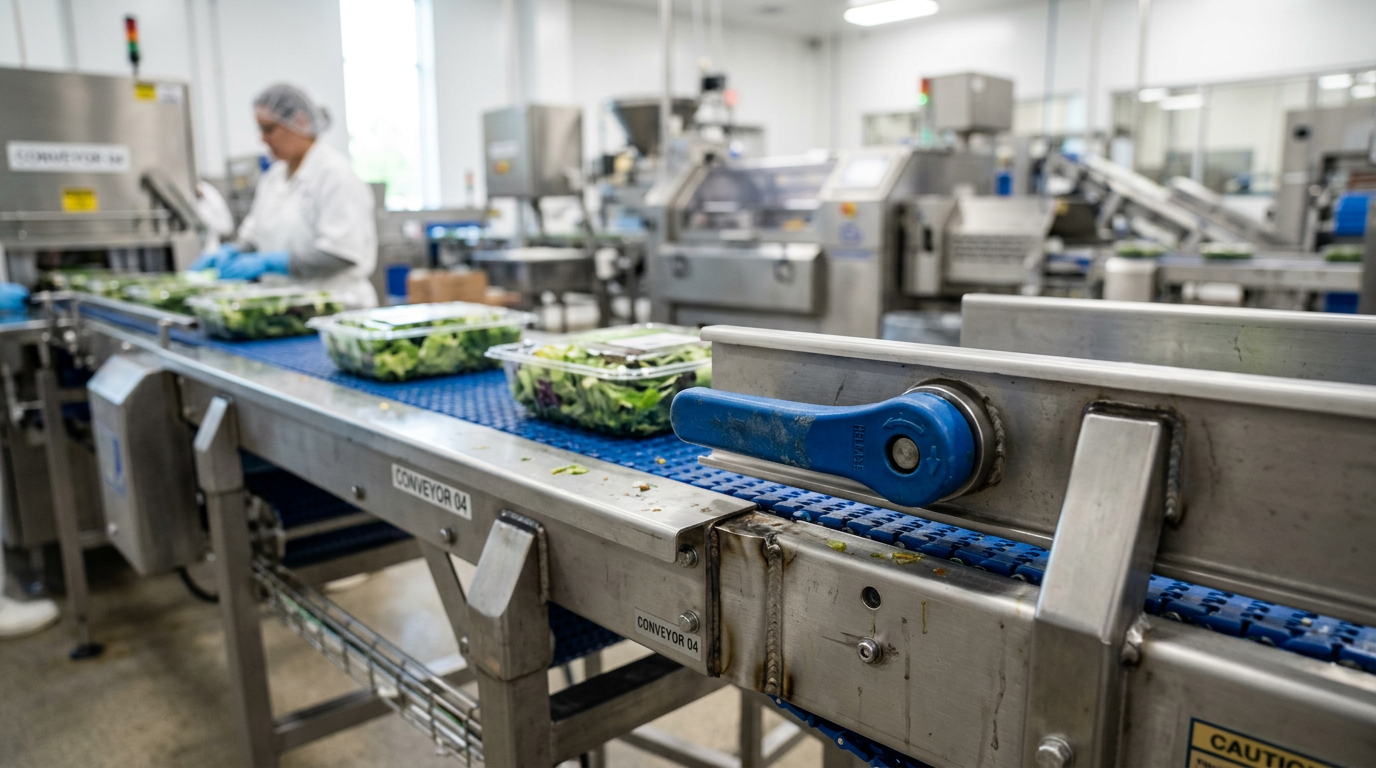
In high-care food production environments, modular plastic belt conveyors are the industry standard for maintaining a "clean-to-dirty" hygiene barrier, typically requiring components that meet EHEDG Guidelines or FDA 21 CFR 177.2600 standards. These systems utilize positive-drive mechanisms to eliminate slippage and use open-hinge geometries that improve clean-in-place (CIP) effectiveness by up to 30% compared to traditional friction-drive systems.
The Role of Modular Plastic Belts in High-Care Zones
High-care production zones—defined as areas where chilled, ready-to-eat (RTE) products are handled—demand the highest levels of microbiological control. Unlike standard industrial settings, a high-care conveyor must be designed to mitigate the risks of Listeria monocytogenes and Salmonella colonization. Modular plastic belts have largely superseded fabric-reinforced belts in these zones because they offer a non-porous surface that does not fray or delaminate, two major sources of foreign body contamination.
The modular nature of these belts allows for the replacement of individual links rather than the entire belt, which significantly reduces downtime. In a high-speed packaging or processing line, this modularity ensures that a localized mechanical failure doesn't result in a multi-hour maintenance window.
Material Selection: POM vs. PP vs. PE
Selecting the correct polymer is critical for compliance and performance. Most high-care applications utilize one of three primary materials, each governed by FDA 21 CFR 177.1520 regulations for food contact.
| Material | Temperature Range | Impact Resistance | Chemical Resistance | Common Use Case |
|---|---|---|---|---|
| Polyacetal (POM) | -40°C to +90°C | Very High | Medium | Heavy loads, raw meat, low temp |
| Polypropylene (PP) | +5°C to +105°C | Medium | High | Hot processing, acidic fruits |
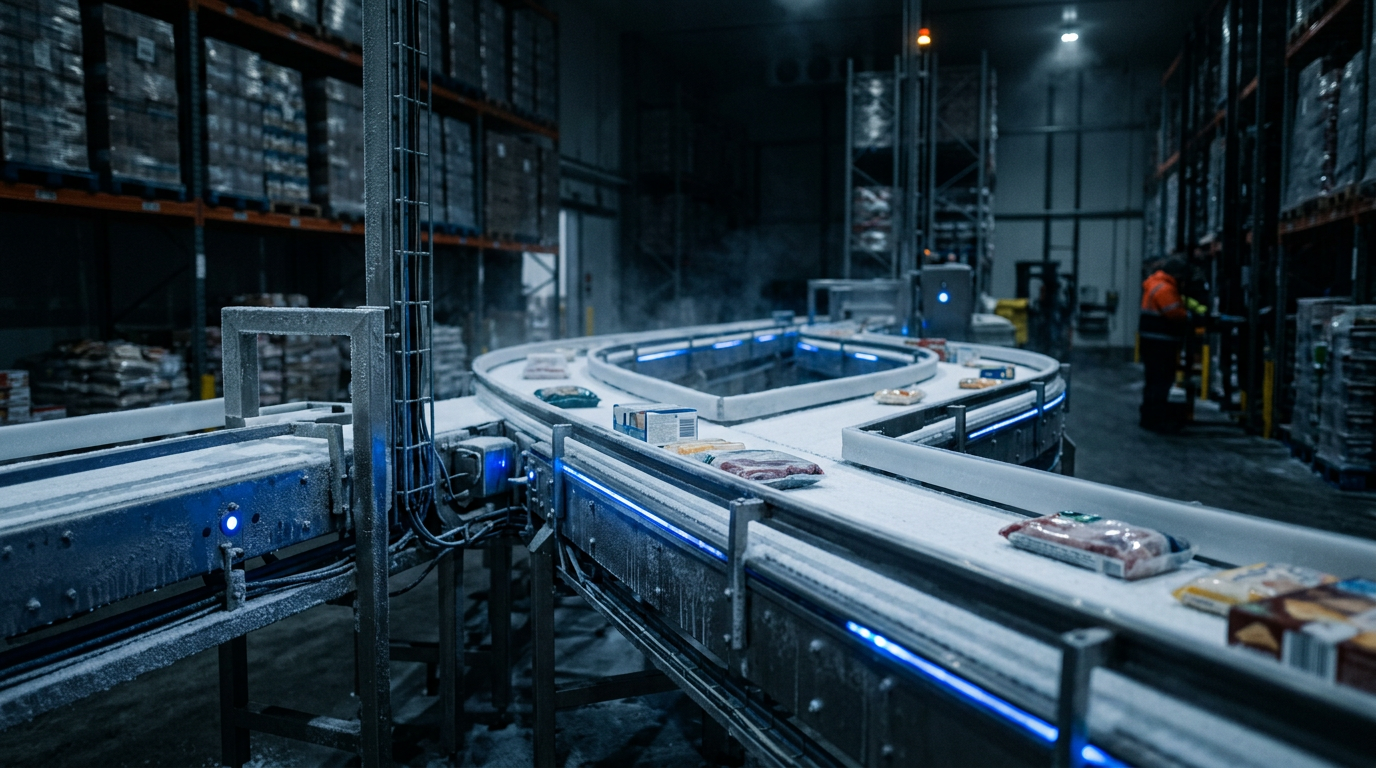
| Polyethylene (PE) | -70°C to +65°C | High (at low temp) | High | Spiral freezers, ice cream |
Polyacetal (POM) is the most common choice for high-care due to its low friction coefficient and high tensile strength. However, in environments using heavy chlorine-based sanitizers, Polypropylene (PP) is often preferred as it resists chemical degradation better than POM.
Hygienic Design Principles for Modular Systems
To meet EHEDG Document 8 criteria for hygienic equipment design, modular plastic belt conveyors must move beyond simple material compliance. The frame construction is just as important as the belt itself.
- Open Frame Construction: Utilizing stainless steel (AISI 304 or 316L) with "T-bolt" stand-offs prevents the entrapment of water and organic matter.
- Radius and Fillets: All internal corners should have a minimum radius of 3mm to ensure that high-pressure washdowns can reach every surface.
- Self-Draining Surfaces: Horizontal surfaces are minimized. Where they must exist, they are sloped at a minimum of 3 degrees to prevent pooling.
- Sprocket Design: Modern hygienic sprockets feature large openings to allow water to pass through the belt hinges during the cleaning cycle.
When integrating these systems into a wider facility, working with a specialist like Easy Conveyors ensures that the modular co
Easy Conveyors stocks the modular systems discussed here — ready to ship across Europe.
mponents are compatible with existing hygienic wash-down design standards, providing a seamless transition between processing stages.
Mechanical Advantages: Positive Drive and Tracking
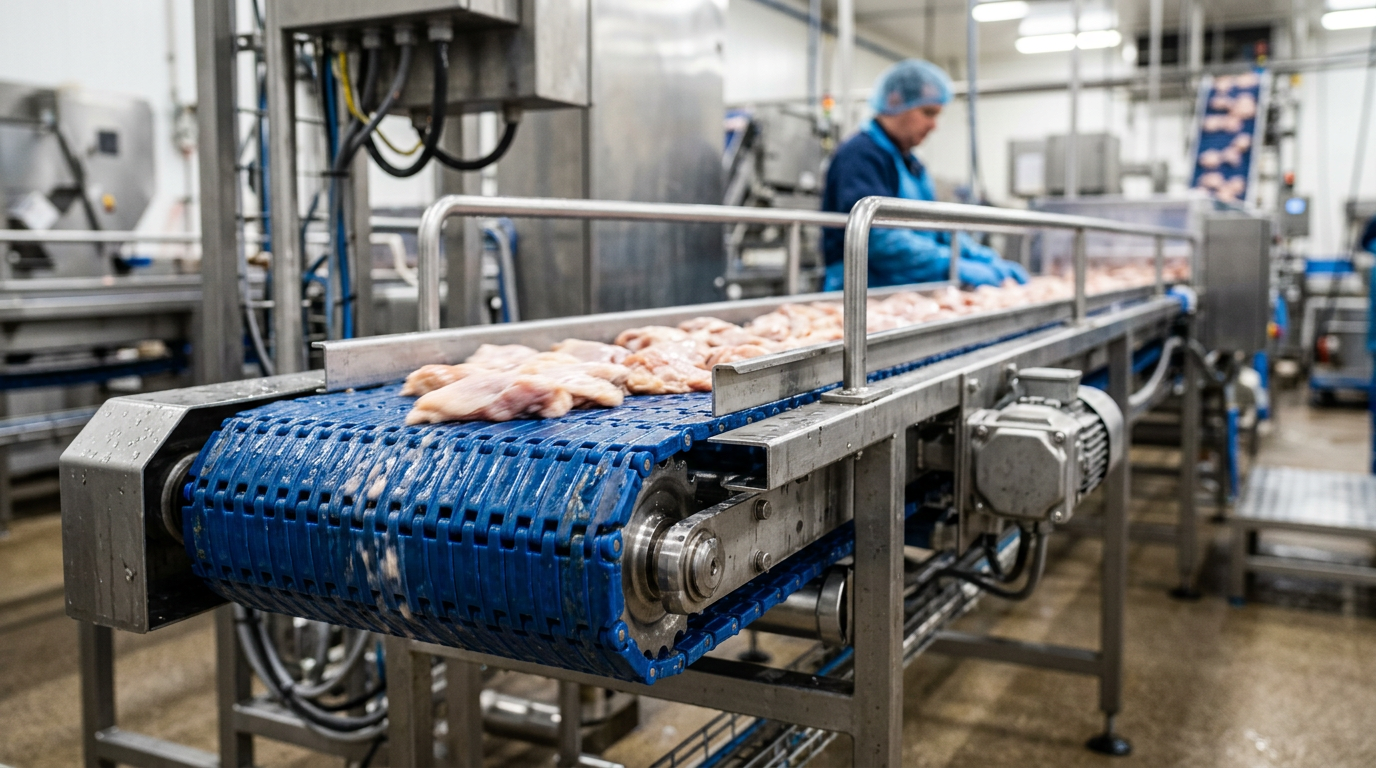
A primary failure mode in food conveyors is belt mistracking, which leads to edge fraying and plastic shavings entering the food stream. Modular plastic belts solve this through a positive drive system. The underside of the belt features transverse ribs or pockets that engage directly with teeth on the drive sprockets.
This eliminates the need for high tension, which is required by flat belts to generate friction. Low-tension operation reduces the load on bearings and motors, often allowing for the use of smaller, more efficient motors. For high-care zones, engineers frequently specify drum motor selection to eliminate external gearboxes and drive chains, which are notorious "bacteria traps."
Cleaning and Maintenance Protocols
The greatest challenge in high-care is the "biofilm" that can develop within the hinges of a modular belt. To combat this, manufacturers have developed "Easy-to-Clean" (ETC) belt geometries. These designs feature a more open hinge area, allowing for 100% visibility of the hinge pin during inspection.
Clean-in-Place (CIP) Systems
Automated CIP systems for modular belts typically involve a series of spray bars located at the return side of the conveyor. The process follows a standardized sequence:
- Pre-rinse: Removal of gross debris with 40-50°C water.
- Detergent Application: Alkaline foam to break down fats and proteins.
- Rinse: Removal of detergent.
- Sanitization: Application of peracetic acid or chlorine-based agents.
Automation and Integration
In the era of Industry 4.0, modular conveyors in food production are rarely standalone units. They are integrated with sensors for "no-product, no-run" logic to save energy. Advanced VFD soft-start tuning is utilized to prevent product "jump" at start-up, which is particularly important for delicate RTE items like pastries or sliced proteins.
Furthermore, these conveyors are often paired with metal detectors or X-ray inspection systems. In these sections, the modular belt must be "metal-free"—using plastic pins instead of stainless steel—to prevent false rejects.
Selection Checklist for Plant Engineers
When procuring a modular plastic belt conveyor for a high-care area, consider the following technical specifications:
- Pitch: Smaller pitches (e.g., 0.5 inch) reduce the "polygon effect" and are better for small product transfers.
- Open Area Percentage: An open area of 20-40% is ideal for cooling or drainage, while 0% (closed top) is required for products with small particles or liquids.
- Scraper Compatibility: Ensure the belt surface is smooth enough for primary and secondary scrapers to remove sticky residues effectively.
- Motor Efficiency: Specify IE3 or IE4 efficiency classes (IEC 60034-30-1) to meet sustainability targets and reduce heat dissipation in chilled rooms.
By adhering to these rigorous standards, food manufacturers can ensure both consumer safety and operational longevity. The transition to modular plastic systems is not merely a hardware upgrade; it is a fundamental shift toward a more controllable, hygienic, and efficient production environment.
Frequently Asked Questions
Why are modular plastic belts preferred over fabric belts in food production?
In high-care zones, modular plastic belts are superior because they are non-porous, do not fray like fabric belts, and utilize positive drive to eliminate tracking issues and debris shed.
What are the best materials for food-grade modular belts?
Common materials include Polyacetal (POM) for high strength and low friction, Polypropylene (PP) for chemical resistance, and Polyethylene (PE) for extreme low-temperature applications like freezing.
What is a positive drive system in conveyor belts?
Positive drive means the belt is moved by sprockets engaging with the belt links, rather than friction. This prevents belt slippage, allows for low-tension operation, and ensures perfect tracking.
How does 'open-hinge' design improve hygiene?
Open-hinge designs allow cleaning fluids to penetrate the pivot points of the belt, where bacteria like Listeria are most likely to grow, ensuring a more thorough sanitization process.