Engineering Modular Conveyor Systems for Cold Storage Warehouses
Discover how modular conveyor systems handle sub-zero temperatures. Learn about PE belt materials, Arctic-grade lubrication, and thermal expansion design for cold storage.
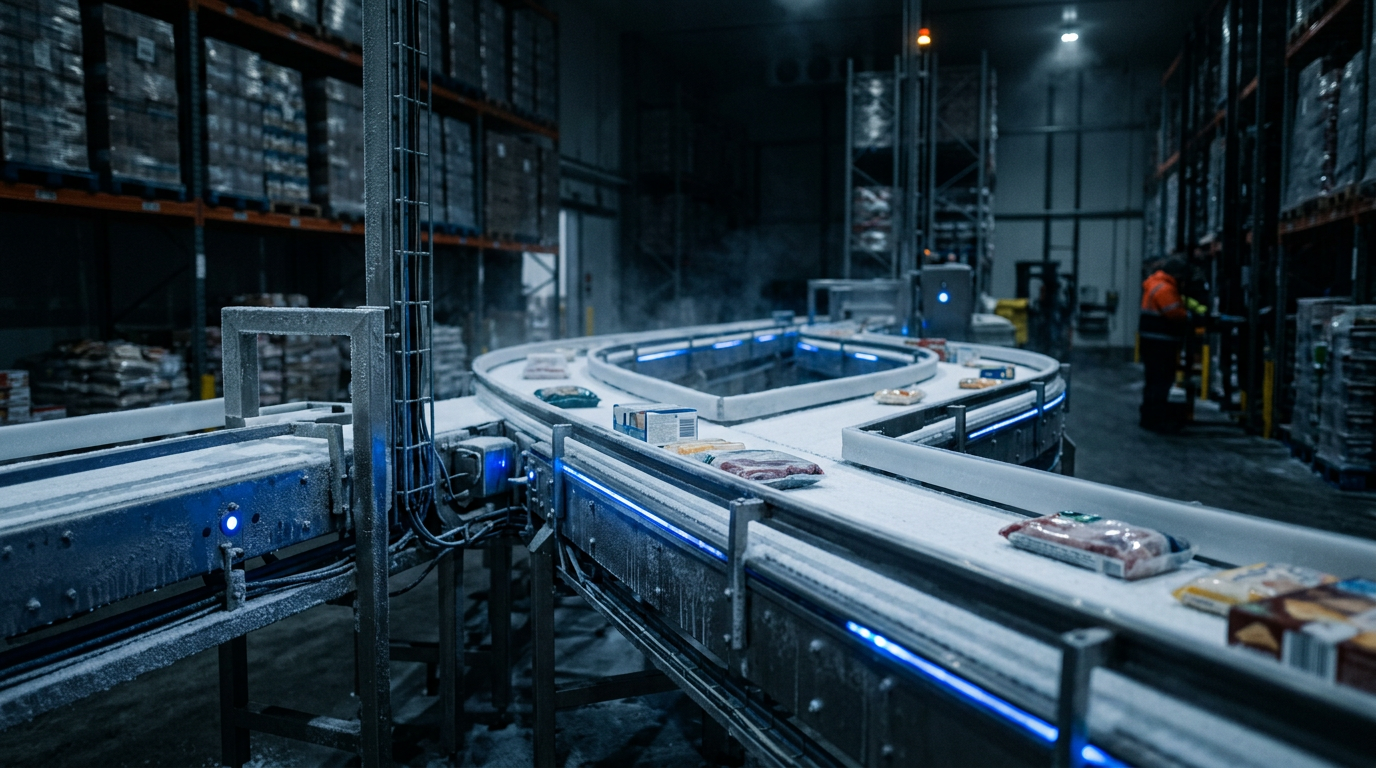
Modular conveyor systems for cold storage warehouses must operate reliably at temperatures as low as -30°C (-22°F), requiring materials like Ultra-High Molecular Weight Polyethylene (UHMW-PE) to prevent brittleness and specialized lubricants rated for Arctic conditions. Standard conveyor components often fail in sub-zero environments due to thermal contraction and condensation-induced icing, making modular designs with integrated thermal expansion gaps essential for maintaining a consistent 98% uptime in automated cold chain facilities.
Challenges of Sub-Zero Material Handling
Operating a conveyor system in a cold storage environment introduces physical stressors that do not exist in ambient temperature facilities. The primary concern is the change in material properties. Standard polymers used in modular belts, such as Polypropylene (PP), can become brittle at temperatures below 5°C, leading to catastrophic failure under impact or high tension.
To combat this, engineers typically specify Polyethylene (PE) or specialized Acetal (POM) blends designed for low temperatures. According to ISO 1133, the melt flow rate and impact resistance of these polymers are critical metrics for ensuring the belt does not crack during start-up sequences in deep-freeze zones.
Thermal Contraction and Expansion
A 100-meter conveyor track can contract by several centimeters when cooled from an ambient installation temperature of 20°C to an operating temperature of -25°C. Without a modular framework designed to absorb these shifts, frames can warp, and bearings can become misaligned. Modular conveyor systems utilize "floating" wear strips and expansion joints to allow the structure to breathe without losing its geometric integrity.
Critical Component Selection for Cold Chains
Successful cold storage automation relies on selecting components that meet rigorous international standards for efficiency and durability.
1. Drive Systems and Motors
Standard motors dissipate heat into the surrounding air. In a freezer, this heat can cause localized condensation, which then freezes, leading to ice buildup on the drive sprockets. High-efficiency motors, such as those meeting the IEC 60034-30-1 IE3 or IE4 efficiency classes, are preferred because they generate less waste heat.
For maximum reliability, many engineers opt for drum motors with IP66 or IP69K ratings. These units enclose the motor and gearbox within the drum, protected by food-grade synthetic oils that maintain a stable viscosity at -30°C. Easy Conveyors provides modular solutions that integrate these high-performance drives, ensuring that the transition from ambient loading docks to deep-freeze storage is seamless and maintenance-free.
2. Modular Belting Materials
The choice of belt material is the difference between a system that lasts ten years and one that fails in ten months.
| Material | Temp Range (C) | Impact Resistance | Best Use Case |
|---|---|---|---|
| Polypropylene (PP) | +5 to +100 | Moderate | Ambient packaging |
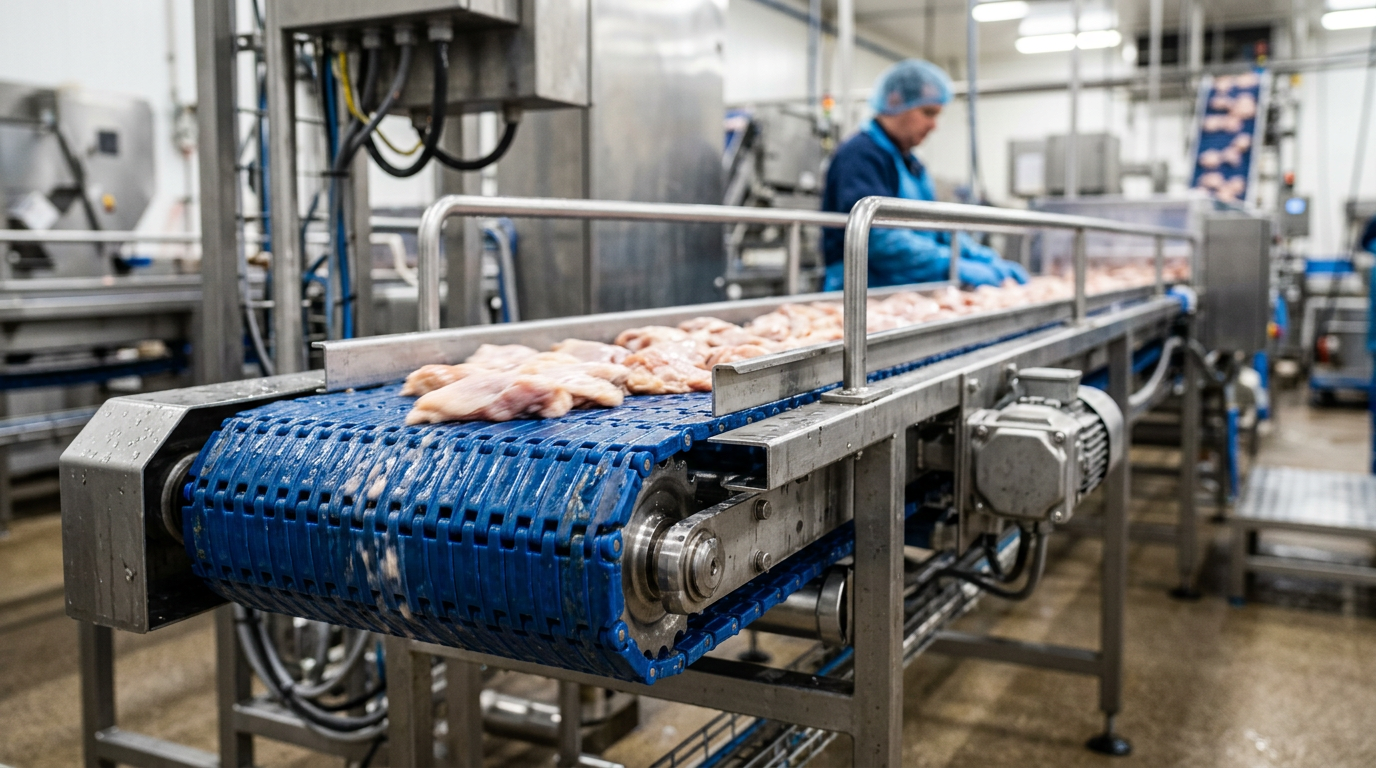
| Polyethylene (PE) | -70 to +45 | High | Deep freeze / Blast freezers |
| Acetal (POM) | -40 to +60 | Very High | Heavy loads / Long runs |
| Stainless Steel | -100 to +400 | Extreme | Cryogenic freezing |
3. Lubrication and Bearings
Standard greases solidify in the cold, increasing the torque required to start the conveyor. This can trigger VFD (Variable Frequency Drive) over-current faults. Using lubricants certified under NSF H1 for incidental food contact is mandatory in most cold storage applications, specifically those formulated with low-pour-point synthetic base oils.
Easy Conveyors stocks the modular systems discussed here — ready to ship across Europe.
Energy Efficiency and Heat Transfer
Cold storage is energy-intensive. Every watt of heat generated by a conveyor motor must be removed by the refrigeration system, effectively doubling the energy cost of running the motor.
- VFD Soft-Start Tuning: Implementing soft-starts prevents sudden tension spikes on brittle cold belts.
- Low-Friction Wear Strips: Utilizing UHMW-PE wear strips reduces the coefficient of friction, lowering the motor's power draw and heat output.
- Automated Sleep Modes: Systems should be programmed to stop during dwell times to minimize heat infusion into the refrigerated space.
Design for Hygiene and Maintenance
In the food and pharma sectors, cold storage conveyors must comply with EHEDG guidelines for hygienic design. Even in sub-zero temperatures, bacteria can survive in a dormant state. When the system is occasionally brought up to ambient temperature for cleaning (wash-down), the design must allow for complete drainage to prevent water from being trapped and later freezing into "ice daggers" that can damage the belt.
Key Maintenance Protocols
- Condensation Management: When conveyors pass through a "climatized" zone between a warm dock and a cold freezer, air curtains and dehumidifiers are necessary to prevent frost formation on the sensors and rollers.
- Tension Monitoring: Cold belts shrink and stiffen. Regular checks of the catenary sag are required to ensure the belt does not jump the sprockets.
- Visual Inspections: Operators should look for "white stress marks" on modular links, which indicate the material is reaching its fatigue limit due to cold-induced brittleness.
Future Trends: Autonomous Cold Storage
The industry is moving toward fully "lights-out" warehouses where modular conveyors interface with Autonomous Mobile Robots (AMRs) and Automated Storage and Retrieval Systems (ASRS). These systems rely on high-precision sensors and encoders that are rated for -40°C. By reducing human presence in the cold zone, facilities can maintain more stable temperatures and significantly lower operational costs.
Integrating modular conveyors into these high-tech environments requires a "plug-and-play" philosophy. Standardized widths and heights, coupled with decentralized control architectures, allow for rapid reconfiguration as storage needs change. This flexibility is the hallmark of modern material handling in the cold chain.
Frequently Asked Questions
Which plastic material is best for conveyor belts in -30°C freezers?
Polyethylene (PE) is the industry standard for deep-freeze environments down to -70°C because it remains flexible, whereas Polypropylene (PP) becomes brittle below 5°C.
Can I use standard bearing grease in a cold storage warehouse?
Standard grease thickens in the cold, increasing motor torque requirements. You must use synthetic, low-viscosity NSF-H1 lubricants specifically rated for sub-zero temperatures.
How do you manage thermal contraction in long conveyor runs?
Conveyors should include expansion joints and 'floating' guide rails to accommodate the 1-2% material contraction that occurs when moving from ambient to freezer temperatures.
Why is motor efficiency more critical in cold storage than in ambient warehouses?
Every watt of heat produced by a motor must be removed by the refrigeration system. Using IE3-class motors reduces both the direct electricity bill and the cooling load.
How do I prevent ice buildup on my conveyor sensors?
Icing usually occurs at the transition points between temperature zones. Air curtains, dehumidification, and heated sensor housings are the most effective countermeasures.