How Tool-less Belt Change Designs Boost OEE on Modular Conveyors
Discover how tool-less belt change designs revolutionize modular conveyor maintenance, slashing MTTR by 80% and significantly boosting OEE for manufacturers.
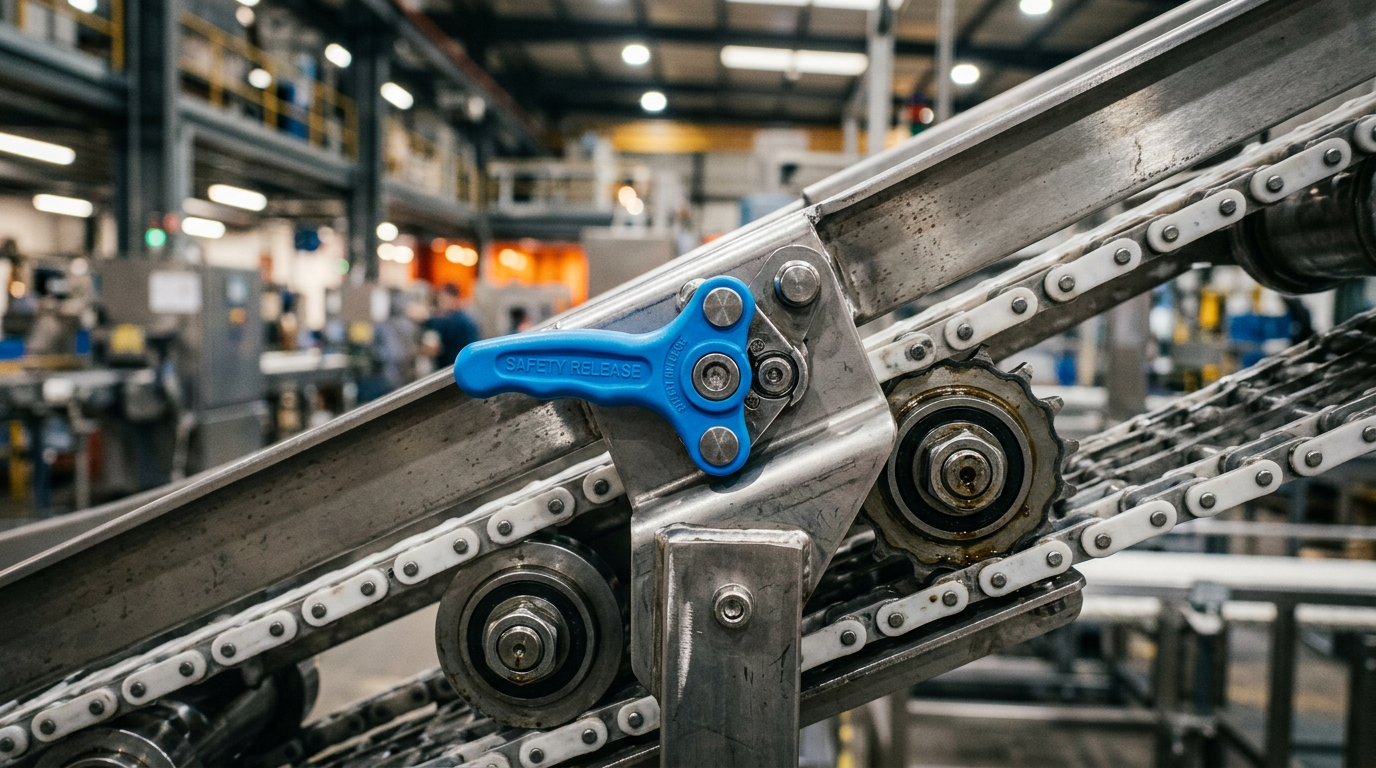
Tool-less belt change designs are engineering configurations in modular conveyor systems that allow operators to remove and replace conveyor belts or modular chains without the use of specialized mechanical tools. By utilizing quick-release tensioners, hinged side-guides, and pull-pin sprocket assemblies, these systems reduce Mean Time to Repair (MTTR) by up to 80%, directly contributing to higher Overall Equipment Effectiveness (OEE).
In modern manufacturing environments—particularly within the food, pharmaceutical, and high-speed packaging industries—downtime is the primary enemy of profitability. Traditional conveyor maintenance often requires a technician with a specific set of wrenches or hex keys to loosen tensioners, remove master pins, and navigate complex drive assemblies. In contrast, tool-less belt change designs decentralize this capability, allowing line operators to perform sanitized wash-downs or belt swaps in minutes rather than hours.
The Impact of Tool-less Designs on OEE
Overall Equipment Effectiveness (OEE) is calculated by multiplying Availability, Performance, and Quality. Tool-less belt designs primarily impact the Availability pillar. When a belt requires replacement due to wear or a changeover for a different product SKU, every minute the line is stationary is lost revenue.
Traditional belt changes often suffer from "hidden downtime." This includes the time spent locating the maintenance technician, waiting for the correct tools to be brought to the floor, and the inherent risk of losing fasteners (bolts or washers) inside the conveyor frame—a critical hazard in food processing. By eliminating the need for tools, these risks are mitigated.
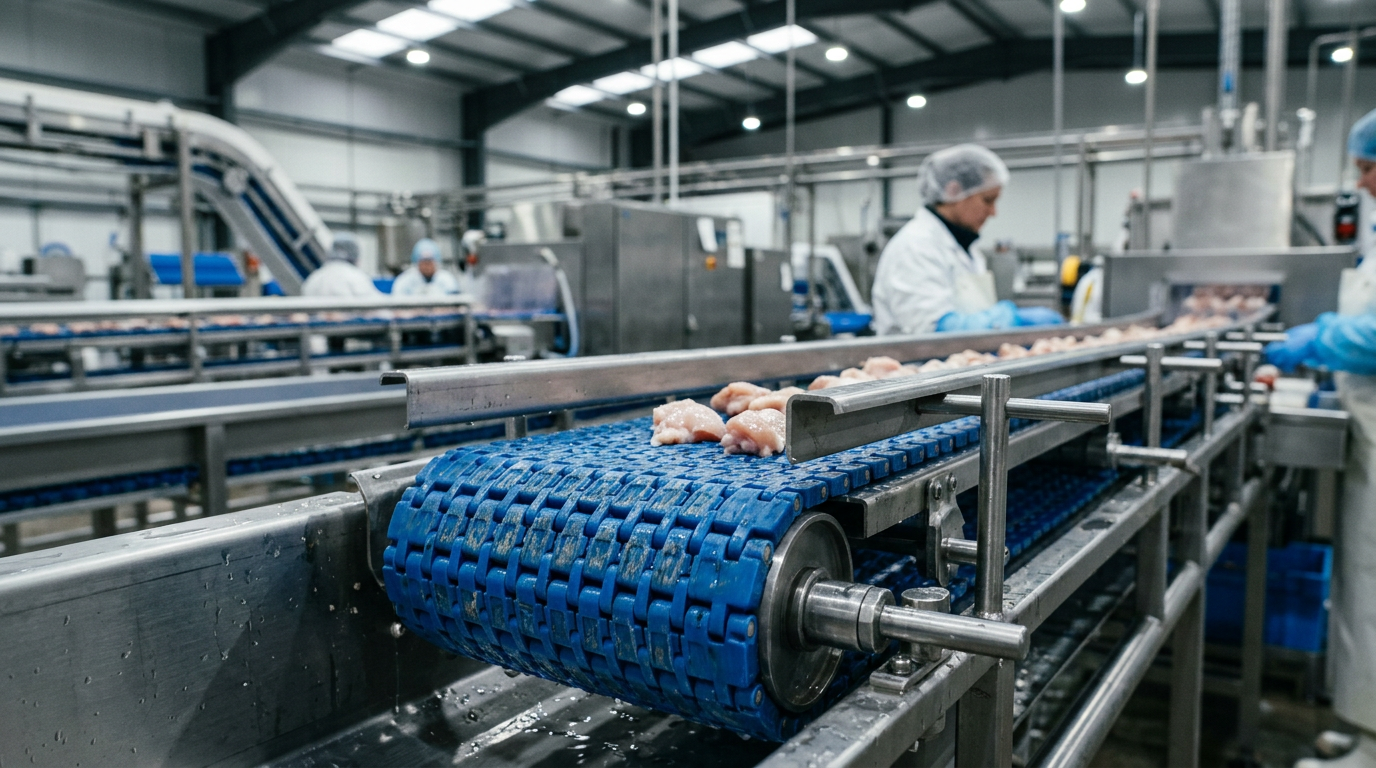
Engineering modular conveyor systems with tool-less features ensures that the mechanical design supports lean manufacturing principles. Easy Conveyors has championed this approach in the European market, focusing on modular plastic chain systems where the "link-and-pin" architecture is optimized for rapid manual intervention.
Key Engineering Components of Tool-less Systems
Achieving a tool-less design requires a holistic approach to the conveyor's mechanical architecture. Several specific components must work in tandem to eliminate the need for wrenches and screwdrivers.
1. Manual Quick-Release Tensioners
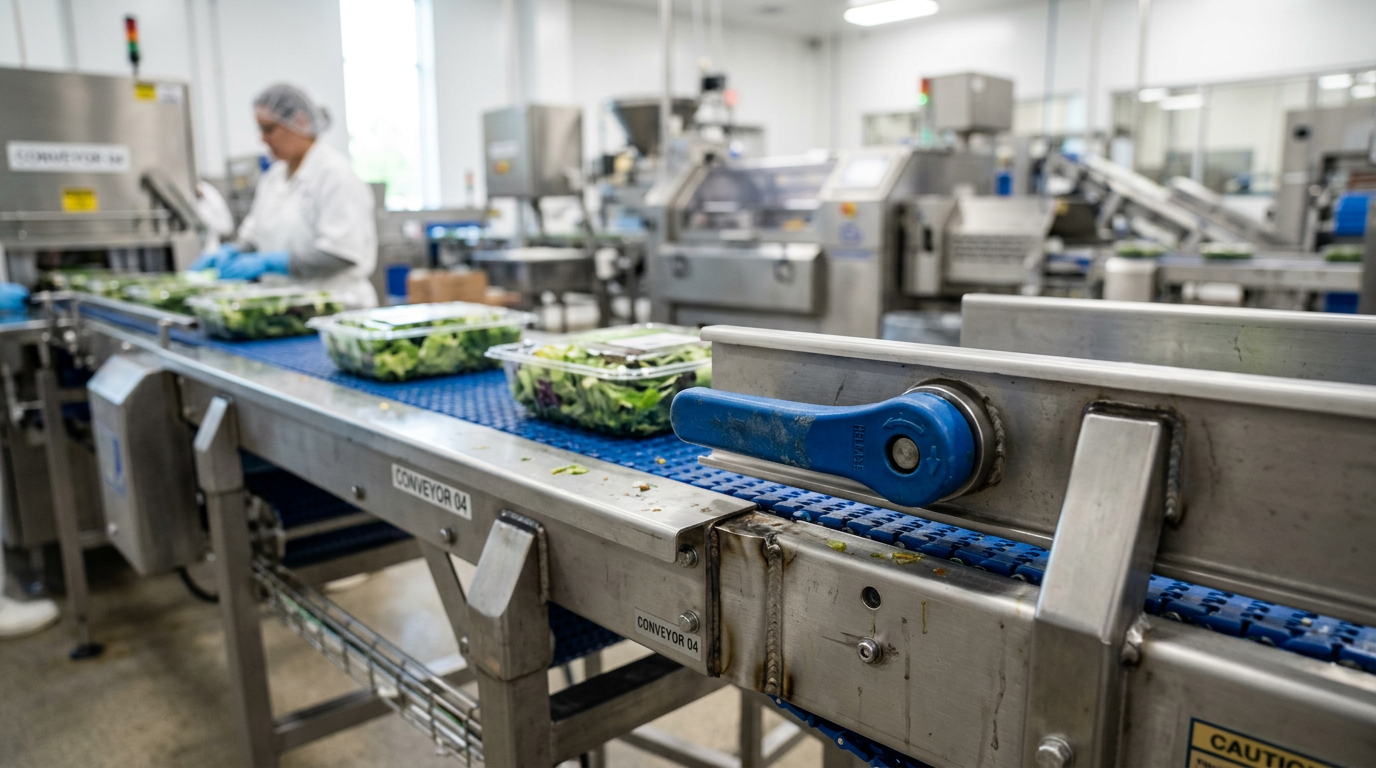
The most critical element is the take-up unit. In standard designs, a screw-jack mechanism requires a wrench to move the tail pulley or sprocket backward to slacken the belt. Tool-less systems utilize cam-lever or spring-loaded tensioners. By flipping a single ergonomic lever, the operator can instantly create several inches of slack, allowing the belt to be lifted off the sprockets.
2. Snap-On Side Guides and Wear Strips
In many conveyor setups, the side rails or product guides physically obstruct the belt's removal path. Modern modular systems use "clip-on" or "wedge-lock" guide rail brackets. These allow the operator to swing the guides out of the way or remove them entirely by hand. Similarly, if a wear strip needs inspection, it should ideally slide into a machined T-slot rather than being bolted to the frame.
3. Split-Sprocket Assemblies
Removing a drive shaft just to replace a sprocket is a major OEE killer. Tool-less-friendly designs often utilize split sprockets that can be snapped together around the shaft. While the sprocket itself might require a tool for initial installation, the interaction between the belt and the drive is designed for "drop-in" clearing, where the belt can be lifted vertically once tension is released.
Comparison: Traditional vs. Tool-less Maintenance Profile
The following table highlights the technical and operational differences between conventional modular conveyors and those optimized for rapid, tool-less changeover.
| Feature | Traditional Bolted Design | Tool-less Modular Design |
|---|---|---|
| MTTR (Mean Time to Repair) | 45–90 Minutes | 5–15 Minutes |
| Skill Requirement | Certified Maintenance Technician | Trained Production Operator |
| Risk of Contamination | High (dropped fasteners/grease) | Minimal (captive parts) |
| Tensioning Precision | Variable (depends on manual torque) | Constant (factory-set cam/spring) |
| Hygienic Rating | Lower (threaded holes harbor bacteria) | Higher (smooth surfaces, EHEDG-compliant) |
| Tool Dependency | Hex keys, Ratchets, Pliers | None (Hand-operated levers) |
Easy Conveyors stocks the modular systems discussed here — ready to ship across Europe.
Maintenance Synergy: Hygienic Wash-down Design
In the food and beverage sector, "changeover" often includes a full sanitation cycle. Tool-less belt designs are almost always paired with hygienic wash-down design principles. If an operator can remove the belt in 120 seconds, they can more effectively clean the "dead zones" beneath the belt where biological growth occurs.
Systems following EHEDG (European Hygienic Engineering & Design Group) guidelines often feature frame stand-offs and open-profile designs. When combined with a tool-less belt release, the entire conveyor bed becomes accessible for high-pressure cleaning without the risk of water entering bolt holes or damaging tool-tightened seals. This synergy between rapid removal and deep cleaning ensures that the "Quality" component of OEE is preserved through lower risk of cross-contamination.
Troubleshooting and Failure Modes
While tool-less designs significantly improve OEE, they introduce specific variables that engineers must monitor.
- Cam-Lever Fatigue: In high-vibration environments, the locking mechanism of a quick-release lever can wear down over time. Regular inspection of the clamping force is required to prevent "belt creep."
- Thermal Expansion: Modular belts made of POM (Polyoxymethylene) or PP (Polypropylene) expand at different rates. A tool-less tensioner must have enough travel to accommodate these changes without requiring a manual "re-pinning" of the belt.
- Operator Over-tightening: Some quick-release systems allow for manual adjustment before locking. If an operator over-tensions the belt, it can lead to premature wear on the sprockets or even motor stall. Implementing a "positive stop" in the design prevents this error.
For organizations looking to scale, integrating these systems requires careful VFD soft-start tuning to ensure that the rapid-tensioning mechanisms are not subjected to sudden torque spikes during a restart post-maintenance.
Integrating Tool-less Design into Lean Workflows
To maximize the benefits of tool-less conveyors, plants should implement a "Standard Operating Procedure" (SOP) that empowers the line operator. By moving the responsibility of belt inspection and cleaning from "Maintenance" to "Operations," a factory can achieve a state of Total Productive Maintenance (TPM).
- Visual Indicators: Use color-coded levers (e.g., blue for food-safe locking points) to guide the operator through the release sequence.
- Captive Pins: Ensure that modular belt pins (rods) are "headed" or utilize a snap-fit locking system so that pins cannot be lost during the process.
- On-Board Storage: Modular frames can be designed with integrated hooks to hang the belt during the cleaning of the frame, preventing the belt from touching a potentially contaminated floor.
By focusing on these design nuances, manufacturers can recover hundreds of hours of production capacity per year. The investment in tool-less architecture often sees a ROI (Return on Investment) in less than six months based solely on the reduction of labor-hours and the increase in line availability. In the competitive landscape of industrial automation, the ability to pivot and clean rapidly is no longer a luxury—it is a baseline requirement for high-efficiency production.
Frequently Asked Questions
How much downtime can tool-less belt designs save?
MTTR usually drops from over an hour to under 15 minutes, as operators don't have to wait for technicians or specialized tools to arrive on the floor.
Are tool-less conveyor designs safe for food processing?
Yes, tool-less systems are ideal for food-grade environments. By eliminating bolts and threaded fasteners, they remove 'bug traps' where bacteria grow and prevent loose hardware from falling into the product.
Do tool-less mechanisms require more frequent maintenance?
While the modular belt itself remains highly durable, the quick-release cam-levers and spring-loaded tensioning pins should be inspected every 6 months for mechanical fatigue or loss of clamping force.
Can tool-less designs handle heavy industrial loads?
Most tool-less modular systems are designed for light to medium-duty applications. For extremely high-tension or heavy-load bulk handling, traditional bolted tensioners are still often required to maintain structural integrity.
What specific features should I look for in a tool-less modular conveyor?
Look for snap-on guide rails, tip-up tail pulleys, and cam-operated tensioning levers. These features indicate the system was engineered for rapid, tool-free intervention.
Sources & references
- [1]Overall Equipment Effectiveness (OEE) - Wikipedia
- [2]Hygienic Design of Belt Conveyors for the Food Industry (Doc 43)
- [3]Intralox FoodSafe: Modular Plastic Belting Solutions
- [4]ISO 14159:2002 - Safety of machinery — Hygiene requirements for the design of machinery
- [5]Maintenance Efficiency and OEE in Smart Manufacturing