Maximizing OEE with Tool-less Belt Change Designs in Modular Conveyors
Discover how tool-less belt change designs can reduce conveyor maintenance time by 80%, significantly boosting OEE through improved availability and hygiene.
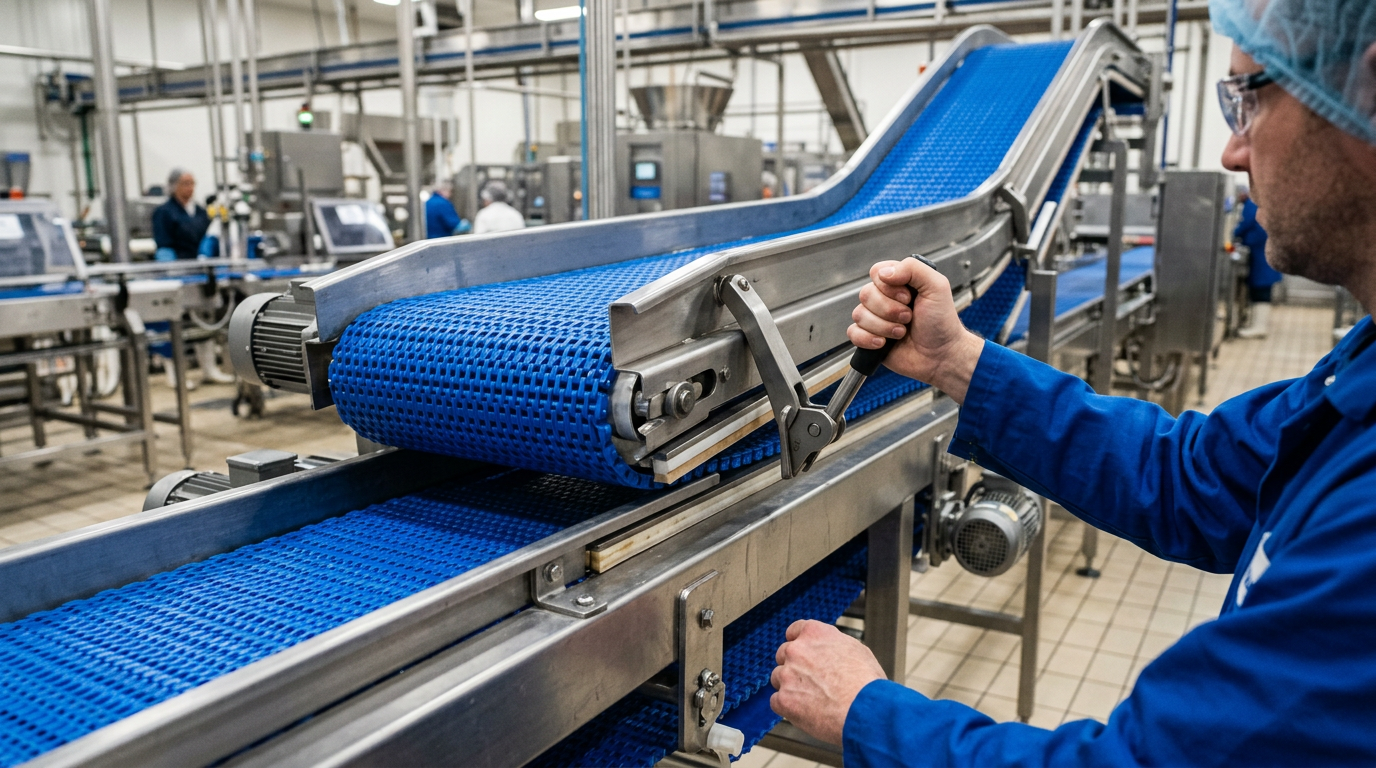
Implementing tool-less belt change designs on modular conveyors can reduce Mean Time to Repair (MTTR) by up to 80%, directly increasing Overall Equipment Effectiveness (OEE) by minimizing planned and unplanned downtime. In high-throughput environments, switching from traditional bolted assemblies to quick-release mechanisms allows operators to perform belt replacements or deep-cleaning cycles in under 10 minutes without specialized maintenance tools.
The Impact of Downtime on OEE
Overall Equipment Effectiveness (OEE) is the gold standard for measuring manufacturing productivity, calculated as the product of Availability, Performance, and Quality. For modular conveyor systems, the "Availability" component is most frequently compromised by sanitation requirements and mechanical wear. In industries governed by FDA regulations regarding food safety, the time required to strip a conveyor for wash-down is often the primary bottleneck.
Traditional modular belts require the removal of pins using punches and hammers, or the loosening of tensioning bolts that require recalibration upon reassembly. Tool-less designs eliminate these variables. By integrating "pop-up" cleats, slide-out wear strips, and cantilevered frames, manufacturers can transform a two-hour maintenance window into a twenty-minute task.
Key Features of Tool-less Modular Designs
Modern modular systems achieve rapid disassembly through several engineering innovations:
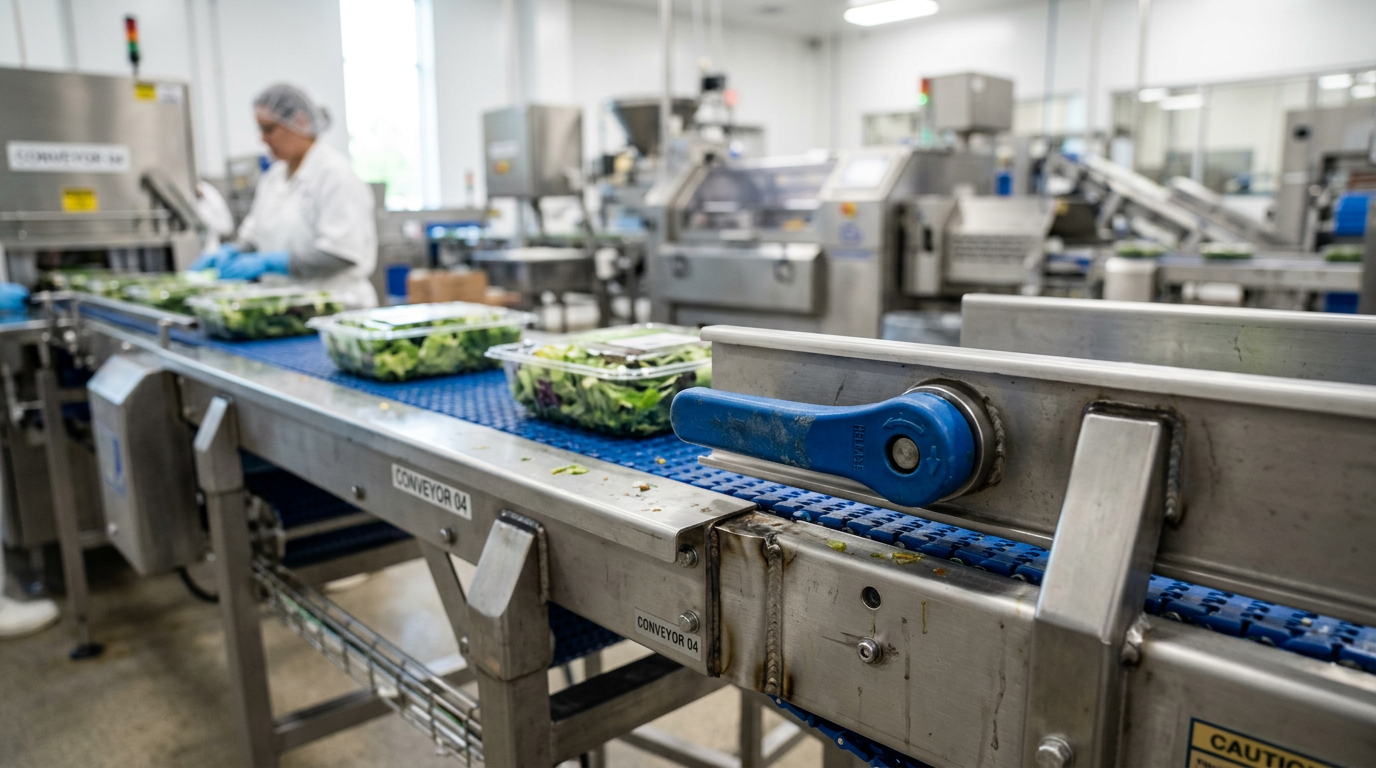
- Quick-Release Tensioners: Instead of threaded rods, these systems use cam-levers or pneumatic actuators. A single flip of a lever releases all belt tension, allowing the belt to be lifted away from the sprockets.
- Cantilevered Frames: By supporting the conveyor frame from only one side, the belt can be slid off the side of the machine without breaking the frame or removing supports.
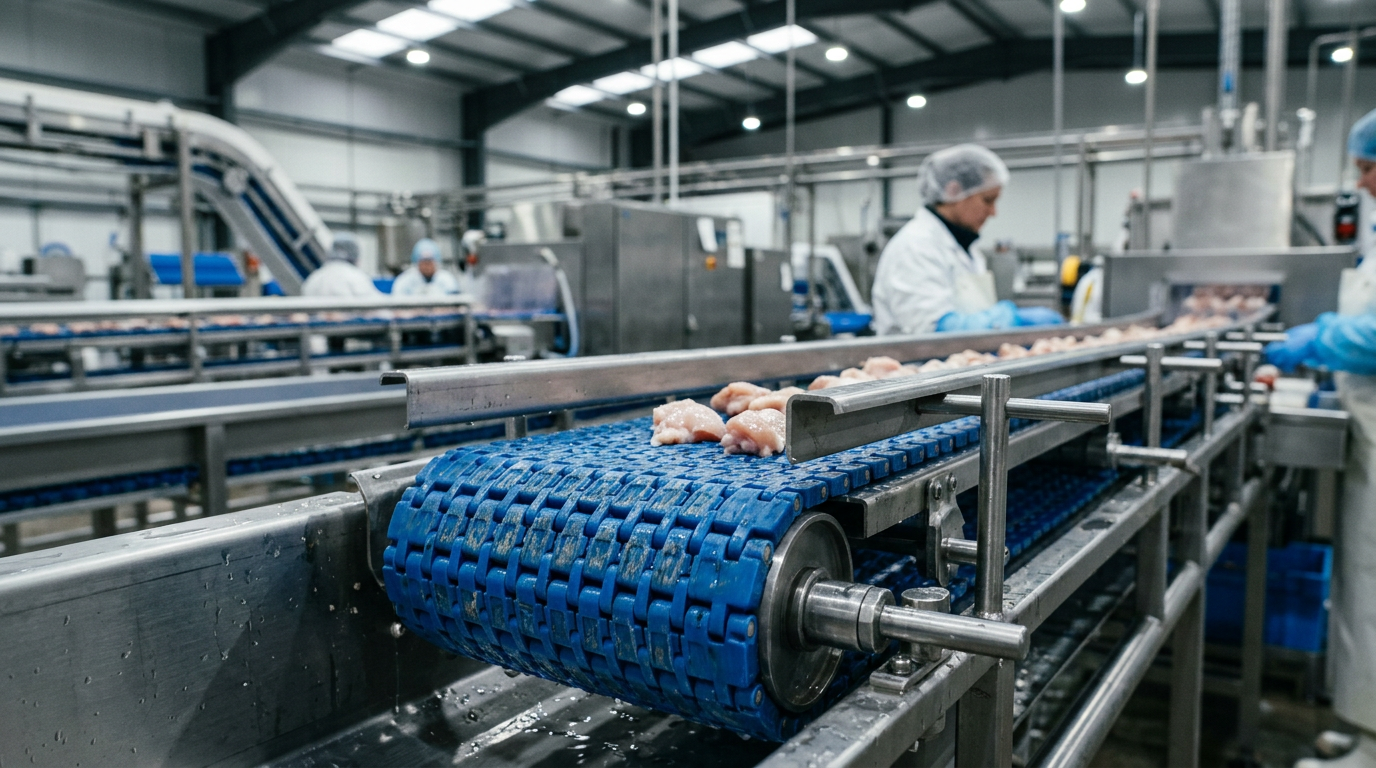
- Captive Hinge Pins: Modular belts like those from Intralox often feature headless pins or snap-in links that can be disengaged with finger pressure or a simple plastic wedge, preventing the loss of small parts in the food stream.
- Drop-in Wear Strips: Traditional UHMW-PE wear strips are often screwed into the frame. Tool-less versions use dovetail slots or clip-on profiles that can be replaced in seconds.
Technical Comparison: Tool-less vs. Traditional Belt Changes
| Metric | Traditional Bolted Design | Tool-less Quick-Release |
|---|---|---|
| MTTR (Mean Time to Repair) | 45–120 Minutes | 5–15 Minutes |
| Tool Requirements | Wrenches, Screwdrivers, Hammers | None (Manual Operation) |
| Sanitation Level | Moderate (Threads trap bacteria) | High (Smooth surfaces, EHEDG compliant) |
| Skill Level Required | Skilled Maintenance Technician | Line Operator |
| Risk of Part Loss | High (Loose bolts/washers) | Low (Captive components) |
Engineering for Hygiene and OEE
In the food and pharmaceutical sectors, OEE is inextricably linked to hygienic design. The EHEDG guidelines emphasize the elimination of "dead spaces" where organic matter can accumulate. Tool-less designs often naturally align with these standards because they replace threaded fasteners—which are notorious for harboring biofilm—with op
Easy Conveyors stocks the modular systems discussed here — ready to ship across Europe.
en, easy-to-clean geometry.
Easy Conveyors specializes in modular systems that balance these hygienic requirements with mechanical robustness. Their engineering approach focuses on reducing the parts count, which not only simplifies the belt-change process but also reduces the spare parts inventory required by the plant.
Calculating the ROI of Rapid Changeover
To justify the investment in tool-less conveyor modules, plant managers must look beyond the initial purchase price. Consider a facility running three shifts where a conveyor must be cleaned daily.
- Traditional System: 30 minutes to disassemble + 30 minutes to reassemble = 1 hour lost per day.
- Tool-less System: 5 minutes to disassemble + 5 minutes to reassemble = 10 minutes lost per day.
Saving 50 minutes per day equates to over 300 hours of additional production capacity per year. If the line produces €5,000 of product per hour, the tool-less design generates an additional €1.5 million in annual revenue, far outweighing the premium paid for the hardware.
Common Failure Modes and Prevention
While tool-less designs boost OEE, they are not immune to issues if improperly maintained:
- Cam-Lever Fatigue: Frequent cycling of quick-release levers can lead to material fatigue. Ensure levers are rated for thousands of cycles according to ISO 12100 safety standards.
- Incorrect Tensioning: Without a torque wrench or fixed bolt position, operators might under-tension the belt. Look for systems with "fixed-stop" tensioners that click into a pre-set position.
- Debris Interference: Small particles can jam sliding mechanisms. Regular visual inspections during the "performance" phase of OEE tracking are essential.
Integration with Automation
As plants move toward Industry 4.0, the conveyor is no longer a "dumb" asset. Integrating tool-less designs with smart sensors allows for predictive maintenance. For instance, if a belt tensioner is not fully engaged, a proximity sensor can prevent the motor from starting, protecting both the belt and the operator. This synergy between mechanical design and electronic control is vital for modern automation cells and material handling workflows.
Proper drum motor selection also plays a role here. Using a motorized pulley with an IP69K rating (IEC 60529) ensures that the drive unit can withstand the same high-pressure wash-down that the tool-less frame is designed to facilitate. Combining a quick-change belt with a wash-down motor creates a system that maximizes both "Availability" and "Performance" metrics.
Conclusion
The transition to tool-less belt change designs is a strategic move for any high-volume manufacturer. By reducing the reliance on maintenance departments for routine sanitation and belt replacements, companies can empower their operators, drastically reduce downtime, and achieve a significantly higher OEE. As labor costs rise and food safety regulations tighten, the ability to maintain and clean equipment without a toolbox will become the industry standard rather than a luxury feature.
Frequently Asked Questions
How does a tool-less belt change differ from a traditional one?
Tool-less designs use cam-levers, spring-loaded pins, and cantilevered frames that allow operators to release tension and remove the belt by hand, whereas traditional designs require wrenches and punches to remove threaded fasteners or drive pins.
Are tool-less conveyors suitable for food-grade environments?
Yes, by eliminating threaded bolts and nuts where bacteria can grow, and using open-frame designs that are easier to access, tool-less systems are often more compliant with EHEDG and FDA hygienic standards.
Do tool-less mechanisms require more frequent maintenance?
While the mechanisms are robust, they should be inspected for cam-lever fatigue and spring tension loss every 6-12 months, depending on the frequency of changeovers.
What specific part of OEE is most affected by tool-less conveyor designs?
Tool-less designs primarily improve the 'Availability' component of OEE by drastically reducing both planned downtime (cleaning) and unplanned downtime (belt repair).