Maximizing OEE with Tool-Less Belt Change Designs on Modular Conveyors
Discover how tool-less belt change designs reduce MTTR by 80%, boosting OEE on modular conveyors through quick-release levers and hygienic engineering.
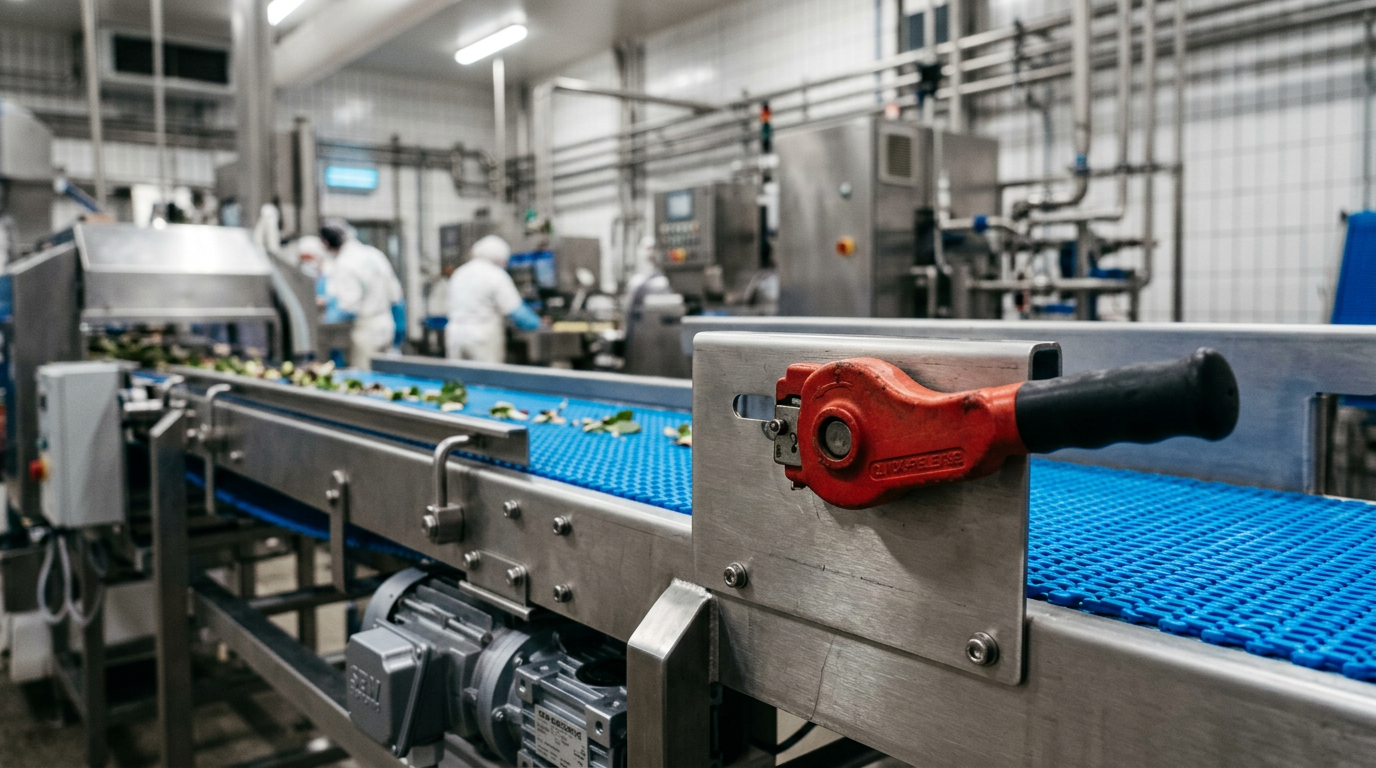
In modern high-throughput manufacturing, tool-less belt change designs can reduce Mean Time to Repair (MTTR) by up to 80%, directly increasing Overall Equipment Effectiveness (OEE) by eliminating the 30-to-60-minute downtime typically associated with mechanical fasteners and traditional tensioning hardware. By utilizing quick-release levers, cantilevered frames, and modular link pins, operators can perform sanitation or belt replacements in under 10 minutes without specialized maintenance tools.
The Impact of Downtime on OEE Calculations
Overall Equipment Effectiveness (OEE) is the gold standard for measuring manufacturing productivity, calculated by multiplying Availability, Performance, and Quality. While performance and quality are often optimized through automation and sensor feedback, Availability is frequently undermined by "planned" downtime that takes longer than expected.
Traditional conveyor systems often require a maintenance technician to locate specific wrenches, loosen four or more tensioning bolts, and potentially disassemble side guards or drive housings just to remove a belt for cleaning or replacement. In food processing environments, where daily wash-downs are mandatory, this cumulative downtime can represent a 5-7% loss in total available production time. Tool-less designs pivot this paradigm by moving maintenance tasks into the hands of operators, decentralizing the repair process and ensuring the "Availability" variable in the OEE equation remains as high as possible.
Engineering Principles of Tool-Less Belt Systems
The transition from standard bolted assemblies to tool-less modular systems relies on three core engineering innovations: quick-release tensioners, cantilevered support structures, and pivot-access drive stations.
1. Quick-Release Tensioning Mechanisms
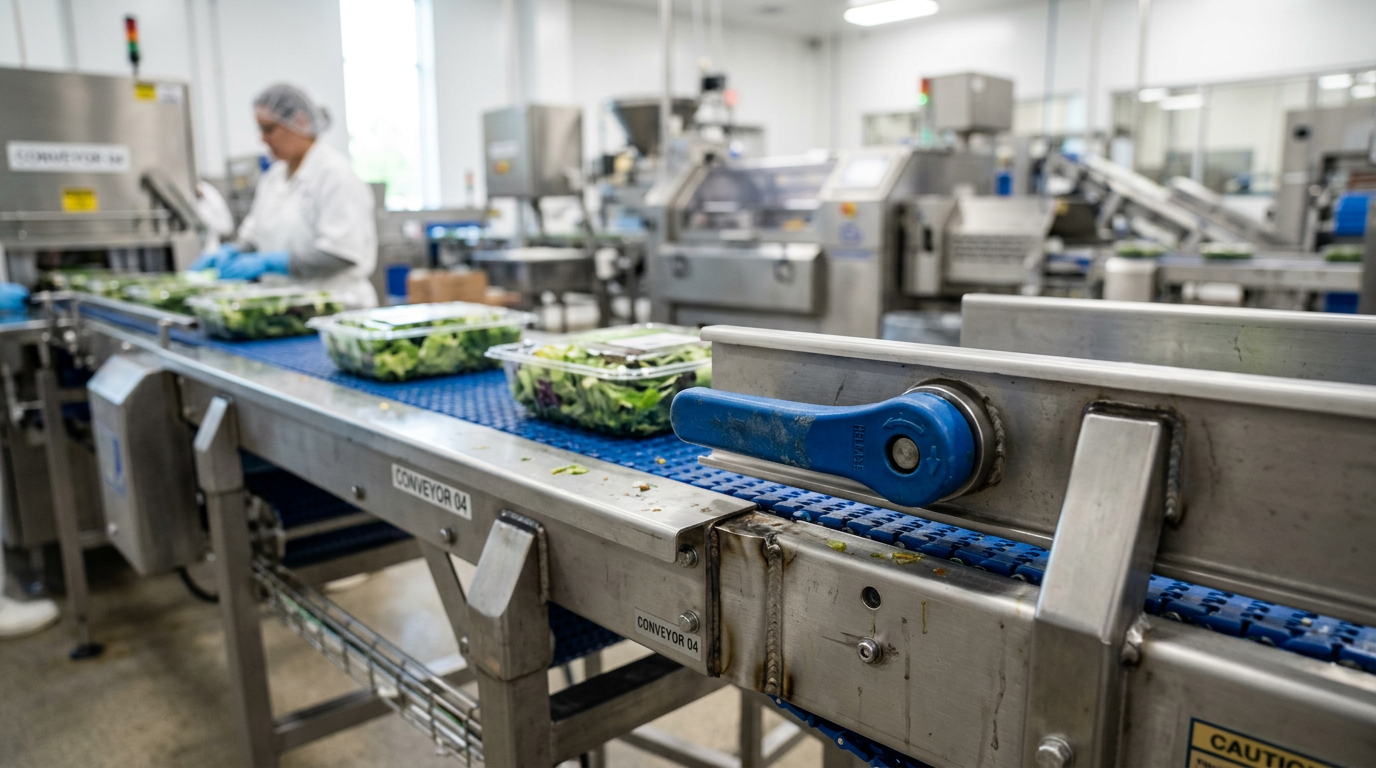
Standard screw-style take-ups require precise measurement to ensure the roller remains square to the frame. Tool-less systems utilize cam-levers or pneumatic "flip-up" tails. These mechanisms allow the operator to collapse the take-up distance instantly, providing the necessary slack to lift the belt off the sprockets. According to VDMA standards for machine safety and ergonomics, these levers are designed to be operated with minimal force while providing a positive lock that prevents accidental loosening during high-speed operation.
2. Cantilevered and Open-Frame Design
In many modular belt applications, the belt must be "snaked" through the machine frame, which is impossible if the frame is a closed box. Tool-less designs often utilize a cantilevered approach where the conveyor is supported from only one side, or include "swing-out" legs. This allows a continuous loop of modular plastic belting to be slid off the side of the machine without breaking the belt join.
3. Modular Link Pin Accessibility
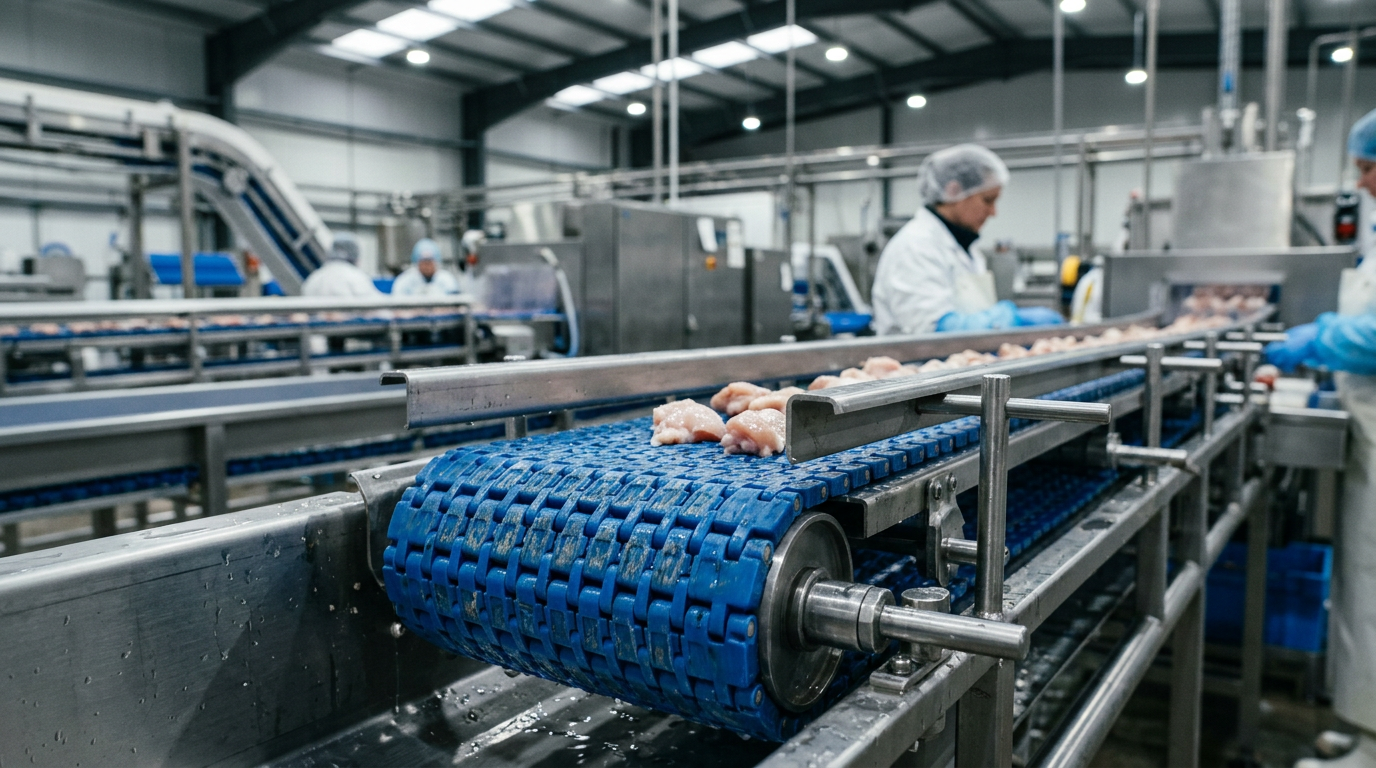
For modular plastic belts, such as those produced by Intralox, the belt itself is held together by transverse rods. Tool-less designs often feature "headless" pins or "snap-in" rod retention systems. Instead of needing a hammer and drift punch to remove a rod, an operator can use a simple finger-press or a built-in "rod-popper" tool integrated into the conveyor side-rail.
Comparative Analysis: Tool-Less vs. Traditional Fasteners
| Feature | Traditional Bolted Design | Tool-Less Quick-Release |
|---|---|---|
| Average Changeover Time | 45–70 Minutes | 5–12 Minutes |
| Required Skill Level | Maintenance Technician | Line Operator |
| Tools Required | Wrenches, Socket Set, Mallet | None / Integrated Lever |
| Hygiene Rating | Lower (Threads harbor bacteria) | Higher (Smooth, open surfaces) |
| Repeatability | Manual alignment required | Fixed tension positions |
| Risk of Hardware Loss | High (Dropped nuts/bolts) | Zero (Captive components) |
Easy Conveyors stocks the modular systems discussed here — ready to ship across Europe.
Hygiene and Sanatary Advantages
In the food and pharmaceutical sectors, tool-less designs are not just about speed; they are a requirement for compliance with EHEDG (European Hygienic Engineering & Design Group) guidelines. Threads, bolt heads, and washers are notorious "harborage points" for microbial growth.
By eliminating threaded fasteners in the food-contact zone, manufacturers reduce the risk of cross-contamination. Easy Conveyors specializes in these modular systems, offering configurations where the entire wear-strip and belt assembly can be stripped to the bare frame in minutes. This level of accessibility ensures that "clean-in-place" (CIP) actually means clean, rather than "clean-what-is-visible."
Integrating Tool-Less Systems into Automation
When specifying a modular conveyor for a high-speed packaging line, the "Modular Link Design" should be evaluated alongside the drive system. For instance, combining a tool-less frame with an IEC 60034-30-1 compliant IE3 or IE4 motor ensures that the system is both mechanically efficient to maintain and electrically efficient to operate.
Furthermore, tool-less designs facilitate better VFD soft-start tuning. Since the belt tension is consistently reset to a factory-calibrated position by the quick-release lever, the starting torque required remains constant. In contrast, a manually tensioned belt might be over-tightened by a technician, leading to premature motor wear and higher energy consumption.
Common Failure Modes and Prevention
While tool-less designs significantly boost OEE, they are not immune to failure if improperly maintained:
- Cam-Lever Fatigue: Over time, the spring tension or friction pads in quick-release levers can wear. These should be inspected every 6 months.
- Debris Interference: Because these systems rely on moving joints (hinges/pivots), accumulated debris in a dry-goods environment can jam the mechanism.
- Improper Seating: If an operator does not fully engage the locking lever, the belt may track poorly. Modern systems often include a "color-coded" visual indicator (Green for locked, Red for unlocked) to prevent this.
When designing a new line, it is critical to balance the initial capital expenditure (CAPEX) against the long-term operational expenditure (OPEX). A tool-less conveyor may carry a 15-20% price premium over a standard unit, but the ROI is typically realized within the first year through labor savings and reclaimed production minutes. Systems that prioritize hygienic wash-down design and rapid belt changes are now the baseline for any facility aiming for World Class Manufacturing (WCM) status.
Frequently Asked Questions
How do tool-less designs specifically impact OEE?
Tool-less designs allow operators to change belts in 5-10 minutes, compared to 45-60 minutes for traditional bolted frames, significantly increasing line Availability.
Is a tool-less tensioner less secure than a bolted one?
No, modern quick-release levers are designed with fixed-stop positions that provide consistent, factory-calibrated tension every time the lever is engaged.
Are tool-less conveyors suitable for food-grade environments?
Absolutely. By eliminating threaded fasteners (bacteria harborage points) and allowing full access to the frame, they meet EHEDG and FDA hygienic standards.
Can I use tool-less designs with fabric belts?
While tool-less features are standard on modular plastic belts, they are also available for certain fabric belt systems using cantilevered frames and quick-slack tails.
What maintenance is required for a tool-less mechanism?
Check for pivot point lubrication (if required), cam-lever wear, and ensure that the 'lock' indicators are clearly visible and functional.