Maximizing OEE with Tool-Less Belt Change Designs in Modular Conveyors
Maximize OEE by reducing downtime. Learn how tool-less belt change designs and quick-release tensioners slash MTTR by 85% in modular conveyor systems.
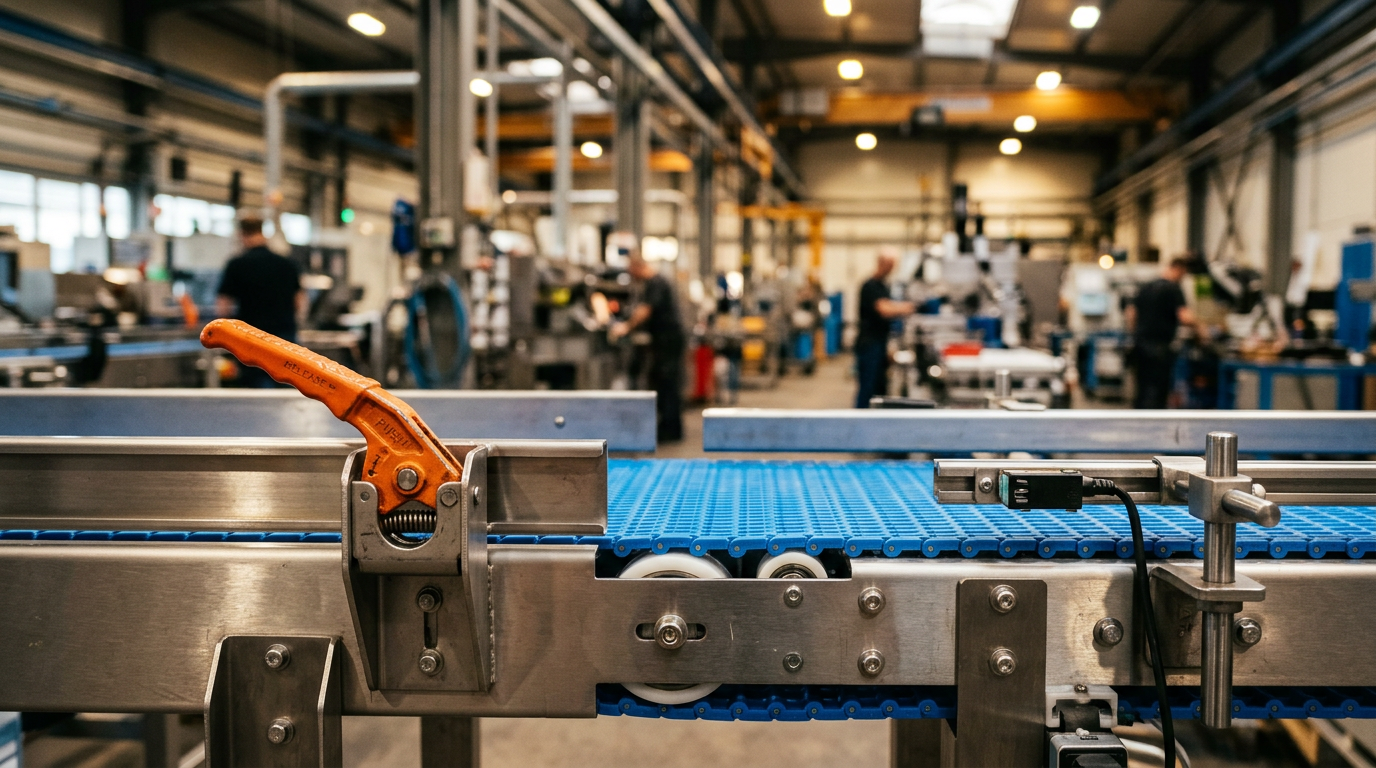
Modular conveyor systems with tool-less belt change designs can reduce Mean Time to Repair (MTTR) by up to 85% compared to traditional fastened assemblies, directly increasing Overall Equipment Effectiveness (OEE) by minimizing planned and unplanned downtime. By utilizing quick-release tensioners and cantilevered frames, operators can swap belts in under 10 minutes without specialized maintenance tools.
The Relationship Between Maintenance Speed and OEE
In high-volume manufacturing, Overall Equipment Effectiveness (OEE) is the gold standard for measuring productivity. It is calculated as the product of Availability, Performance, and Quality. While modular conveyors inherently improve performance through high-speed reliability, the Availability component is often compromised by lengthy sanitation cycles or belt replacements.
Traditional conveyor designs require a technician with a set of wrenches to loosen tensioning bolts, remove guarding, and perhaps even disassemble a portion of the frame to "thread" a new endless belt. This process can take 60 to 120 minutes. In contrast, a tool-less design focuses on "Single-Minute Exchange of Die" (SMED) principles. By transforming a 90-minute maintenance task into a 5-minute operator task, a facility running three shifts can recover hundreds of hours of production capacity annually.
Engineering Principles of Tool-Less Belt Changes
To achieve a tool-less exchange, engineers focus on three primary mechanical innovations:
1. Quick-Release Tensioners
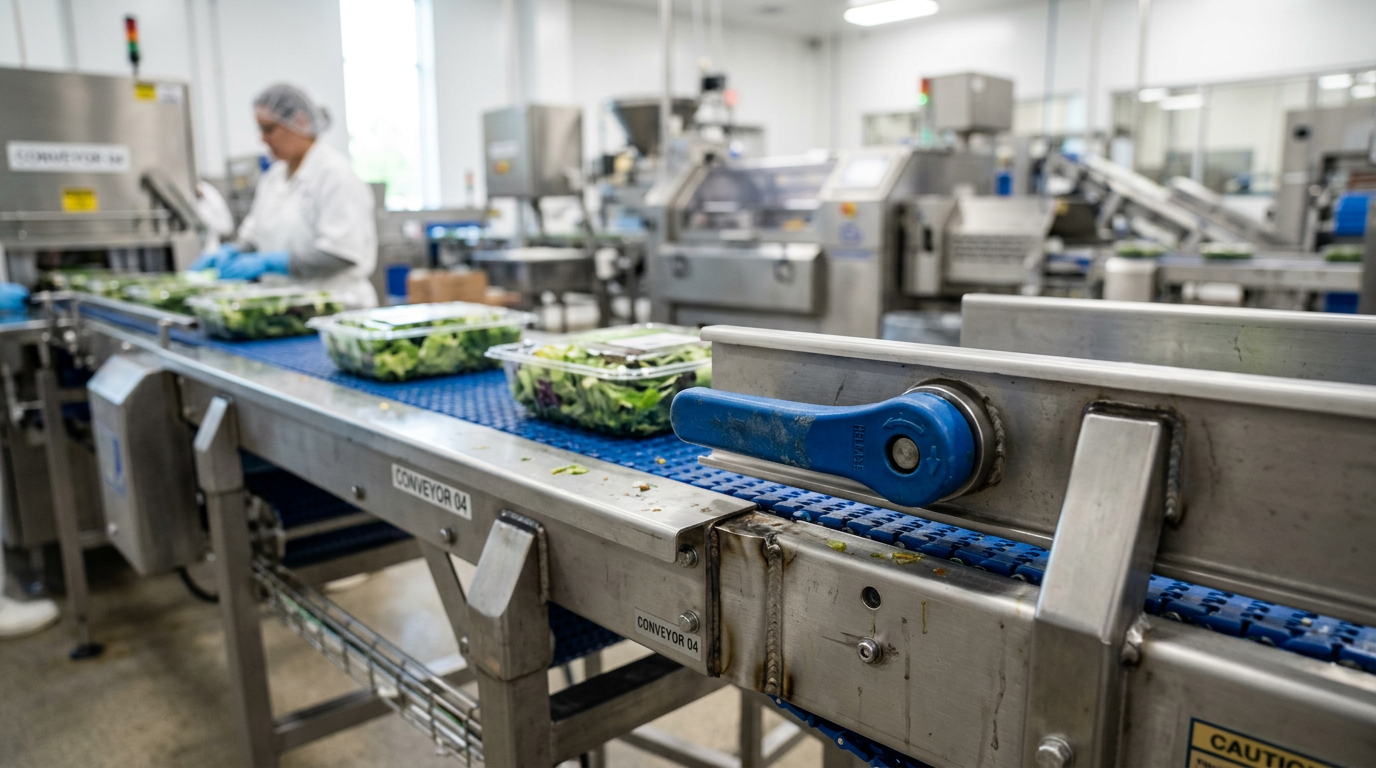
Instead of lead screws that require manual cranking, quick-release systems use cam-levers or pneumatic cylinders. Flipping a single lever collapses the take-up pulley by several centimeters, instantly removing all tension from the belt. This allows the belt to be lifted off the drive sprockets without resistance.
2. Cantilevered Frames and Open-Side Access
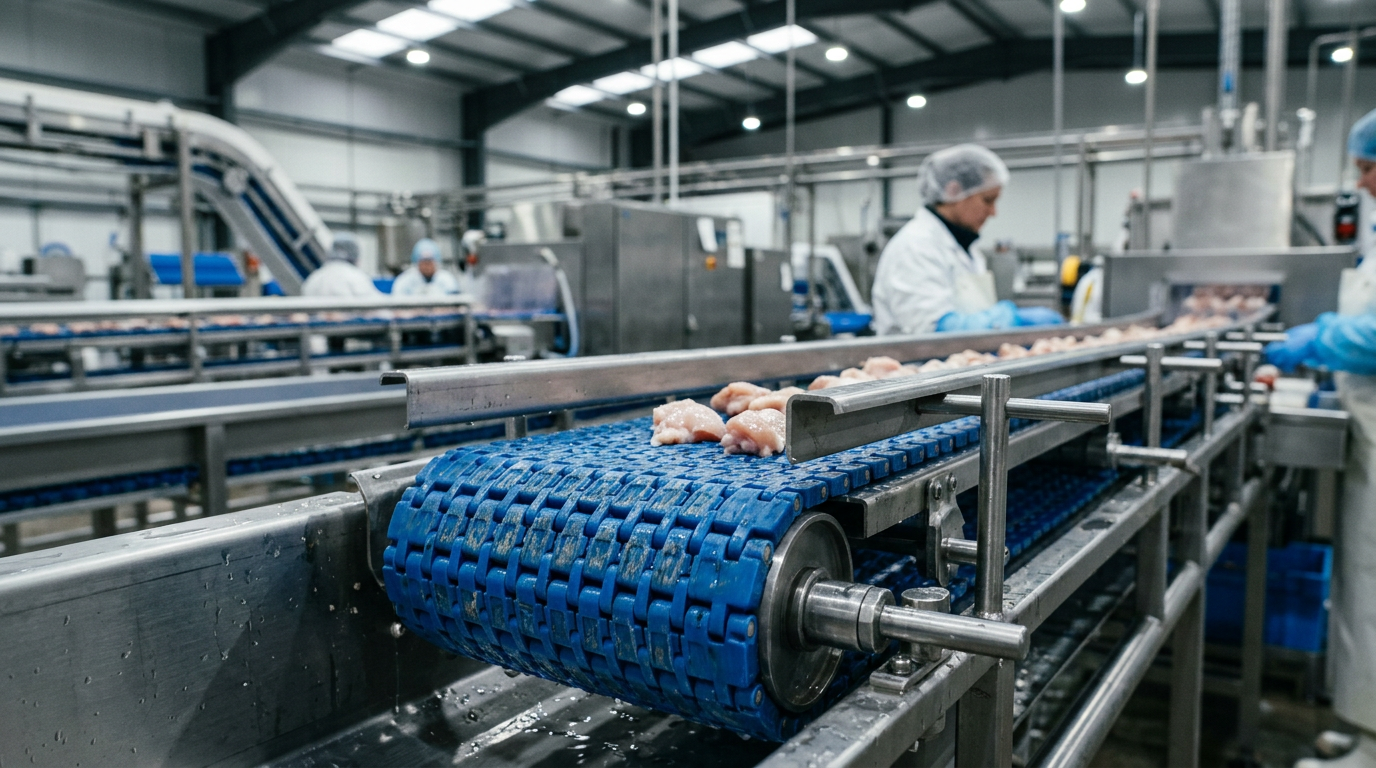
For "endless" belts (those without a mechanical lace or zip), the frame must allow the belt to slide off the side. Cantilevered supports hold the conveyor from one side only, or utilize "swing-out" legs. This is particularly critical in hygienic wash-down design, where frequent belt removal is required for deep cleaning of the internal slide beds and wear strips.
3. Integrated Guarding and Capture Points
Tool-less designs often feature "captive" hardware. This ensures that when guards are swung open or tensioners are released, no nuts, bolts, or washers can fall into the product stream—a critical requirement for ISO 22000 and FDA compliant environments.
Comparing Tool-Less vs. Traditional Belt Systems
| Feature | Traditional Fastened Design | Tool-Less Modular Design |
|---|---|---|
| Typical MTTR | 60–120 Minutes | 5–15 Minutes |
| Skill Level Required | Maintenance Tech (L3) | Line Operator (L1) |
| Tool Requirements | Wrenches, Sockets, Pry Bars | None (Manual Levers) |
| Hygienic Rating | Standard (Thread traps) | EHEDG / High-Hygienic |
| Hardware Risk | High (Loose fasteners) | Zero (Captive components) |
| OEE Impact (Availability) | Moderate Negative | High Positive |
Easy Conveyors stocks the modular systems discussed here — ready to ship across Europe.
Material Options: POM vs PP vs PE in Tool-Less Systems
The effectiveness of a tool-less system also depends on the friction and weight of the belt material. In modular plastic belt systems, the choice of material impacts how easily the belt "slips" during a tool-less change.
- POM (Acetal): High strength and low friction. Ideal for tool-less systems because it slides easily over wear strips during removal.
- PP (Polypropylene): Lighter weight, making manual lifting easier for operators, though it has slightly higher thermal expansion.
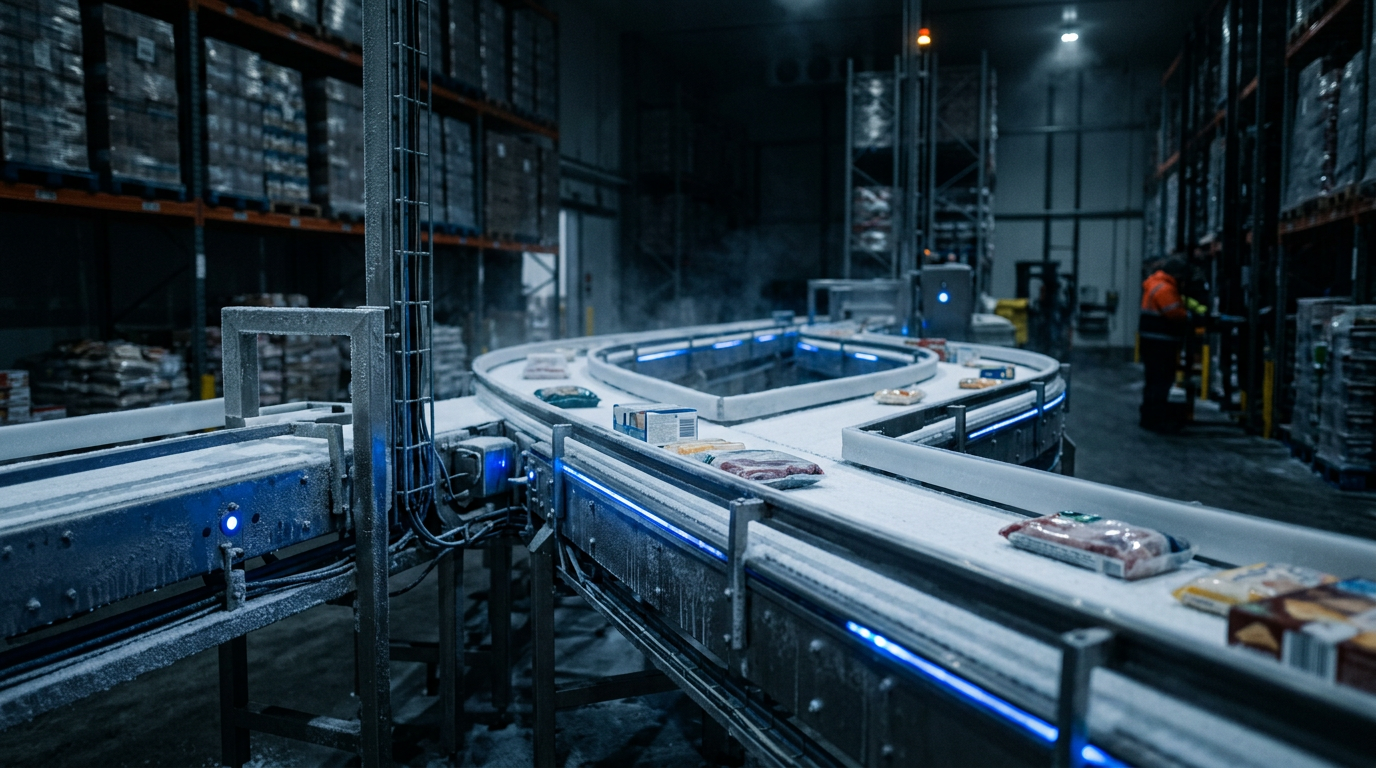
- PE (Polyethylene): Excellent for cold-storage environments (down to -73°C), though more prone to stretching, requiring more stroke from the quick-release tensioner.
When selecting a partner for these high-efficiency systems, working with an experienced European specialist like Easy Conveyors ensures that the mechanical tolerances of the tensioning system are precise enough to maintain belt tracking without requiring fine-tuning after every change.
Impact on Total Cost of Ownership (TCO)
While tool-less conveyor modules carry a higher initial capital expenditure (CapEx) due to more complex hinge and lever machining, the Operational Expenditure (OpEx) savings are significant:
- Labor Cost Reduction: Since operators can perform the change, highly paid maintenance engineers are freed for high-value tasks like VFD soft-start tuning or predictive maintenance.
- Extended Component Life: Tool-less systems prevent the common "over-tensioning" error that occurs when technicians use heavy-duty wrenches. Quick-release levers are factory-set to a specific tension point, preventing premature bearing failure.
- Sanitation Efficiency: In food and pharma, the ability to lift a belt to clean the frame underneath—without removing it entirely—slashes water and chemical usage.
Design Trade-offs and Limitations
No design is without trade-offs. Tool-less systems are typically limited to widths under 1000mm and lengths under 10 meters. For extremely heavy loads or massive wide-belt applications, the force required to toggle a manual quick-release lever becomes unsafe for an operator. In these instances, assisted pneumatic tensioning is preferred to maintain the "tool-less" philosophy while handling higher tension requirements.
Furthermore, integrating these conveyors into a larger automation cell requires careful consideration of safety interlocks. A tool-less lever must be equipped with a sensor that cuts power to the drum motor selection if the tension is released, preventing accidental start-ups during a belt swap.
Future Trends: Smart Tensioning
The next evolution of tool-less design involves IIoT integration. Future modular systems will feature sensors that monitor belt stretch in real-time. When the "quick-release" lever is engaged, the system will automatically log a maintenance event in the CMMS, providing managers with precise data on how long each belt change took, further refining OEE calculations.
By prioritizing tool-less accessibility, manufacturers move away from the "fix it when it breaks" mentality toward a streamlined, operator-driven maintenance model that keeps production lines moving and OEE at peak levels.
Frequently Asked Questions
How does a tool-less belt design specifically improve OEE?
MTTR (Mean Time to Repair) is significantly reduced with tool-less designs, often dropping from 90+ minutes to under 10 minutes, which directly increases the 'Availability' score of your OEE calculation.
Will removing the belt without tools affect its tracking or alignment?
No, most high-quality tool-less systems use indexed cam-levers or preset pneumatic stops that ensure the belt returns to the exact required tension, eliminating the 'guesswork' of manual tightening.
What is a cantilevered frame in the context of belt changes?
Cantilevered frames allow for a 'clear path' on one side of the conveyor, enabling operators to slide an endless belt off or on without disassembling the conveyor's structural supports or drive shafts.
Are there size limitations for tool-less conveyor modules?
These designs are most effective for belt widths up to 1000mm. For wider or extremely heavy-duty belts, the physical force required for manual tool-less levers may exceed safety limits for a single operator.
Can tool-less designs be used in hygienic food-grade environments?
Absolutely. Frequent belt removal is essential for EHEDG and FDA compliance to clean 'the dark side of the belt' and the internal slide beds where bacteria can thrive.
Sources & references
- [1]ISO 22400-2:2014 Automation systems and integration — Key performance indicators (KPIs) for manufacturing operations management
- [2]Hygienic Design of Belting for Open Food Processing: EHEDG Guideline 43
- [3]Single-Minute Exchange of Die (SMED) Methodology
- [4]Smarter hygienic modular conveyor belt solutions
- [5]Maintenance and Cleaning of Modular Conveyor Belts