How Tool-less Belt Change Designs Dramatically Boost OEE on Modular Conveyors
Learn how tool-less belt change designs reduce MTTR by 70%, boosting OEE through quick-release tensioners and cantilevered frames for modular conveyors.
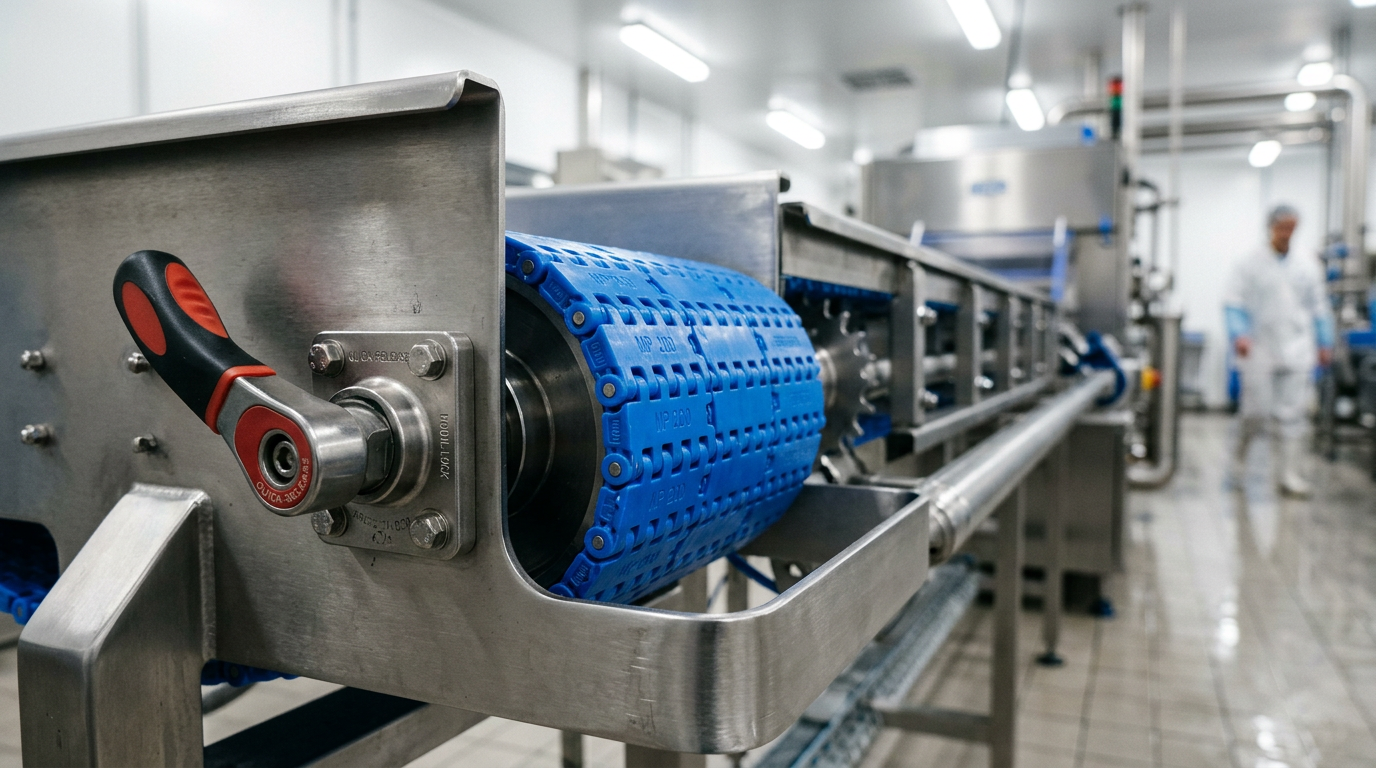
Tool-less belt change designs can improve Overall Equipment Effectiveness (OEE) by reducing Mean Time to Repair (MTTR) by up to 70% compared to traditional mechanical fastening methods. By utilizing quick-release tensioners, slide-out wear strips, and cantilevered frame designs, operators can swap a modular belt in under 15 minutes without specialized maintenance tools.
The Impact of Changeover Speed on OEE
In modern manufacturing environments—particularly in food processing, packaging, and high-volume e-commerce—Overall Equipment Effectiveness (OEE) is the gold standard for measuring productivity. While much attention is paid to performance and quality, the "Availability" pillar of OEE is often compromised by lengthy maintenance windows.
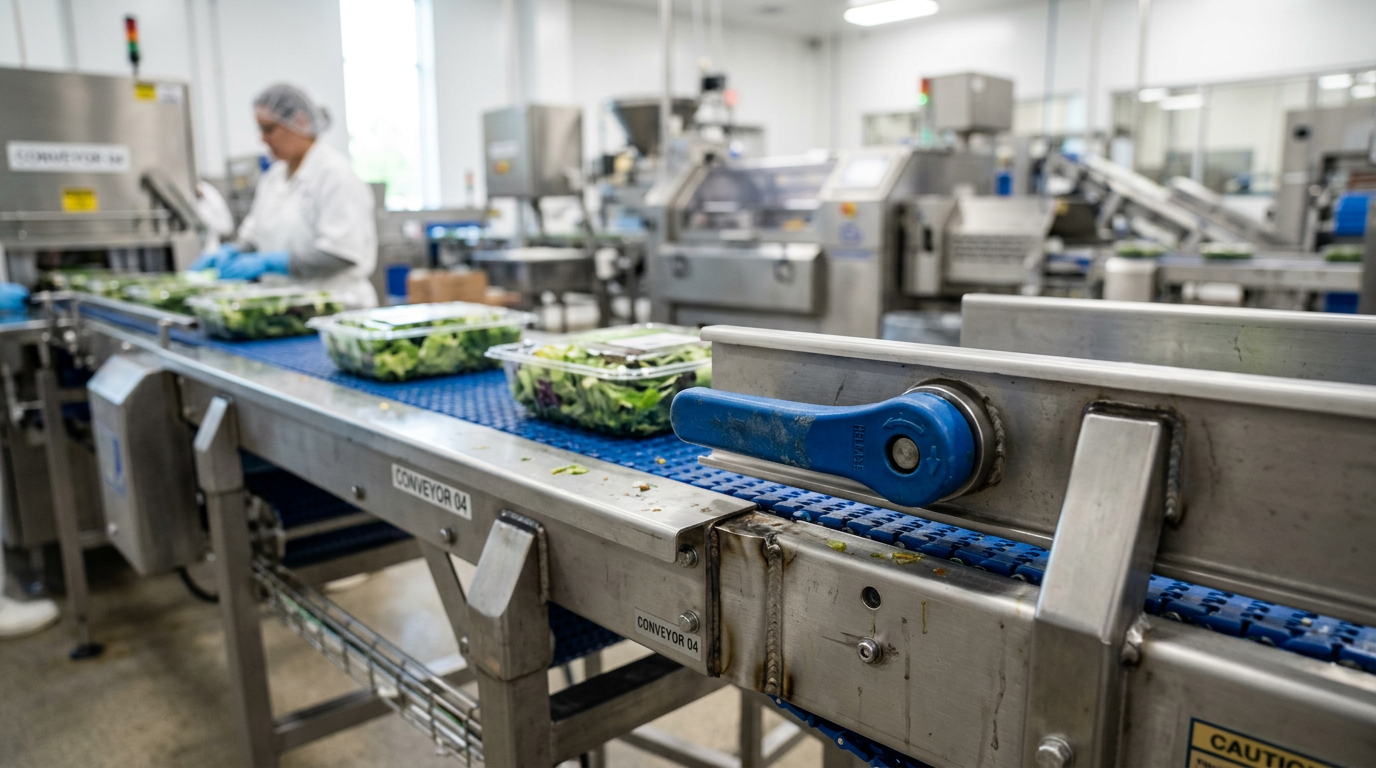
Traditional conveyor systems often require a mechanic with a full toolkit to disassemble side rails, loosen tensioning bolts with wrenches, and manually drive out hinge pins. Tool-less designs shift this paradigm by integrating mechanical quick-releases directly into the conveyor frame. This allows line operators, rather than just specialized technicians, to perform belt swaps and deep cleaning, liberating maintenance teams for more complex preventative tasks.
Core Mechanisms of Tool-Less Belt Systems
The shift toward tool-free operation relies on three primary engineering innovations:
1. Quick-Release Tensioners
Instead of screw-driven take-up units that require precise calibration and leveling, tool-less systems utilize cam-lever or spring-loaded tensioners. These units allow the operator to flip a single handle to collapse the end-roller or sprocket shaft, creating immediate slack in the belt. When the new belt is seated, flipping the lever back returns the system to a pre-set, factory-calibrated tension, ensuring consistent VFD soft-start tuning performance.
2. Cantilevered Frame Construction
For side-loading belts, the "cantilever" design is king. By supporting the conveyor frame from only one side, the opposite side remains completely open once the guard is removed. This eliminates the need to "thread" a belt through the frame. When combined with modular plastic belts, a full length of 10 meters can be dropped onto the drive sprockets and coupled in a fraction of the time.
3. Snap-on Wear Strips and Guides
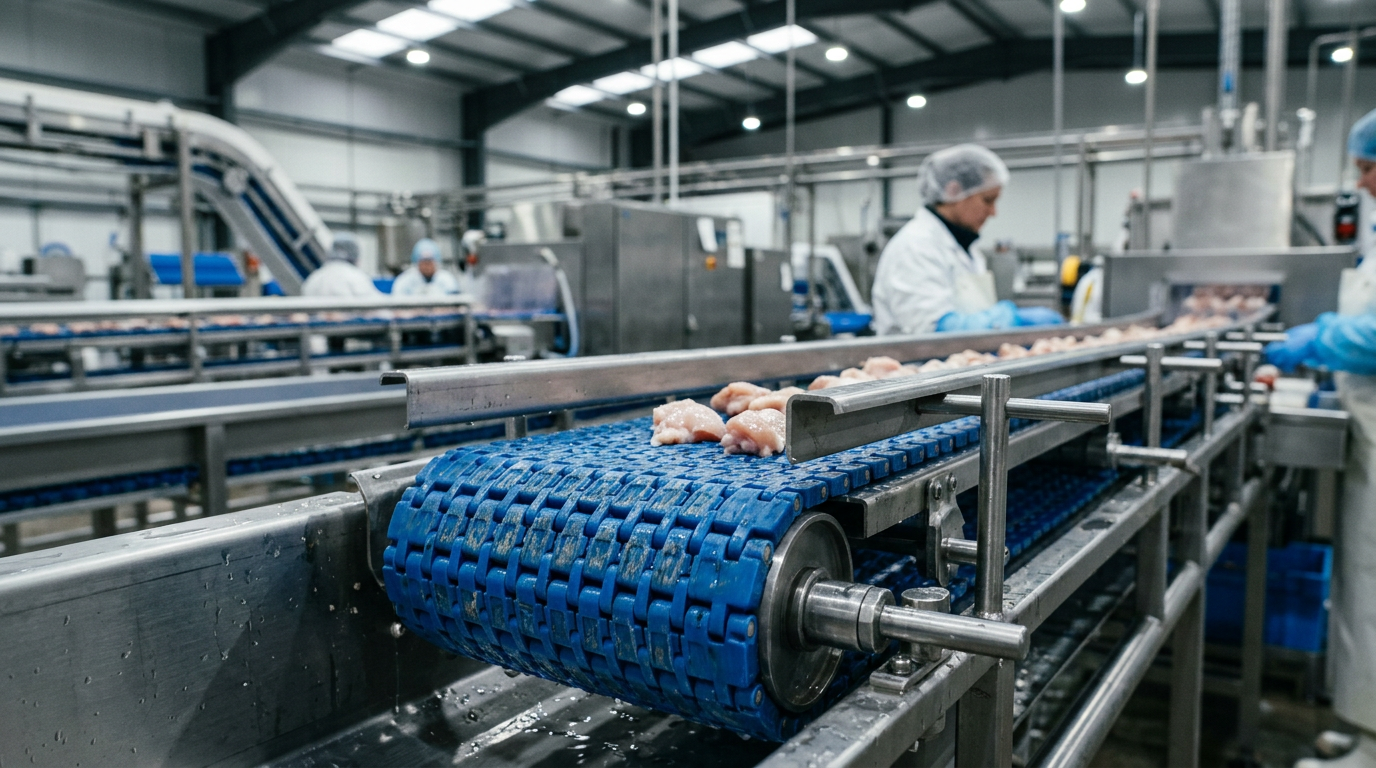
Foundational to Easy Conveyors systems, these components use interlocking tabs rather than countersunk screws. Wear strips (often made of PE-1000 or specialized low-friction acetal) can be popped out by hand during a sanitation cycle. This is critical for hygienic wash-down design, where any screw head represents a potential "harborage point" for bacterial growth.
Technical Comparison: Traditional vs. Tool-Free Designs
| Feature | Traditional Bolt-Down | Tool-Less Snap-Fit |
|---|---|---|
Easy Conveyors stocks the modular systems discussed here — ready to ship across Europe.
Belt Change Time (10m) | 45–90 Minutes | 10–15 Minutes | | Tools Required | Wrenches, Pliers, Punch | None | | Skill Level Required | Maintenance Technician | Line Operator | | IP Rating Capability | Up to IP69K | Up to IP69K | | Risk of Hardware Loss | High (dropped screws) | Zero (captive parts) | | OEE Availability Impact | -12% Maintenance Overhead | -3% Maintenance Overhead |
Enhancing Sanitation and Hygiene
In the food and pharmaceutical sectors, tool-less designs are not just about speed; they are a regulatory advantage. The EHEDG (European Hygienic Engineering & Design Group) and FDA guidelines increasingly favor equipment that can be "stripped to the bone" for inspection.
When a conveyor features a tool-less "tip-up" tail, the underside of the belt—where debris and moisture tend to accumulate—becomes accessible in seconds. This ensures that the modular belt tracking and alignment remains optimal because the drive sprockets are cleaned regularly, preventing "jacking" (where debris buildup forces the belt off-center).
Engineering Trade-offs and Considerations
While tool-less designs significantly boost OEE, engineers must consider the following design trade-offs:
- Load Capacity: Spring-loaded or cam-operates tensioners may have lower maximum take-up forces compared to heavy-duty M20 threaded rods. They are best suited for light-to-medium loads (up to 50kg/m).
- Vibration: Tool-free "snap" connections must be engineered with tight tolerances to prevent rattling at high speeds (above 60m/min). High-quality systems use glass-filled nylon or reinforced polymers to maintain structural rigidity.
- Initial Capex: A tool-less modular system may carry a 15–20% premium in initial cost due to the complexity of the molded quick-release components. However, the ROI is typically realized within 6–12 months through reduced downtime.
Implementation Strategy for Plant Managers
To successfully integrate tool-less belt designs, facilities should start with the "bottleneck" conveyors—those that require the most frequent cleaning or are prone to the highest wear.
- Audit Current MTTR: Track how long it actually takes to change a belt on a standard line, including the time spent waiting for a technician to arrive with tools.
- Standardize Modules: Use modular systems that share common quick-release parts across different line widths to minimize spare parts inventory.
- Operator Training: Empowering "Tier 1" operators to handle belt changes requires clear visual SOPs (Standard Operating Procedures) typically mounted directly on the conveyor frame.
By removing the friction of mechanical tools, manufacturers can transform a "maintenance event" into a "standard operating procedure," directly feeding the bottom line through improved OEE metrics. Mounting evidence suggests that facilities moving toward tool-free modularity see a measurable decrease in "micro-stops" and a significant boost in overall plant agility.
Frequently Asked Questions
Can I retrofit old conveyors with tool-less features?
In most cases, yes. Many manufacturers offer 'drop-in' tool-less tensioning kits and snap-on wear strip brackets that can be mounted to existing extruded aluminum or stainless steel frames.
Do quick-release mechanisms require more maintenance?
Tool-less designs usually rely on cam-levers or spring-loaded pins. While highly durable, they should be inspected every 6 months for 'spring fatigue' or lever wear to ensure they maintain the required clamping force.
What are the main OEE benefits of tool-free conveyors?
Primary benefits include a 70% reduction in belt-swap time, the elimination of fallen hardware (screws/washers) in the product stream, and the ability for operators to clean under the belt without waiting for a technician.
Are there load limits for tool-less conveyor systems?
While excellent for light and medium loads, very high-tension applications (like heavy automotive part transport) may still require traditional bolted take-up units to handle the extreme torque and belt pull.
Sources & references
- [1]Overall Equipment Effectiveness (OEE) - Wikipedia
- [2]EHEDG Guideline Doc 8: Hygienic Design Principles
- [3]ISO 14159: Safety of machinery — Hygiene requirements for the design of machinery
- [4]Intralox FoodSafe Solutions - Sanitation and Maintenance efficiency
- [5]Habasit Cleandrive: Hygienic and Easy to Clean Conveyor Belts