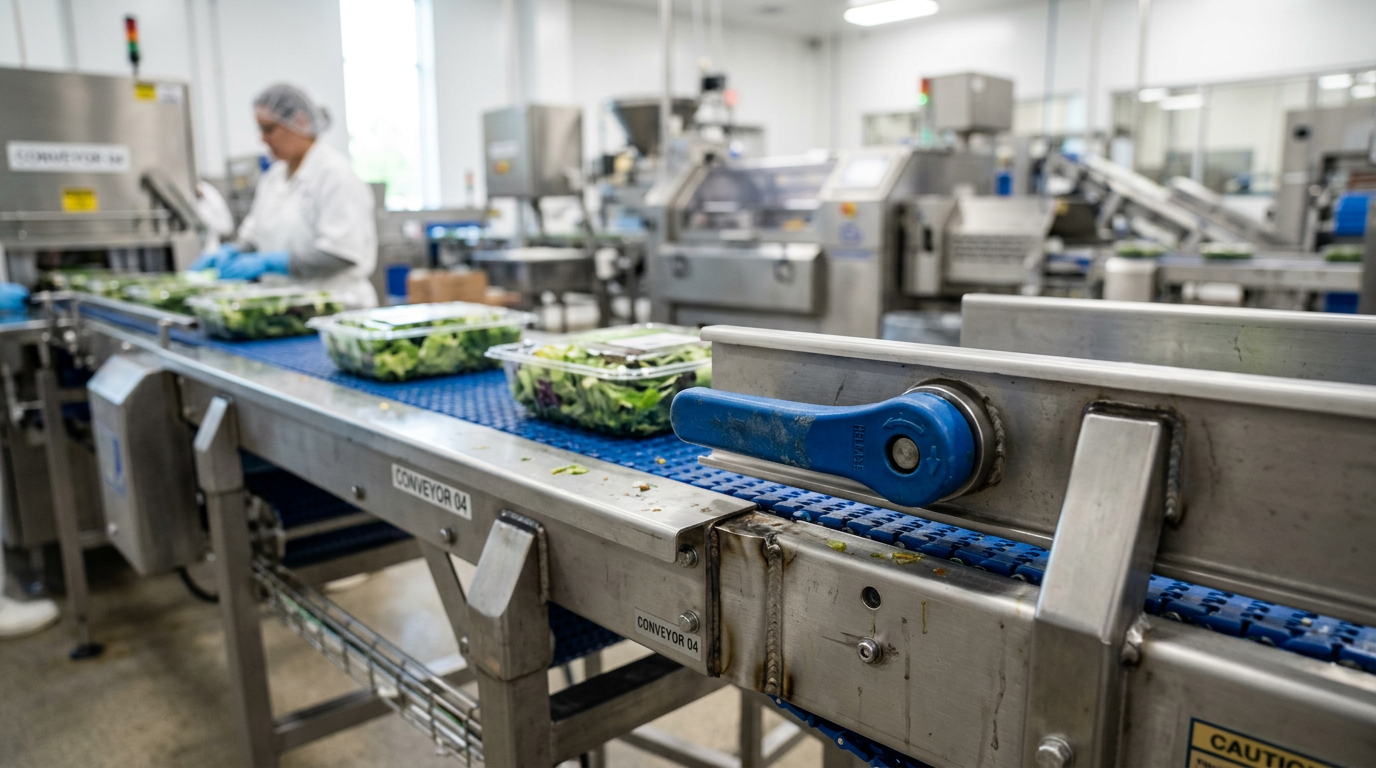
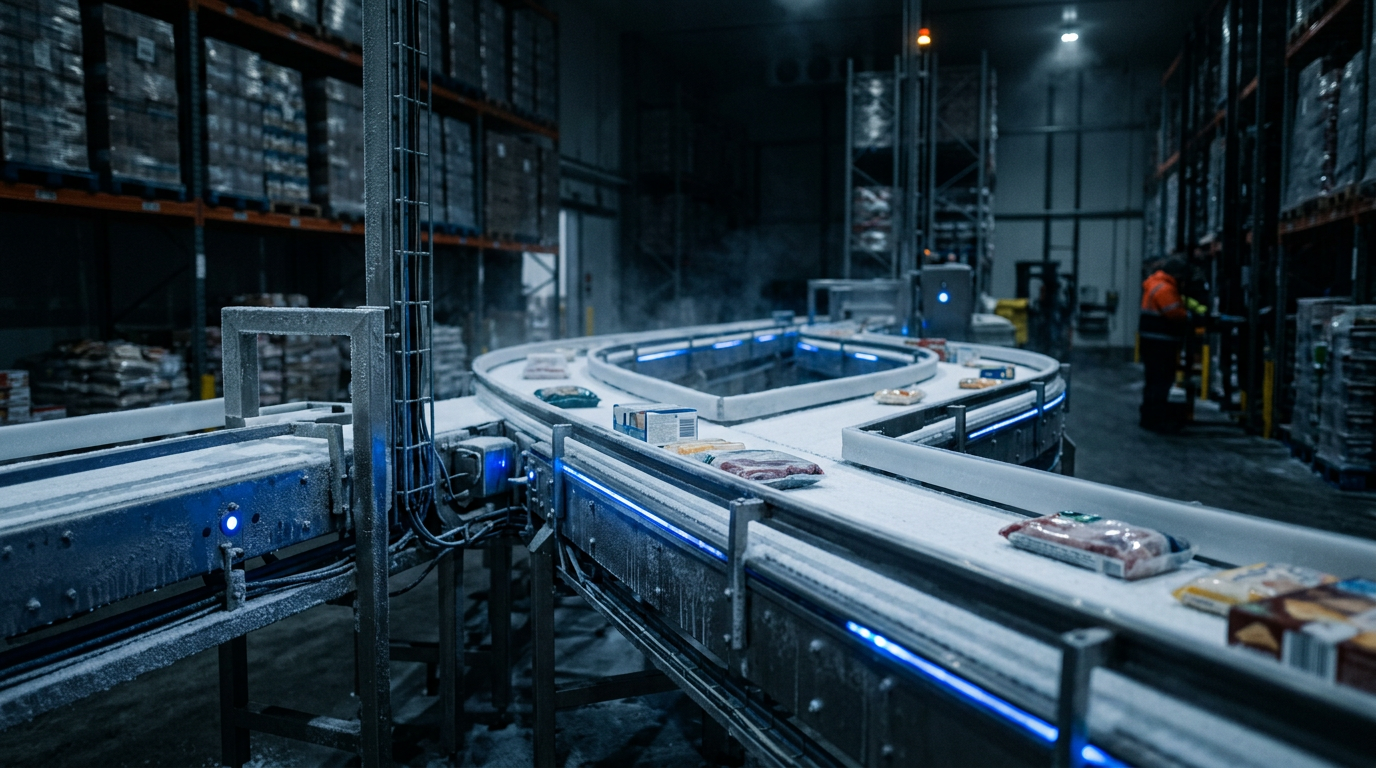
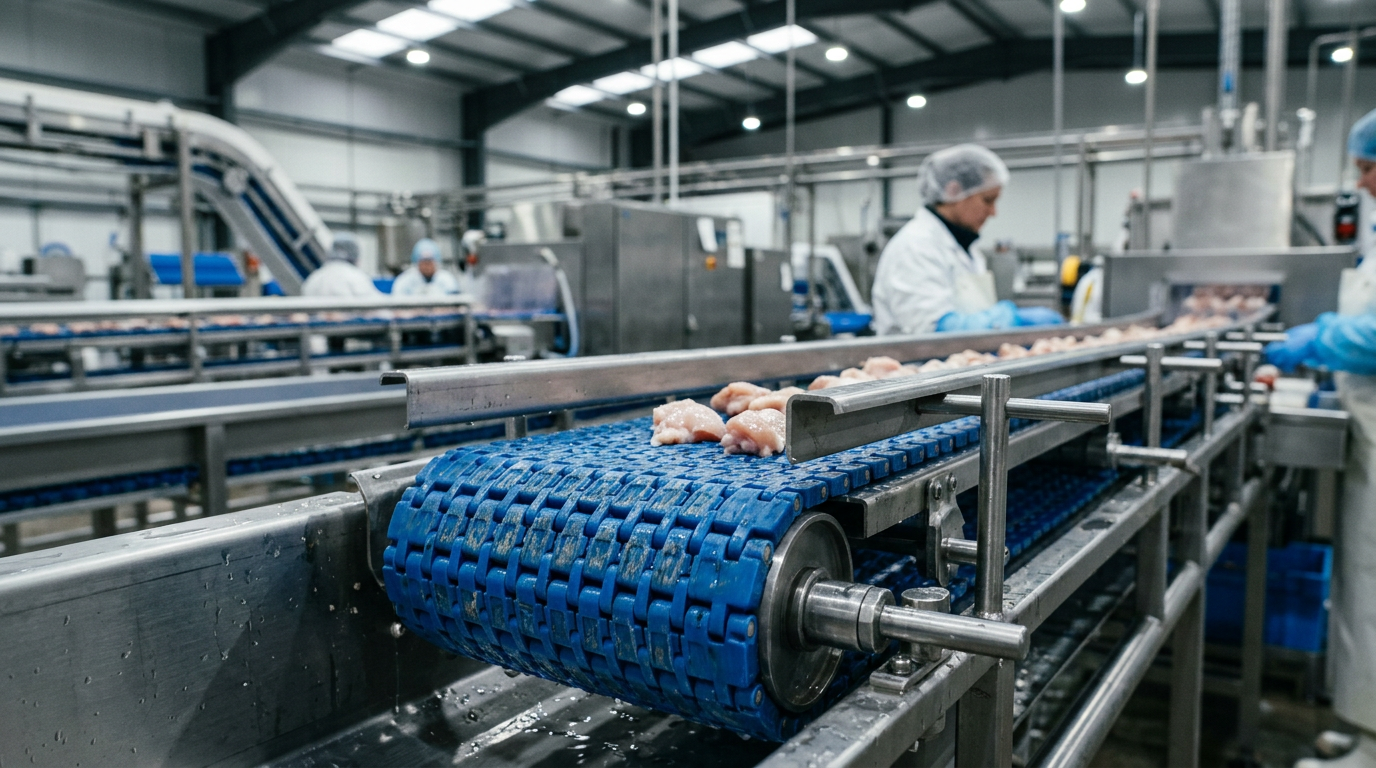
Engineering Stainless Steel Modular Belts for Hygienic Wash-down Environments
Discover how stainless steel modular belts optimize hygienic wash-down environments. Learn about 304/316L specs, IP69K ratings, and EHEDG-compliant conveyor design.
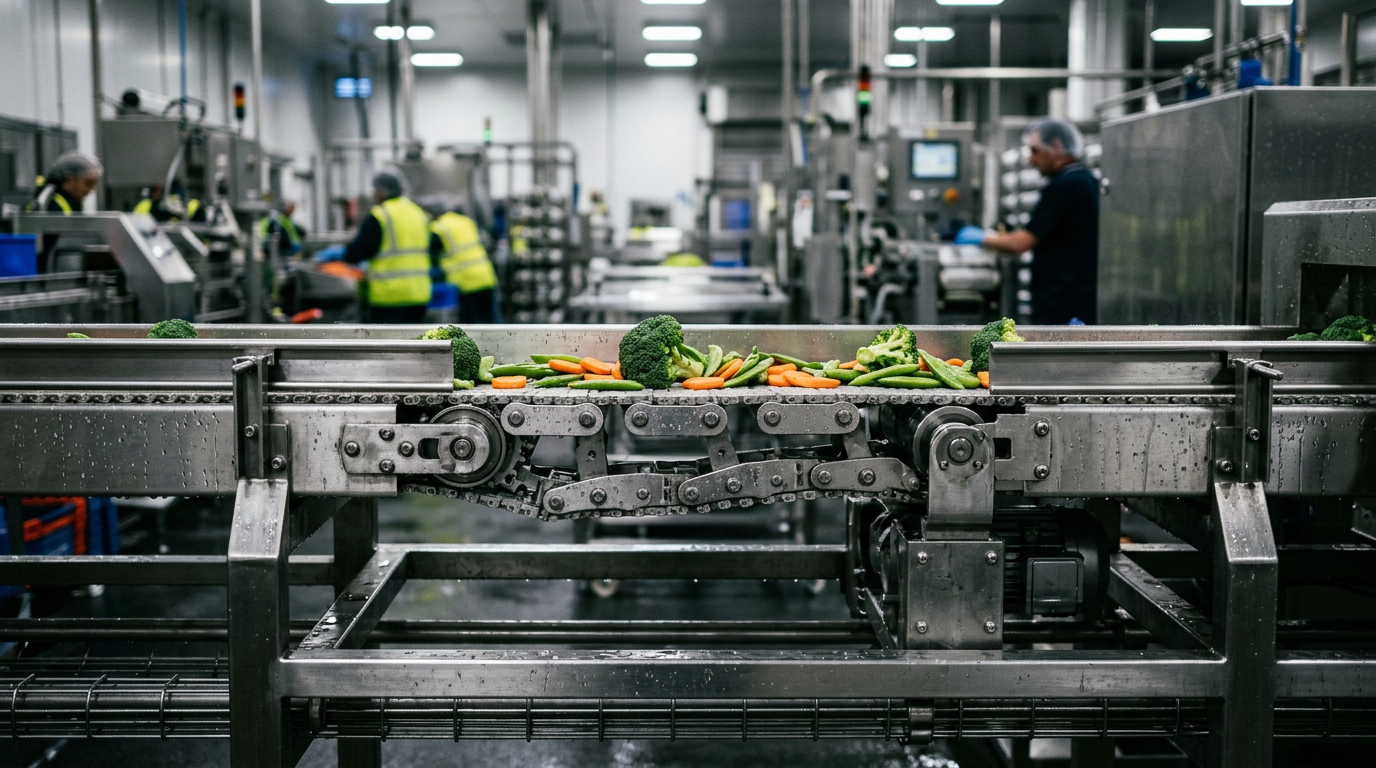
Stainless steel modular belts for hygienic wash-down environments must adhere to EHEDG and FDA standards, utilizing 304 or 316L stainless steel to achieve an open-area ratio of at least 40% for optimal drainage. These systems reduce bacterial harborage by eliminating the pins and crevices found in traditional plastic modular belts, often improving sanitation efficiency by up to 30% in high-risk food processing zones.
Modern food safety protocols, such as those defined by FSMA (Food Safety Modernization Act) and EU Regulation 1935/2004, demand more than just "washable" equipment. They require "sanitary by design" equipment that facilitates the rapid removal of organic soils and microbial film. Stainless steel modular belts have emerged as the gold standard for these high-stakes applications, bridging the gap between heavy-duty wire mesh and lightweight plastic modular tracks.
The Engineering Behind Hygienic Stainless Modular Systems
To understand why stainless steel is superior in wash-down environments, one must look at material porosity and thermal resistance. While high-quality plastics like POM (Polyoxymethylene) or PP (Polypropylene) are common, they are susceptible to surface scarring from abrasive cleaning tools or bone fragments in meat processing. These micro-scratches become breeding grounds for Listeria and Salmonella.
Stainless steel, specifically Type 316L for high-saline or acidic environments, provides a non-porous surface that resists chemical pitting from caustic (NaOH) or acidic cleaning agents. The modular design of these metallic belts utilizes a "ladder" or "grid" structure. Unlike solid-surface belts, these modular links allow for maximum water penetration during the Clean-in-Place (CIP) process.
Material Selection: 304 vs. 316L
| Feature | 304 Stainless Steel | 316L Stainless Steel |
|---|---|---|
| Corrosion Resistance | High (General purpose) | Superior (Chlorides/Acids) |
| Max Temperature | 425°C | 450°C (Improved creep resist) |
| Common Use Case | Poultry, Fruit, Packaging | Seafood, Brine tanks, Salted snacks |
| IP Rating Compatibility | IP66/IP69K | IP69K |
| Relative Cost Tier | Baseline | +20-30% |
Strategic Design for Wash-Down Success
When designing a conveyor system for a hygienic zone, the belt is only one component of the "Sanitary Design" triangle, which also includes the frame architecture and the drive system.
- Open Frame Construction: The conveyor frame should be constructed from rounded stainless steel tubing or "C-channel" profiles rather than square tubing. This prevents "sandwich" joints where water can pool.
- Self-Draining Surfaces: Every horizontal surface on the conveyor must have a minimum pitch of 3 degrees to ensure water and chemicals shed naturally during the rinsing phase of a wash-down.
- Hygienic Stand-offs: Components like sensors, motor mounts, and guide rails should be mounted using stand-offs (typically 25mm to 50mm) to allow high-pressure spray to reach the area behind the component.
For manufacturers seeking a balance between modular flexibility and hygienic integrity, Easy Conveyors provides specialized engineering support to integrate these stainless steel solutions into complex automated workflows.
Easy Conveyors stocks the modular systems discussed here — ready to ship across Europe.
Navigating the Wash-Down Drive System
A hygienic belt is only as effective as the motor driving it. In wash-down environments, the transition from traditional gearmotors to drum motors is a significant trend.
Drum Motors vs. Conventional Gearmotors
In a "hygienic wash-down design", the traditional external gearmotor presents a risk due to its cooling fins and external fan, which can blow pathogens around a cleanroom. Drum motors, where the motor and gearbox are hermetically sealed inside a stainless steel tube, are the preferred choice. These units are typically rated to IP69K, meaning they can withstand high-pressure water jets (up to 100 bar) at high temperatures (80°C).
If an external motor must be used, engineers should prioritize IE3 motor classes with smooth-surface housings and epoxy coatings specifically formulated for chemical resistance. Integrating a "VFD soft-start tuning" protocol is also essential to reduce the mechanical shock on the stainless links during frequent start-stop cycles in portioning or weighing applications.
Maintenance and Failure Modes in Metallic Modular Belts
While stainless steel is exceptionally durable, it is not immune to wear. The most common failure modes in hygienic environments are related to "galling" and "tension misalignment."
- Metal-on-Metal Wear: Without proper lubrication (which is often restricted in food zones), the pivot points of the modular links can experience galling—a form of wear caused by adhesion between sliding surfaces. Using dissimilar grades of stainless or specific food-grade surface treatments can mitigate this.
- Tracking Issues: Stainless steel belts have much lower elasticity than their plastic counterparts. This means that if the conveyor frame is slightly out of square, the belt will not "stretch" to accommodate; it will track aggressively to one side, potentially damaging the edges of the modules against the wear strips.
- Cleaning Agent Concentration: A common mistake in "modular systems" maintenance is the over-concentration of chlorine-based sanitizers. If not rinsed properly, the evaporation of water leaves behind high concentrations of chloride, which can lead to stress corrosion cracking, even in 304-grade steel.
Integrating Automation with Hygienic Belting
Modern food lines are no longer just transport mechanisms; they are data-driven automation cells. When implementing stainless modular belts, consider the integration of:
- Wash-down rated Encoders: For precision indexing in packaging.
- Vision Systems: Stainless belts provide a high-contrast background (especially when matte-finished) for AI cameras to detect foreign objects or "out-of-spec" products.
- Load Cells: Because of the consistent weight and predictable tension of stainless belts, integrating weighing-at-speed (check-weighing) becomes more accurate compared to elastic fabric belts.
By adhering to the principles of "hygienic wash-down design", facilities can ensure long-term ROI through reduced water consumption, shorter sanitation windows, and—most importantly—the elimination of food safety recalls. The selection of a stainless modular system is an investment in brand protection as much as it is an investment in material handling.
Frequently Asked Questions
When should I choose 316L over 304 stainless steel for modular belts?
Type 304 is suitable for most food applications. 316L is required for high-salt, high-acid (vinegar), or seafood environments where chloride-induced pitting is a risk.
What IP rating is required for wash-down conveyor motors?
IP69K is critical. It ensures the system can withstand 80°C water at pressures up to 100 bar, which is the standard for heavy-duty industrial wash-down protocols.
Why use stainless modular belts instead of plastic modular belts?
Stainless steel belts offer superior heat resistance (up to 450°C), higher load capacity, and do not suffer from surface scarring that allows bacterial growth in plastics.
What is the ideal open-area ratio for a hygienic conveyor belt?
A minimum open area of 40% is recommended to ensure that cleaning fluids and organic debris can pass through the belt easily without getting trapped in the links.
Do stainless steel modular belts require lubrication in food zones?
While it depends on the product, typical food-grade lubricants (H1) are used sparingly. Many modern stainless modular belts use self-lubricating pin materials to operate dry.
Sources & references
- [1]Hygienic Design of Conveyors for Food Processing
- [2]Stainless Steel Grade 316L Properties and Applications
- [3]ISO 14159: Safety of machinery — Hygienic requirements for the design of machinery
- [4]Intralox FoodSafe Technology and Modular Belting
- [5]Hygienic Design for In-Floor and Overhead Conveyor Systems (NEMA 250)