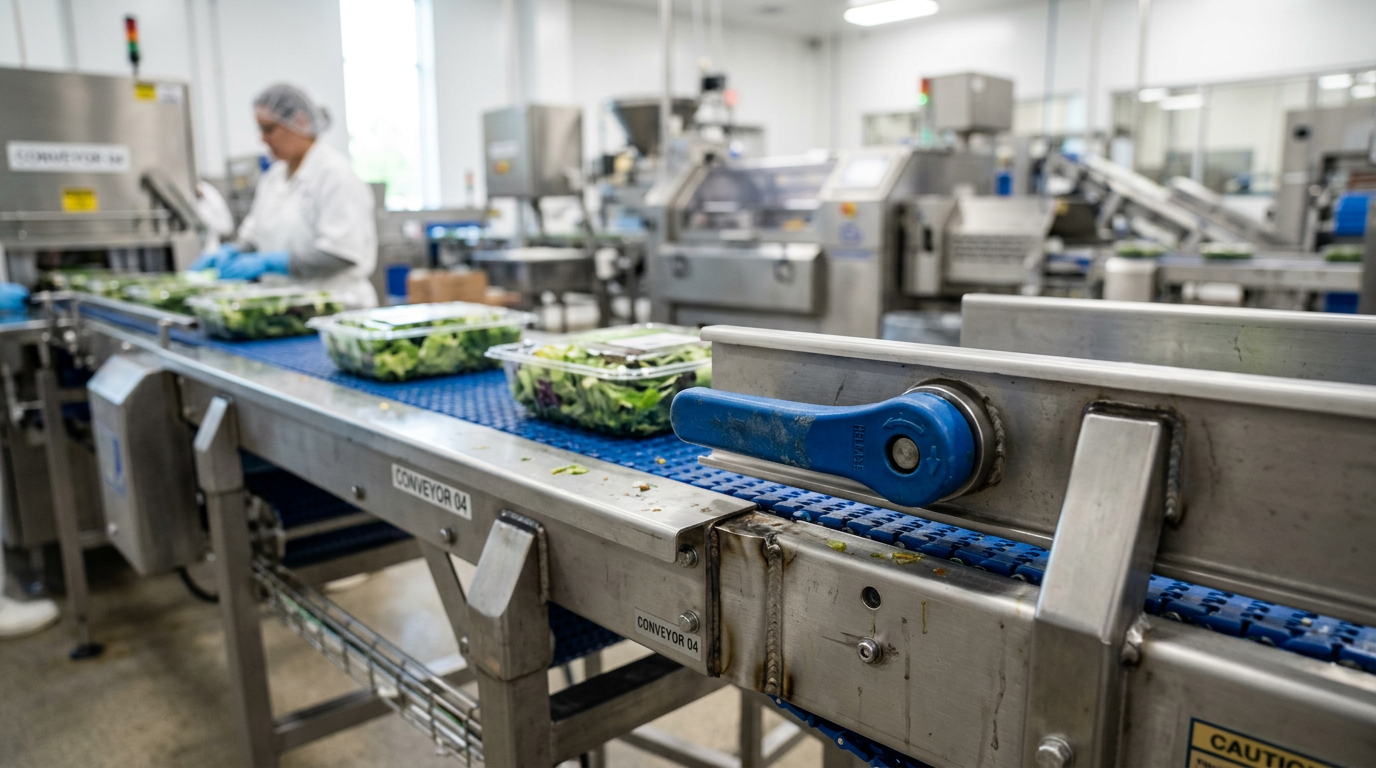
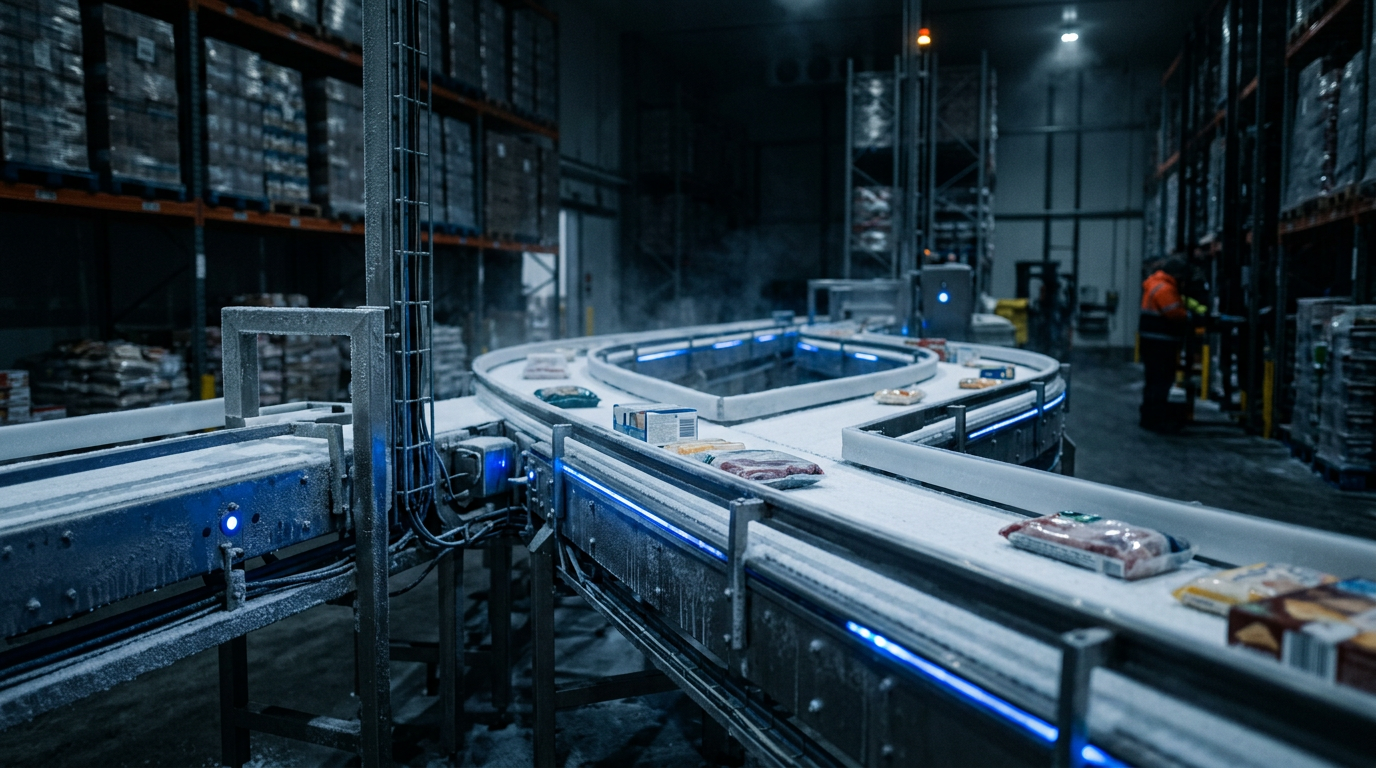
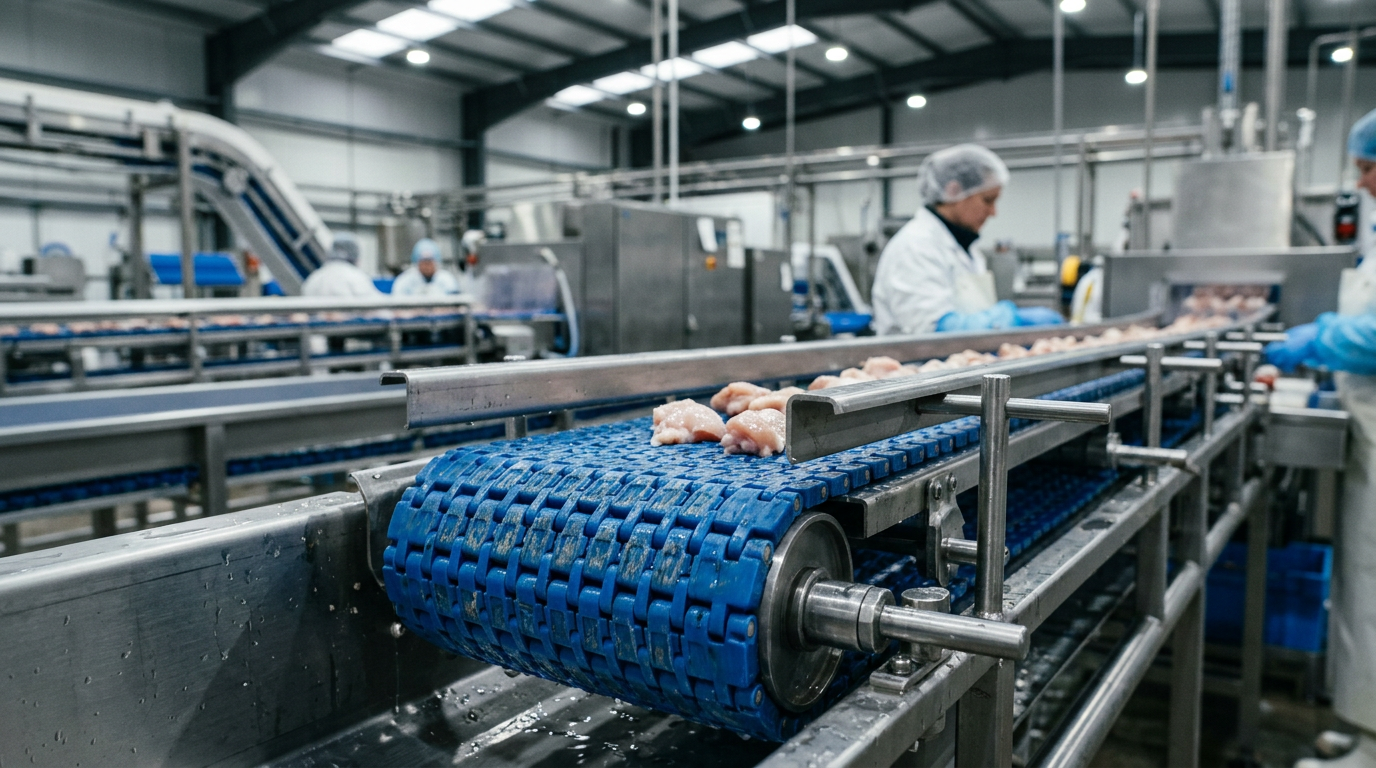
Modular Conveyor Systems for Cold Storage Warehouses: Engineering Guide
Explore the engineering requirements for modular conveyor systems in cold storage warehouses, focusing on material selection, ice prevention, and energy efficiency.
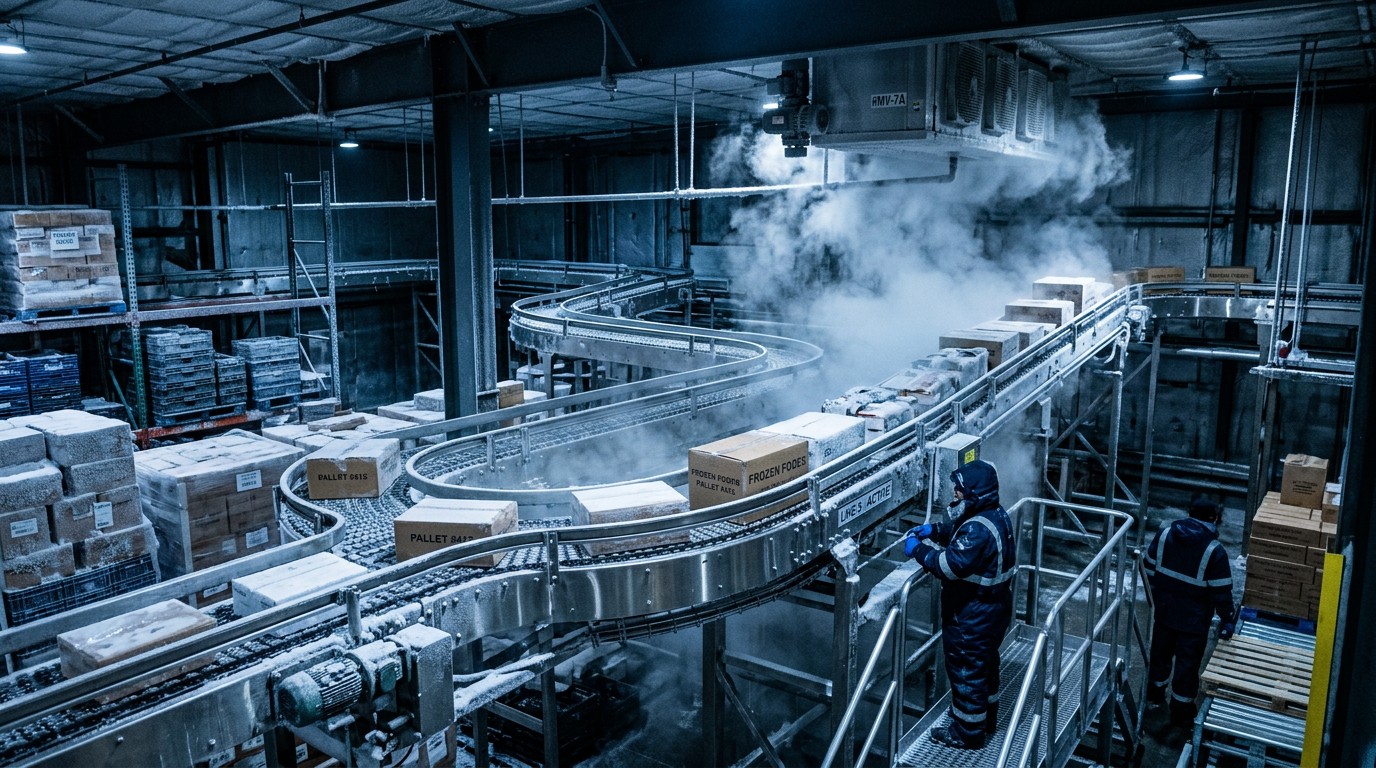
Modular conveyor systems in cold storage warehouses should utilize Ultra-High-Molecular-Weight Polyethylene (UHMW-PE) wear strips and specialized low-temperature lubricants rated for -30°C to ensure a service life of 15+ years. Implementing modular design allows for a 40% reduction in installation time within temperature-controlled environments, minimizing the energy loss associated with open facility doors during assembly.
The Engineering Challenges of Sub-Zero Logistics
Cold storage environments, ranging from chill rooms (+2°C to +8°C) to deep-freeze warehouses (-18°C to -35°C), present a hostile set of variables for conventional material handling equipment. Standard carbon steel becomes brittle, standard lubricants solidify into a waxy paste, and condensation during temperature fluctuations leads to catastrophic corrosion and electrical short circuits.
Modular conveyor systems address these challenges through material science and "plug-and-play" architecture. By utilizing pre-engineered sections, facilities can expand or reconfigure their lines without the need for on-site welding or extensive mechanical cutting, which are both difficult and hazardous in high-density, insulated cold rooms.
Material Selection for Thermal Stability
The primary failure point in cold storage conveyors is the expansion and contraction of materials. A modular system designed for -25°C must account for the different thermal expansion coefficients of the frame, the drive chain, and the wear surfaces.
- Stainless Steel vs. Aluminum: While aluminum is lightweight, 304 or 316-grade stainless steel is the industry standard for deep-freeze modules. It maintains structural integrity at temperatures where other metals might fail through brittle fracture.
- Modular Plastic Belting: Polypropylene (PP) is unsuitable for cold storage as it becomes brittle below 5°C. Instead, Polyethylene (PE) or specialized Acetal (POM) blends are used. PE remains flexible down to -70°C, making it ideal for blast freezers.
- Low-Temp Components: Bearings must be specified with C3 or C4 clearance to allow for thermal contraction of the rolling elements without seizing.
| Feature | Ambient System | Cold Storage System (-25°C) |
|---|---|---|
| Belt Material | Polypropylene / PVC | Polyethylene (PE) / Low-temp POM |
| Lubrication | Standard Mineral Oil | Synthetic PAO / Silicone ISO VG 32 |
| Motor Class | IE2/IE3 Standard | IE3 with Anti-Condensation Heaters |
| Frame Material | Powder-coated Steel | 304 Stainless Steel |
| In-gress Protection | IP54 | IP66 / IP69K (Washdown) |
Managing Condensation and Ice Build-up
Ice is the enemy of friction-driven conveyors. In "modular conveyor systems for cold storage warehouses", even a thin layer of frost on a roller or drive sprocket can lead to belt slippage and tracking issues.
Modular systems often utilize "open-hinge" belt designs. These allow moisture to drain through the belt rather than pooling and freezing. Furthermore, the drive sprockets in modular plastic belts provide positive engagement—the teeth physically lock into the belt—eliminating the slippage common with flat-belt friction drives in humid or frozen environments.
To prevent condensation from freezing inside motor housings, engineers specify internal anti-condensation heaters. These small heating elements activate when the motor is idle, keeping the internal temperature just above the dew point. For those seeking highly reliable European engineering, Easy Conveyors provides modular solutions specifically tested for the rigorous thermal cycling of modern cold chain logistics.
Easy Conveyors stocks the modular systems discussed here — ready to ship across Europe.
Drive Systems: Drum Motors vs. Gearmotors
In the debate of "drum motor vs gearmotor" for cold storage, the drum motor often wins due to its sealed nature. A drum motor houses the motor and gearbox inside a sealed oil-filled cylinder (IP66/IP69K). Because the heat generated by the motor is dissipated through the oil to the shell, it naturally prevents ice from forming on the drive surface.
However, if using external gearmotors, it is critical to use synthetic oils (Polyalphaolefin - PAO) with high viscosity indexes. Standard oils will thicken, increasing the torque required for startup and potentially tripping the VFD (Variable Frequency Drive) on an overcurrent fault.
Energy Efficiency in the Cold Chain
Every watt of heat generated by a conveyor motor in a freezer must be removed by the refrigeration system. This "double penalty" on energy (the cost of the electricity to run the motor plus the cost to remove the heat it generates) makes high-efficiency components mandatory.
Selection of IE3 or IE4 permanent magnet motors is highly recommended. Additionally, "VFD soft-start tuning" is crucial; a slow ramp-up prevents the high-torque "jerk" that can snap brittle plastic components or slip chains in sub-zero start-up conditions.
Integration with Automated Storage and Retrieval (AS/RS)
Modular conveyors act as the arterial system for AS/RS in cold storage. Because these warehouses are often high-bay to minimize the footprint of the footprint of the cooled volume, the conveyors must interface seamlessly with:
- High-speed de-palletizers.
- Vertical lifters for multi-level storage.
- Weight-check and scanning stations.
The modularity allows for the "hygienic wash-down design" necessary in food-centric cold storage, where meat or dairy products may require aggressive cleaning protocols.
Maintenance and Commissioning Tips
When commissioning a modular system in a cold environment, the "soak time" is a critical metric. All equipment should be brought into the cold environment and allowed to reach thermal equilibrium for at least 24–48 hours before final tensioning. Tensioning a belt at 20°C and then dropping the room to -20°C will result in a significant change in belt length and tension, potentially damaging shafts or bearings.
Regular inspections should focus on "polyurethane roller wear" and debris buildup in the sprocket teeth. Even in cold storage, dust from cardboard packaging can mix with moisture to create a "grime" that freezes into hard obstructions.
Summary of Design Principles
Designing for cold storage is a specialized discipline within material handling. By choosing the right modular plastic belt materials, specifying stainless steel frames, and ensuring motors are equipped with anti-condensation measures, operators can achieve the same "OEE (Overall Equipment Effectiveness)" in a freezer as they would in an ambient distribution center. Using modular components significantly reduces "Total Cost of Ownership (TCO)" by simplifying the replacement of wear parts without specialized tools or prolonged downtime in sub-zero temperatures. Evaluation of "material handling system throughput" should always account for shorter maintenance windows dictated by the harsh working conditions for technicians.
Frequently Asked Questions
What is the best belt material for a -25°C freezer?
Polyethylene (PE) is the preferred choice for deep-freeze environments (-30°C) as it maintains flexibility and impact resistance, whereas Polypropylene (PP) becomes brittle and prone to cracking below freezing.
Why is energy efficiency more critical in cold storage than ambient?
A 'double energy penalty' refers to the fact that electricity used by a conveyor motor creates heat, which then requires additional energy from the refrigeration system to remove that heat from the environment.
Can standard gearmotors be used in cold storage?
Yes, but motors must be equipped with internal anti-condensation heaters and specified with low-temperature synthetic lubricants to prevent grease from solidifying.
How do modular conveyors handle ice build-up?
Modular plastic belts use positive sprocket engagement, which mechanically locks the belt to the drive, preventing the slippage that occurs when ice forms on traditional friction-drive systems.
How long should equipment acclimate before commissioning?
Equipment should be 'soaked' at operating temperature for 24-48 hours before final belt tensioning to account for thermal contraction.
Sources & references
- [1]ISO 14159:2002 - Safety of machinery — Hygiene requirements for the design of machinery
- [2]Guidelines for the hygienic design of conveyor systems for food processing
- [3]Conveyor Systems for Cold Chain Logistics and Deep Freeze Storage
- [4]Low Temperature Resistance of Modular Plastic Belts
- [5]Cold Storage Solutions for Automated Material Handling