Stainless Steel Modular Belts for Hygienic Wash-Down Environments
Discover how stainless steel modular belts optimize food safety in hygienic wash-down environments, reducing bacterial load by 40% through EHEDG-compliant design.
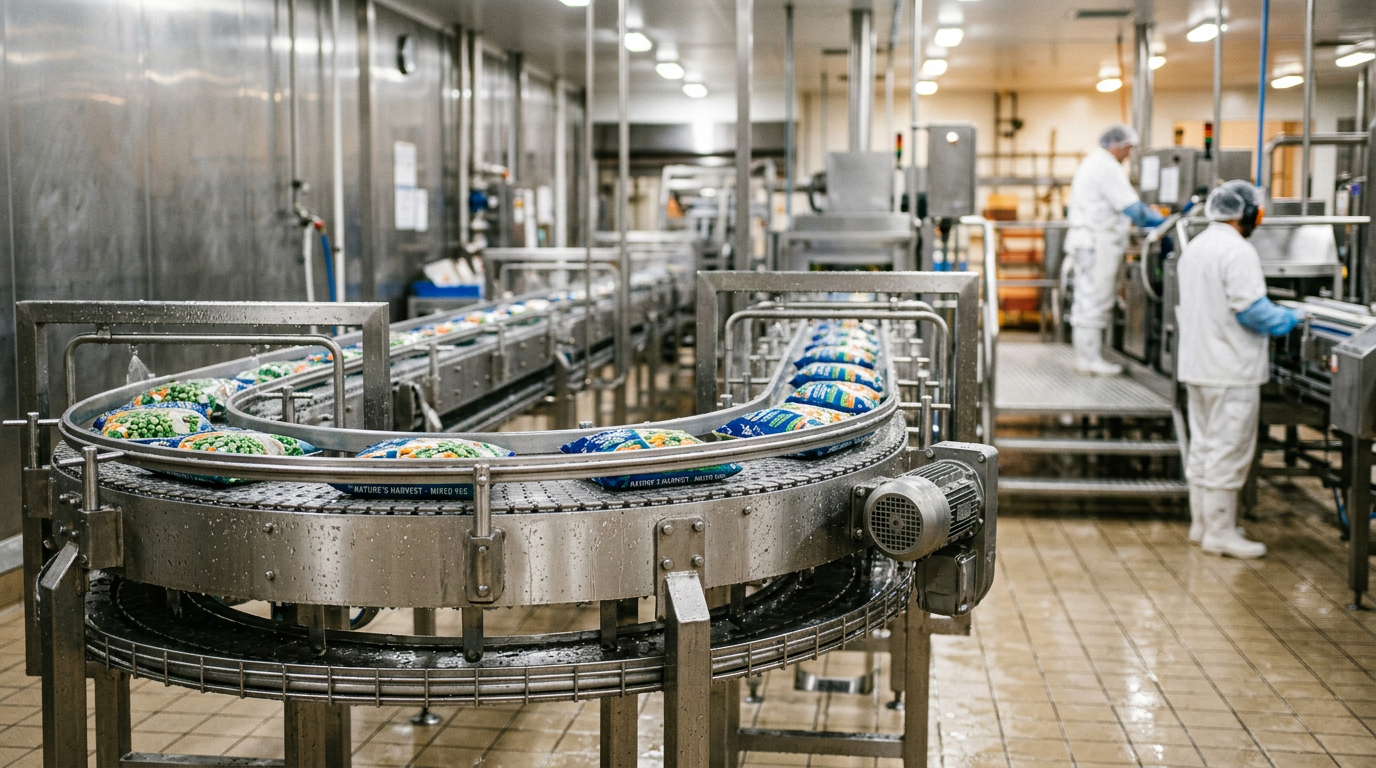
Stainless steel modular belts and their associated conveyors are the gold standard for high-hygiene food processing, typically offering a 40% reduction in bacterial load compared to fabric-reinforced belts due to their non-porous surfaces and open-hinge designs. These systems are specifically engineered to meet EHEDG (European Hygienic Engineering & Design Group) and FDA standards, ensuring that wash-down procedures involving high-pressure water (IP69K) and aggressive chemical agents do not lead to material degradation or microbial harborage.
Key Takeaways
- Stainless steel modular belts reduce bacterial growth by up to 40% compared to traditional fabric belts due to superior drainage.
- Hygienic systems must withstand IP69K high-pressure wash-downs (up to 100 bar) and temperatures reaching 80°C.
- AISI 304 and 316L are the primary materials used, offering high resistance to chloride-induced pitting and oxidation.
- Open-hinge designs facilitate "clean-in-place" (CIP) processes, significantly reducing downtime and water consumption.
The Engineering Necessity of Stainless Steel in Hygiene
In the food, beverage, and pharmaceutical industries, the choice of conveyor material is dictated by the ability to resist corrosion and eliminate "dead zones" where organic material can collect. While plastic modular belts (POM or PP) are common, stainless steel modular belts provide unmatched mechanical strength and thermal stability, particularly in cookers, freezers, and heavy-duty wash-down zones.
Standard stainless steel grades like AISI 304 provide excellent general corrosion resistance, but for environments involving high brine concentrations or acidic sanitizers, AISI 316L is required to prevent pitting corrosion. These materials comply with FDA CFR 21 for direct food contact.
Design Principles for Hygienic Wash-Down
A conveyor is only as hygienic as its most difficult-to-clean component. In wash-down environments, the design must prioritize accessibility.
Open Construction and Drainage
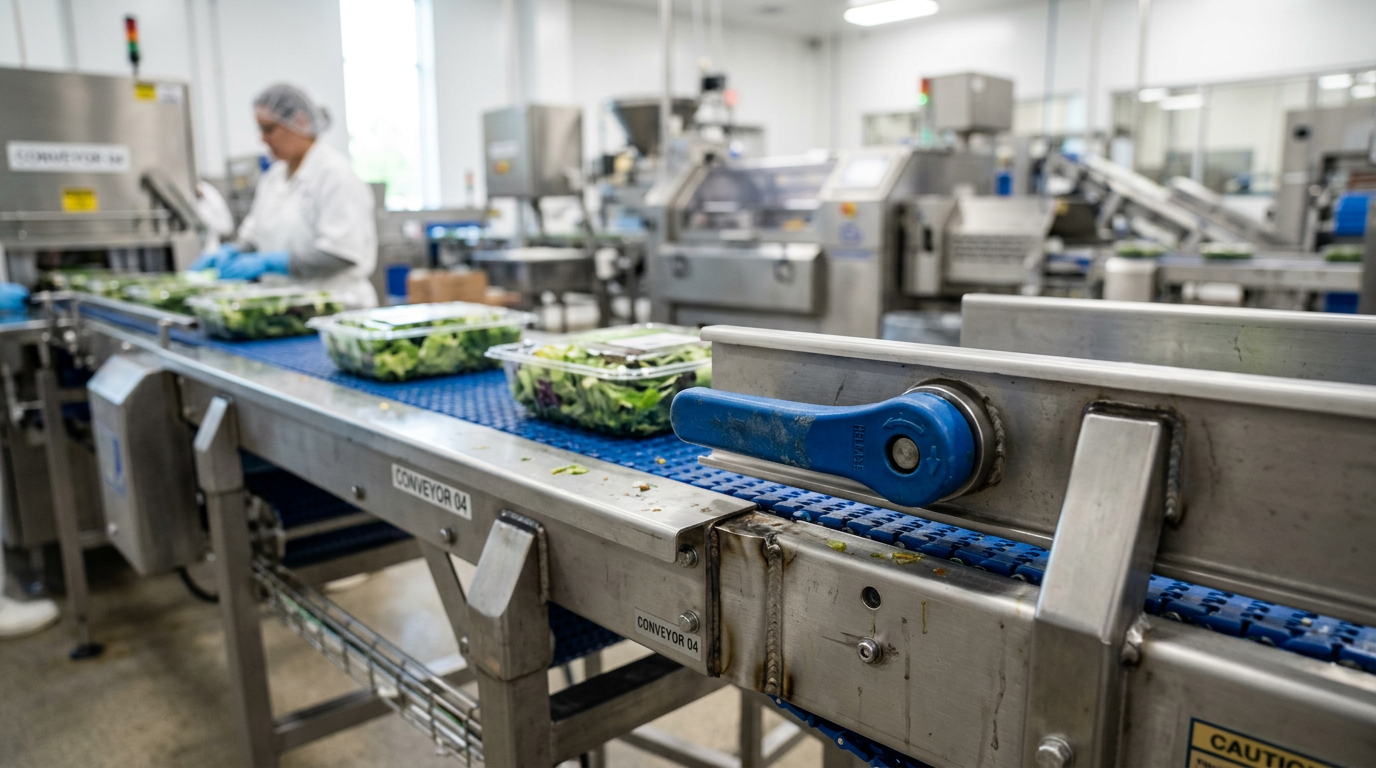
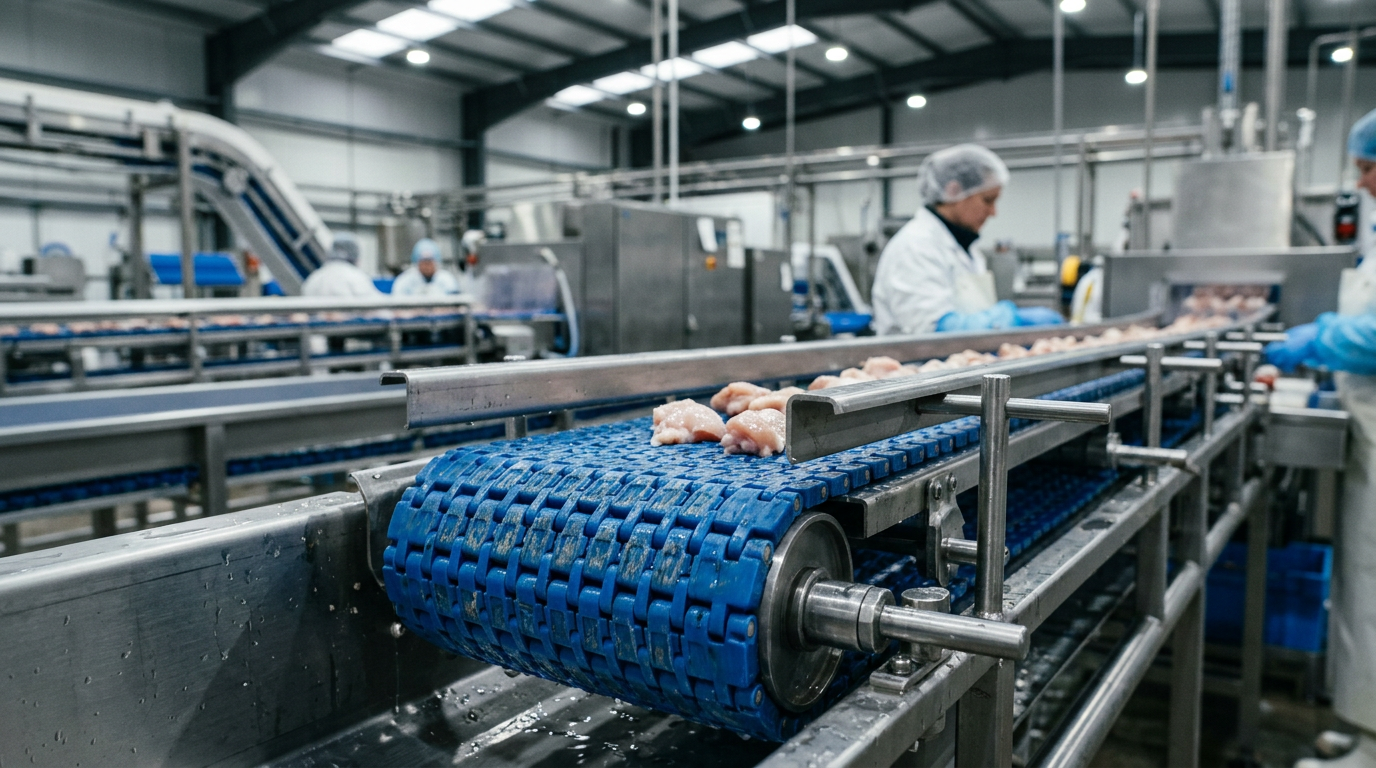
Traditional box-frame conveyors are being phased out in favor of open-frame designs. These allow cleaning agents to reach all sides of the modular belt. The belt itself often features a high "open area" percentage—sometimes exceeding 40%—to ensure that fluids and debris pass through rather than accumulating on the surface.
Component Selection: Motors and Bearings
To achieve a true hygienic rating, the drive system must be as robust as the belt. Many engineers now opt for drum motors or stainless steel gearmotors with IP69K ratings. Integrating a wash-down motor requires careful VFD soft-start tuning to prevent mechanical shock to the modular links during startup.
When designing these systems, partnering with experienced providers like Easy Conveyors ensures that the modular framework is compatible with high-pressure cleaning protocols and European safety standards.
Comparing Belt Materials for Food Safety
| Feature | Stainless Steel (304/316) | Acetal (POM) | Polypropylene (PP) |
|---|---|---|---|
| Max Temperature | Up to 400°C | 90°C | 105°C |
| Chemical Resistance | Excellent (Organic & Inorganic) | Good (Oils/Fats) | Excellent (Acids/Bases) |
| IP Rating Capability | IP69K (Full System) | IP66/67 (Typical) | IP66/67 (Typical) |
| Mechanical Strength | Very High | High | Moderate |
| Bacterial Resistance | Highest (Non-porous) | Moderate | Moderate |
| Standard Compliance | EHEDG / FDA / ISO 14159 | FDA / EU 10/2011 | FDA / EU 10/2011 |
Easy Conveyors stocks the modular systems discussed here — ready to ship across Europe.
Maintenance and Cleaning Protocols
The primary failure mode in hygienic conveyors is not mechanical wear, but chemical degradation due to improper sanitizer concentration.
- Chemical Concentration: Over-exposure to chlorine-based cleaners can lead to stress corrosion cracking even in 304 stainless steel. Always follow the manufacturer's PPM (parts per million) guidelines.
- Pressure Guidelines: While IP69K equipment is rated for 80-100 bar, excessive pressure at close range can damage seals on sensors and bearings.
- Drying Cycles: Post-wash drying is critical. Residual moisture in modular hinges can lead to microbial "blooms." Automated air-knives are often integrated into the modular system to accelerate this process.
Strategic Selection for Modular Systems
Selecting the right belt involves more than just material; it involves understanding the pitch and sprocket engagement. In hygienic environments, large-diameter sprockets are preferred to facilitate easier cleaning of the belt underside. Furthermore, the use of solid-piece sprockets (rather than split sprockets) eliminates crevices where bacteria might grow, adhering to EHEDG Doc 8 guidelines for hygienic equipment design.
For applications requiring high throughput, engineers should look into hygienic wash-down design principles that incorporate self-draining surfaces (sloped at least 3 degrees) to prevent stagnant water pooling.
Future Trends: Smart Cleaning
As Industry 4.0 matures, "Smart Wash-down" systems are emerging. These involve sensors integrated into the modular frame that detect protein residues using UV fluorescence, signaling the PLC when the belt is truly clean rather than relying on timed cycles. This integration of automation and hygiene is the next frontier for global food safety.
Frequently Asked Questions
Why is stainless steel preferred over plastic in high-hygiene areas?
Stainless steel is non-porous and highly resistant to the aggressive chemicals and high-pressure water (IP69K) required for sterilization, whereas plastics may degrade or harbor bacteria in surface scratches over time.
What does the IP69K rating mean for conveyor systems?
IP69K is the highest protection rating, signifying the equipment can withstand high-pressure (up to 100 bar) and high-temperature (80°C) water jets from multiple angles, essential for sanitization.
Which stainless steel grades are best for food grade conveyors?
Common grades include AISI 304 for general food use and AISI 316L for environments with high salt, acid, or chloride content to prevent pitting and corrosion.
How does an open-hinge design improve hygiene?
Open-hinge belts allow water and cleaning agents to penetrate the hinge area and the underside of the belt more effectively, ensuring that no organic matter is trapped during the CIP process.