Stainless Steel Modular Belts for Hygienic Wash-Down Environments
Discover how stainless steel modular belts optimize hygiene and efficiency in wash-down environments, offering 50% better sanitation than fabric belts.
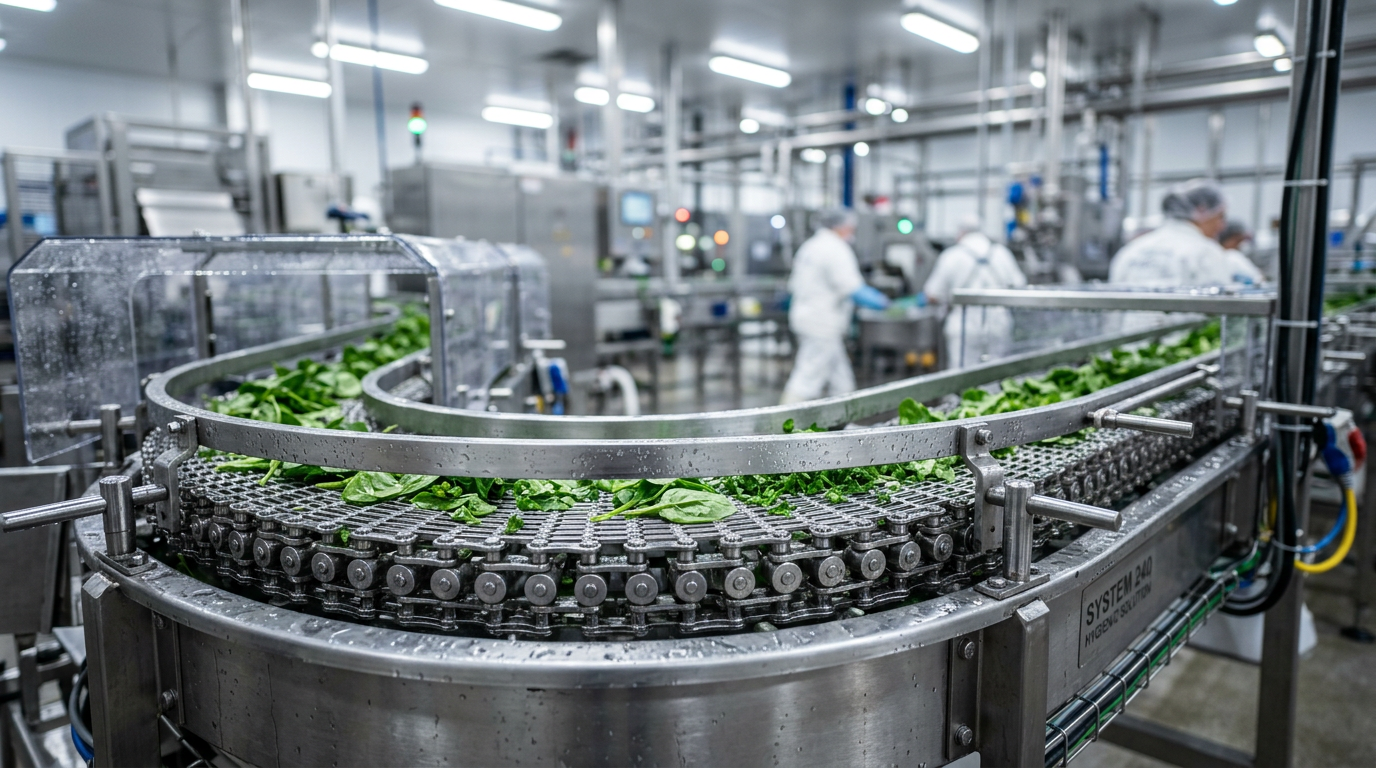
In high-hygiene food processing and pharmaceutical environments, stainless steel modular belts provide a 30% to 50% improvement in bacterial sanitation efficacy compared to traditional fabric belts, primarily due to their open-area construction and non-porous material properties. These systems are engineered to withstand high-pressure wash-down procedures exceeding 1,000 PSI while maintaining structural integrity in temperature extremes ranging from -40°C to +150°C.
The Engineering Necessity of Stainless Steel in Hygiene
When designing conveyor systems for "High Care" zones, the choice of material is governed by strict regulatory frameworks such as EHEDG Doc 8 for hygienic design and FDA 21 CFR for food contact surfaces. Stainless steel, specifically Grade 304 and 316L, is the industry standard due to its passive oxide layer which prevents corrosion and inhibits microbial biofilm attachment.
Unlike plastic modular belts (typically POM or PP), stainless steel variants do not suffer from "hinge-pin wear" which can create microscopic crevices where Listeria or Salmonella can thrive. In a wash-down environment, the ability to sanitize every square millimeter of the conveying surface is non-negotiable. Stainless steel modular belts utilize an open-link structure that allows water and chemical sanitizers to pass through the belt, cleaning both the product-side and the drive-side simultaneously.
Comparative Analysis: Stainless Steel vs. Plastic Modular Belts
| Feature | Stainless Steel Modular | Plastic Modular (POM/PP) |
|---|---|---|
| Temperature Range | -50°C to +400°C | -40°C to +95°C |
| Standard Grade | AISI 304 / 316L | FDA Polypropylene / Acetal |
| Hygienic Rating | EHEDG / 3-A Compliant | USDA / FDA Compliant |
| Chemical Resistance | High (Chlorine resistant 316) | Variable (Acid/Base sensitive) |
| Mechanical Strength | Up to 150 kN/m width | Up to 50 kN/m width |
| Cleanability | Superior (Steam compatible) | Moderate (Chemical sensitive) |
Design Principles for Wash-Down Conveyors
To fully leverage a stainless steel modular belt, the conveyor frame itself must adhere to hygienic design principles. This includes:
- Open Frame Construction: Avoiding hollow sections where moisture can be trapped. Using C-profile or angled steel instead of square tubing is a standard recommendation by VDMA.
- Self-Draining Surfaces: All horizontal surfaces must be pitched at a minimum of 3 degrees to ensure water runoff during the cleaning cycle.
- Minimal Fasteners: Utilizing "clean-out" ports and tool-less removable wear strips allows operators to access the internal track for inspection.
- Component Integration: Selecting IP69K-rated drive systems is critical. Many engineers now opt for drum motor selection strategies that eliminate external chains and guards, further reducing the "harborage points" for bacteria.
Impact of Modular Systems on Operational Efficiency
Implementing [Easy Conveyors](https://easy
Easy Conveyors stocks the modular systems discussed here — ready to ship across Europe.
-conveyors.com/en/?utm_source=conveyormodules&utm_medium=blog&utm_campaign=inline) modular solutions allows facilities to scale their production lines without compromising on food safety. The modularity means that if a single section of the belt is damaged—perhaps by a dropped metal tool—only the affected links need replacement rather than the entire belt. This reduces Mean Time To Repair (MTTR) by up to 70% compared to endless fabric belts.
Furthermore, the sprocket-driven nature of these belts eliminates the "belt slip" common in high-moisture environments. Traditional friction-drive belts require high tension to maintain grip when wet, which accelerates bearing wear and motor fatigue. Stainless steel modular belts operate under low tension, which aligns with IE3/IE4 motor efficiency standards by reducing the parasitic torque load on the drive system.
Troubleshooting Common Failure Modes
While robust, stainless steel systems are not immune to failure if improperly maintained.
- Chloride Pitting: Even 304 stainless steel can succumb to pitting if exposed to concentrated chlorine-based cleaners without adequate rinsing. In such cases, upgrading to 316L (which contains Molybdenum) is the standard industry fix.
- Sprocket Misalignment: If the drive sprockets are not perfectly phased, the modular links will experience uneven loading, leading to "link-jumping."
- Wear Strip Degradation: The interface between the steel belt and the support bed typically uses UHMW-PE or specialized PTFE-filled polymers. These must be inspected for "shaving"—where small plastic particles are sheared off by the belt—which can lead to physical contamination of the product.
Advanced Integration: VFDs and Soft-Starts
In modern automation, these belts are rarely run at a fixed speed. Integrating a Variable Frequency Drive (VFD) is essential for managing the high inertia of steel belts. Proper VFD soft-start tuning prevents the "whiplash" effect during startup, which can stress the hinge pins and lead to premature elongation. For pharmaceutical applications, precise speed control allows for the synchronization of the belt with downstream pick-and-place robotics or filling stations.
Sustainability and Lifecycle Costs
While the initial capital expenditure (CAPEX) for a stainless steel modular system is higher than plastic or fabric alternatives, the Total Cost of Ownership (TCO) over a 10-year period is often 20-30% lower. This is attributed to the longevity of the material and the significant reduction in water and chemical usage during cleaning cycles. As energy costs rise, the mechanical efficiency of a low-tension, positive-drive system contributes to a more sustainable manufacturing footprint.
When specifying these systems, always consider the hygienic wash-down design requirements of your specific product. For example, raw meat processing requires a much higher "open area" percentage in the belt (up to 40%) compared to packaged goods, to allow for the effective removal of fats and proteins during the CIP (Clean-In-Place) process.
Frequently Asked Questions
When should I choose 316L stainless steel over 304 for my modular belt?
Grade 304 is sufficient for most food environments, but 316L is required if you use high-concentration chlorine sanitizers or handle high-salinity products, as the molybdenum in 316L prevents chloride-induced pitting.
What is 'open area' in a modular belt and why does it matter?
The 'open area' refers to the percentage of the belt surface that is perforated. Higher open area (30-50%) allows for better drainage and cleaning of raw proteins, while lower open area is better for small product stability.
Do stainless steel modular belts consume more energy than plastic ones?
While stainless steel is heavy, the positive sprocket drive eliminates the need for high belt tension. This reduces the friction-based power loss common in fabric belts, often resulting in lower overall energy consumption.
What is the recommended cleaning protocol for hygienic modular belts?
Modular belts should be cleaned using low-pressure foam application followed by a high-pressure rinse (up to 1,000 PSI) and a final sanitizing spray. The belt should be run at a slow 'creep speed' during the rinse cycle.
Can stainless steel modular belts be used in blast freezers?
Most industrial stainless steel modular belts are rated for temperatures between -40°C for blast freezing and +150°C for steam blanching, with specialized heat-treated alloys reaching up to 400°C.