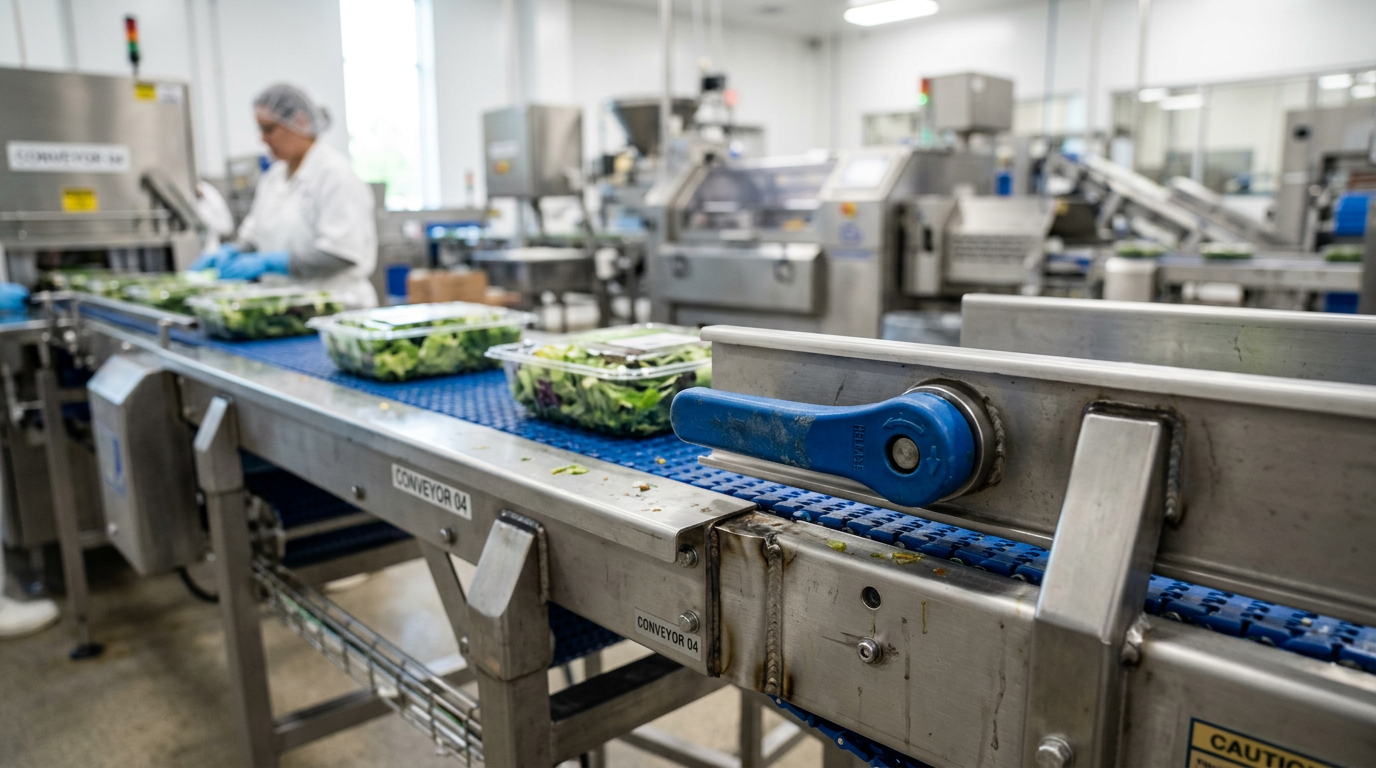
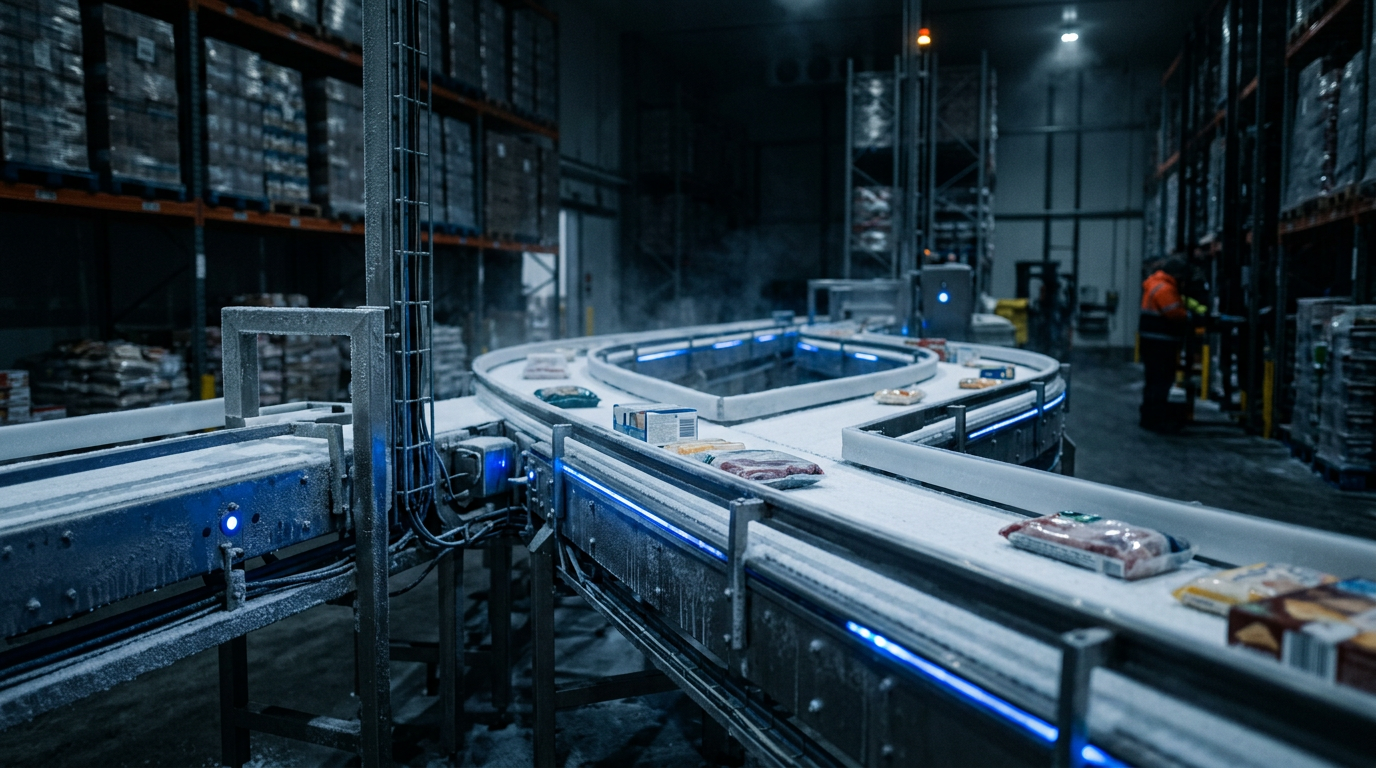
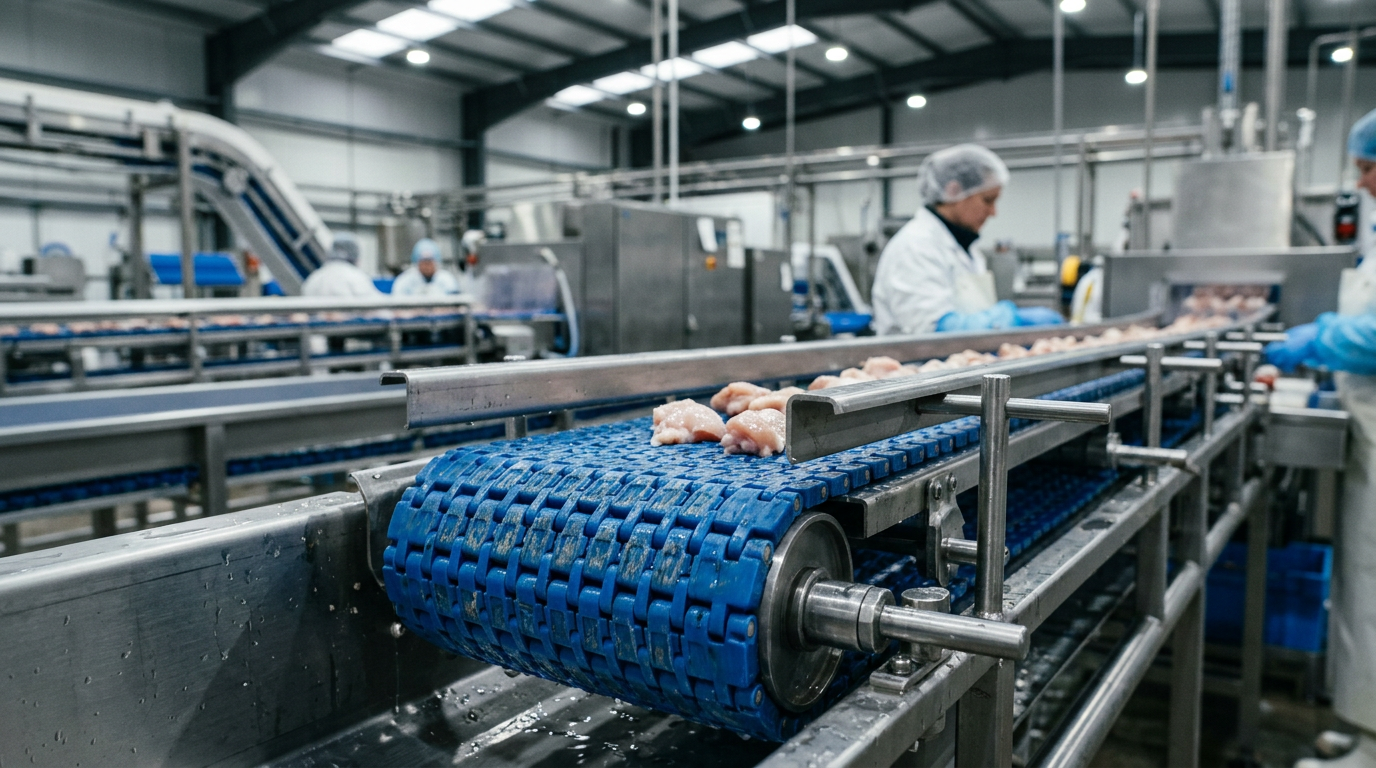
Stainless Steel Modular Belts for Hygienic Wash-down Environments
Discover why stainless steel modular belts are essential for hygienic wash-down environments. Learn about 304 vs 316L grades, EHEDG standards, and CIP efficiency.
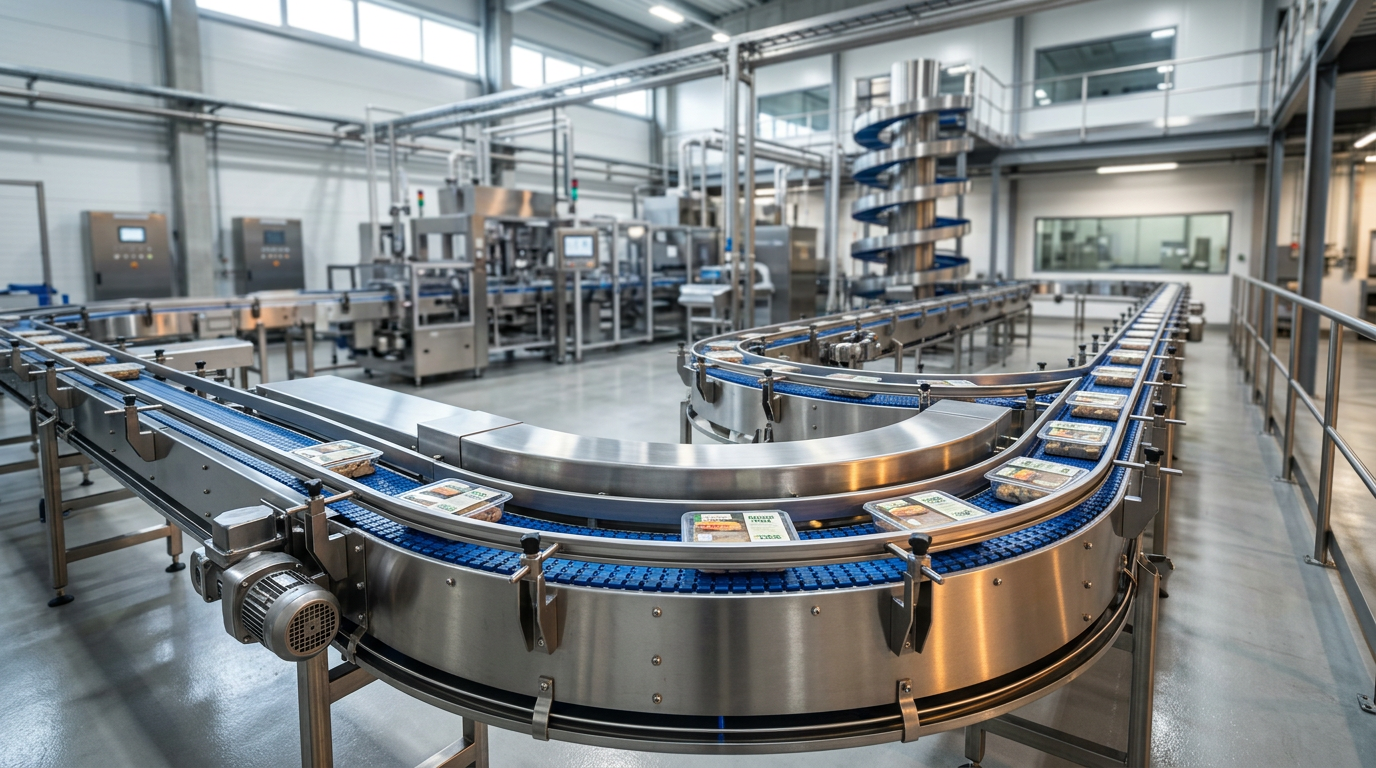
Engineering Solutions for High-Hygiene Operations
In food processing and pharmaceutical manufacturing, modular conveyor systems must withstand aggressive chemical cleaning while preventing bacterial niches. Stainless steel modular belts, often utilizing 304 or 316L grade alloys, provide a 100% non-porous alternative to plastic counterparts, offering a service life up to 3 times longer in high-temperature or abrasive wash-down environments.
While plastic modular belts (POM or PP) are common, they are susceptible to "micro-pitting" and surface scratches where pathogens like Listeria can harbor. Stainless steel variants, designed according to EHEDG Doc 8 guidelines, eliminate these risks through superior surface integrity and open-link architectures that allow 360-degree spray penetration.
Material Selection: 304 vs. 316L Stainless Steel
Choosing the correct alloy is the first step in ensuring longevity in a wash-down environment. The environment's chemistry—specifically the presence of chlorides—determines the grade.
| Feature | Grade 304 Stainless | Grade 316L (Low Carbon) |
|---|---|---|
| Corrosion Resistance | High (General purpose) | Superior (Chloride/Salt resistant) |
| Typical Application | Dairy, Bakery, Poultry | Seafood, Brine, Pharma |
| Temperature Range | -40°C to +400°C | -40°C to +450°C |
| Chemical Resistance | Good for standard detergents | Excellent for halides/acids |
| Cost Index | 1.0 (Baseline) | 1.25 - 1.40 |
Hygienic Design Principles and Standards
Modern hygienic conveyors are built around the concept of "Clean-in-Place" (CIP) compatibility. According to the FDA Food Code, food contact surfaces must be smooth, free of breaks and sharp internal angles, and made of non-toxic materials.
- Open Area Ratios: High-performance stainless belts often feature an open area of 70% or higher. This ensures that during the wash-down cycle, water and sanitizing agents reach every part of the drive sprockets and the underside of the modules.
- Surface Finish (Ra Value): For a surface to be considered hygienic, it typically requires a roughness average (Ra) of less than 0.8 μm. Stainless steel can be electropolished to achieve these values, whereas plastic modules are limited by the molding process.
- Self-Draining Surfaces: Horizontal surfaces are minimized. Easy Conveyors emphasizes the use of rounded frames and angled cross-members in their hygienic modules to ensure that no standing water remains after cleaning, preventing biofilm formation.
Mechanical Advantages Over Plastic Modular Belts
While the initial capital expenditure for stainless steel modular belts is higher, the total cost of ownership (TCO) in harsh environments often tells a different story.
Easy Conveyors stocks the modular systems discussed here — ready to ship across Europe.
High Temperature Stability
Plastic belts, specifically those made of Polypropylene, begin to lose structural integrity above 80°C. In industrial frying or steam-blanching applications, stainless steel remains stable up to 450°C, preventing the belt elongation and "snaking" common with thermal expansion in polymers.
Resistance to Abrasive Wear
In the processing of root vegetables (sand/grit) or frozen goods (ice crystals), plastic modules suffer from rapid hinge wear. Stainless steel pins and modules resist abrasion, maintaining precise pitch and tracking over years of continuous operation. This reduces the need for frequent "belt shortening" and tensioning adjustments.
Integration with Drive Systems
The choice of motor is just as critical as the belt. In wash-down environments, internal drum motor selection is often preferred over conventional gearmotors. Stainless steel drum motors, rated to IP69K (IEC 60529), eliminate external fans and cooling fins which are notorious "bacteria traps."
When pairing stainless modular belts with drives, engineers must also consider VFD soft-start tuning. Because stainless steel is significantly heavier than plastic, the starting inertia is higher. A ramp-up time of 2.0 to 4.0 seconds is generally recommended to prevent mechanical shock to the sprockets and drive shaft.
Failure Modes and Maintenance
Despite their robustness, stainless steel modular belts are not "set and forget." Maintenance teams should monitor for:
- Chloride Stress Corrosion Cracking (SCC): Even 316L can fail if high-concentration chlorine sanitizers are allowed to pool on the surface without adequate rinsing.
- Sprocket Alignment: Misalignment leads to uneven wear on the drive lugs. Unlike plastic, which may "give" or wear down, a misaligned stainless belt will damage the drive sprockets or the shaft itself.
- Pin Retention: Modern designs use headless pins or laser-welded retainers. Inspecting these points ensures that no metal fragments (Foreign Object Debris/FOD) enter the production stream, a critical requirement for ISO 22000 food safety compliance.
Conclusion
Stainless steel modular belts represent the gold standard for hygienic material handling. By combining the drainage capabilities of an open-grid design with the indestructible nature of high-grade alloys, manufacturers can meet the stringent requirements of EHEDG and FDA while significantly reducing downtime associated with belt failure and sanitation labor. When designing your next line, consider the environmental stressors—temperature, chemistry, and abrasion—to determine if the jump to stainless steel is the right strategic move for your facility's efficiency.
Frequently Asked Questions
Why use 316L stainless steel instead of 304 for food belts?
316L contains molybdenum and lower carbon content, making it significantly more resistant to chloride-induced pitting and corrosion from harsh sanitizing chemicals.
What IP rating is required for hygienic wash-down conveyors?
IP69K is the highest rating, indicating the equipment can withstand high-pressure (up to 100 bar) and high-temperature (80°C) water jets from multiple angles.
Can stainless steel modular belts be used with standard VFDs?
Yes, but they require a higher starting torque due to increased mass. Ensure your VFD is tuned for a soft-start ramp to protect the drive train.
Is the ROI for stainless steel belts better than plastic?
Stainless steel belts typically provide 3 to 5 times the service life of plastic belts in abrasive or high-temperature applications, justifying the higher initial cost.
How do I ensure a belt is truly 'Clean-in-Place' (CIP) compatible?
Search for belts with at least 60-70% open area to allow for Clean-in-Place (CIP) effectiveness and total spray penetration.