Mastering Stainless Steel Modular Belts for Hygienic Wash-Down Environments
Discover why stainless steel modular belts are the gold standard for hygienic wash-down environments, offering 5x longer life and 95% better microbial resistance.
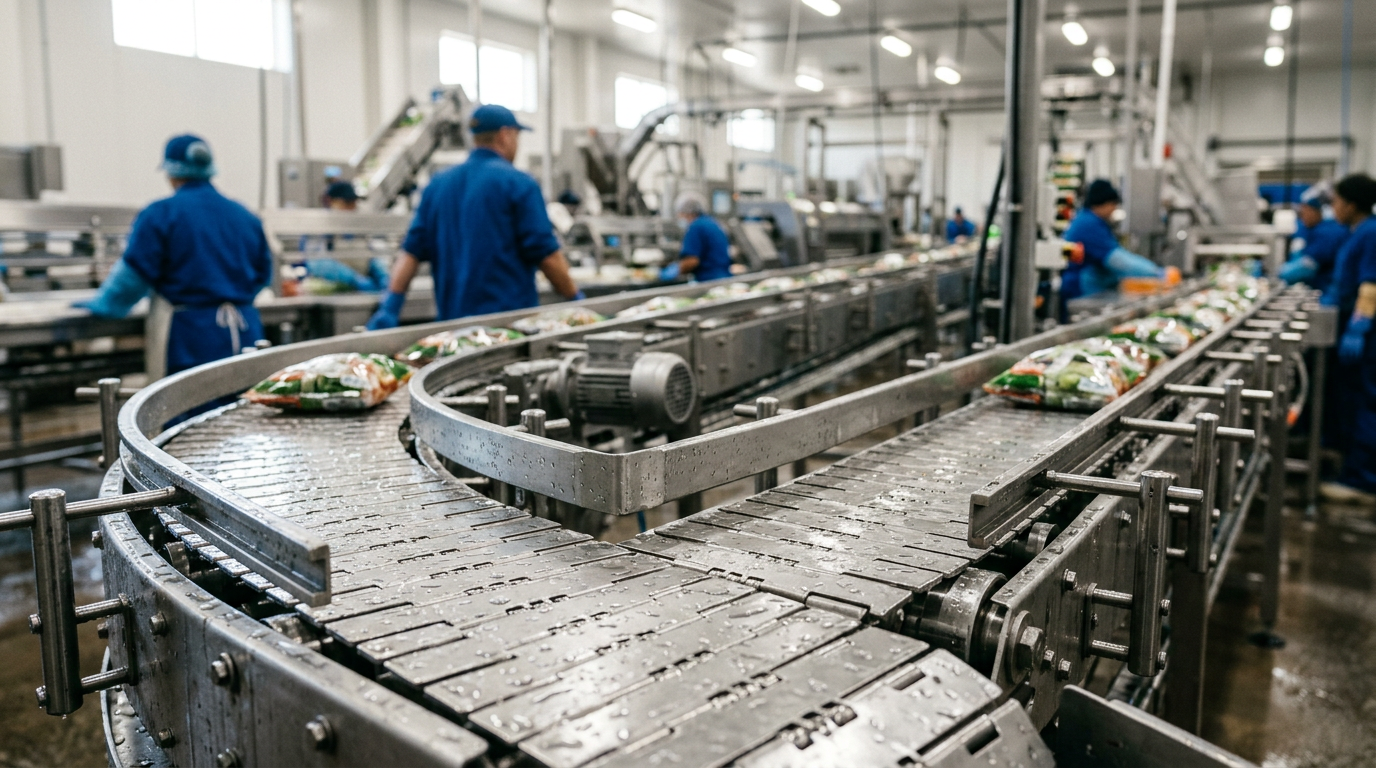
Stainless steel modular belts represent the gold standard for high-hygiene food processing, offering a typical service life 3 to 5 times longer than plastic modular alternatives in high-temperature or abrasive wash-down environments. By utilizing open-area designs that allow for 40% to 60% fluid drainage, these systems satisfy the rigorous clean-in-place (CIP) requirements mandated by EHEDG and FDA guidelines, reducing bacterial harboring by up to 95% compared to closed-surface fabric belts.
The Engineering Logic Behind Stainless Steel Modular Belts
In the realm of food safety and industrial automation, the "hygienic wash-down environment" is defined by frequent chemical exposure, high-pressure water jets, and extreme temperature fluctuations. While plastic modular belts (typically POM or PP) are common, stainless steel modular belts—often constructed from AISI 304 or 316 grade steel—are required when mechanical integrity must be maintained during steam cleaning or heavy-duty sanitation cycles.
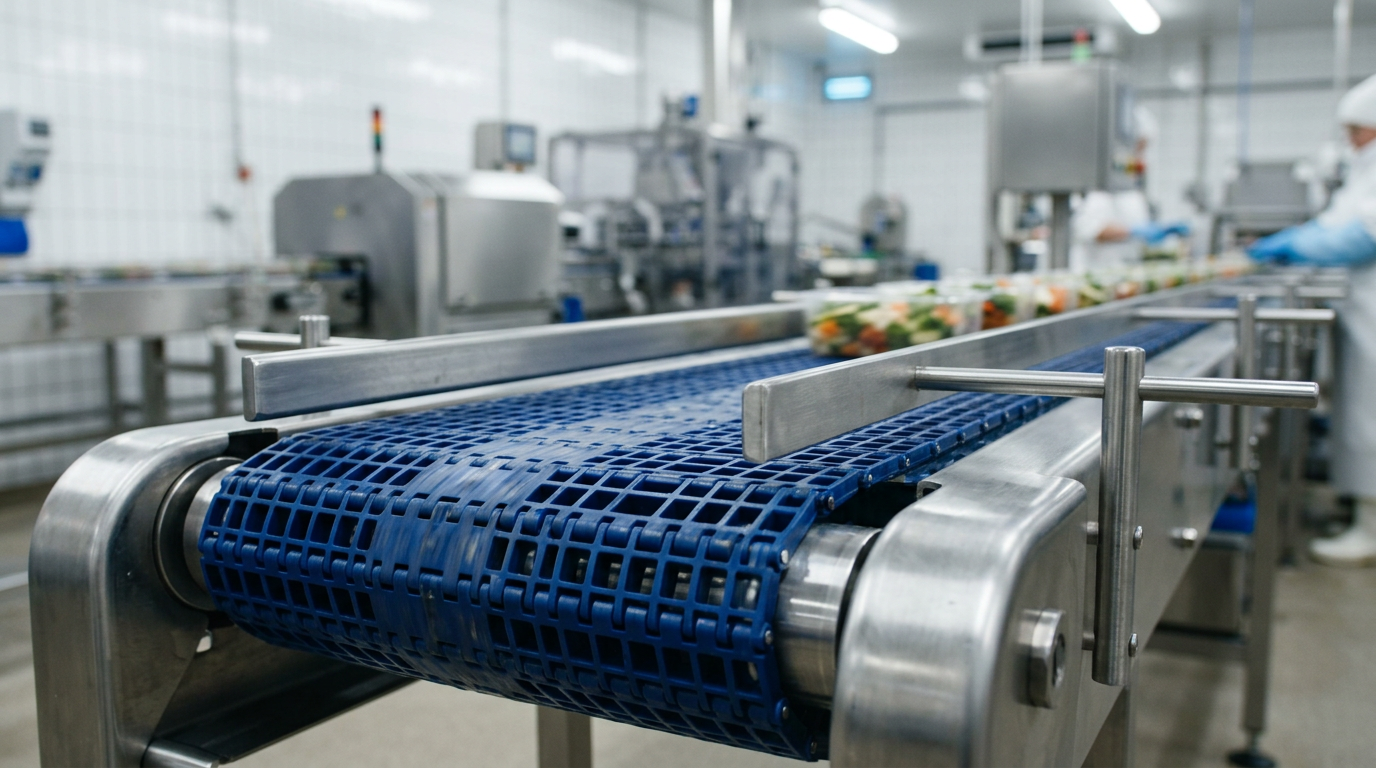
The modularity of these belts refers to the interlocking link construction, joined by stainless steel hinge pins. This design facilitates "zero-tension" drive systems, which eliminate the tracking issues common in traditional flat-wire belts. For engineers, this means a reduction in downtime; if a single link is damaged, only that section is replaced, rather than the entire belt.
Material Selection: 304 vs. 316 Grade
Selecting the right alloy is critical for longevity. While both provide excellent corrosion resistance, their applications differ:
- AISI 304: The standard for general food processing (dairy, bakery, confectionery). It resists common cleaning chemicals and organic acids.
- AISI 316: Contains molybdenum, which provides superior resistance to chlorides and salts. This is essential for seafood processing, brining operations, or environments using heavy chlorine-based sanitizers.
Design for Cleanability: EHEDG and FDA Standards
Hygienic design is not just about the material; it is about the geometry. According to EHEDG Document 8, equipment must be designed to prevent the accumulation of soil and microorganisms.
Stainless steel modular belts achieve this through:
- High Open Area: Large apertures allow water and cleaning agents to reach all surfaces of the belt and the underlying conveyor frame.
- Radius Edges: Minimizing sharp 90-degree angles where bio-films can form.
- Self-Draining Surfaces: Ensuring no standing water remains after a wash-down cycle, which is a primary driver of microbial growth.
When integrating these systems, working with an experienced manufacturer like Easy Conveyors ensures that the conveyor frame itself complements the belt's hygienic properties. A modular belt is only as clean as the frame it sits on; therefore, open-profile frames with minimal horizontal surfaces are the industry recommendation.
Performance Comparison: Stainless Steel vs. Plastic Modular Belts
Engineers often weigh the higher initial CapEx of stainless steel against the lower OpEx of plastic. The following table highlights the technical trade-offs.
| Feature | Stainless Steel Modular | Plastic (POM/PP) Modular |
|---|---|---|
| Temperature Range | -50°C to +400°C | -40°C to +90°C |
| Tensile Strength | Very High (up to 50,000 N/m) | Moderate |
| Chemical Resistance | Excellent (Alkalines/Acids) | Good (Variable by polymer) |
| Hygiene Rating | EHEDG Class I | EHEDG Class II/III |
| Abrasion Resistance | Extremely High | Low to Moderate |
| Initial Cost | High | Low to Moderate |
Easy Conveyors stocks the modular systems discussed here — ready to ship across Europe.
Optimizing the Wash-Down Process
The primary failure mode in hygienic conveyors is not mechanical wear, but "crevice corrosion" or bacterial colonization caused by inadequate cleaning access. To maximize the ROI of a stainless steel modular system, the conveyor must be paired with a high-efficiency drive system.
For wash-down environments, IP69K-rated motors are non-negotiable. Many modern plants are transitioning to drum motors or IE3-class stainless steel gearmotors to eliminate the nooks and crannies associated with traditional motor cowlings. Proper VFD soft-start tuning is also essential to prevent the "surging" effect that can occur with heavy metal belts, which otherwise leads to premature wear on the drive sprockets.
Troubleshooting Common Issues
- Sprocket Wear: Unlike plastic belts that "give" under load, stainless steel is unforgiving. Ensure sprockets are aligned within ±1mm to prevent side-loading.
- Hydrogen Embrittlement: If using highly acidic cleaners without proper rinsing, certain lower-grade stainless steels can become brittle. Always verify chemical compatibility with your detergent supplier.
- Black Specks: This is often a sign of metal-on-metal wear between the belt and the wear strips. Ensure that ultra-high-molecular-weight (UHMW) polyethylene wear strips are used, as they provide a low-friction interface that prevents metal shavings from contaminating food products.
Integration with Automation Systems
In a modern smart factory, the modular belt is a data source. By monitoring the torque requirements of the drive motor via a PLC (such as a Siemens SIMATIC S7-1500), operators can detect if a belt is becoming "loaded" with debris or if a bearing is failing. This predictive maintenance approach is vital in high-throughput food packaging lines where an hour of downtime can cost thousands of Euros.
Furthermore, stainless steel modular belts are ideal for "spiral provers" and blast freezers. Their ability to maintain structural integrity at -40°C while carrying heavy loads makes them superior to plastic, which can become brittle and crack in cryogenic environments. For more information on system layouts, engineers should consult resources on hygienic wash-down design and material handling automation.
Conclusion
Stainless steel modular belts are the definitive choice for facilities where sanitation is a mission-critical metric. While the upfront investment is higher than plastic alternatives, the combination of extreme temperature resistance, mechanical strength, and ease of sterilization provides a lower Total Cost of Ownership (TCO) over the equipment's lifecycle. By adhering to ISO 14159 safety and hygiene standards and utilizing modular components, manufacturers can ensure their production lines remain compliant, efficient, and safe for global consumers.
Frequently Asked Questions
Are stainless steel modular belts suitable for cryogenic or freezing applications?
Yes, they are highly recommended. Unlike plastic, stainless steel maintains its tensile strength and does not become brittle at temperatures as low as -50°C, making it ideal for blast freezers.
What type of wear strips should be used with metal modular belts?
It is recommended to use UHMW-PE (Ultra-High-Molecular-Weight Polyethylene) wear strips. This prevents metal-on-metal friction, reducing noise and eliminating the risk of metal shavings (black specks) contaminating the product.
When should I choose 316 stainless steel over 304 for my conveyor?
AISI 316 is superior in environments involving high salt (brine) or chlorine, as the addition of molybdenum prevents pitting corrosion that can occur in standard 304 stainless steel.
What is the typical open area percentage for a hygienic modular belt?
Typically, they have an open area of 40% to 60%. This high ratio is critical for allowing high-pressure water and sanitizing foam to pass through the belt, ensuring all internal hinges are cleaned.