Maximizing Floor Space with Modular Curve Conveyors for Tight-Radius Layouts
Discover how modular curve conveyors achieve tight-radius turns (1.6x belt width) to optimize floor space while maintaining product stability and high throughput.
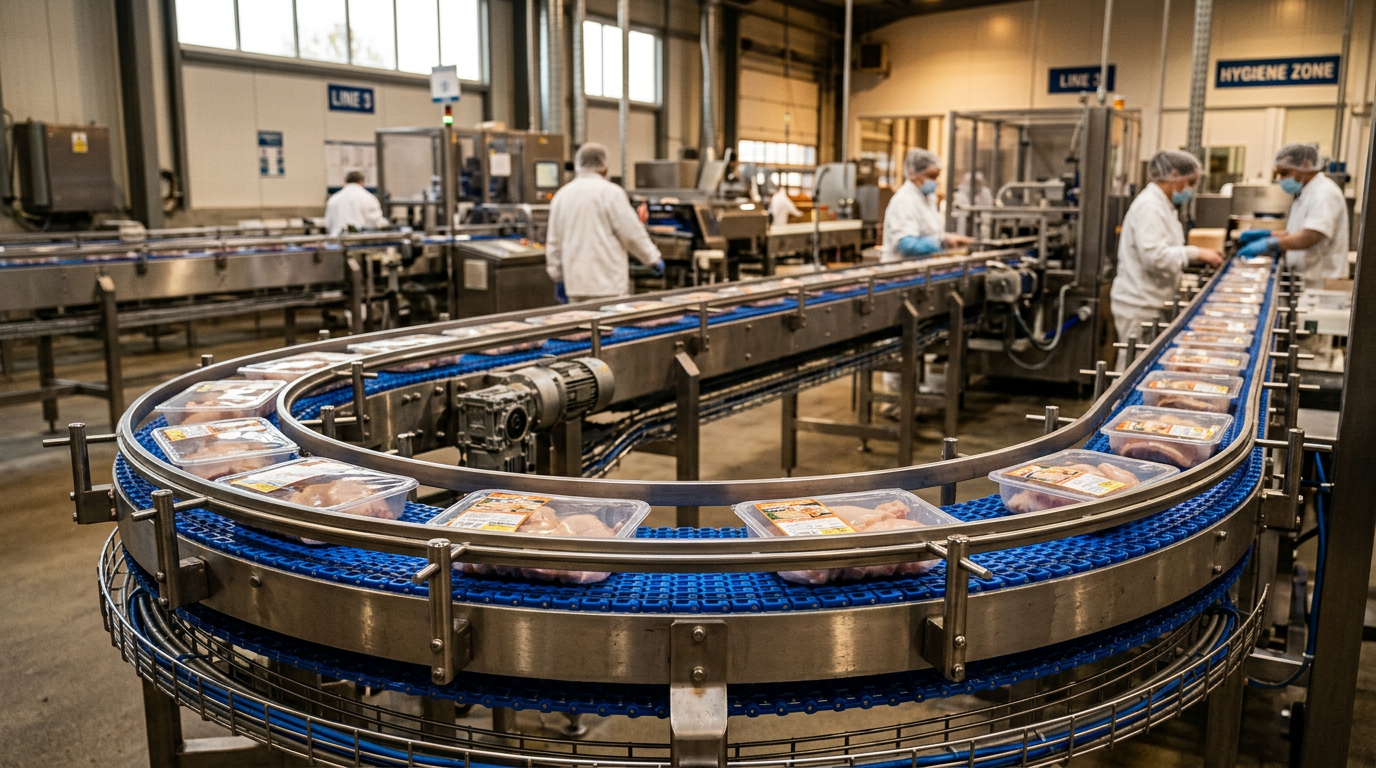
Modular curve conveyors utilize side-flexing plastic chains or specialized belt modules to achieve turn radii as tight as 1.5 to 2.0 times the belt width, significantly reducing the footprint of industrial production lines compared to traditional long-arc belt curves. By integrating high-friction inserts and specialized guide rails, these systems maintain product orientation and stability at throughput speeds exceeding 60 meters per minute while minimizing the "polygon effect" common in non-optimized modular designs.
The Engineering Logic of Tight-Radius Curves
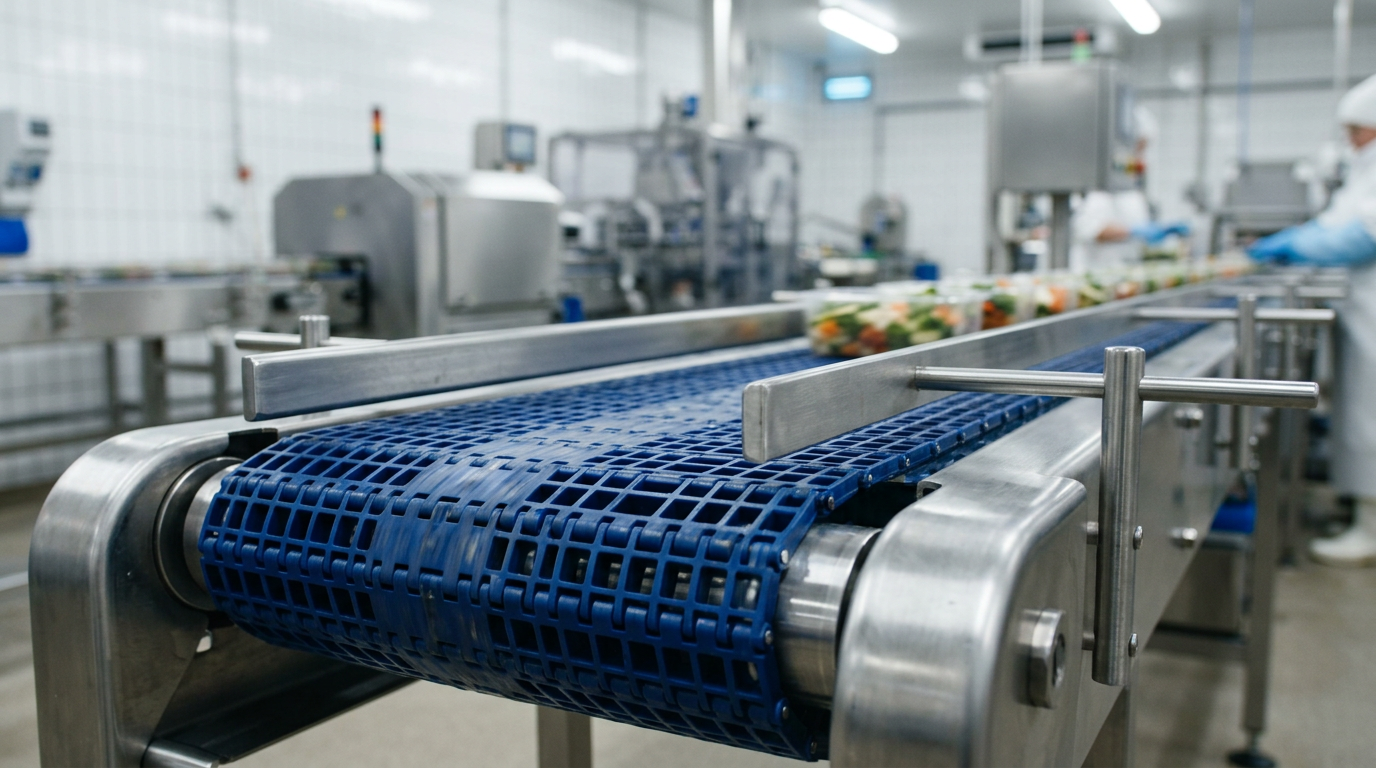
In modern factory layouts, floor space is often the most expensive asset. Traditional fabric belt curves require large footprints because the belt must maintain a specific tension profile across its width to prevent tracking issues. Modular curve conveyors, however, operate on a different mechanical principle. They utilize interlocking plastic modules—typically made of Polyoxymethylene (POM) or Polypropylene (PP)—connected by transverse rods.
These modules are designed with "collapse" capability on the inner radius. According to REXNORD, side-flexing chains allow the inner edge of the link to compress while the outer edge remains under tension. This geometry enables engineers to design turns that are significantly tighter than those possible with flat-belt systems. When selecting these systems, the Turn Radius Factor is the critical metric: it is the ratio of the inside radius ($R_i$) to the belt width ($W$). High-performance modular systems often achieve a factor of 1.6, meaning a 400mm wide belt can execute a turn with an inside radius of just 640mm.
Material Selection: POM vs. PP vs. PEEK
The choice of material for the modular links dictates the system's longevity and friction coefficients. Most industrial applications utilize POM (Acetal) due to its high tensile strength and low coefficient of friction against wear strips. However, in specific environments, other polymers are required.
| Feature | POM (Acetal) | PP (Polypropylene) | PEEK |
|---|---|---|---|
| Tensile Strength | High (70-80 MPa) | Moderate (30-40 MPa) | Ultra-High (>100 MPa) |
| Temp Range | -40°C to +90°C | +5°C to +105°C | Up to +250°C |
| Chemical Resistance | Good (Oils/Solvents) | Excellent (Acids/Bases) | Exceptional |
| Friction Coeff. | 0.15 - 0.20 | 0.25 - 0.30 | 0.20 - 0.25 |
| Common Use | General Automation | Food/Washdown | High-Temp/Pharma |
Managing Centrifugal Force and Product Stability
As products navigate a tight-radius curve, they are subjected to lateral forces that threaten to shift their orientation or tip them over. To counteract this, modular curves incorporate several design features:
- High-Friction Inserts: Small rubber or TPE (Thermoplastic Elastomer) grips are co-molded into the surface of the plastic modules. These increase the grip between the product and the belt, allowing for higher speeds in the turn without product migration.
Easy Conveyors stocks the modular systems discussed here — ready to ship across Europe.
- Hold-Down Tabs: To prevent the belt from lifting out of the track due to the radial tension, "tabs" or "wings" are molded into the bottom of the links. these engage with the underside of the wear strips.
- Variable Speed Optimization: Utilizing a VFD soft-start tuning strategy allows the conveyor to ramp up speed smoothly, preventing the initial jerk that often causes lightweight products to tumble in a curve.
Integration with Modular Systems
One of the primary advantages of these components is their compatibility with straight sections. Leading manufacturers, such as Easy Conveyors, provide modular curve units that plug directly into existing aluminum or stainless steel frames. This modularity allows for "S-curves" and "U-turns" to be constructed using standardized components, reducing the need for custom engineering and lowering the Total Cost of Ownership (TCO).
When designing these layouts, engineers must account for the increased friction generated in the curve. A curve typically requires 2 to 3 times the pulling force of a straight section of the same length. This necessitates careful drum motor selection to ensure the drive has sufficient torque to overcome the radial friction against the wear strips, especially when the conveyor is fully loaded.
Standards and Compliance
For industries like food processing and pharmaceuticals, the design of modular curves must adhere to strict hygienic standards. The EHEDG (European Hygienic Engineering & Design Group) provides guidelines for "open" designs that allow for easy cleaning and prevent the buildup of organic matter between the links. Furthermore, materials must be FDA-compliant for direct food contact, ensuring that the plastic does not migrate into the product during the high-friction environment of a tight turn.
Maintenance and Wear Monitoring
The tight-radius layout puts specific stresses on the wear strips and the hinge pins of the modular belt.
- Wear Strips: Typically made of UHMW-PE (Ultra-High Molecular Weight Polyethylene), these should be inspected every 2,000 operating hours. Wear is usually concentrated on the inner radius guide.
- Elongation: Over time, the plastic rods can undergo "creep." If the belt elongates by more than 2-3%, links should be removed to maintain proper tension.
- Chordal Action: In tight turns, the "polygon effect" (the slight rise and fall of the belt as it passes over sprockets) is magnified. Using smaller pitch modules (e.g., 12.5mm or 25mm) helps mitigate this vibration, protecting sensitive electronics or fragile glass containers.
By understanding the mechanical limits of side-flexing modules and applying the correct friction management strategies, facilities can achieve dense, high-throughput layouts that were previously impossible with conventional conveyor technology.
Frequently Asked Questions
What is the typical minimum turn radius for a modular belt?
The turn radius factor is the ratio of the inside radius to the belt width. A factor of 1.6 is considered excellent for tight layouts, meaning a 500mm belt needs an 800mm inside radius.
Which material is best for side-flexing modular belts: POM or PP?
POM (Acetal) is generally preferred for its high strength and low friction. PP (Polypropylene) is used when chemical resistance to acids or high-temperature washdowns is required.
Do I need a bigger motor for a conveyor with multiple curves?
Friction in a curve is significantly higher than in a straight section. You must calculate the 'equivalent straight length' of the curve, which often involves multiplying the actual curve length by a factor of 2.5 to 3.0 to account for radial friction.
How do you prevent the modular belt from lifting in a tight turn?
Hold-down tabs or 'wings' are mechanical features on the bottom of the belt modules that lock into the wear strip track, preventing the belt from flipping or lifting under tension in the turn.