Maximizing Hygiene: Modular Plastic Belt Conveyors in High-Care Food Production
Modular plastic belt conveyors in high-care food zones reduce water usage by 30% and ensure microbial control via open-hinge design and FDA-compliant materials.
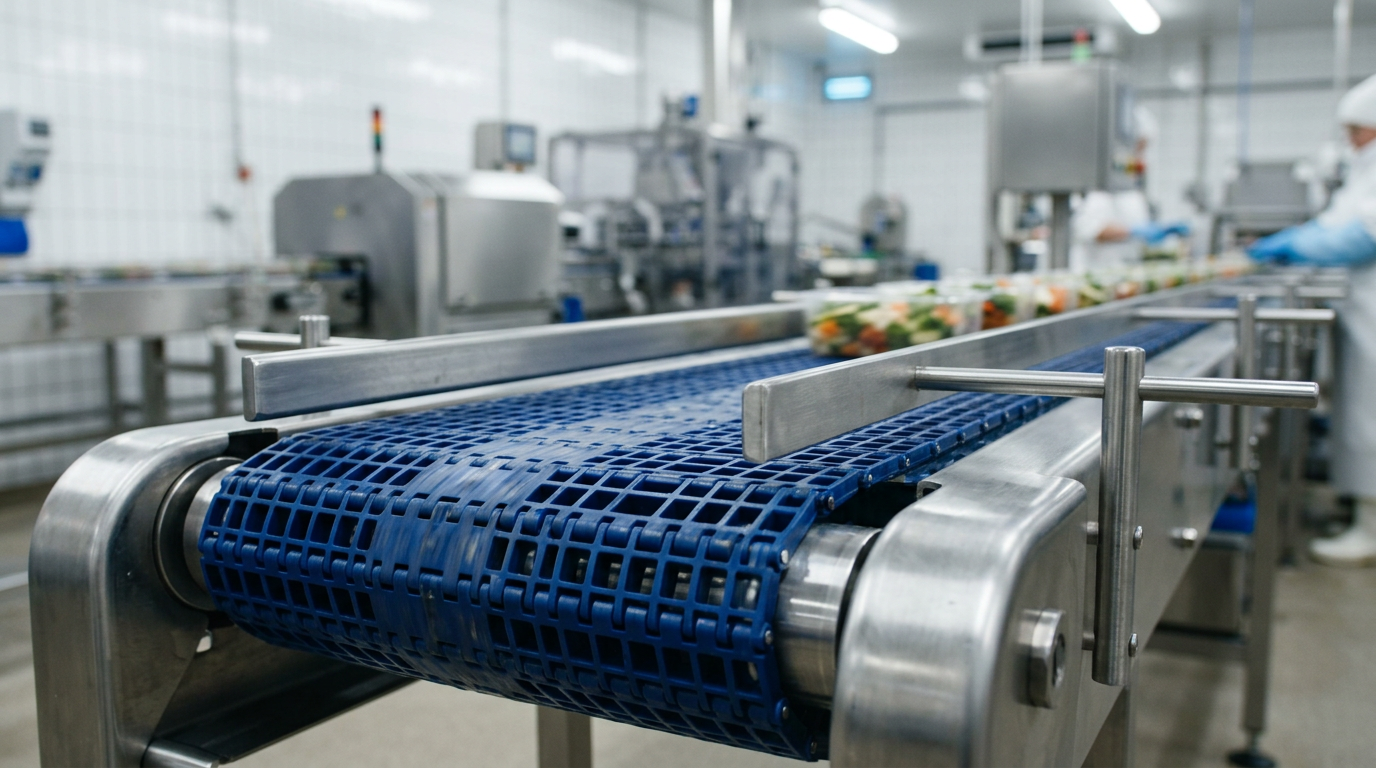
Modular plastic belt conveyors in high-care food production are designed to maintain a 100% microbial control environment by utilizing open-hinge geometry and non-porous materials that allow for a 30% reduction in water and chemical usage during sanitation cycles compared to traditional fabric belts. The integration of high-density polyethylene (HDPE) or Polypropylene (PP) components ensures compliance with FDA Title 21 CFR and EHEDG Doc 8 hygiene standards, facilitating rapid, validated cleaning of critical control points.
The Engineering Logic of High-Care Modular Systems
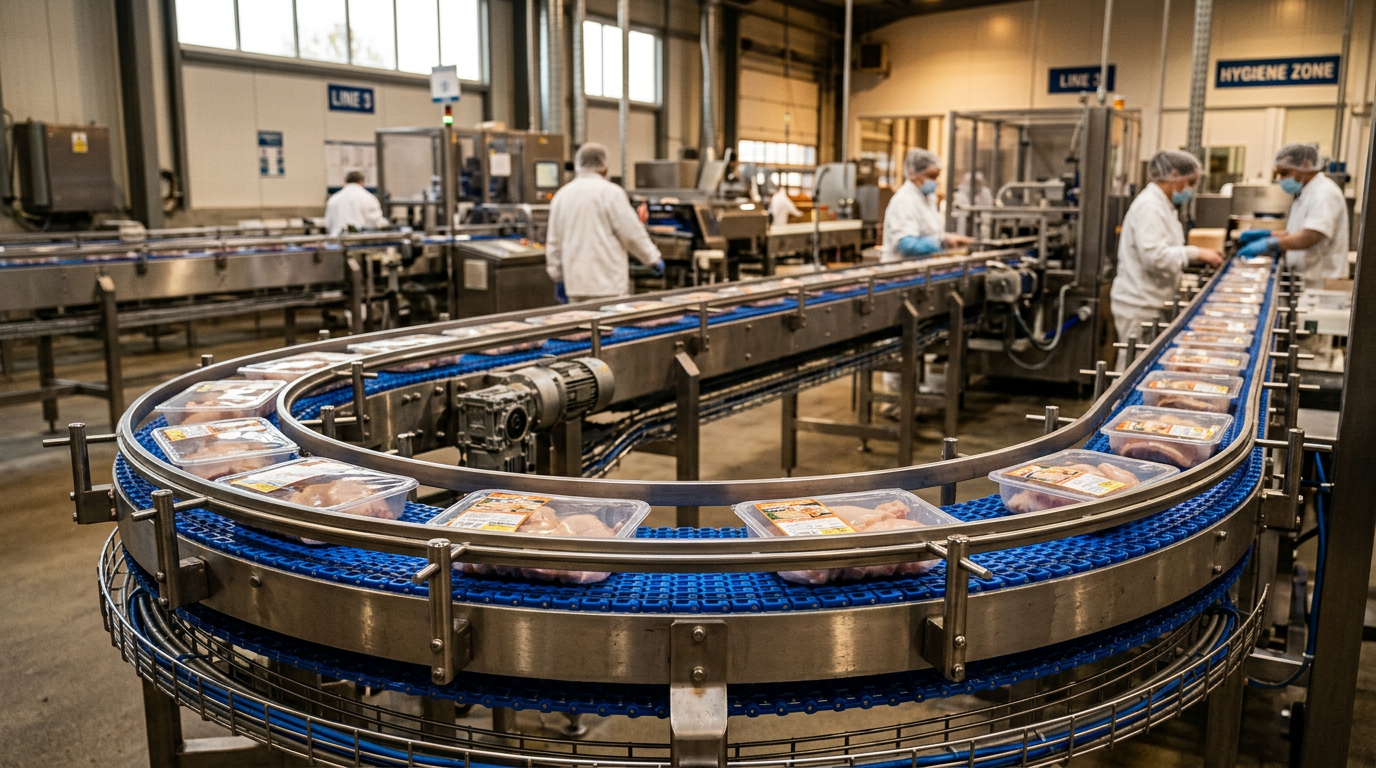
In food manufacturing, "high-care" zones are areas where chilled, ready-to-eat (RTE) products are handled, requiring the highest level of environmental control to prevent contamination by pathogens like Listeria monocytogenes. Modular plastic belt conveyors have become the industry standard in these environments due to their inherent mechanical advantages over tensioned fabric or rubber belts.
Unlike traditional belts that rely on friction and tension, modular belts are positively driven by sprockets. This eliminates the risk of belt slippage and mistracking, which are common sources of edge fraying and subsequent physical contamination in food lines. Furthermore, the modular nature allows for the replacement of individual damaged links rather than the entire belt, significantly reducing lifecycle costs and downtime.
Material Selection for Microbial Resistance
The choice of polymer is the first line of defense in high-care production. Three primary materials dominate the landscape:
- Polypropylene (PP): Ideal for higher temperature applications (up to 105°C) and resistant to many aggressive cleaning chemicals. However, it becomes brittle at very low temperatures.
- Polyethylene (PE): The preferred choice for cold-room applications and freezers. It maintains high impact resistance down to -73°C but has lower mechanical strength than PP.
- Polyacetal (POM): Offers the highest tensile strength and lowest coefficient of friction, making it excellent for long conveyor runs. However, it is sensitive to high concentrations of chlorine, a common sanitizing agent.
Hygienic Design Principles and EHEDG Compliance
The European Hygienic Engineering & Design Group (EHEDG) provides the framework for "Hygienic Design." In high-care modular systems, this translates to several specific engineering features:
- Open Hinge Geometry: High-care belts feature hinges that open as they travel around the sprocket. This "self-cleaning" action exposes the pivot pin to the Clean-in-Place (CIP) spray, ensuring that no organic matter remains trapped in the joint.
- Minimal Surface Contact: Modern conveyor frames utilize "snake" or "zigzag" wear strips to minimize the surface area where the belt touches the frame. This prevents the formation of "dead zones" where moisture and bacteria can flourish.
- Tool-less Disassembly: For deep cleaning, the system should allow operators to lift the belt and remove the wear strips without specialized tools. This is a hallmark of systems provided by Easy Conveyors, where modularity is paired with ease of sanitation.
Comparison of Conveyor Belt Technologies in Food Production
| Feature | Modular Plastic Belt | Fabric/Tensioned Belt | Stainless Steel Mesh |
|---|---|---|---|
| Microbial Control | High (Open hinges) | Low (Fraying risk) | Medium (Crevice risk) |
| Cleaning Time | Short (Positive Drive) | Moderate | Long (Steam required) |
| Chemical Resistance | Excellent (PP/PE) | Variable | High |
| Maintenance | Single link replacement | Full belt replacement | Section welding |
| FDA/EU Compliance | Standard | High Risk | Standard |
| Life Expectancy | 5-10 Years | 1-2 Years | 3-5 Years |
Optimizing the Sanitation Cycle (CIP vs. COP)
In high-care environments, the cleaning process is divided into Clean-in-Place (CIP) and Clean-out-of-Place (COP). Modular systems are uniquely suited for automated CIP systems.
Clean-in-Place (CIP) Integration
Integrated spray bars positioned at the drive and idler ends can be programmed to run during the sanitation shift. By utilizing a VFD soft-start tuning approach, the belt can be run at a slow "creep speed" (approx. 5-10% of production speed) to ensure every link passes through the high-pressure spray zone.
Reducing Water and Chemical Consumption
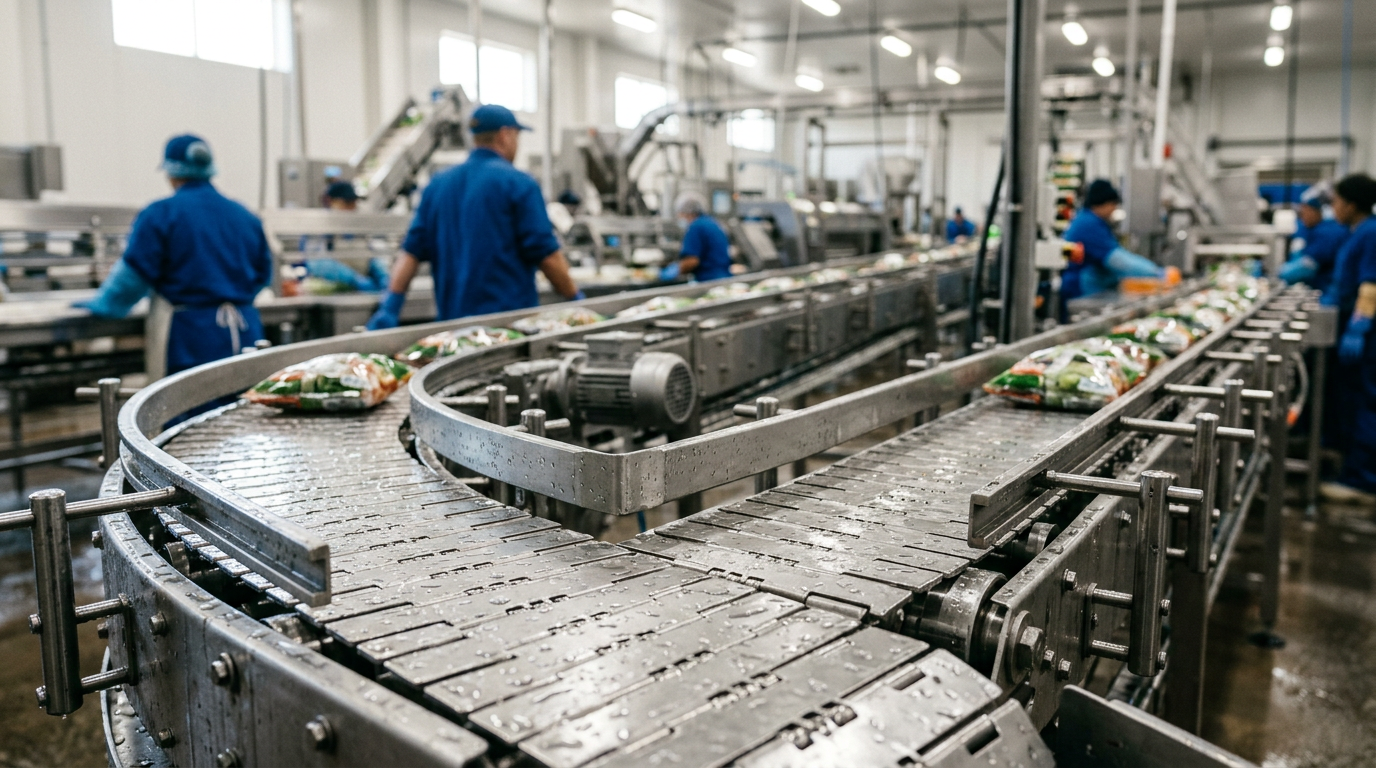
According to Intralox, hygienic modular belts can reduce water consumption by up to 45% compared to fabric belts. This is due to the lack of absorbent carcass material. In a high-care facility, this reduction directly impacts the bottom line and sustainability targets.
Easy Conveyors stocks the modular systems discussed here — ready to ship across Europe.
Mechanical Considerations: Sizing and Load
When designing a modular plastic belt conveyor for high-care, engineers must account for the Thermal Expansion Coefficient. Plastic expands and contracts significantly more than stainless steel. For a 20-meter conveyor, a temperature swing from a 4°C production state to a 50°C sanitation state can result in a belt length change of several centimeters.
- Catenary Sag: Engineers must design a catenary sag area on the return side to absorb this expansion. Without proper sag, the belt will over-tension, leading to premature sprocket wear or shaft failure.
- Sprocket Engagement: Proper alignment of the sprockets is critical. In high-care environments, "tracking" is not adjusted by tension (as with fabric belts) but by the fixed position of the sprockets on the drive shaft.
Failure Modes and Troubleshooting
Despite their robustness, modular systems in high-care zones can fail if not maintained.
- Pin Migration: If the locking mechanism of the pivot pin fails, the pin can migrate out of the belt side, potentially falling into the product stream. Modern "headless" pins or recessed locking tabs are designed to prevent this.
- Sprocket Wear: A "hooked" sprocket profile indicates that the belt has been running under too much tension or that the belt pitch has increased due to wear.
- Biofilm Accumulation: If the cleaning validation (ATP swabbing) fails, it is often due to the "shadowing" effect where the spray bar cannot reach the underside of the belt. Adjusting the spray angle or adding a belt flipper can resolve this.
Future Trends: Antimicrobial Polymers and AI Inspection
The next generation of high-care conveyors is incorporating antimicrobial additives directly into the polymer matrix. While these do not replace cleaning, they provide an added layer of protection against biofilm formation. Furthermore, vision-based AI systems are now being used to monitor belt health, identifying cracked links or debris before they pose a food safety risk.
By adhering to ISO 14159:2002 (Safety of machinery — Hygiene requirements for the design of machinery), manufacturers can ensure that their modular conveyor systems are not the weak link in their food safety chain. Proper material selection, hygienic frame design, and automated sanitation protocols remain the three pillars of successful high-care production.
Integrating these systems requires a deep understanding of both mechanical engineering and microbiology. For plant managers, the transition to modular plastic belts is often the single most effective step toward achieving consistent 6-log reductions in surface microbial counts during the sanitation window.
Frequently Asked Questions
What is the best material for modular belts in cold-room environments?
Polyethylene (PE) is the industry standard for high-care cold rooms and freezers as it retains impact strength and flexibility down to -73°C, whereas Polypropylene (PP) may become brittle.
How do you track a modular plastic belt compared to a fabric belt?
Unlike fabric belts, modular belts are positively driven by sprockets. Tracking is maintained by the fixed position of these sprockets on the shaft, eliminating the need for tensioning systems that can harbor bacteria.
What design features are essential for a 'high-care' conveyor frame?
For a 100% hygienic environment, use an open-frame stainless steel structure, tool-less belt lifters for cleaning access, and 'snake' wear strips to minimize belt-to-frame contact area.
Why is catenary sag important in food-grade conveyors?
Catenary sag is the unsupported loop of belt on the return side. It is critical because it absorbs the thermal expansion of the plastic belt during hot wash-down cycles, preventing over-tensioning.