Maximizing Throughput: Spiral Modular Conveyors for Vertical Accumulation
Discover how spiral modular conveyors optimize vertical accumulation, saving up to 75% floor space while providing critical buffering for high-speed production lines.
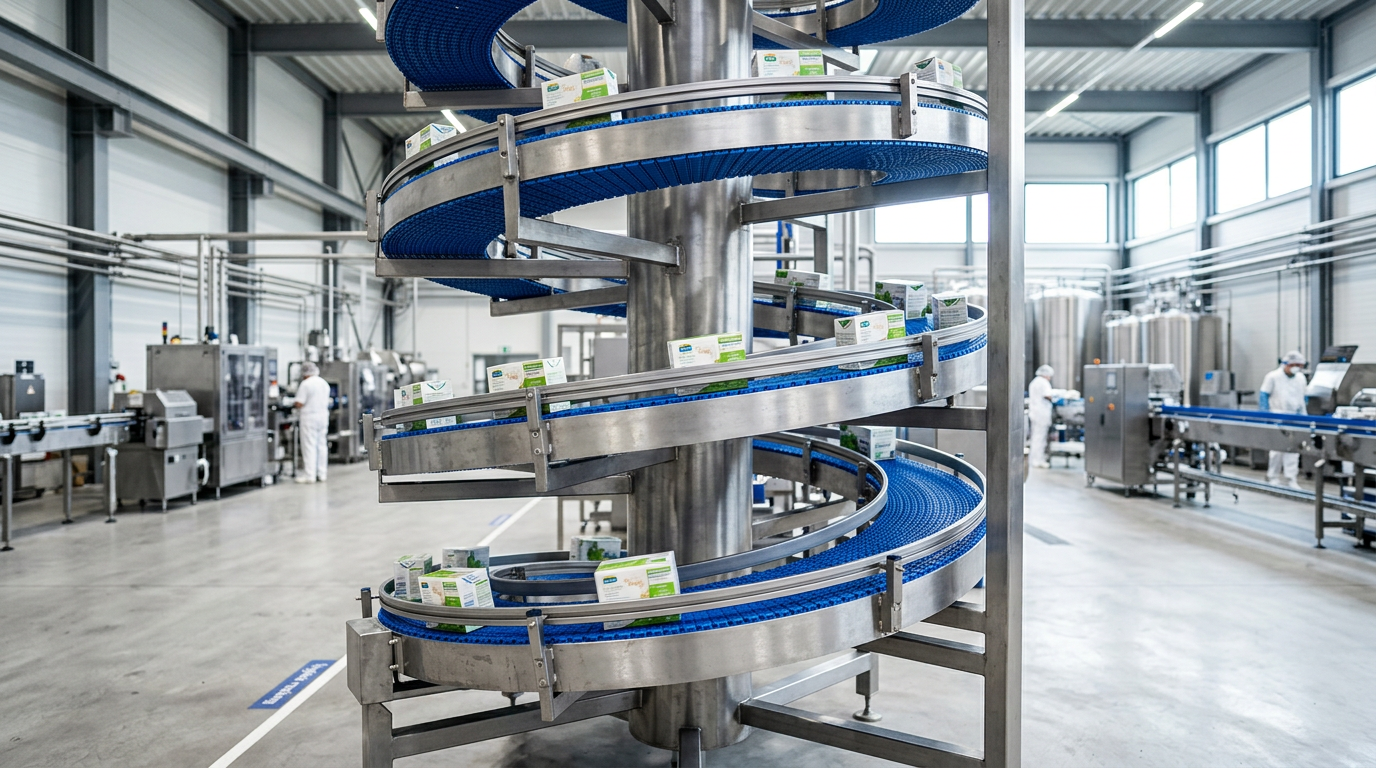
Spiral modular conveyors provide a mechanical advantage for vertical accumulation by utilizing a continuous helical path to increase dwell time by up to 400% compared to linear tracks within the same floor footprint. These systems are essential in high-throughput packaging environments where upstream line stoppages must be absorbed without halting downstream processes like palletizing or labeling.
The Role of Spiral Accumulation in Modern Automation
In high-speed production lines, an unplanned stoppage of just 30 seconds on a case packer can cause a ripple effect that halts the entire filling or processing line. Vertical accumulation, achieved through spiral modular conveyors, acts as a "buffer" or "accumulator." Unlike traditional horizontal accumulation tables that consume vast expanses of floor space, spiral systems leverage vertical height to store product.
A spiral modular conveyor typically consists of a central column around which a modular plastic belt travels in a continuous incline or decline. For accumulation purposes, these are often configured as "Dynamic Buffers" or "First-In-First-Out" (FIFO) zones. According to VDMA standards for materials handling, optimizing floor space index (FSI) is a primary driver for adopting vertical transport solutions in manufacturing facilities.
Material Selection: POM vs. PE in Spiral Chains
The choice of belt material is critical for the longevity of a spiral system. Because the belt is under constant radial tension (the "side-flexing" force), the friction coefficient and tensile strength are paramount.
- Polyoxymethylene (POM/Acetal): The industry standard for spiral accumulation. It offers high tensile strength and a low coefficient of friction, which is vital for minimizing "pulsing" or "slip-stick" effects in long helical runs.
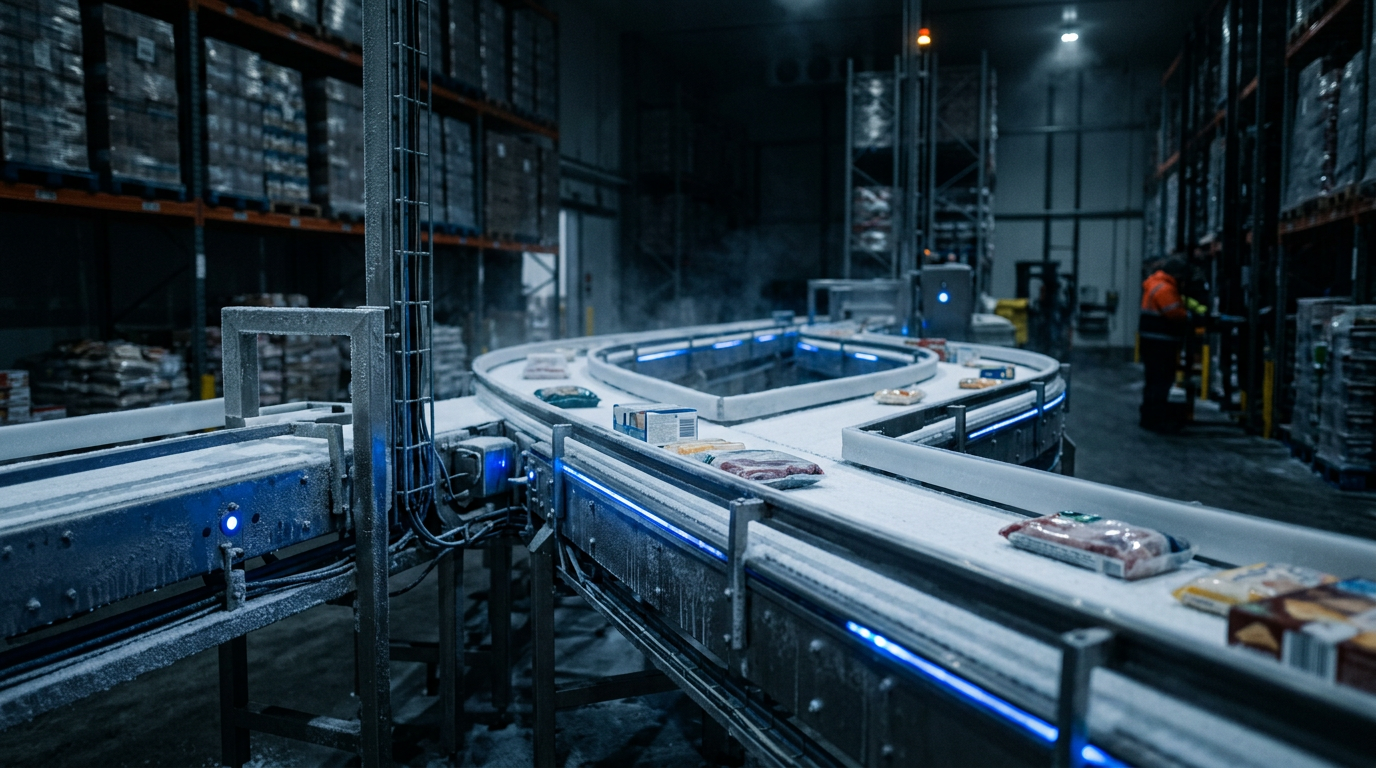
- Polyethylene (PE): Preferred for cryogenic or high-impact applications, though it has lower load-carrying capacity than POM.
| Feature | POM (Acetal) | PP (Polypropylene) | PE (Polyethylene) |
|---|---|---|---|
| Tensile Strength | Very High | Moderate | Low |
| Friction Coeff. | 0.15 - 0.20 | 0.25 - 0.30 | 0.10 - 0.15 |
| Temp Range | -40°C to +90°C | +5°C to +105°C | -70°C to +65°C |
| Impact Resistance | Good | Moderate | Excellent |
Structural Engineering and Drive Dynamics
The mechanics of a spiral conveyor differ significantly from standard belt conveyors. In a spiral, the belt must navigate 360-degree turns while climbing. This introduces lateral forces that are managed by "tab" or "bearing" guides on the inner radius.
Modern systems often utilize high-efficiency motors. When selecting a drive, engineers should target IE3 or IE4 efficiency classes to minimize the heat generated by the motor, especially if the spiral is located in a temperature-controlled environment like a food-grade freezer or a pharmaceutical cleanroom. For precise control, integration with a Variable Frequency Drive (VFD) is mandatory to synchronize the spiral’s speed with the upstream infeed and downstream outfeed rates.
Design Considerations for Vertical Buffering
When designing a spiral accumulation system, several factors determine the footprint and the logic of the control system:
- **Incline
Easy Conveyors stocks the modular systems discussed here — ready to ship across Europe.
Angle:** Most modular plastic belts used in spirals can handle an incline of up to 10-12 degrees without product slippage, depending on the surface friction of the container (glass vs. cardboard). 2. Turn Radius: The ratio between the belt width and the inner radius is typically 1.1 to 1.5. A tighter radius allows for a smaller footprint but increases the tension on the outer edge of the belt. 3. Chain Tensioning: Unlike horizontal conveyors where gravity keeps the belt on the drive sprockets, spirals require sophisticated weighted take-up units or spring-loaded tensioners to compensate for belt stretch over time.
For European manufacturers looking for versatile components that integrate seamlessly into these complex layouts, Easy Conveyors offers a range of modular solutions designed to handle the high radial loads inherent in spiral configurations.
Maintenance and Failure Modes
Spiral conveyors are high-duty assets. Common failure modes include:
- Belt "Tenting": Occurs when debris gets trapped in the inner radius track, causing the belt to lift.
- Sprocket Wear: Given the long length of the chain (often exceeding 50 meters), uneven sprocket wear can lead to "surging."
- Lubrication Issues: While many POM belts are self-lubricating, high-speed spirals may require dry-film lubricants to reduce the coefficient of friction against the wear strips.
Implementing a preventive maintenance schedule that includes "hygienic wash-down design" inspections is vital for food and pharma sectors, ensuring that the central column and underside of the helical tracks are free from biological buildup, in accordance with EHEDG guidelines.
Integration with Warehouse Logic
The "intelligence" of a vertical accumulator lies in its sensors. Photo-eyes at every 90 or 180 degrees of the spiral rotation allow the PLC (Programmable Logic Controller) to calculate the "fill level" of the buffer. If the downstream palletizer stops, the spiral begins to slow down or enter "creep mode," stacking products closely to maximize the vertical storage capacity.
This logic is often paired with "VFD soft-start tuning" to prevent the torque spike that occurs when a fully loaded spiral transitions from a dead stop to full speed. This reduces mechanical stress on the motor and the modular drive sprockets.
Conclusion
Spiral modular conveyors represent the pinnacle of space-efficient material handling. By mastering the physics of vertical accumulation, plant managers can significantly improve their Overall Equipment Effectiveness (OEE) by decoupling machine dependencies. Whether it is a small-footprint cooling spiral for a bakery or a massive buffer for an e-commerce fulfillment center, the modularity of modern plastic chains ensures these systems can be tailored to virtually any vertical requirement. Capacity planning and careful material selection remain the cornerstones of a successful installation. Managers should also consider related topics such as "drum motor selection" for compact drive footprints and "VFD soft-start tuning" to ensure smooth operation under heavy loads.
Frequently Asked Questions
How much floor space does a spiral conveyor save compared to a linear one?
A spiral conveyor saves roughly 60% to 85% of floor space compared to a standard horizontal conveyor of the same length, by utilizing vertical height.
What is the best belt material for a spiral accumulator?
POM (Acetal) is the preferred material due to its high tensile strength and low friction, which helps the belt navigate long helical paths without excessive wear.
What is the maximum incline angle for a spiral modular belt?
The maximum incline for a spiral conveyor is generally between 10° and 15°. Exceeding this can lead to product instability or belt slippage without special high-friction inserts.
Why is FIFO important in spiral accumulation?
FIFO (First-In-First-Out) ensures product freshness and sequence, whereas LIFO (Last-In-First-Out) is simpler to engineer but can lead to older products being trapped at the bottom of the buffer.
Do spiral conveyors require Variable Frequency Drives?
VFDs are essential for matching the spiral's speed to the line flow, managing torque during start-up, and preventing 'surging' that can damage the product or the belt.