Maximizing Efficiency with Spiral Modular Conveyors for Vertical Accumulation
Maximize floor space with spiral modular conveyors. Learn how vertical accumulation systems use FIFO logic and modular belts to provide high-density buffering.
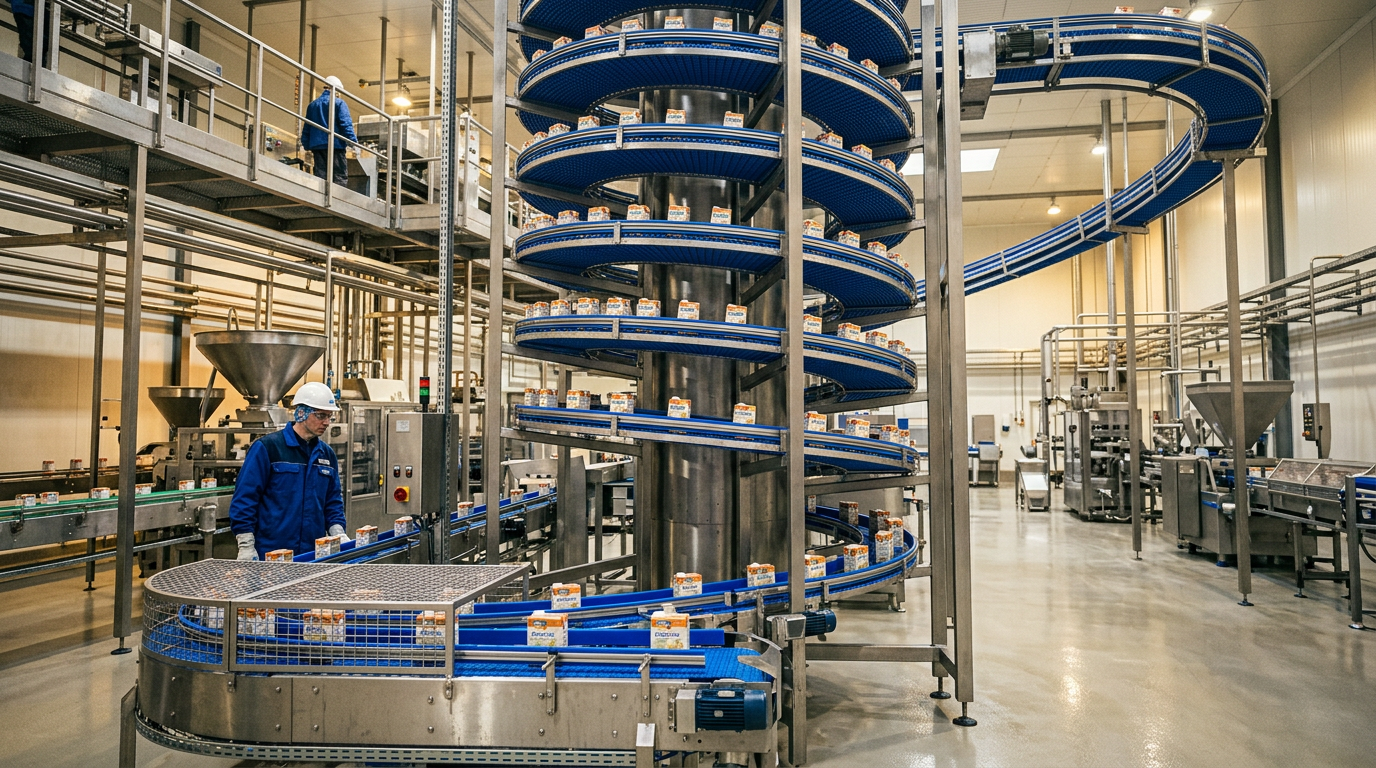
Spiral modular conveyors for vertical accumulation provide a high-density buffer solution that utilizes overhead space, typically saving between 40% to 60% of floor area compared to traditional horizontal accumulation systems. By employing a continuous spiral path driven by low-friction modular plastic belts, these systems maintain a "First-In-First-Out" (FIFO) logic and can accommodate up to 50 meters of operational length in a footprint as small as 3 meters in diameter.
The Role of Vertical Accumulation in Modern Production
In high-speed production environments, such as beverage bottling or pharmaceutical packaging, the "cost of downtime" is measured in thousands of Euros per minute. Vertical accumulation systems serve as a physical shock absorber between disparate machines—for example, a filler operating at 60,000 units per hour and a case packer that may require periodic stops for film roll replacement.
The primary advantage of the spiral modular design is its ability to decouple machine speeds. While a simple incline conveyor moves products between levels, a spiral accumulator stores them. This is achieved through sophisticated belt control and modular plastics that allow for tight-radius turns without losing orientation or damaging fragile packaging.
Technical Foundations of Spiral Modular Design
The efficiency of a spiral conveyor is rooted in the tribology of the modular belt and the structural integrity of the central column. Most modern spirals utilize high-strength POM (Polyoxymethylene) belts with integrated bearings or low-friction tabs.
Modular Belt Selection
Choosing the right belt material is critical for energy efficiency and longevity.
- POM (Acetal): The industry standard for high-speed spirals due to its high tensile strength and low coefficient of friction.
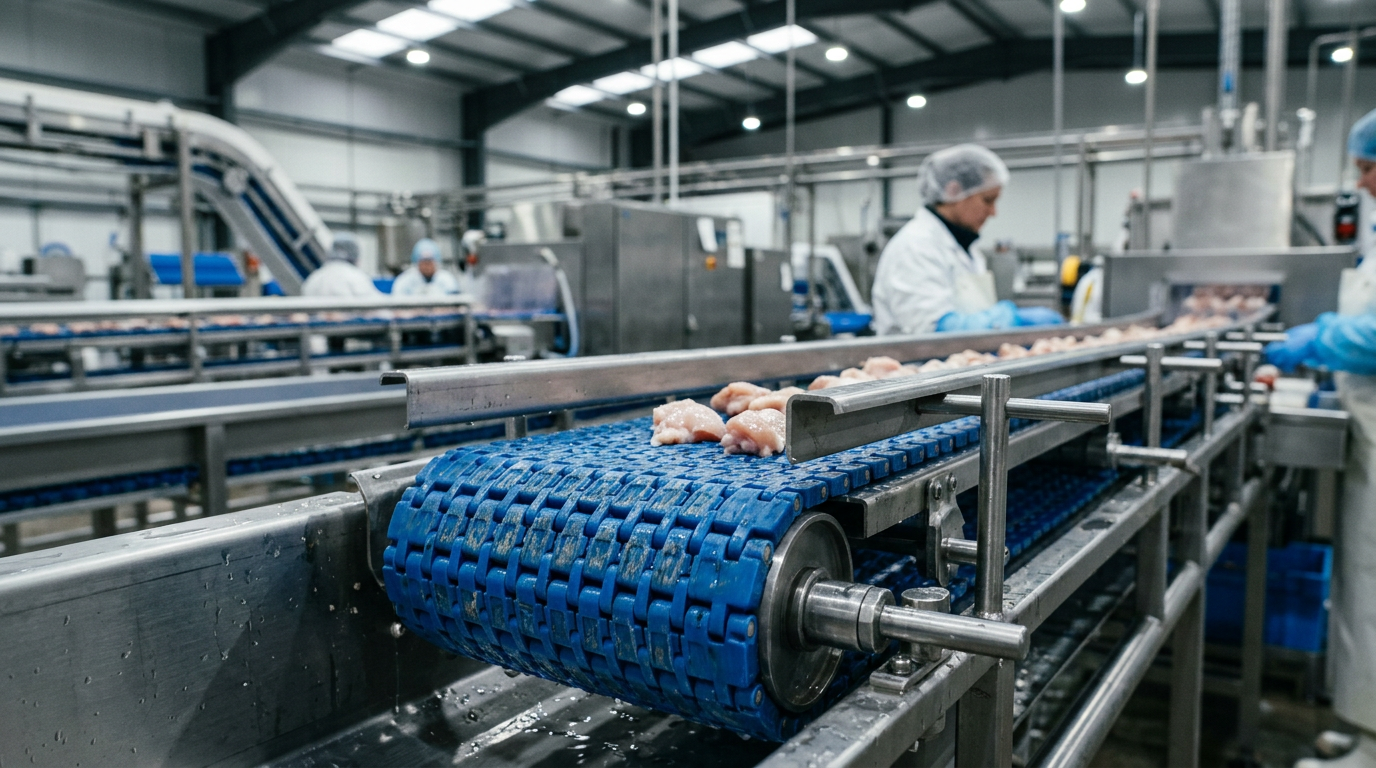
- PP (Polypropylene): Preferred for chemical resistance in pharmaceutical wash-down environments, though it has lower load capacity than POM.
- Antistatic Materials: Essential for e-commerce and electronics sortation to prevent dust buildup and ESD (Electrostatic Discharge) events.
According to safety standards such as ISO 12100, these systems must be designed with integrated guarding and emergency stop protocols, ensuring that the vertical height does not introduce new gravitational hazards to the workshop floor.
Performance Specifications: Spiral Accumulators
| Feature | Standard Spiral | High-Throughput Spiral | Heavy-Duty Accumulator |
|---|---|---|---|
| Max Speed | 30 m/min | 60 m/min | 25 m/min |
| Max Load | 30 kg/m | 50 kg/m | 100 kg/m |
| Belt Widths | 200 - 600 mm | 100 - 400 mm | Up to 1200 mm |
| Incline Angle | 5° - 12° | 3° - 8° | 5° - 10° |
| Typical Motor | IE3 AC Motor | Servo / VFD | IE4 Gearmotor |
Integration and Control Strategies
To maximize the utility of vertical accumulation, the control system must be integrated with the wider factory MES (Manufacturing Execution System). This usually involves the use of Variable Frequency Drives (VFDs) to modulate the spiral speed based on the "fill level" of the buffer.
- Dynamic Buffering: The spiral slows down or speeds up incrementally as upstream sensors detect a buildup.
- Zero-Pressure Accumulation (ZPA): In some modular designs, the belt is divided into zones to prevent products from touching, whic
Easy Conveyors stocks the modular systems discussed here — ready to ship across Europe.
h is crucial for glass containers or delicate electronics. 3. Emergency Off-loading: Advanced spirals can be reversed or have secondary discharge points to clear the line quickly during a catastrophic failure of downstream equipment.
For engineers looking to integrate these systems into a wider facility layout, partnering with a versatile manufacturer is key. Easy Conveyors offers a range of modular components that allow for the seamless transition from horizontal transport to vertical buffering, ensuring that the modular conveyor system remains flexible as production needs evolve.
Design Factors: Friction and Centrifugal Force
A common failure mode in vertical spirals is "belt surging" or "tracking jitter." This occurs when the tension required to move the belt exceeds the friction limits of the wear strips. To mitigate this, engineers must calculate the PV factor (Pressure-Velocity) of the wear strips.
Modern spirals often utilize "side-flexing" chains that track along a stainless steel or UHMW-PE guide rail. The radius of the spiral is directly proportional to the width of the belt; wider belts require larger diameters to prevent the inner edge from buckling. As noted by Habasit, the collapse factor (the ratio between the minimum turn radius and the belt width) is typically between 1.6 and 2.2 for most spiral-capable modular belts.
Hygienic Design for Food and Pharma
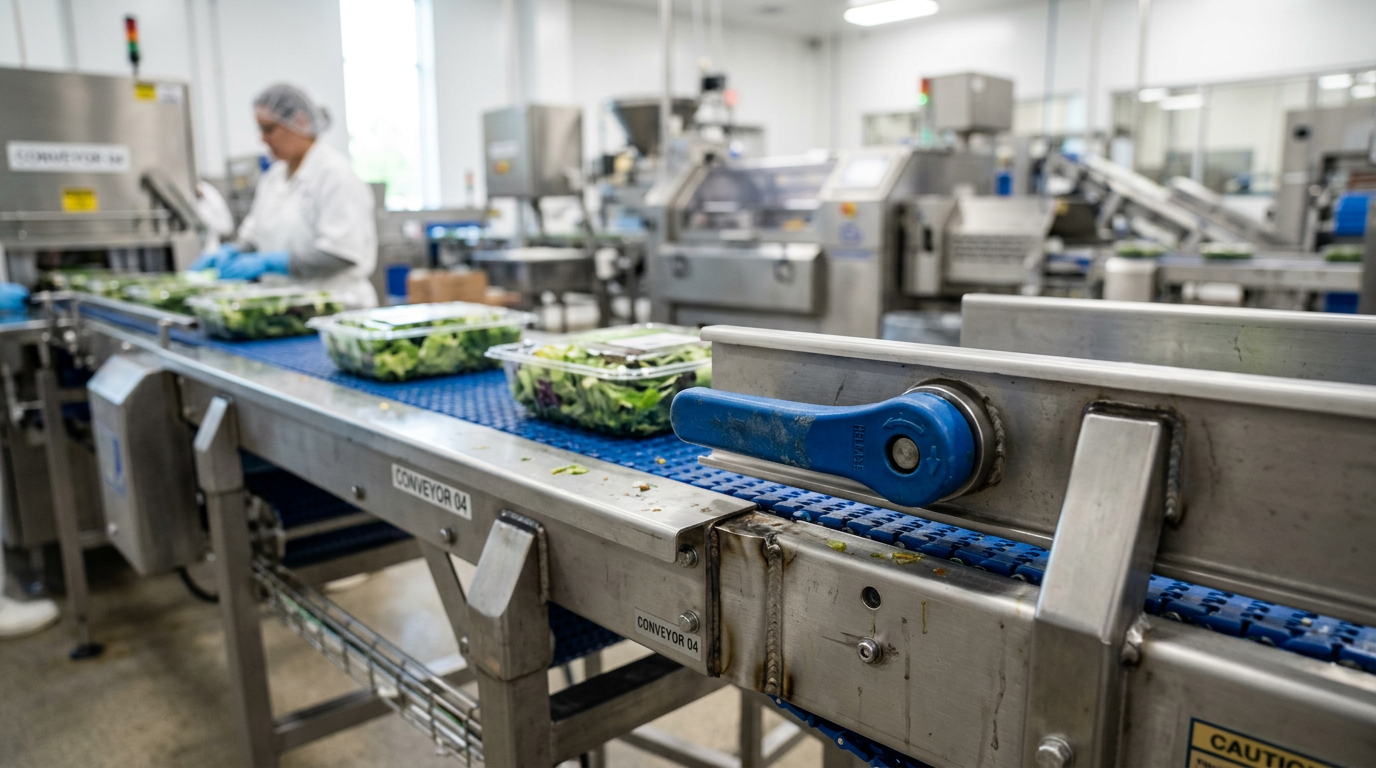
In food processing, the vertical accumulator must comply with EHEDG guidelines to prevent bacterial growth in the "dead zones" of the spiral.
- Open Frame Construction: Allows for easy cleaning and inspection of the internal column.
- Self-Draining Surfaces: All horizontal surfaces should be pitched at least 3 degrees.
- FDA Compliant Belts: Materials must be verified by the FDA for direct food contact.
Maintenance and Troubleshooting
Regular maintenance of a spiral system is significantly different from a standard conveyor. Because the belt is under constant lateral stress, the "stretch" of the modular chain must be monitored.
- Chain Elongation: POM belts can stretch up to 1-2% over their lifetime. If the take-up unit reaches its limit, links must be removed.
- Lubrication: While many modular belts are "dry-running," high-speed spirals may benefit from food-grade silicone sprays or automated brush systems to reduce the friction-induced heat on the wear strips.
- Motor Efficiency: Utilizing IE3 efficiency class motors as defined by IEC 60034-30-1 is standard for reducing the total cost of ownership (TCO) in 24/7 operations.
Conclusion
Spiral modular conveyors represent the pinnacle of space-efficient material handling. By moving the accumulation buffer into the Z-axis, manufacturers can protect their throughput from the inevitable micro-stops of individual machines. Whether selecting a system for high-speed beverage lines or heavy industrial parts, understanding the interplay between belt chemistry, motor control, and frame hygiene is essential for a successful vertical integration project. Focus on modularity ensures that as your production line grows, your accumulation capacity can grow with it.
Frequently Asked Questions
How much floor space can I save with a vertical spiral?
Spiral modular conveyors typically save 40% to 60% of floor space compared to a horizontal conveyor with the same buffering capacity.
Can spiral accumulators handle fragile packaging?
Yes, by using modular belts with zero-pressure accumulation (ZPA) logic and low-friction materials, spiral conveyors can handle fragile products like glass or electronics without damage.
What is FIFO logic in vertical accumulation?
FIFO (First-In-First-Out) logic ensures that the first item to enter the buffer is the first to leave, preventing product expiration or batch mixing issues.
Does the belt on a spiral conveyor stretch over time?
Modular plastic belts (POM) can typically stretch 1-2% over their lifespan. Modern spirals include take-up units to manage this, but links may eventually need to be removed.
Do spiral modular belts require lubrication?
While many are dry-running, high-load/high-speed spirals benefit from periodic cleaning of the wear strips and, if permitted, food-grade lubrication to minimize heat.