Maximizing Efficiency with Spiral Conveyors for Vertical Accumulation
Maximize your factory floor space with spiral conveyors for vertical accumulation. Learn how FIFO buffering and helical design optimize production flow and OEE.
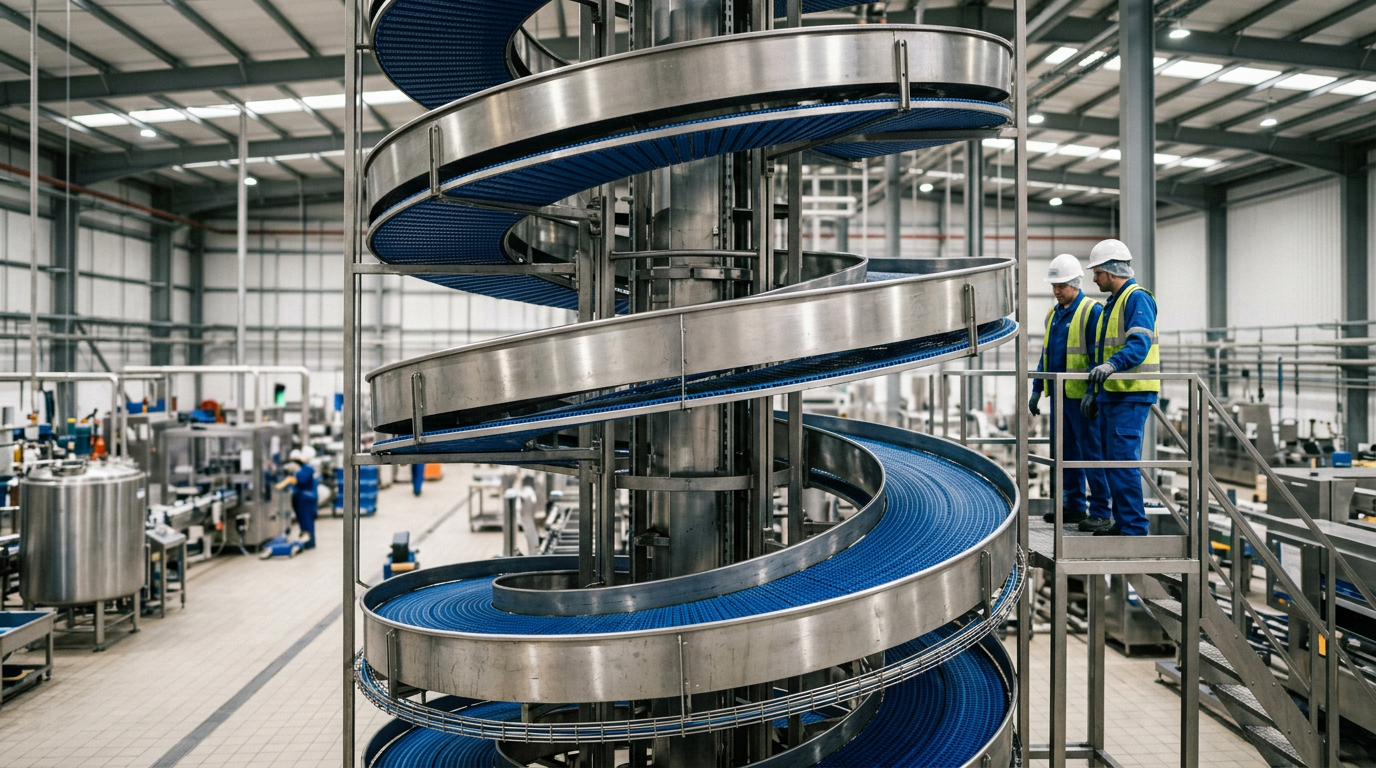
Spiral conveyors for vertical accumulation are specialized material handling systems designed to maximize floor space by transporting products vertically while simultaneously providing a buffer or "dwell time" between manufacturing processes. By utilizing a continuous helical path, these systems allow for high-density storage of goods—such as bottled drinks, packaged foods, or pharmaceutical vials—within a compact footprint.
In modern high-speed production environments, the traditional linear production line is often inefficient. If one machine downstream pauses for a label roll change or a minor jam, the entire upstream process must stop, leading to significant throughput losses. Vertical accumulation spirals solve this by decoupling production stages, allowing upstream machines to continue running while downstream issues are resolved.
Key Takeaways
- Space Efficiency: Reclaims up to 90% of the floor space compared to traditional horizontal accumulation tables.
- First-In-First-Out (FIFO): Ensures product integrity and traceability by maintaining the exact sequence of goods.
- Dynamic Buffering: Acts as a "shock absorber" for the production line, smoothing out micro-stops and increasing Overall Equipment Effectiveness (OEE).
- Versatility: Capable of handling diverse packaging types, from flexible pouches and shrink-wrapped bundles to rigid cartons and crates.
The Engineering Behind Vertical Accumulation
Unlike standard spiral elevators that primarily focus on elevation changes, spiral conveyors for vertical accumulation are engineered for variable speeds and high internal friction management. They often employ a "low-back-pressure" or "zero-pressure" philosophy to ensure that fragile products are not crushed while waiting in the buffer.
Helical Geometry and Drive Systems
The core of a spiral accumulator is its central column, around which a modular plastic or steel slat chain winds. The drive system must account for the high tensile forces generated by a long, curving chain. High-efficiency IE3 or IE4 motors are typically used to ensure constant torque across variable speeds. Advanced systems utilize a distributive drive system where multiple motors synchronize to reduce chain tension, extending the Mean Time Between Failures (MTBF).
Friction and Chain Dynamics
In accumulation scenarios, products may sit stationary while the chain continues to move beneath them, or the entire spiral may slow down. Managing the coefficient of friction (COF) is critical. For dry environments, low-friction acetal chains are standard. In washdown environments (IP66 or IP69K rated), stainless steel construction and FDA-approved food-grade plastics are required to meet EHEDG standards.
Why Choose Vertical Over Horizontal Accumulation?
In the past, accumulation was handled by large bi-directional tables or massive "S-curve" conveyors. While effective, these methods consume hundreds of square meters of factory floor space.
- Footprint Optimization: A spiral accumulator with a 3-meter diameter can provide over 50 meters of linear accumulation. In a facility where floor space is valued at thousands of dollars per square meter, the ROI is often realized in less than 18 months.
- Sequential Integrity (FIFO): Horizontal tables often shuffle products (Random In, Random Out). For industries like pharma or food with strict batch tracking, FIFO is non-negotiable. Spiral accumulators maintain the product's orientation and sequence perfectly.
- Complex Layouts: Modern plants are moving toward 3D layouts. Professional engineering partners like Easy Conveyors provide modular components that allow these spirals to be integrated into mezzanine levels or bridge over existing traffic aisles, further optimizing the facility’s volumetric efficiency.
Critical Design Considerations for Plant Engineers
When specifying a vertical accumulation spiral, engineers must look beyond just height and width. Several technical variables dictate the success of the installation.
Throughput and Pitch
The "pitch" refers to the distance between the tiers of the spiral. A steeper pitch allows for higher elevation changes but increases the risk of product toppling if not properly guarded. For accumulation, a shallower pitch is often preferred to maximize the number of windings within a specific height.
Product Stability and Side Guards
During accumulation, goods are subject to centripetal forces. High-friction inserts or specialized side-grippers may be necessary for tall, narrow products like wine bottles or aerosol cans. Designers must calculate the center of gravity (CoG) for the heaviest and lightest products to ensure the spiral remains stable under full load.
Control Logic and Sensor Integration
A spiral accumulator is only as smart as its control system. Standard installations include:
- Photoelectric Sensors: Placed at the entry and exit to monitor "gap" and "slug" flow.
- Encoders: To track the exact position of products within the spiral for precise discharge timing.
- VFDs (Variable Frequency Drives): To allow the spiral to ramp speed up or down smoothly, preventing "jerking" that could tip delicate items.
Easy Conveyors stocks the material handling discussed here — ready to ship across Europe.
Common Applications and Use Cases
Food and Beverage Packaging
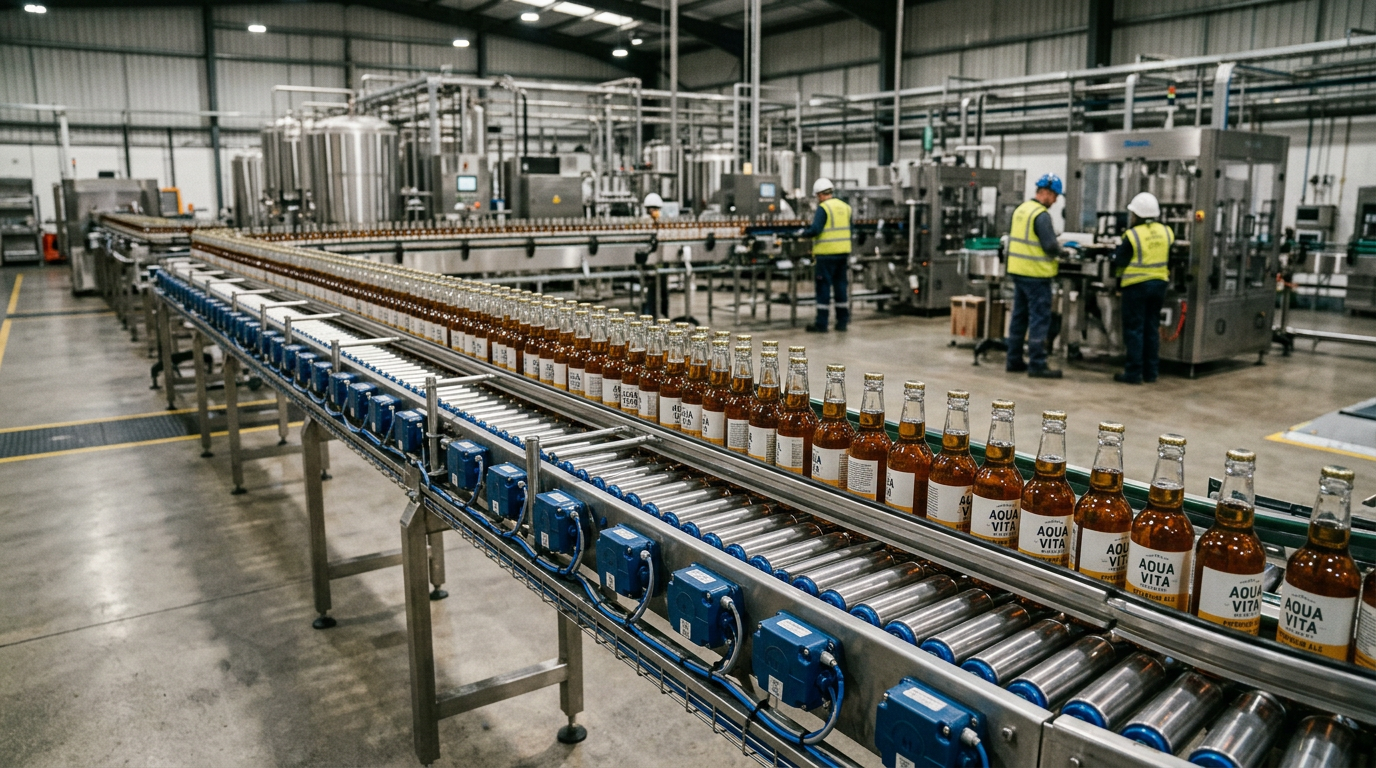
In bottling lines, the filler is the "heart" of the operation. If the packer stops, the filler must keep running to avoid contamination or product waste. A vertical spiral provides 3–5 minutes of buffer time, which is usually enough to clear a minor downstream jam without stopping the filler.
E-commerce and Warehouse Sortation
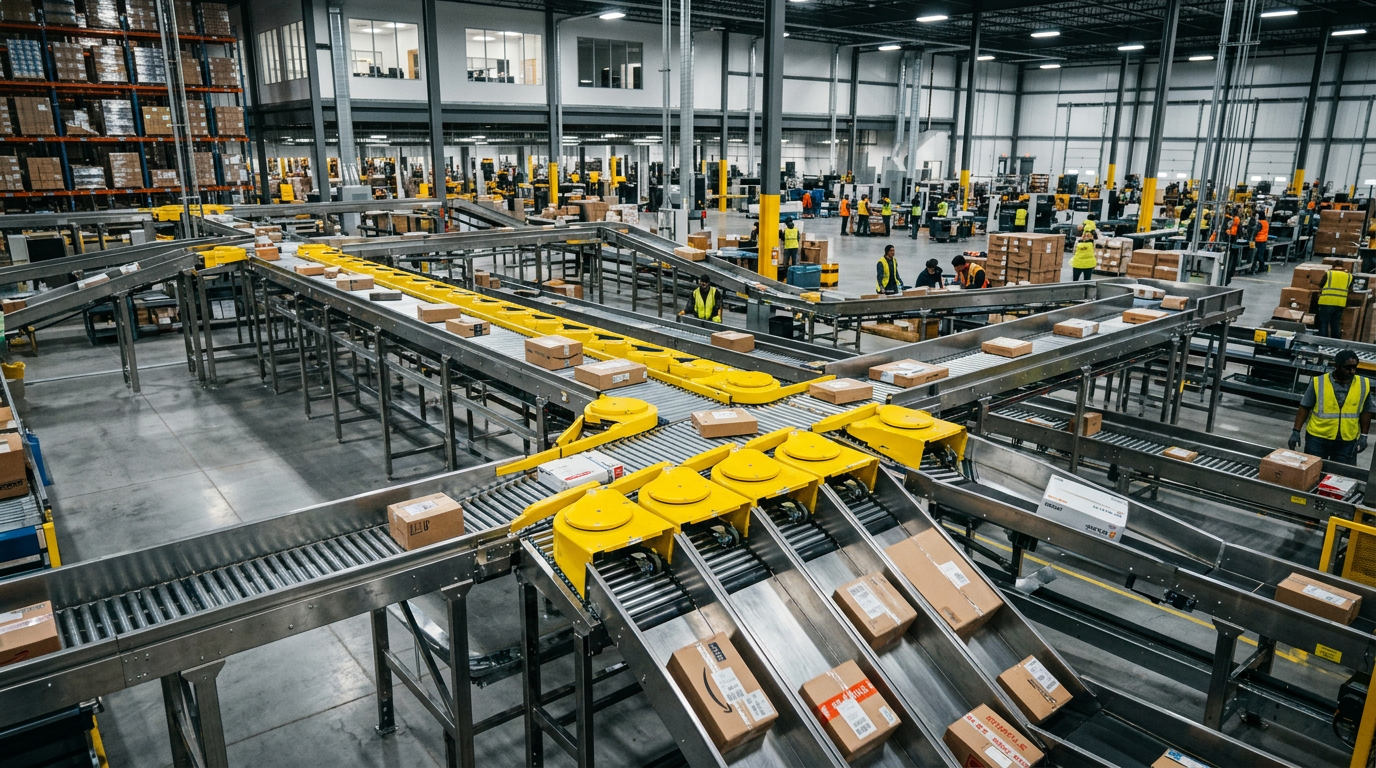
In large distribution centers, spiral accumulators are used to hold packages during surges in tractor-trailer arrivals. They prevent the primary sortation conveyors from "backing up" and shutting down the intake docks.
Cooling and Curing
Sometimes accumulation isn't just about buffering—it's about time. In bakery applications, a spiral accumulator allows hot bread to cool while moving vertically. In chemical or paint industries, it provides the necessary "curing time" for coatings to dry before the next stage of secondary packaging.
Maintenance and Longevity
To ensure a 15-20 year lifespan, regular maintenance of the modular chain and the central drive shaft is essential.
- Lubrication: While many modern modular belts are "dry-running," high-speed spirals may require automated lubrication systems to reduce heat and wear.
- Chain Tensioning: Over time, plastic chains can stretch due to "creep." Modern spirals feature automated take-up units that maintain constant tension.
- Inspection: Quarterly inspections should focus on the wear strips (usually UHMW-PE) that the chain slides upon. Excessive wear here can lead to increased power consumption and vibration.
Future Trends: The Digital Twin and AI
We are seeing a shift toward "Digital Twin" modeling for vertical accumulation. Before a single piece of steel is cut, engineers simulate the flow of products through the spiral under various failure scenarios. AI-driven controllers can now predict when a jam is likely to occur based on vibration patterns or current spikes in the motor, allowing for predictive maintenance that eliminates unscheduled downtime.
By integrating vertical accumulation into the production line, manufacturers move from a "stop-start" mentality to a continuous flow model. This transition is vital for achieving the high OEE targets required in a competitive global market. Whether handling delicate vials or heavy automotive parts, the spiral conveyor remains the gold standard for high-density, sequential vertical accumulation.
Frequently Asked Questions
How does a spiral accumulator differ from a horizontal accumulation table?
A spiral accumulator maintains the exact sequence of products (First-In-First-Out), which is vital for batch tracking and quality control. Traditional tables often result in products being discharged out of order.
What is the typical height and footprint of a vertical spiral accumulator?
While height is flexible, most industrial units range from 2 to 10 meters. The footprint usually remains under 4 meters in diameter, providing significantly more linear storage than any other conveyor type.
Can spiral conveyors be used in food-grade washdown environments?
Yes, by using food-grade modular belts and stainless steel (304 or 316) frames, spiral accumulators can meet EHEDG and FDA standards for washdown environments.
What happens to the product flow when a downstream jam occurs?
In the event of a downstream stoppage, the spiral can either slow down to pack products closer together (high-density buffering) or continue moving at a set speed to act as a timed buffer before discharging.
Are there product size limitations for spiral accumulation?
Most systems can handle a wide variety of dimensions, but the minimum turn radius of the belt and the 'pitch' of the spiral determine the maximum product height and minimum stability.