Side Guides, Transfer Plates, and End Rollers Explained for Modular Systems
Optimize your modular conveyor with the right side guides, transfer plates, and end rollers. Learn how to eliminate product loss and reduce friction in transition zones.
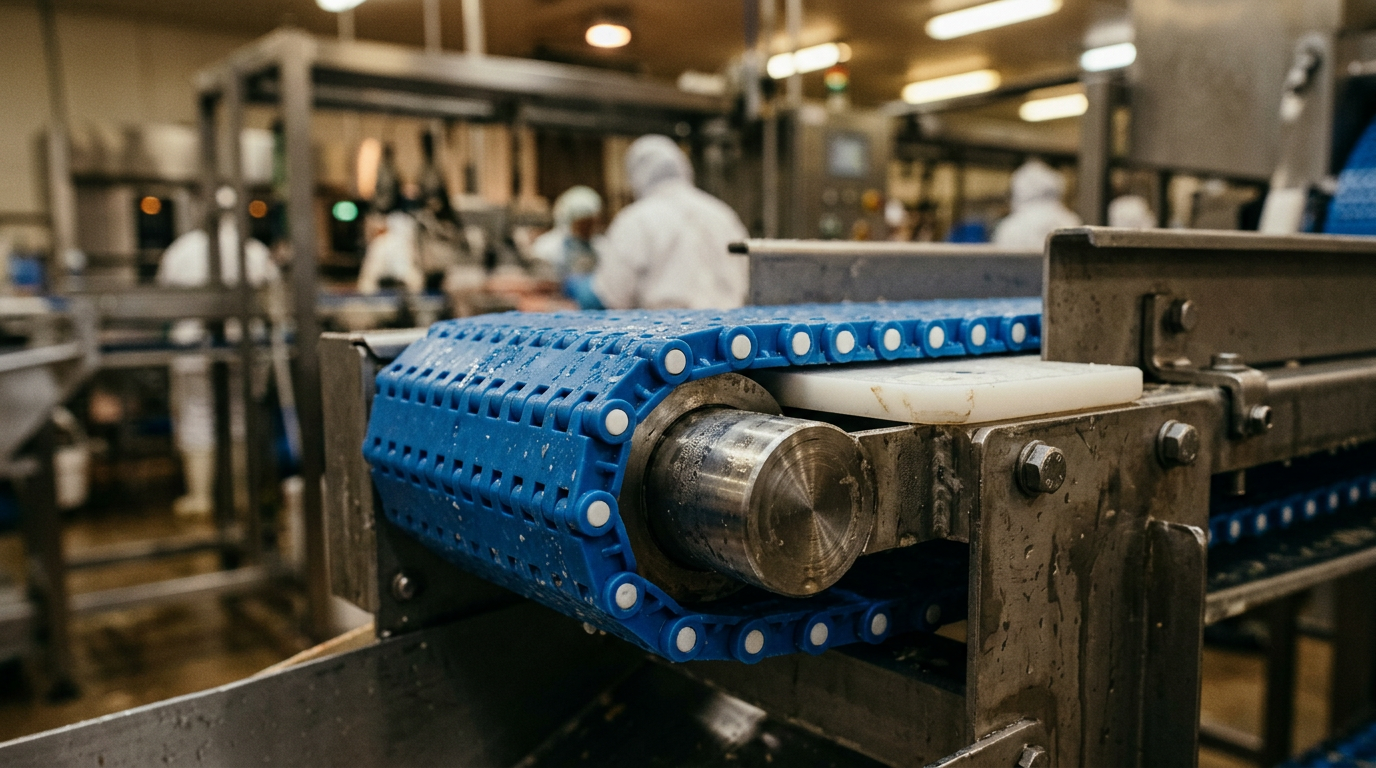
In modular conveyor design, the stability of a product is determined by the transition zones, where a 1-2mm gap or a misaligned side guide can lead to a 15% increase in product loss or structural damage. Optimizing conveyor performance requires a precise hardware trifecta: adjustable side guides for lateral constraint, transfer plates to bridge the "dead zone" between belt segments, and small-diameter end rollers to minimize the pitch-gap ratio.
The Role of Side Guides in Lateral Control
Side guides (or guard rails) are the primary mechanism for maintaining product orientation along the conveyor path. While they appear simple, their design significantly impacts the coefficient of friction and the required motor torque.
Standard side guides typically consist of a stainless steel or aluminum profile with a plastic wear strip. The material selection for the wear strip is critical:
- UHMW-PE (Ultra-High-Molecular-Weight Polyethylene): The industry standard due to its low coefficient of friction (typically 0.15 to 0.25) and high abrasion resistance.
- Antistatic Plastics: Required in electronics manufacturing or explosive atmospheres to prevent surface charge buildup, adhering to IEC 60079 standards.
- High-Temperature Alloys: Utilized in oven applications where standard polymers would deform.
For lines handling multiple SKU sizes, manual or automated adjustable guides are essential. According to the VDMA, modularity in guide systems allows for changeovers that are up to 70% faster than fixed-rail systems. Side guides must be positioned with a "lead-in" flare at the entry point of the conveyor to prevent product snags.
Transfer Plates: Bridging the Gap
The "dead zone" is the physical gap between two conveyor modules where the belt wraps around the drive or idler sprocket. Without a transfer plate, small products (like pharmaceutical vials or small food items) can tip or become trapped.
Transfer plates, often called "dead plates" or "bridge plates," are stationary components that sit flush between two moving surfaces. Easy Conveyors designs modular systems that integrate these plates seamlessly, ensuring that the transition profile remains constant even during thermal expansion of the belt.
| Feature | Fixed Dead Plate | Gravity Roller Transfer | Powered Transfer |
|---|---|---|---|
| Primary Use | Small, stable products | Heavy boxes/crates | High-speed, fragile items |
| Material | Stainless Steel / POM | Steel / Plastic rollers | Micro-pitch belt |
| Maintenance | Low (Static) | Moderate (Bearing wear) | High (Motor/Drive) |
| Friction Level | High | Low | Negligible |
| Gap Width | 5mm - 20mm | 30mm - 100mm | <10mm |
End Rollers and Nose Bars
To achieve the tightest possible transfer, eng
Easy Conveyors stocks the conveyor components discussed here — ready to ship across Europe.
ineers specify "nose bars" or small-diameter end rollers. Standard sprockets on a modular belt might have a pitch diameter of 100mm, creating a large gap between conveyors. By using a nose bar with a diameter as small as 6mm to 19mm, the gap is minimized.
However, reducing the end roller diameter increases the articulation angle of the belt. This can lead to:
- Chordal Action: The pulsation effect as belt links engage with the sprocket.
- Heat Buildup: Increased friction at the nose bar interface.
- Reduced Belt Life: High fatigue on the hinge pins.
To mitigate these issues, hygiene-conscious designs in food processing often use EHEDG-compliant nose bars made of solid PVDF or stainless steel with integrated cooling channels.
Engineering Design Trade-offs
When selecting these components, the design must account for the Product Footprint Rule: A product should always be supported by at least three points of contact. If a product's length is less than 3x the gap width of a transfer point, a transfer plate or a micro-pitch belt is mandatory.
In high-speed automation (over 60m/min), side guide friction becomes a thermal management issue. If the product rubs constantly against the guide, the resulting heat can soften POM (Polyoxymethylene) belt links, leading to premature elongation. In such cases, rolling side guides or low-friction lubricated-grade plastics should be used.
Installation and Alignment Standards
Improperly installed side guides are a leading cause of belt tracking issues. While the belt itself should be tracked via the sprocket alignment, off-center loading caused by misaligned guides will force the belt to "climb" the edge of the conveyor frame.
According to NEMA guidelines, all peripheral hardware must be grounded if it interacts with moving parts to prevent electrostatic discharge (ESD) that could interfere with sensors or VFD control loops.
Interaction with Automation Modules
Modern "Smart Conveyors" often integrate the transfer plate with sensors. For example, a diffuse-reflection sensor can be embedded directly into a laser-cut slot in the transfer plate to detect "slugs" of product or backups. This integration is common in modular conveyor systems used for e-commerce sortation, where millisecond timing on the transfer determines the success of a diverter arm or push-sorter.
Maintaining these components involves regular checks for "grooving"—where the belt or product wears a physical channel into the transfer plate. Once a groove exceeds 0.5mm in depth, the risk of product "diving" (tipping forward) increases significantly, necessitating a replacement of the wear surface. Regular inspections of the conveyor components ensures the longevity of the entire drivetrain and prevents unscheduled downtime.
Frequently Asked Questions
What material is best for side guide wear strips?
For standard low-friction applications, UHMW-PE is the best choice. For high-speed lines where heat is a factor, PTFE-filled or 'special lubricated' POM grades are preferred to prevent belt melting.
When is a transfer plate mandatory?
A transfer plate is required if the product length is less than three times the gap between the two conveyor belts to prevent tipping or snagging.
What is the difference between a nose bar and a standard end roller?
A nose bar is a small-diameter stationary or rolling rod used at the end of a conveyor to allow for tight transfers of small items, whereas a standard roller is larger and usually part of the drive mechanism.
Can side guides affect conveyor belt tracking?
Excessive side guide pressure can cause the belt to shift laterally, leading to 'edge wear' or causing the belt to climb the sprockets, which can snap the belt links.
How do I choose a transfer plate for hygienic applications?
In food-grade environments, transfer plates should be made of 316 stainless steel or blue FDA-approved plastics, featuring a 'tool-less' removal design for daily sanitation.