The Engineering Guide to Side Guides, Transfer Plates, and End Rollers
Explore the critical roles of side guides, transfer plates, and end rollers in conveyor systems. Learn sizing rules, material selection, and transfer physics.
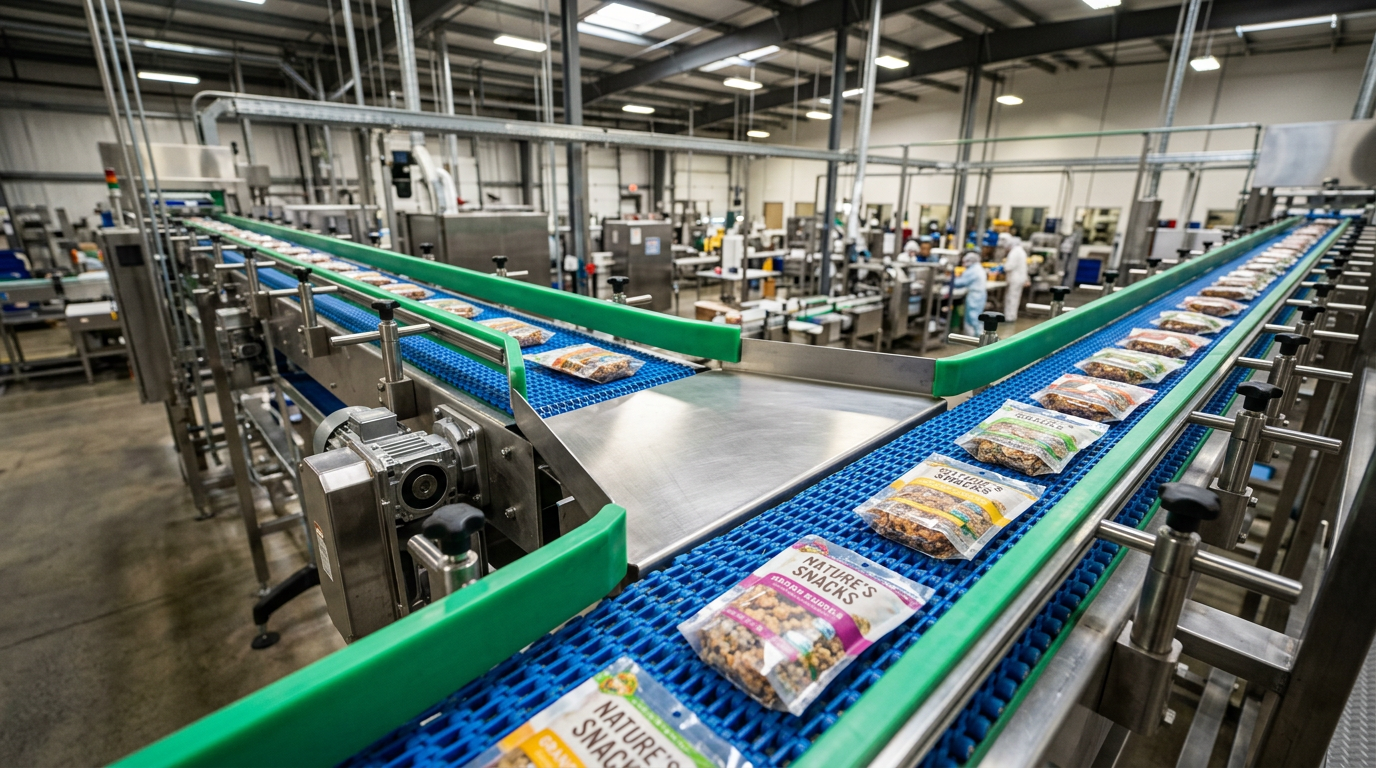
Material handling systems rely on more than just belts and motors; the efficiency of a modular conveyor is often determined by the precision of its auxiliary components. Side guides, transfer plates, and end rollers serve as the critical interfaces that ensure product stability, prevent jams at transition points, and enable the smooth "flow" of goods across complex automation layouts.
The Role of Side Guides in Product Stability
Side guides (or lateral rails) are the primary defense against product loss and misalignment. In high-speed packaging lines, even a 2mm deviation in product positioning can lead to downstream failures in labeling, scanning, or robotic picking.
Material Selection: MDPE vs. Stainless Steel
The choice of side guide material is dictated by the environment and the coefficient of friction required.
- High-Molecular-Weight Polyethylene (PE-HMW/UHMW): These are the industry standard for reducing friction. They offer excellent wear resistance and are often color-coded (green or black) to indicate antistatic properties or FDA compliance.
- Stainless Steel with Plastic Inserts: For heavy-duty applications or high-temperature environments, stainless steel rails provide structural rigidity, while a clipped-on plastic profile protects the product from scratching.
Adjustability and Ergonomics
In modern manufacturing, where batch sizes are shrinking and changeovers are frequent, "tool-less" side guides are essential. Specialized hand knobs and scaled adjustment rods allow operators to reset guide widths for different SKUs in seconds rather than minutes. Easy Conveyors provides modular side guide brackets that integrate seamlessly with aluminum profiles, offering both fixed and adjustable configurations to suit varied packaging dimensions.
Solving the "Dead Plate" Problem with Transfer Plates
The "gap" between two conveyor conveyors is a notorious bottleneck. If the gap is too wide, small products (like cosmetic bottles or small electronic components) may tip or become trapped. If the gap is bridged by a static "dead plate," friction builds up, potentially stalling the line.
Passive vs. Active Transfers
- Passive Transfer Plates: These are stationary bridges, typically made of low-friction POM (Polyoxymethylene) or stainless steel. They are cost-effective but depend on the momentum of the product or the pressure from the product behind it to "push" across the gap.
- Active (Roller) Transfer Plates: These incorporate small, non-powered micro-rollers nested within the plate. These rollers significantly reduce the force required to clear the transition, making them ideal for lightweight or fragile items.
Geometric Considerations
A common mistake in hygienic wash-down design is neglecting the "comb" geometry of transfer plates. For modular plastic belts, finger-style transfer plates (comb plates) are used. The "fingers" of the plate reach into the gaps of the belt’s surface, lifting the product off before it reaches the sprocket, which eliminates the "pulsing" effect caused by polygon action.
Easy Conveyors stocks the conveyor components discussed here — ready to ship across Europe.
End Rollers and Nose Bars: The Small-Radius Solutions
When a conveyor must transfer goods to another machine or a perpendicular line, the diameter of the end roller (the terminal pulley) determines the "tightness" of the transfer.
The Physics of the Nose Bar
A standard drive sprocket might have a diameter of 100mm, creating a large gap between conveyors. A "nose bar" (or dead-end bar) reduces this radius to as little as 6mm to 10mm. This is vital for handling small pouches or lightweight blister packs. However, small radii increase the stress on the belt and the heat generated by friction.
Rolling vs. Fixed Nose Bars
| Feature | Fixed Nose Bar (Static) | Rolling Nose Bar (Dynamic) |
|---|---|---|
| Minimum Radius | 3mm - 8mm | 10mm - 25mm |
| Friction Level | High (Heat generation) | Low (Energy efficient) |
| Maintenance | Low (No moving parts) | Medium (Bearing wear) |
| Ideal Load | < 5 kg/m | > 10 kg/m |
| Speed Limit | Lower (Thermal limits) | Higher (Lower friction) |
Integration and Maintenance Best Practices
Ensuring these components work in harmony requires precise alignment. When implementing drum motor selection for a system utilizing nose bars, engineers must account for the additional drag. A static nose bar can increase the required motor torque by 15-20% compared to a standard roller.
Troubleshooting Common Issues
- Product Shingling: If transfer plates are set too low, products may "dive" into the gap. Ensure the plate is 0.5mm to 1.0mm higher than the receiving belt.
- Guide Rail Marking: If side guides are leaving black marks on white packaging, the material pressure is likely too high, or the guide material is degrading. Switching to a high-performance PE-1000 material usually resolves this.
- Vibration at Transitions: Often caused by improper VFD soft-start tuning leading to "cogging" at low speeds, which is then amplified as the product hits a transfer plate.
Environmental Considerations: IE3 and Hygiene
In the food and pharma sectors, components must comply with EHEDG or FDA standards. This means side guides must have "open" designs to avoid bacteria traps, and transfer plates must be easily removable for daily sanitation. Furthermore, the efficiency of the entire line is influenced by these small parts; reducing friction at every side guide and end roller contributes to lower energy consumption, supporting IE3 motor efficiency targets by reducing the overall load on the drivetrain.
By treating side guides, transfer plates, and end rollers as critical engineering variables rather than afterthoughts, plant managers can significantly improve OEE (Overall Equipment Effectiveness) and reduce product damage rates.
Frequently Asked Questions
How should I align the height of a transfer plate?
For small products, the transfer plate should be set approximately 0.5mm to 1.0mm higher than the receiving conveyor surface to prevent snagging.
Are adjustable side guides worth the extra cost?
No. Rigid side guides are cheaper but lead to long downtimes. Tool-less, adjustable side guides are recommended for lines with more than two SKU size changes per week.
What is the difference between a nose bar and a standard end roller?
Static nose bars (6-10mm) allow for the tightest transfers but generate more heat and friction. Rolling nose bars (12mm+) are better for high-speed or heavy-load applications.
What is the best material for low-friction side guides?
UHMW-PE (Ultra-High-Molecular-Weight Polyethylene) is preferred for its exceptionally low coefficient of friction (0.10 to 0.20) and high wear resistance.
When should I use a 'comb' transfer plate instead of a flat plate?
Comb-style transfer plates are specifically designed for modular belts; their teeth mesh with the belt surface to pick up the product before the belt wraps around the sprocket.