Optimizing Shaftless Screw Conveyors for Sludge and Biomass Handling
Shaftless screw conveyors provide a 100% clear flow path for sludge and biomass, eliminating hanger bearings and shafts to prevent clogging in demanding industrial environments.
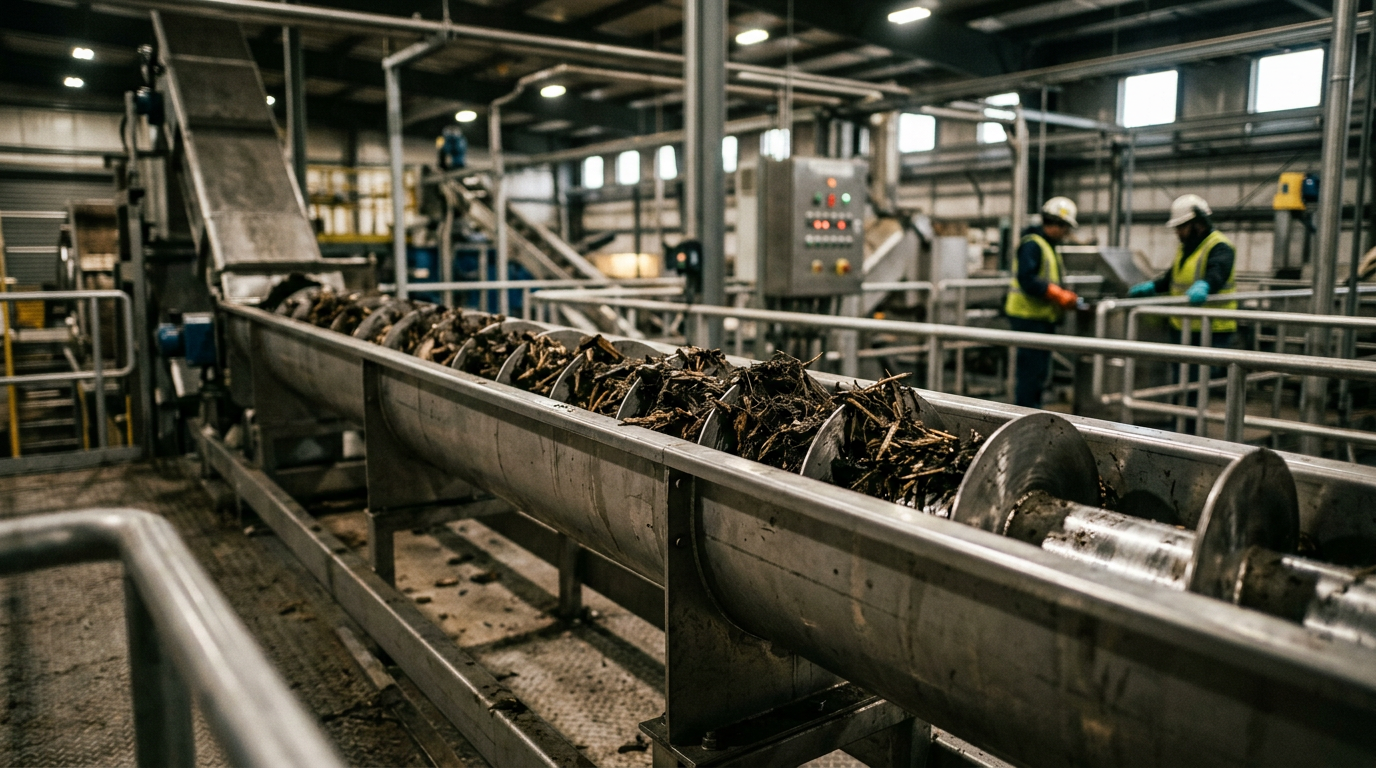
Shaftless screw conveyors represent a critical evolution in material handling, designed specifically to transport difficult, heterogeneous materials that would clog or wrap around a traditional center pipe. By utilizing a high-strength, heavy-duty spiral driven at one end and supported by a low-friction liner, these systems offer a 100% clear flow path, making them the industry standard for transporting dewatered sludge, screenings, and fibrous biomass.
The Mechanics of Shaftless Design
Unlike traditional screw conveyors that rely on a central shaft to support the flights and internal hanger bearings to maintain alignment, shaftless systems utilize a "spiral" or "rotor" that is significantly thicker and more robust. This spiral rotates on a replaceable liner, typically made of Ultra-High-Molecular-Weight Polyethylene (UHMWPE) or specialized alloys.
The absence of a central shaft eliminates the primary points of failure when handling sticky or stringy materials. In sludge handling, for example, fibrous materials tend to wrap around the shaft of a conventional conveyor, eventually creating a "plug" that halts flow. The shaftless design allows these materials to pass through the center of the spiral, effectively increasing the volumetric capacity by approximately 20-30% compared to a shafted screw of the same diameter.
Critical Components and Materials
For demanding applications like municipal wastewater treatment or biomass energy plants, material selection is dictated by the chemical composition and abrasiveness of the load.
- The Spiral: Usually manufactured from high-strength carbon steel or stainless steel (304/316). Cold-formed spirals offer superior grain structure and hardness compared to those that are welded or hot-formed.
- The Liner: The "wear bed" is the most critical consumable. High-performance plastics like UHMWPE are standard, but for high-temperature biomass applications, specific ceramic-filled materials or hard-faced alloys may be required.
- The Drive Assembly: Since the spiral is only supported at the drive end, the thrust bearing and gearbox must be rated for high axial loads.
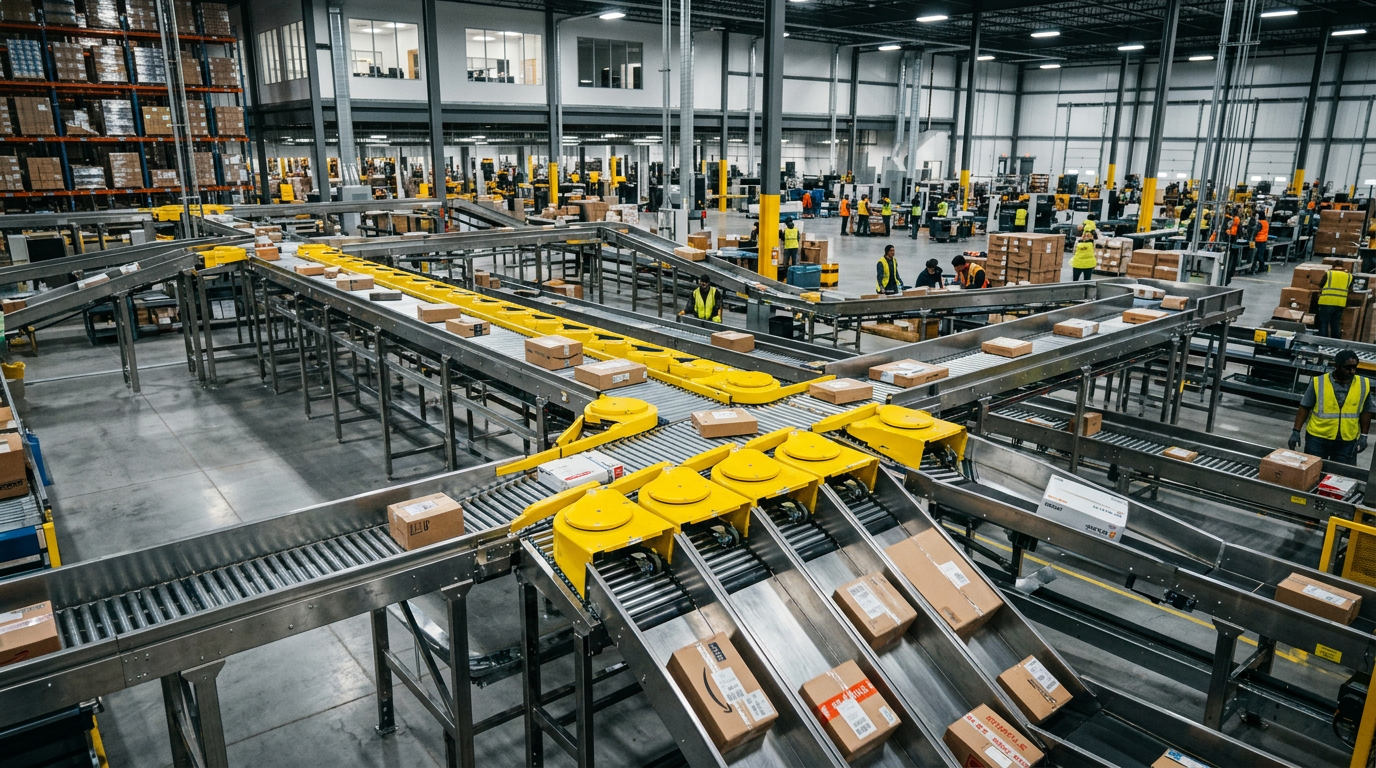
When integrating these systems into a broader production line, engineers often look to partners like Easy Conveyors to bridge the gap between heavy sludge processing and modular unit handling, ensuring a seamless transition from raw material processing to final packaging.
Shaftless vs. Shafted: A Technical Comparison
| Feature | Shaftless Screw Conveyor | Shafted Screw Conveyor |
|---|---|---|
| Material Type | Sticky, stringy, large particles | Dry, free-flowing, granular |
| Hanger Bearings | None (No internal obstructions) | Required every 3-4 meters |
| Volumetric Efficiency | High (100% of cross-section) | Lower (shaft occupies center) |
| Maintenance Focus | Liner replacement | Bearing lubrication/alignment |
| Max Incline | Up to 90° (with modifications) | Generally limited to <30° |
| Typical IP Rating | IP65 / IP66 (Washdown) | IP54 / IP55 |
Handling Dewatered Sludge
In wastewater treatment, sludge handling involves moving a material that is often 15-30% solids. This material is non-Newtonian, meaning its viscosity changes under stress. A shaftless screw conveyor provides the necessary shear to keep the sludge moving without the risk of the "bridging" effect seen in hopper-fed systems.
Standards such as ISO 1050:1975 for screw conveyors provide the foundational geometry, but for sludge, manufacturers often exceed these requirements to account for the extreme torque required during start-up. If a conveyor stops while fu
Easy Conveyors stocks the material handling discussed here — ready to ship across Europe.
ll of wet sludge, the "stiction" (static friction) can be significantly higher than the running torque. Engineers should size motors with a service factor of at least 1.5 to 2.0 and utilize VFDs for soft-start capabilities to protect the drive train.
Biomass and Alternative Fuels
Biomass handling (wood chips, agricultural waste, MSW) introduces the challenge of bulk density variability. One cubic meter of dry wood chips weighs significantly less than one cubic meter of wet compost. Shaftless conveyors excel here because they can handle "slug loads"—sudden surges in volume—without the risk of bending a central shaft or stalling a hanger bearing.
For biomass applications, fire safety and explosion prevention are paramount. Conveyors must be designed to meet ATEX directives (in Europe) or NFPA 820 (in the US) if the material creates combustible dust. This involves grounding the spiral, using explosion-venting covers, and installing speed sensors to detect slippage before heat builds up.
Design Considerations for Maximum Uptime
When specifying a shaftless conveyor for sludge or biomass, three factors determine the Mean Time Between Failures (MTBF):
- Trough Loading: For abrasive materials, the trough should generally not be filled beyond 30-45%. Overfilling increases liner wear exponentially.
- Rotational Speed: Shaftless conveyors typically run at lower RPMs (15–50 RPM) than shafted versions. Slower speeds reduce friction and extend the life of the UHMWPE liners.
- Liner Wear Indicators: Modern systems include "wear strips" of a different color (e.g., a red layer beneath a green surface). When the red layer becomes visible, maintenance teams know they have approximately 500 hours of operation left before a replacement is mandatory.
Integration with Automation
Advanced material handling requires precise control over throughput. Integrating a Shaftless Screw Conveyor into a SCADA system allows for:
- Torque Monitoring: Using the VFD to monitor current draw can predict a blockage before it occurs.
- Level Control: Ultrasonic or radar level sensors in the discharge chute prevent downstream equipment from being overwhelmed.
- Reverse Functionality: The ability to briefly reverse the spiral can clear minor jams without manual intervention, a critical feature in unmanned biomass plants.
Proper selection of the drive system is vital. High-efficiency IE3 or IE4 motors (IEC 60034-30-1) are now standard for continuous-duty applications in Europe, significantly reducing the Total Cost of Ownership (TCO) over the 10-to-20-year lifespan of the equipment.
Troubleshooting Common Issues
Despite their robustness, shaftless conveyors face specific failure modes. The most common is "spiral compression," where the spiral compresses toward the drive end due to an obstruction at the discharge. This can lead to the spiral rubbing against the end plate. Regular inspection of the "clearance" at the non-drive end is a standard maintenance task.
Another issue is liner lifting. If the material is extremely sticky, it can get under the liner and lift it into the path of the spiral. Ensuring the liner is securely fastened with recessed stainless steel hardware or held down by "hold-down bars" is essential for high-viscosity sludge applications.
In summary, for any facility dealing with "difficult" materials, the shaftless screw conveyor offers a combination of high uptime and low maintenance that traditional conveyors cannot match. By removing the shaft, we remove the most common point of failure in the material handling loop.
Frequently Asked Questions
What is the difference between a shafted and shaftless screw conveyor?
A shaftless conveyor replaces the central pipe with a heavy-duty spiral that rotates on a low-friction liner. This allows for a completely unobstructed path, preventing materials from wrapping around a shaft.
What is the best liner material for sludge handling?
For municipal sludge, UHMWPE (Ultra-High-Molecular-Weight Polyethylene) is the standard due to its low friction and high abrasion resistance. For high-temp or highly abrasive biomass, specialized alloys or ceramic liners are preferred.
Can shaftless screw conveyors handle vertical inclines?
Yes, shaftless conveyors can operate vertically or at steep inclines. However, the spiral design must be modified to prevent material 'fall-back', and the drive system must be sized for the increased gravitational load.
How often do the liners need to be replaced?
Liner life varies by material abrasiveness, but in standard sludge applications, a high-quality UHMWPE liner typically lasts 2 to 5 years before requiring replacement.