Optimizing Throughput: Modular Sortation Systems for E-commerce
Modular sortation systems increase e-commerce throughput by up to 50% using scalable, plug-and-play components like swivel-wheel diverters and shoe sorter modules.
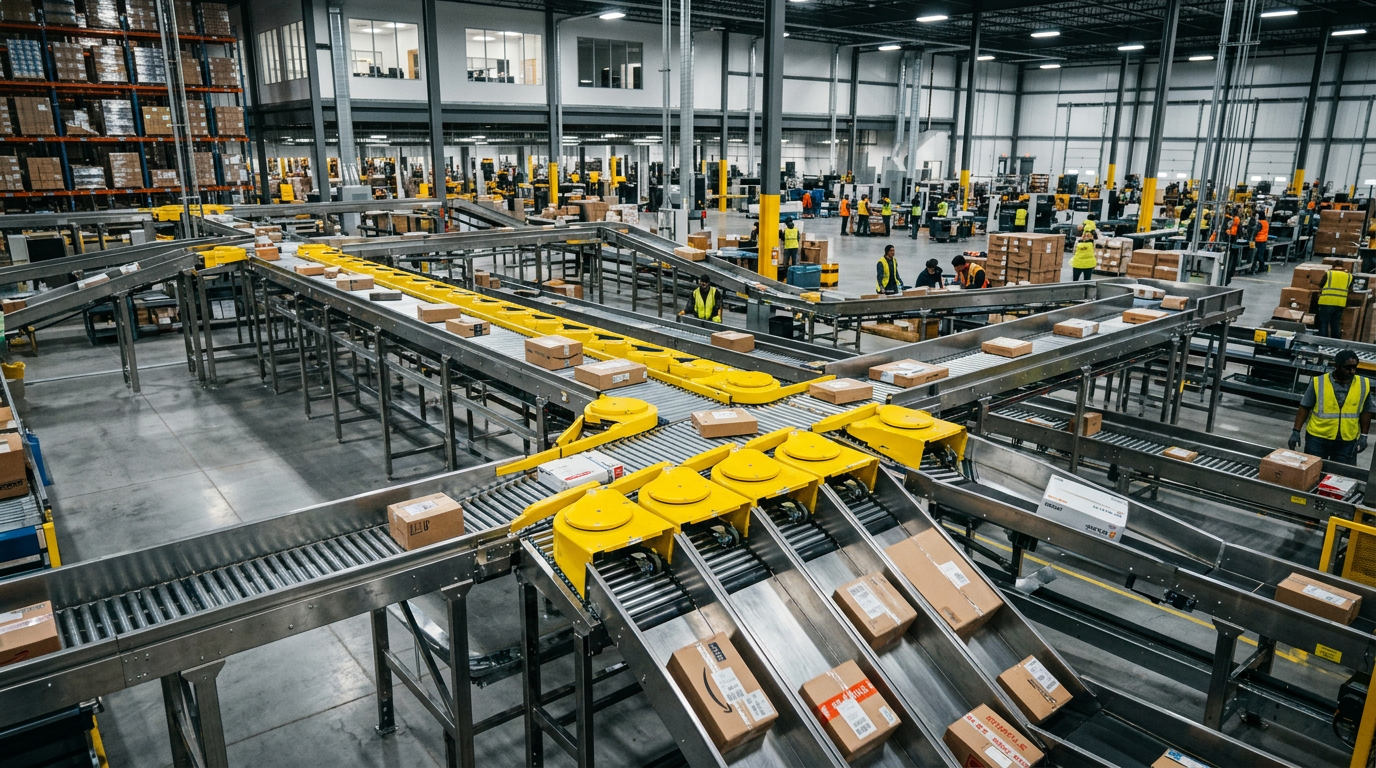
Modular sortation systems in modern e-commerce fulfillment centers typically increase throughput by 30% to 50% compared to manual induction, utilizing standardized 400mm to 1000mm wide modules to sort up to 15,000 parcels per hour. By decoupling the sortation logic from rigid, monolithic steel structures, these systems allow facilities to scale throughput incrementally as seasonal demand fluctuates.
The Shift from Fixed to Modular Sortation
Traditional sortation systems, such as large-scale tilt-tray or cross-belt sorters, were designed as "monuments"—permanent installations with high capital expenditure and rigid footprints. However, the volatility of e-commerce, characterized by unpredictable SKU growth and seasonal spikes like Black Friday, has shifted the industry toward modularity.
Modular sortation systems are built on the principle of plug-and-play components. These include standard conveyor sections, diverter modules (like swivel-wheel or pop-up rollers), and integrated scanning tunnels. By using standardized mechanical interfaces and decentralized control architectures (often utilizing IO-Link or PROFINET), engineers can reconfigure a warehouse layout in days rather than months.
Key Performance Metrics in E-commerce Sortation
When evaluating modular systems, engineers focus on three primary metrics:
- Throughput (PPH): The number of Parcels Per Hour the system can process. Modular narrow-belt or shoe sorters typically handle 5,000 to 12,000 PPH.
- Divert Accuracy: The percentage of items successfully reaching the correct bin without recirculating. High-end modules target >99.9% accuracy.
- Footprint Efficiency: The ratio of sortation capacity to square footage, crucial in urban "last-mile" hubs where space is at a premium.
Core Technologies in Modular Sortation
Swivel-Wheel and Multi-Directional Diverters
Swivel-wheel modules are the workhorses of modular sortation. These units consist of rows of wheels that can pivot to angles of 30, 45, or 90 degrees. According to technical specifications from Interroll, these modules can handle a wide variety of packaging types, from polybags to rigid cardboard boxes, without requiring mechanical changeovers.
Cross-Belt and Shoe Sorter Modules
For higher speeds and fragile goods, modular cross-belt units are preferred. Each "cell" is an independent motorized belt running perpendicular to the main travel direction. Unlike traditional circular cross-belts, modular versions can be integrated into linear conveyor lines. For heavier loads, modular shoe sorters use slats and sliding "shoes" to gently push items into destination chutes.
The Role of Decentralized Control
Modularity is not just mechanical; it is digital. In a modular setup, each sortation zone often has its own localized logic controller or a decentralized drive system. This reduces the complexity of the central PLC (Programmable Logic Controller) program. Siemens provides integrated drive solutions that allow these modules to operate autonomously, sharing data via industrial Ethernet to synchronize gaps between parcels—a process known as "induction control."
Design Trade-offs: Speed vs. Flexibility
Choosing the right modular system requires balancing initial cost (CAPEX) against long-term operational flexibility (OPEX).
| Feature | Swivel-Wheel Sorter | Modular Shoe Sorter | Cross-Belt Module |
|---|---|---|---|
| Throughput (PPH) | 2,000 - 6,000 | 6,000 - 10,000 | 10,000 - 15,000+ |
| Handling Capability | Rigid boxes, some polybags | Wide range, heavy items | Very high (fragile/slippery) |
| Maintenance Complexity | Low (modular wheels) | Medium (slat/track wear) | High (individual belt motors) |
| Noise Level | < 75 dB(A) | 75 - 82 dB(A) | < 70 dB(A) |
| Scalability | Excellent | Moderate | Moderate |
Easy Conveyors stocks the material handling discussed here — ready to ship across Europe.
Integration and Engineering Partners
Integrating these modules into a cohesive ecosystem requires high-quality primary transport. For example, Easy Conveyors provides the robust belt and roller conveyor foundations that feed these sortation modules, ensuring that the transition points—where most jams occur—are engineered for smooth parcel flow. Their modular approach aligns with the need for rapid deployment in e-commerce environments.
Maintenance and Reliability: The Modular Advantage
One of the greatest risks in material handling is a "single point of failure." In a monolithic sorter, a broken chain can halt the entire facility. In a modular system, failure is localized.
Predictive Maintenance and IE3 Efficiency
Modern modular systems utilize IE3-rated premium efficiency motors (IEC 60034-30-1). These motors not only reduce energy consumption by up to 15% but also generate less heat, extending the life of electronic components. By monitoring the current draw and vibration of each module, maintenance teams can identify a failing bearing before it stops the line.
Safe Human-Machine Interaction
Safety is governed by standards such as ISO 13849-1, which defines the Safety Integrity Level (SIL) for control systems. Modular sorters must include integrated E-stop zones and light curtains, ensuring that if one section is accessed for maintenance, the rest of the system can potentially continue to operate in a "limp mode" or safely stop only the affected zone.
Future Trends: AI and Robotic Induction
The next frontier for modular sortation is the integration of AI-driven vision systems. Traditional scanners look for barcodes; AI-driven cameras can identify package dimensions, weight, and even structural integrity in real-time. This data allows the modular sorter to adjust its divert speed and angle dynamically.
Furthermore, the rise of AMR (Autonomous Mobile Robot) sortation provides a "hyper-modular" alternative where the "conveyor" is a fleet of independent robots. However, for high-volume fulfillment, fixed modular conveyors remain the standard due to their vastly superior PPH-per-square-meter ratio.
Sizing and Selection Checklist
When specifying a modular sortation system for a new fulfillment center, engineers should follow a strict validation process:
- Product Matrix: Define the minimum and maximum dimensions and weights. A polybag behaves differently on a 90-degree divert than a 15kg carton.
- Gap Management: Ensure the induction modules can create the required "pitch" (distance between items) to allow the diverters to reset between parcels.
- Environmental Ratings: For facilities handling groceries or chemicals, ensure modules meet IP65 or higher ratings for wash-down or dust protection.
- Future-Proofing: Select a framework that allows for "plug-in" diverters at a later date without cutting the conveyor frame.
By focusing on these modular building blocks, e-commerce operators can build resilient, scalable supply chains that adapt to the ever-changing demands of global retail.
Frequently Asked Questions
What are the main advantages of modular sortation over fixed systems?
Modular sortation allows for rapid reconfiguration and incremental scaling. Unlike fixed systems, if one module fails, it can often be swapped out quickly, and new divert points can be added without replacing the entire conveyor line.
What is the typical weight limit for modular sortation modules?
Most modular swivel-wheel or narrow-belt sorters can handle weights ranging from 0.5 kg up to 35 kg or 50 kg, depending on the motor torque and frame strength. Always check the manufacturer's load-per-meter rating.
Can modular sorters handle polybags and non-rigid packaging?
Yes, polybags require specific handling. Swivel-wheel diverters are effective, but the conveyor must have small roller centers or high-friction belts to prevent thin bags from getting caught in gaps.
How are modular sorters typically controlled?
Modern modular systems often use decentralized controllers (like IO-Link blocks) at each divert point, which communicate with a central PLC via PROFINET or EtherNet/IP for real-time tracking and synchronization.