Mastering Safety PLCs, Light Curtains, and SIL Ratings on Conveyor Lines
Master the integration of safety PLCs, light curtains, and SIL ratings on conveyor lines to ensure ISO 13849-1 compliance and maximum industrial uptime.
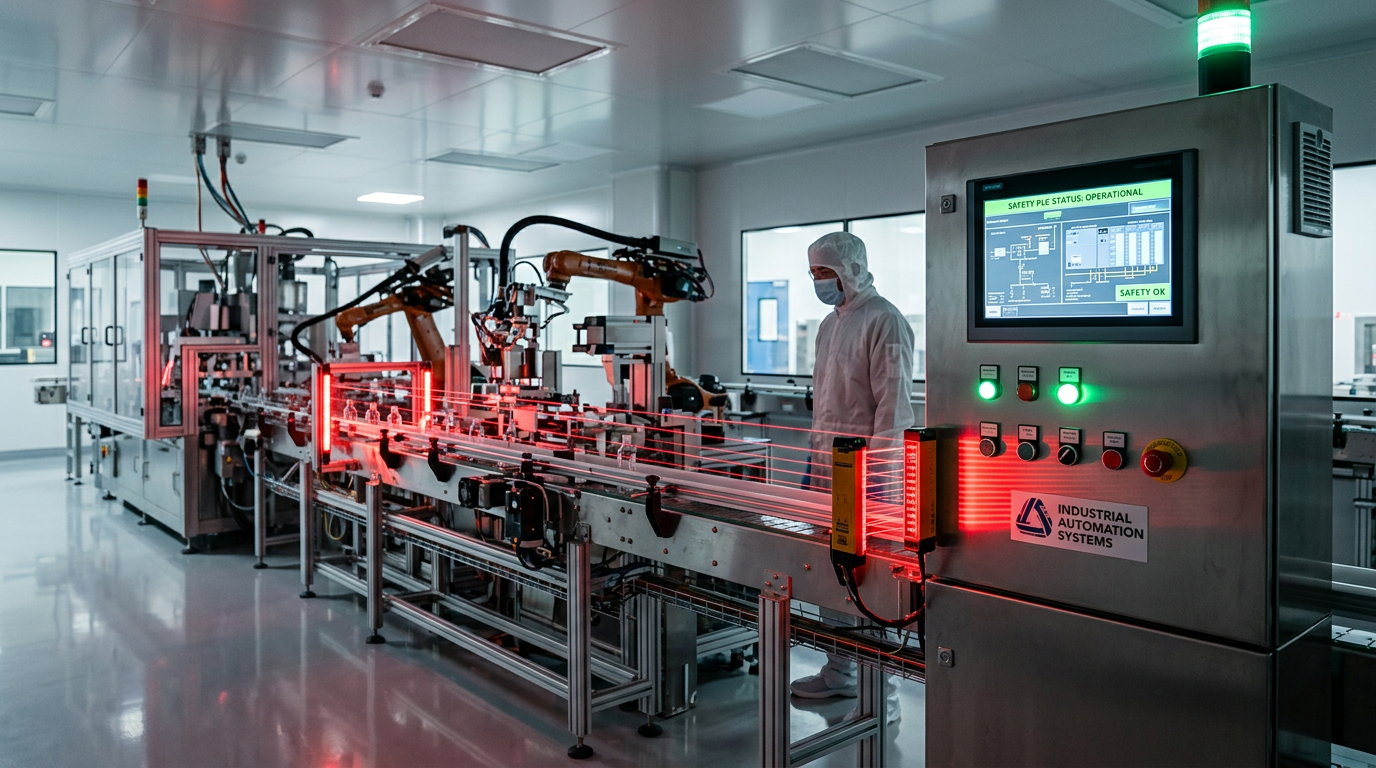
Implementing safety PLCs and light curtains on modern conveyor lines requires adherence to the ISO 13849-1 standard, where a Safety Integrity Level (SIL) 2 or 3 is typically required for high-speed automated material handling systems to ensure a probability of dangerous failure per hour (PFHd) of less than 10⁻⁷. By integrating programmable safety logic with optoelectronic sensors, manufacturers can reduce the physical footprint of safety zones by up to 40% compared to traditional hard-wired mechanical guarding.
The Architecture of Conveyor Functional Safety
Functional safety in conveyor automation is no longer just about hitting an emergency stop button. It is a comprehensive architectural approach designed to protect personnel while maintaining operational uptime. At the core of this architecture is the Safety PLC. Unlike a standard PLC, a safety PLC utilizes redundant internal processing, hardware diagnostics, and cross-checking mechanisms to detect internal faults.
The transition from hard-wired safety relays to safety PLCs is driven by the complexity of modern modular systems. In a complex facility, a single conveyor line might have multiple zones, each requiring different "Safe Off" conditions. Hard-wiring these logic gates with traditional relays leads to "relay creep," where panels become unmanageable and troubleshooting becomes a multi-hour ordeal.
According to IEC 62061, safety functionality is measured by the Safety Integrity Level (SIL). In the context of e-commerce sortation or heavy palletizing, SIL 2 or SIL 3 is the benchmark. These ratings ensure that the safety function—such as stopping a motor when a light curtain is breached—will perform its task with a specific, mathematically verified degree of reliability.
Light Curtains: The Frontline of Intrusion Detection
Light curtains, or Active Optoelectronic Protective Devices (AOPDs), are the most common non-contact safety solution for conveyor apertures. They function by creating a multi-beam grid of infrared light; if any beam is interrupted, the device sends a stop signal to the safety PLC.
Resolution and Blanking
When selecting light curtains for a conveyor line, two technical specs are paramount: Resolution and Blanking.
- Resolution: This determines the smallest object the curtain can detect. For "finger protection," a resolution of 14mm is required, while "hand protection" focuses on 30mm. For conveyor perimeter guarding (torso detection), 50mm to 90mm is often sufficient.
- Muting and Blanking: This is critical for conveyor operations. "Muting" temporarily disables the safety function while a pallet passes through the curtain, distinguished from a human by a specific sequence of entry sensors. "Blanking" allows specific beams to be permanently or floatingly ignored to allow for fixed conveyor structures or fluctuating material heights.
Engineers must calculate the Safety Distance based on ISO 13855. This calculation accounts for the approach speed of the human (standardized at 1,600mm/s or 2,000mm/s) and the total system stopping time (sensor response time + PLC logic time + motor brake time).
Understanding SIL vs. PL: The Safety Metrics
While the industry often uses SIL and PL (Performance Level) interchangeably, they stem from different standards.
| Feature | SIL (IEC 62061) | PL (ISO 13849-1) |
|---|---|---|
| Origin | Electrical/Electronic focus | Machine/Mechanical focus |
| Scale | SIL 1 to SIL 3 (for machinery) | PL a to PL e |
| PFHd Range | 10⁻⁸ to 10⁻⁵ | 10⁻⁸ to 10⁻⁴ |
| Best For | Complex programmable systems | Simple mechanical architectures |
| Conveyor Standard | SIL 2 or SIL 3 | PL d or PL e |
For a high-duty cycle conveyor line, a PL d / SIL 2 rating is typically the minimum requirement for hazards that could cause irreversible injury. For robotic palletizing cells integrated with conveyors, PL e / SIL 3 is the mandatory gold standard.
Easy Conveyors stocks the industrial automation discussed here — ready to ship across Europe.
Integrating Safety with Modular Conveyor Systems
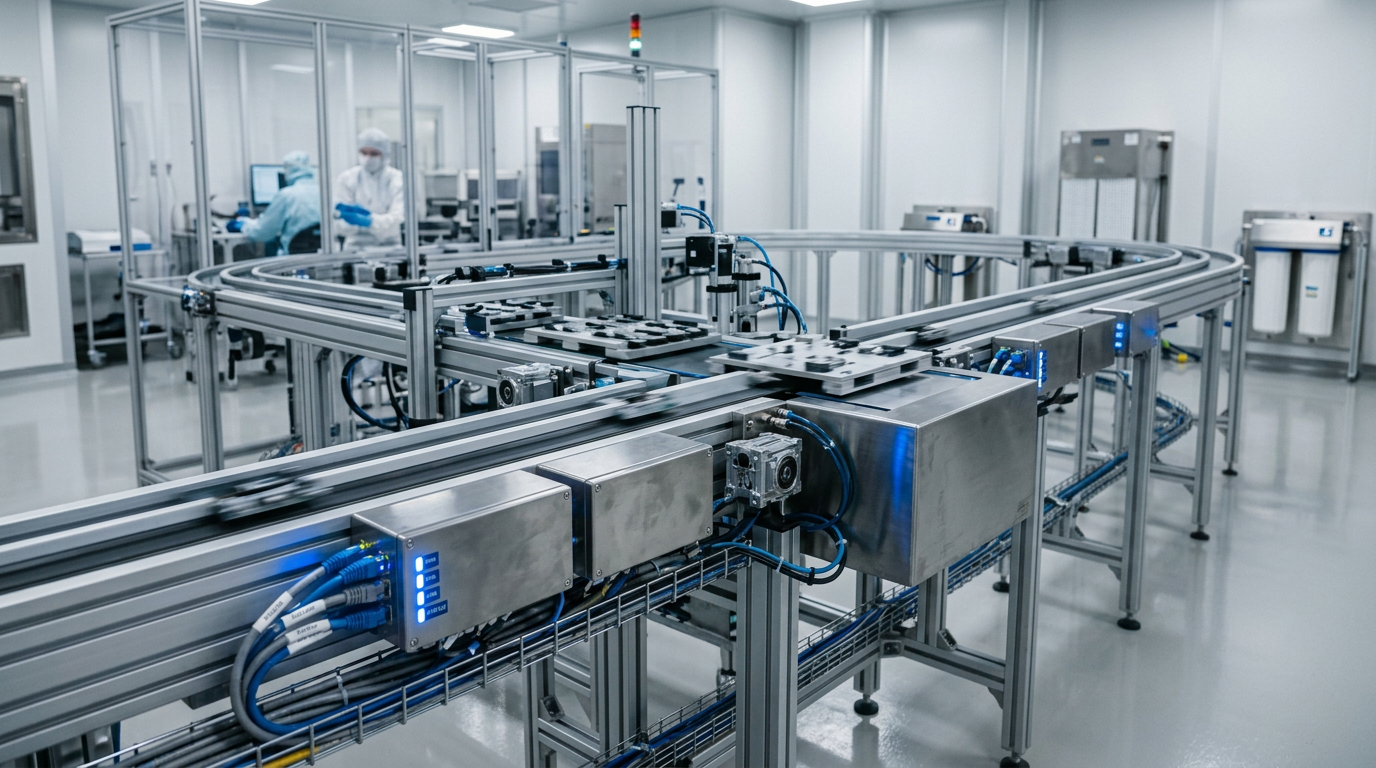
In modern factory layouts, safety must be "modular" to match the physical hardware. When using high-quality components from a partner like Easy Conveyors, the integration of safety hardware becomes significantly easier. Their modular frames are designed with mounting slots and cable management galleries that accommodate the brackets and wiring for light curtains and E-stops without requiring custom fabrication.
When designing the automation layer, engineers should prioritize:
- Safety over EtherNet/IP or PROFIsafe: This allows safety data to travel over the same network cable as standard control data without compromising integrity, significantly reducing wiring costs.
- Zone Control: Instead of stopping a 50-meter line, use the safety PLC to create "zones." If a light curtain is tripped in Zone A, Zone B continues to run, preventing a total facility bottleneck.
- VFD Safety Functions: Modern Variable Frequency Drives (VFDs) often include "Safe Torque Off" (STO). This allows the safety PLC to cut power to the motor's power bridge while keeping the drive logic powered, enabling a much faster restart once the safety breach is cleared.
Common Design Pitfalls and Failure Modes
1. The "Muting" Trap
One of the most frequent causes of conveyor accidents is improper muting sensor placement. If the muting sensors are placed too close together, a person could potentially "trick" the system by walking closely behind a pallet. Standards require that the muting sequence be initiated by a specific timing or sequence that a human cannot easily replicate.
2. Ignoring Response Time
Every millisecond counts. In many retrofitted systems, engineers overlook the "total system response time." If you add a safety PLC and several intermediate safety relays, the time it takes from a beam break to a motor stop can increase by 100ms or more. This requires moving the light curtain further back from the hazard, which might not be possible in tight layouts.
3. Non-Validated Software
Under ISO 13849-2, safety software must be validated. It is not enough to simply write the code; the logic must be tested against a "fault list" to ensure that no single software bug can lead to a loss of the safety function.
Maintenance and Proof Testing
Safety systems are not "set and forget." SIL-rated systems require periodic Proof Testing. This involves a documented test of every E-stop, every light curtain beam, and every safety gate interlock. In a high-risk environment, these tests are often mandated annually to ensure the PFHd remains within the acceptable limits of the SIL rating.
When troubleshooting, always check the Safety PLC diagnostic logs first. Most modern systems can identify exactly which beam in a light curtain is misaligned or which emergency stop button has a dusty contact, saving hours of floor-walking diagnostic time. Proper labeling of field I/O also speeds up the commissioning of "VFD soft-start tuning" and other performance-related adjustments after a safety event.
Designing with safety in mind from the beginning is always more cost-effective than a post-incident retrofit. By combining the physical reliability of modular hardware with the logical intelligence of SIL-rated PLCs, operations managers can ensure a facility that is both highly productive and fundamentally safe.
Frequently Asked Questions
What is the difference between a standard PLC and a Safety PLC?
A Safety PLC uses redundant processors and self-diagnostics to ensure a failure in the hardware does not lead to a loss of the safety function, whereas a standard PLC may fail in an 'on' state.
How do I calculate the required distance for a light curtain?
Safety distance is calculated using the formula S = (K x T) + C, where K is human approach speed, T is total system stopping time, and C is the penetration distance before detection.
What is the difference between muting and blanking in light curtains?
Muting is the temporary, automatic suspension of a safety function (like during a pallet pass), while blanking is the permanent bypassing of certain light curtain beams.
What SIL rating is required for my conveyor?
Most high-speed industrial conveyor systems require SIL 2 or SIL 3 / PL d or PL e, depending on the severity of potential injury and the frequency of exposure.
Can I run safety signals over a standard Ethernet network?
Yes, via protocols like PROFIsafe or CIP Safety, safety data can coexist with standard control data on the same Ethernet cable while meeting SIL 3 requirements.