Optimizing Pharmaceutical Track-and-Trace Conveyor Line Layouts
Learn how to design pharmaceutical track-and-trace conveyor layouts that meet DSCSA and EU FMD standards with ±0.5 mm accuracy and 400+ bpm throughput.
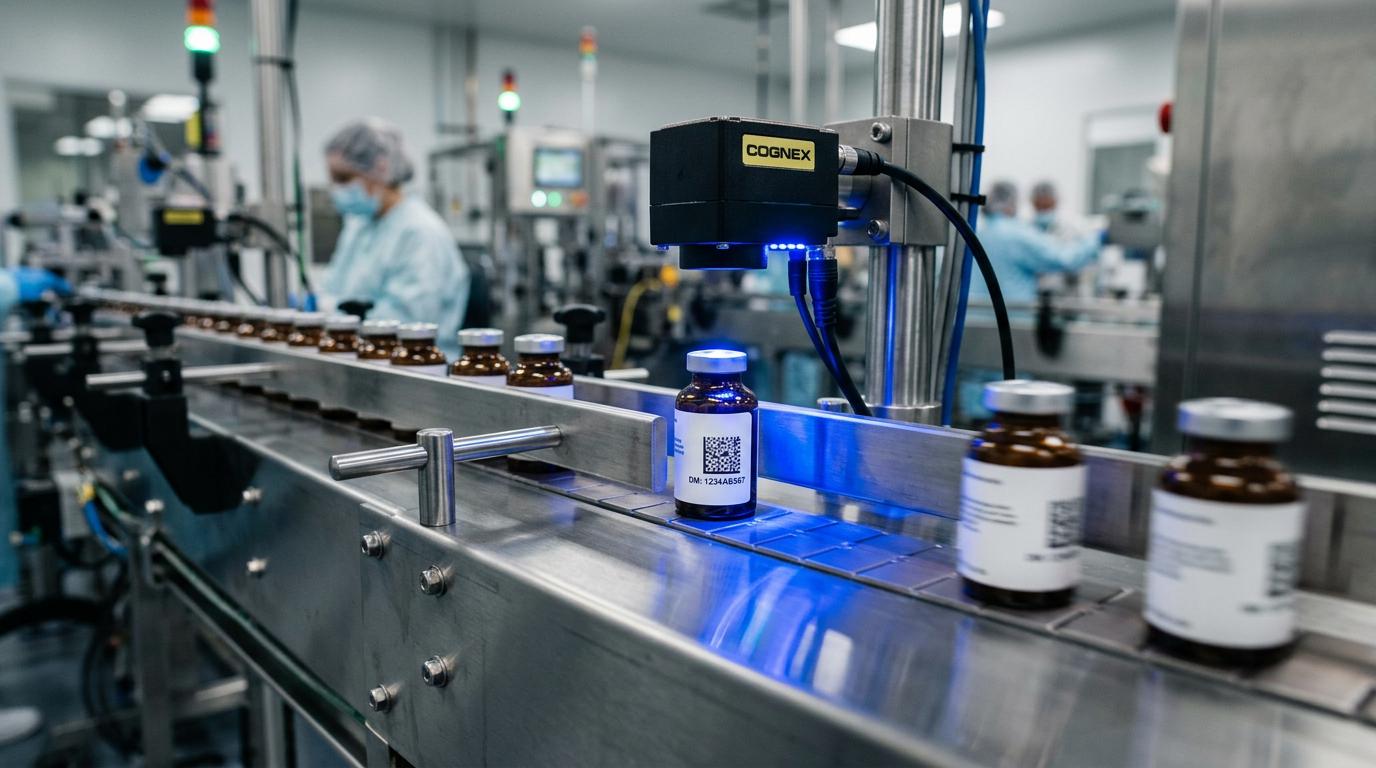
Designing a pharmaceutical track-and-trace conveyor line requires a minimum positioning accuracy of ±0.5 mm and strict adherence to DSCSA and EU FMD 2011/62/EU standards to ensure 100% readability of 2D DataMatrix codes. Modern layouts prioritize modularity to accommodate high-speed serialization (up to 400 cartons/minute) and integrated rejection stations that isolate non-compliant units without interrupting line flow.
The Architecture of Serialization: Layout Principles
The pharmaceutical industry operates under stringent regulatory frameworks, most notably the Drug Supply Chain Security Act (DSCSA) in the United States and the Falsified Medicines Directive (EU FMD) in Europe. These regulations require every individual unit of sale to carry a unique, machine-readable serial number. For a conveyor system, this translates to a mechanical challenge of stabilization, orientation, and data synchronization.
A successful track-and-trace layout is rarely a straight line. It is a sequence of precision-engineered zones:
- Infeed and Pitching Zone: Transitioning from bulk or loose spacing to a precise, timed gap between products.
- Marking and Coding Zone: Where thermal inkjet (TIJ) or laser markers apply the DataMatrix code.
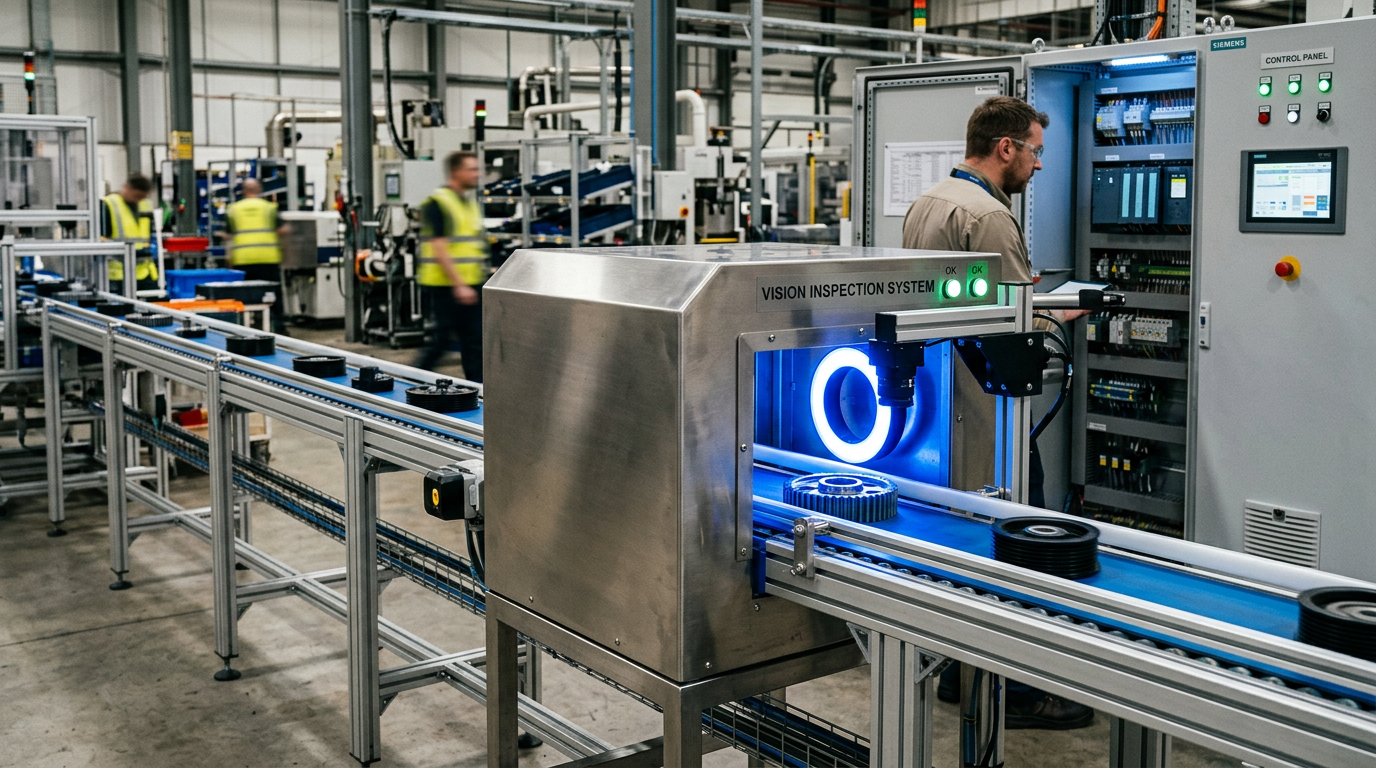
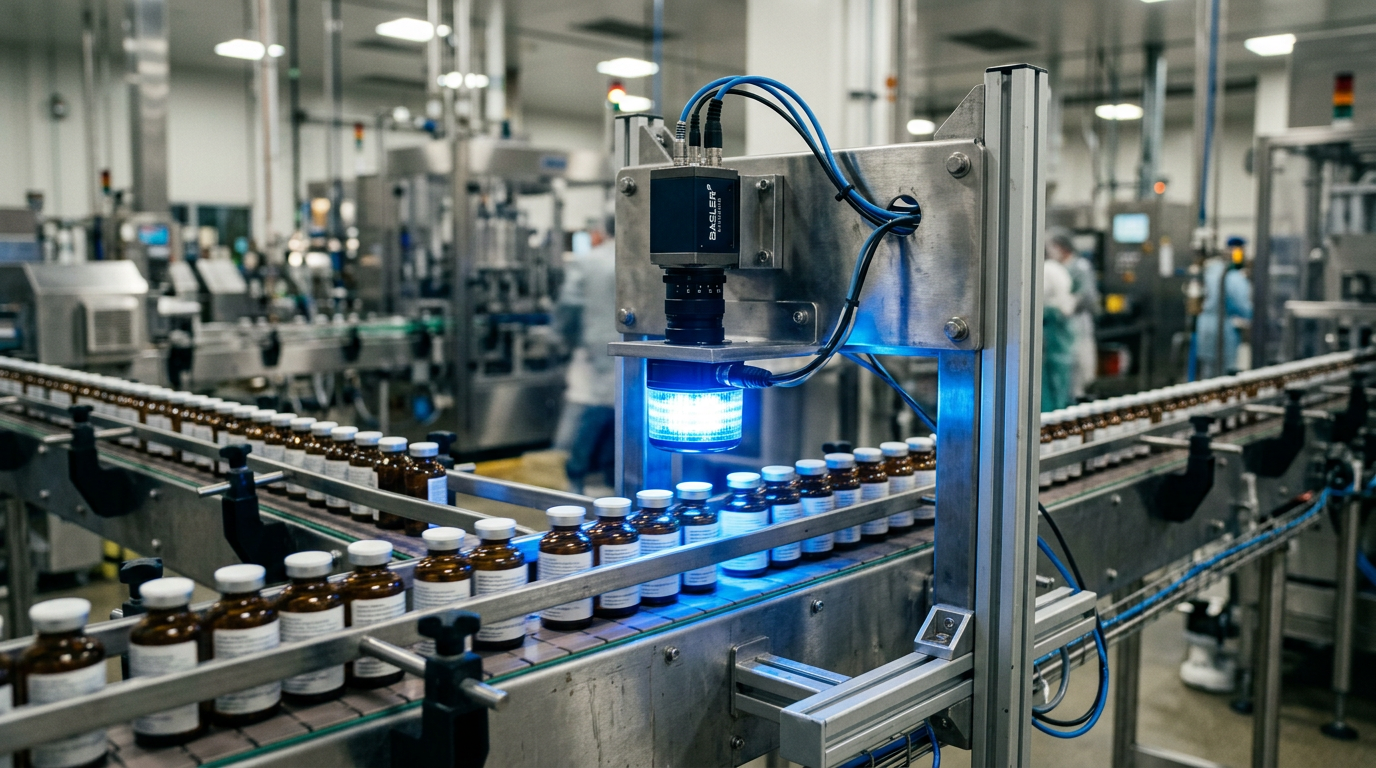
- Vision Inspection Zone: High-resolution cameras verify the code quality against ISO/IEC 15415 standards.
- Rejection and Sorting Zone: Defective units are diverted into locked catch bins.
- Aggregation Zone: Where individual units are grouped into bundles or cases, linking their serial numbers to a parent code.
Critical Design Requirements for Accuracy
In track-and-trace applications, "vibration" is the enemy of "readability." If a conveyor belt oscillates or the product moves slightly during the 10-millisecond window of a camera trigger, the grading of the 2D code can drop from an 'A' to a 'Fail'.
High-Friction Specialized Belting
Standard PVC belts often lack the grip necessary for rapid acceleration and deceleration. Designers typically specify high-friction Top-Face modular belts or vacuum-assisted belts. Vacuum conveyors pull the carton down against the belt surface, eliminating "hydroplaning" effects at high speeds and ensuring the product remains perfectly indexed relative to the encoder signal.
Precision Drive Systems
To maintain the required ±0.5 mm positioning accuracy, the use of servo-driven motors or high-efficiency IE3 motor classes is standard. Unlike standard AC motors, servo drives provide an absolute position feedback loop to the PLC, ensuring that the software knows exactly where a specific serial number is on the belt at all times.
Comparing Layout Strategies: Side-Grip vs. Top-Down
The geometry of the pharmaceutical packaging often dictates the conveyor's mechanical layout.
| Feature | Side-Grip (Twin-Belt) | Top-Down (Vacuum) | Roller-Bed (Aggregation) |
|---|---|---|---|
| Primary Use | Bottom/Side Coding | Top Surface Coding | Heavy Case Packing |
| Stability | High (Clamped) | Very High (Suction) | Moderate |
| Speed Limit | 250 units/min | 400+ units/min | 60 units/min |
| Adjustability | Manual or Auto-Width | Fixed Width | Modular Blocks |
| Hygiene Rating | High (Open Design) | Moderate (Internal Fans) | Industrial |
The choice between these depends on the real estate available and the variety of carton sizes. For facilities requiring rapid changeovers, Easy Conveyors provides modular aluminum and stainless steel framing systems that allow for the quick integration of side-grip modules or specialized belt transfers, reducing the downtime associated with format changes.
Easy Conveyors stocks the industrial automation discussed here — ready to ship across Europe.
Integration of Vision and Rejection Systems
The "Trace" part of track-and-trace relies heavily on the "Handshake" between the conveyor's programmable logic controller (PLC) and the vision system.
The Fail-Safe Rejection Protocol
A pharmaceutical layout is only as good as its rejection mechanism. Most designs utilize a "Positive Rejection" philosophy. This means that a carton is considered "guilty until proven innocent." If the vision system fails to send a "Good" signal, or if the sensor timing is slightly off, the system defaults to rejecting the unit. Common rejection methods include:
- Air Blasts: For lightweight blisters or small cartons.
- Pneumatic Pushers: For heavier bottles or bundles.
- Divert Gates: For high-speed lines where a pusher might damage the product.
Encoder Synchronization
A critical component of the layout is the rotary encoder, typically mounted to the non-drive tail shaft. This ensures that even if the belt slips slightly on the drive drum, the PLC receives an accurate measurement of linear travel. Integrating "VFD soft-start tuning" is essential here to prevent jerky movements that could cause products to topple during startup.
Modular Systems and Scalability
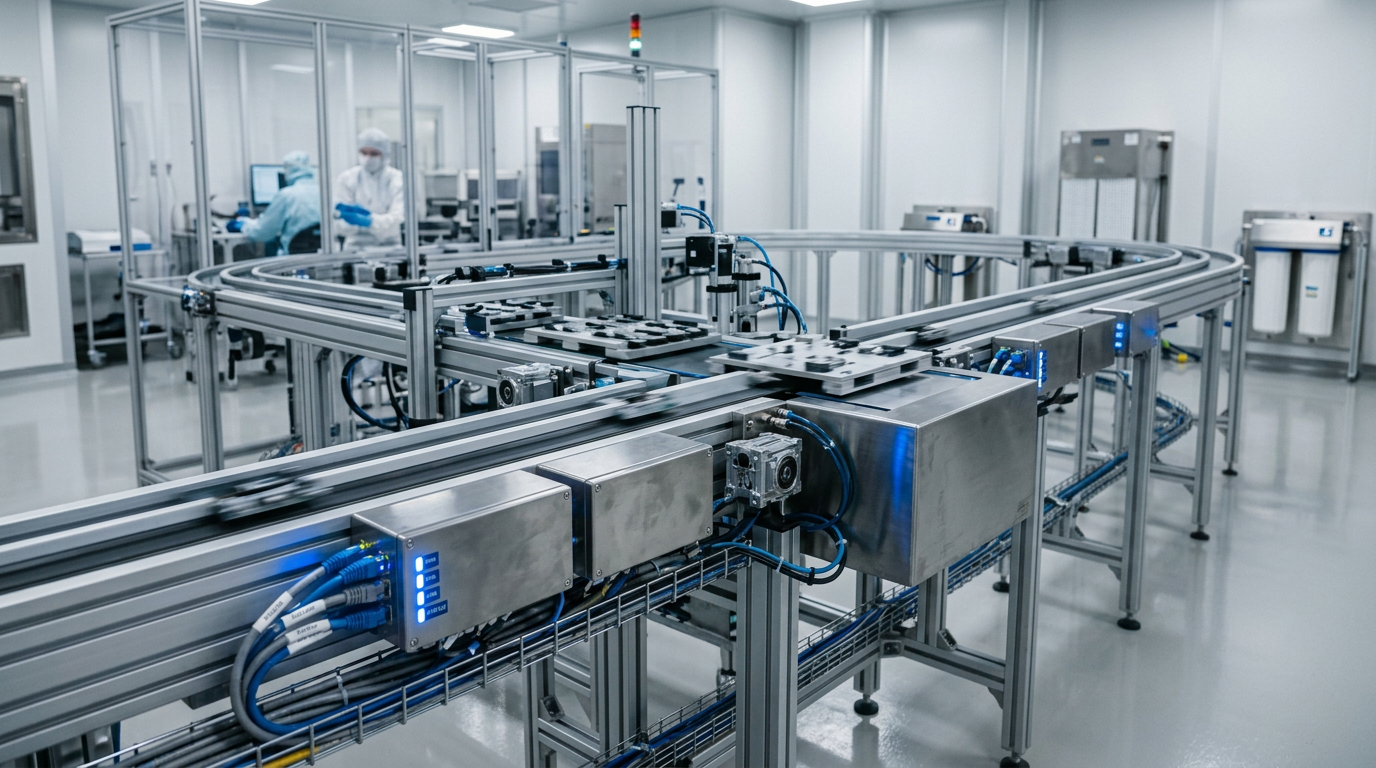
Modern pharmaceutical plants are moving away from monolithic, custom-built machines in favor of modular subunits. This allow engineers to swap out a "Labeling Module" for a "Laser Marking Module" without redesigning the entire line.
When planning these layouts, consider the "hygienic wash-down design" requirements if the line handles unsealed primary packaging. While most track-and-trace occurs at the secondary packaging stage (cartons), the use of FDA-compliant materials for belts and wear strips is often a corporate requirement to ensure overall facility cleanliness.
Common Failure Modes in Track-and-Trace Lines
Even the most advanced layouts can fail if environmental factors are ignored.
- Ambient Light Interference: External warehouse lighting can "blind" vision sensors. Layouts should include shrouds or tunnels over the inspection zone.
- Static Electricity: In dry pharmaceutical environments, static buildup on plastic modular belts can cause small cartons to "jump" or stick. Using anti-static (ESD) materials is a common mitigation strategy.
- Inaccurate Pitching: If the infeed spacing isn't consistent, the vision system may trigger too early or late, leading to "False Rejects." This is often solved by using a dual-belt pitching system where the first belt runs 10-15% slower than the second.
Future-Proofing with Data Aggregation
As the industry moves toward "Full Aggregation" (linking every bottle to a carton, and every carton to a pallet), the conveyor layout must provide "dwell points." These are areas where the belt momentarily slows or stops to allow a wide-area camera to capture an entire layer of products at once. Designing these zones requires a deep understanding of "automation cell" logic and low-back-pressure accumulation techniques to prevent product damage during the dwell period.
By focusing on mechanical stability, precise indexing, and modular flexibility, manufacturers can ensure their track-and-trace lines meet current legal mandates while remaining adaptable for the production needs of tomorrow.
Frequently Asked Questions
What is the required positioning accuracy for serialization conveyors?
Serialization requires ±0.5 mm positioning accuracy to ensure 2D DataMatrix codes are consistently aligned with the vision system's focal point.
Why are vacuum conveyors used in pharmaceutical track-and-trace?
Vacuum conveyors are preferred because they eliminate product slippage and vibration, ensuring high-resolution cameras can grade codes according to ISO/IEC 15415 standards.
What is a positive rejection system in pharma packaging?
A 'positive rejection' system assumes every product is defective until the vision system confirms a valid serial number scan, preventing failed units from ever reaching the consumer.
How are rejected pharmaceutical products diverted?
Common methods include air blasts for light blisters, pneumatic pushers for cartons, and high-speed divert gates for delicate or high-velocity items.
How does static electricity affect track-and-trace lines?
Static can cause light cartons to shift or tumble. Using anti-static (ESD) modular belts or ionizing bars ensures the product stays indexed for the camera.