Integrating PLC and Machine Vision on High-Speed Packaging Conveyors
Learn how to integrate PLC logic with machine vision for high-speed packaging. Master encoder tracking, PROFINET protocols, and real-time reject mechanisms.
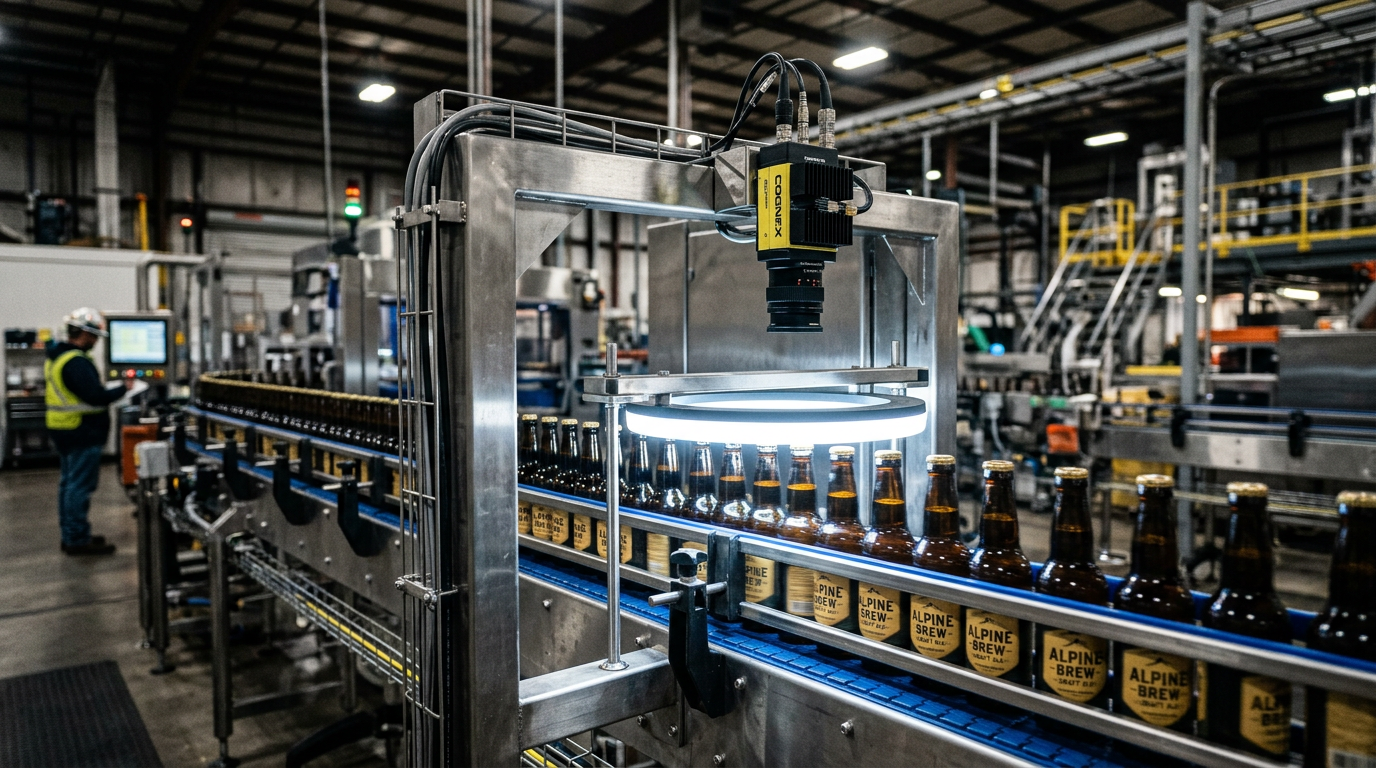
The integration of Programmable Logic Controllers (PLCs) with machine vision systems on packaging conveyor lines relies on high-speed industrial Ethernet protocols such as PROFINET or EtherNet/IP to achieve latency-critical response times under 20-50 milliseconds. Successful synchronization allows packaging lines to execute real-time reject mechanisms, dynamic sorting, and quality data logging at speeds exceeding 600 parts per minute.
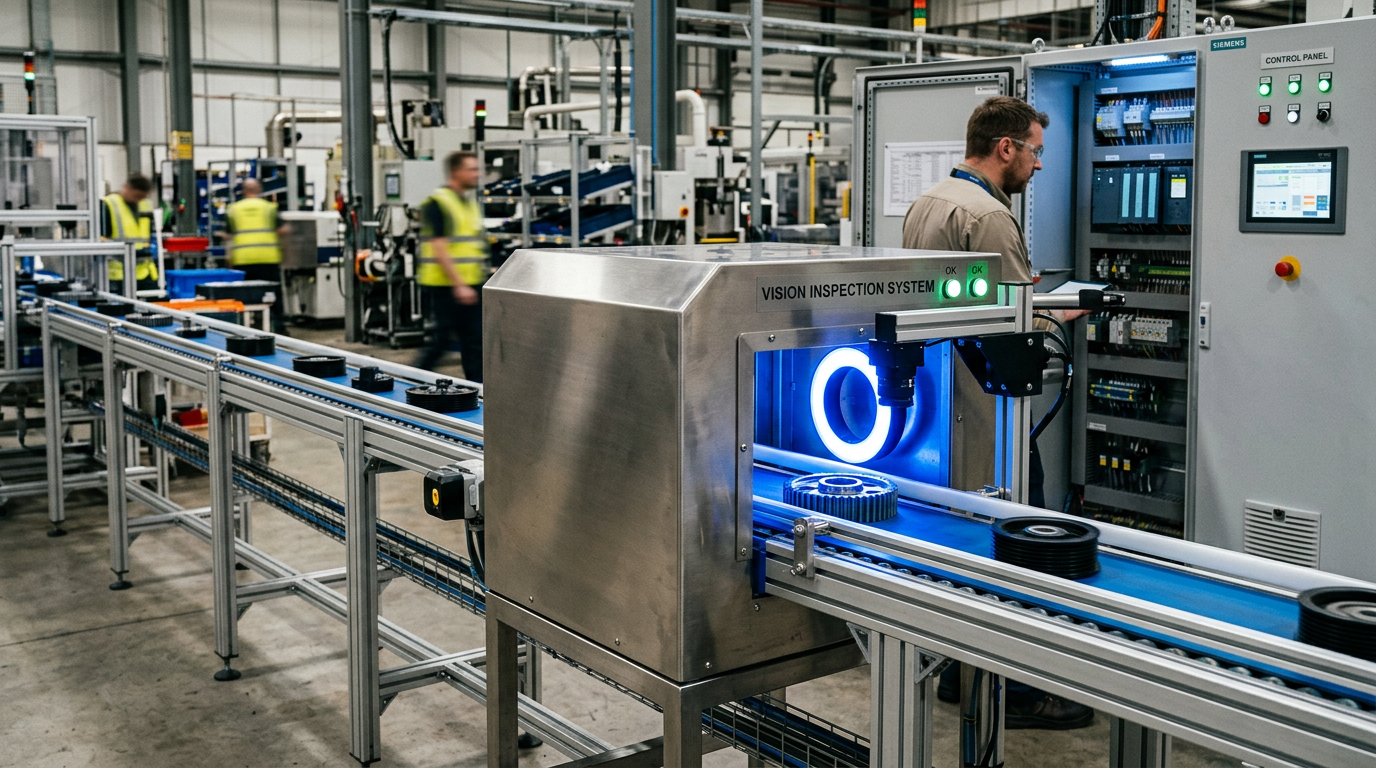
Modern packaging environments demand more than simple "pass/fail" logic. As the industry moves toward Industry 4.0 standards, the synergy between vision sensors and the PLC enables a level of traceability and flexibility previously unattainable. By offloading complex image processing to dedicated vision controllers and passing decision-making data to the PLC via fieldbus interfaces, manufacturers can ensure 100% inspection rates without sacrificing line throughput.
The Architecture of Vision-PLC Integration
At the core of an automated packaging cell is the communication bridge between the vision processor and the PLC. This architecture typically follows a master-slave or producer-consumer model.
Communication Protocols and Latency
To maintain synchronization at high conveyor speeds, the choice of protocol is paramount. PROFINET RT (Real-Time) and EtherNet/IP are the industry standards for these applications. In a high-speed bottling or primary packaging line, the PLC must receive the vision result and trigger a pneumatic reject cylinder within a specific "window of opportunity."
If a conveyor is running at 1.5 meters per second and the distance from the camera to the rejecter is 500mm, the PLC has exactly 333 milliseconds to receive the "fail" signal and fire the solenoid. If the overhead of the network protocol exceeds this or introduces jitter, the rejecter will miss the target. For these critical paths, using a VFD soft-start tuning approach on the conveyor motor helps maintain a constant velocity, reducing the burden on the PLC's tracking timers.
Hardware Topologies
- Smart Cameras: These units perform processing onboard. The PLC simply receives a discrete signal or a small data packet (e.g., job ID, pass/fail, or a coordinate).
- PC-Based Vision: Multiple cameras feed into an industrial PC (IPC). The IPC performs heavy lifting (like deep learning OCR) and communicates via an OPC UA or dedicated fieldbus card to the PLC.
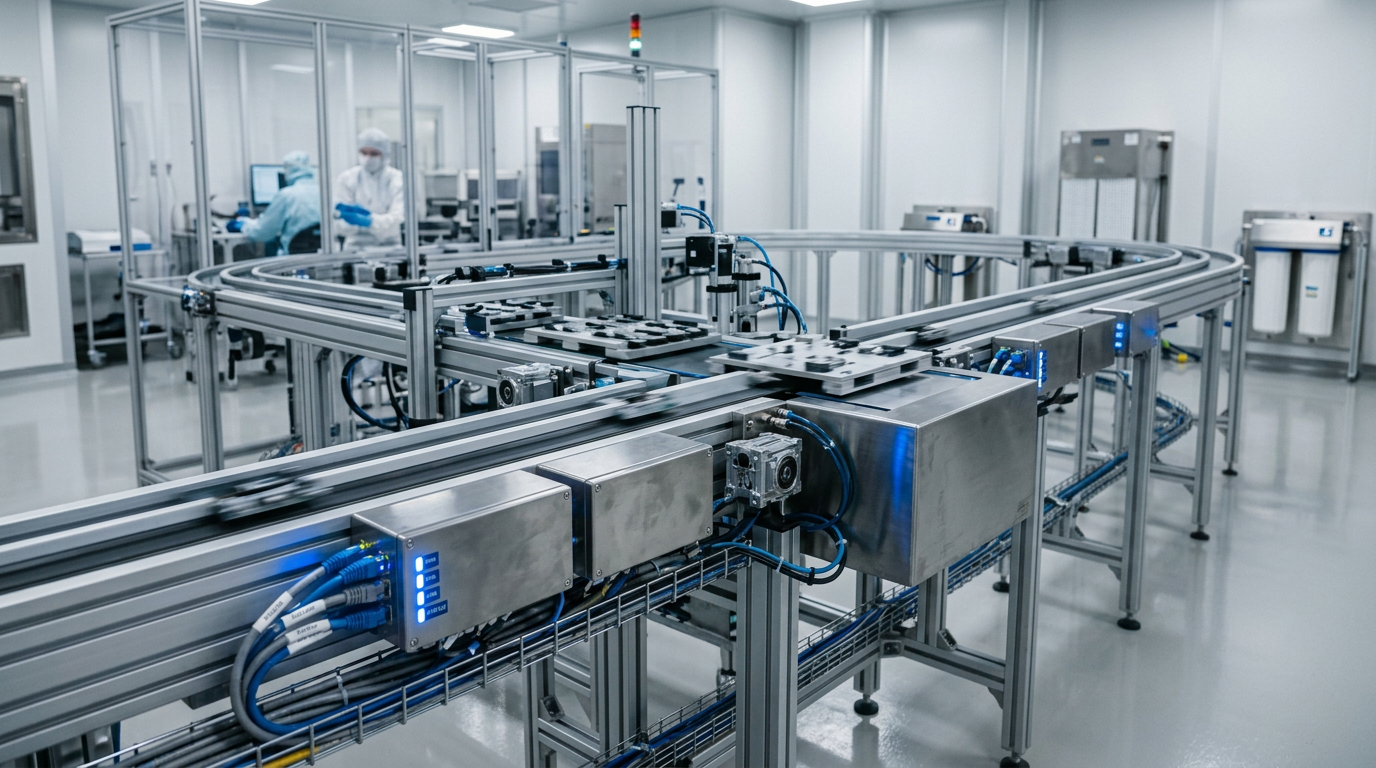
- Embedded Vision: Integrated directly into the conveyor controls, often used in modular setups where local logic handles small-scale sortation.
Synchronization and Product Tracking
The most common failure in vision integration is the loss of product "identity" between the point of inspection and the point of action.
Encoder-Based Tracking
In high-speed packaging, time-based triggers are often insufficient because conveyor speeds can fluctuate or the belt can slip. Implementing an incremental encoder on the conveyor drive shaft allows the PLC to track "pulser count" rather than milliseconds.
- Step 1: The product passes a trigger photo-eye.
- Step 2: The PLC records the current encoder count.
- Step 3: The camera captures the image and processes it.
- Step 4: The PLC receives the result and maps it to the specific encoder count.
- Step 5: When the encoder reaches
Trigger Count + Offset, the actuator is fired.
This method ensures that even if the line stops or ramps down, the "bad" product is accurately tracked to the reject bin. For those designing high-throughput systems, Easy Conveyors provides the modular mechanical platform required to integrate these encoders and vision mounting brackets seamlessly into existing packaging layouts.
Comparison of Vision-PLC Interfacing Methods
| Feature | Discrete I/O | Industrial Ethernet (Profinet/EtherNet/IP) | OPC UA |
|---|---|---|---|
| Speed/Latency | Ultra-Low (<1ms) | Low (2-10ms) | Medium (50-200ms) |
| Data Complexity | Boolean (Pass/Fail) | Large arrays, Coordinates, Strings | High-level Metadata / Cloud |
| Wiring Effort | High (Individual wires) | Low (Single RJ45/M12) | Low (Networked) |
| Diagnostics | Minimal | Advanced / Real-time | Management Level |
| Standard | IEC 61131-3 | IEC 61784 | IEC 62541 |
Easy Conveyors stocks the industrial automation discussed here — ready to ship across Europe.
Advanced Use Cases: Beyond Inspection
1. Dynamic Robot Guidance
In secondary packaging, vision systems identify the orientation and XYZ coordinates of products on a moving belt. The PLC receives these coordinates and translates them into "Robot Space." This requires a "Handshake" protocol where the PLC confirms the robot is ready before the vision system sends the next coordinate set.
2. Label and OCR Verification
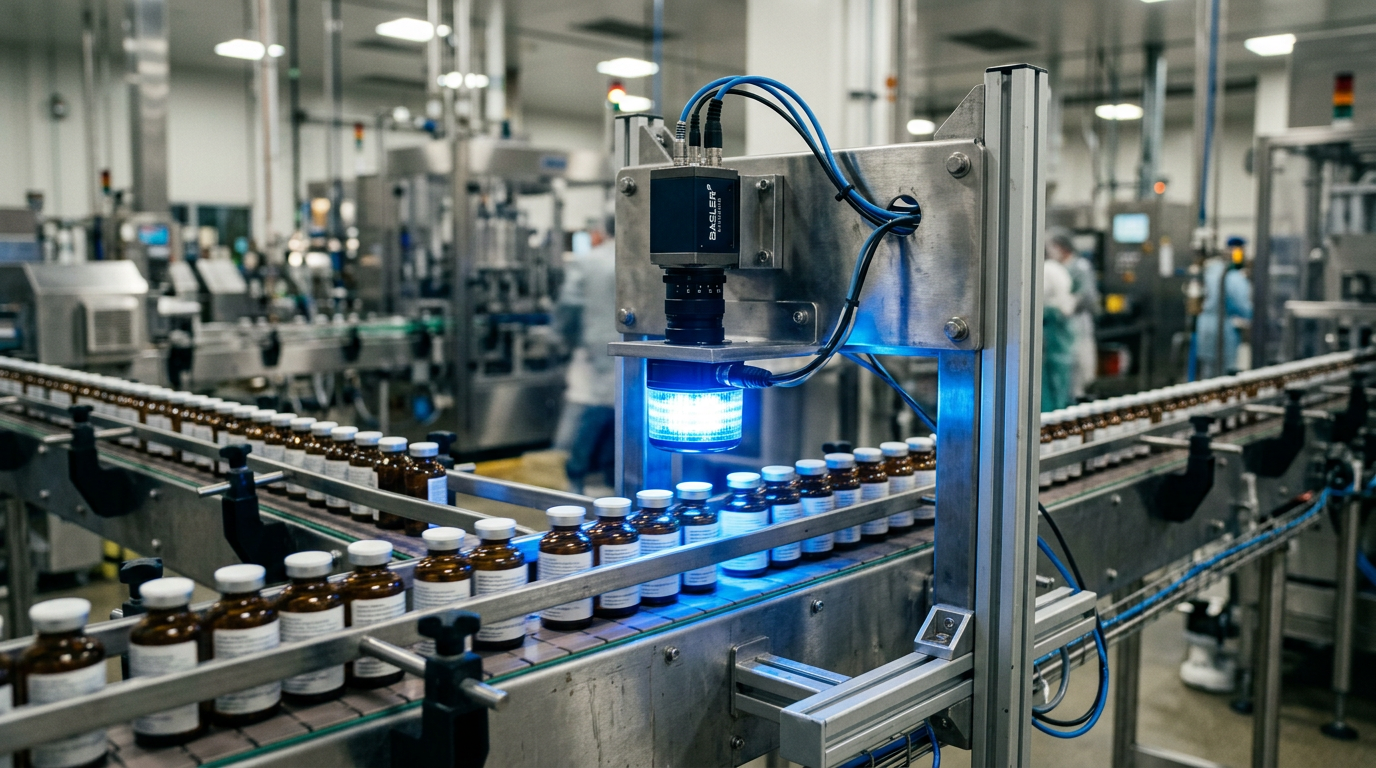
In pharmaceutical packaging, vision systems perform Optical Character Recognition (OCR) to verify lot codes and expiration dates. The PLC compares the vision string against the "Golden String" stored in the Batch Recipe. This integration often requires hygienic wash-down design considerations if the line handles liquids, ensuring the cameras and lighting enclosures meet IP69K standards.
3. Case Packing and Volume Sensing
Vision systems can measure the "fill volume" of a case. If the PLC detects a box is under-filled based on the vision data, it can signal the upstream feeder to adjust the dosing, creating a closed-loop control system that minimizes waste.
Common Pitfalls and Best Practices
- Lighting Interference: Ambient facility lighting can change throughout the day. Always use high-frequency LED strobes synchronized to the camera shutter via the PLC to override environmental variables.
- Buffer Overflows: If the vision system processes data slower than the line speed, the PLC's input buffer will overflow. Always size the vision controller to handle 1.5x the maximum expected line rate.
- Trigger Jitter: Avoid using the PLC scan cycle to trigger the camera. Instead, use a direct hardware interrupt or a vision-dedicated trigger sensor to eliminate the 5-15ms of PLC scan jitter.
When selecting drive components, engineers should also consult resources on drum motor selection to ensure the motor can handle the frequent stop-start cycles or high-precision speed control required for high-resolution vision capture. Proper mechanical stability is the foundation upon which accurate machine vision is built.
Future Trends: AI and Edge Integration
The 2026 landscape is seeing a shift toward "Inference at the Edge." Modern PLCs are starting to incorporate AI accelerator modules, allowing basic neural network processing to happen within the PLC rack itself. This reduces network overhead and allows for even tighter integration between the vision "eyes" and the machine "muscles." Proper data structuring within the PLC—using User Defined Types (UDTs)—is essential to manage the influx of AI-generated metadata.
Frequently Asked Questions
What is the best communication protocol for PLC-vision integration?
For high-speed packaging, PROFINET and EtherNet/IP are preferred due to their low-latency, real-time data exchange capabilities, typically operating in the 2ms to 10ms range.
Why should I use an encoder for product tracking instead of a timer?
Time-based triggers fail when conveyor speeds vary. Encoder-based tracking uses 'pulses' to track objects by distance, ensuring the correct item is rejected even if the belt stops.
What is 'trigger jitter' and how do I avoid it?
Direct hardware triggers use a physical sensor wired to the camera to bypass PLC scan time jitter (5-20ms), which is critical for high-resolution inspection at high speeds.
How do I integrate machine vision in a wash-down environment?
Use IP69K-rated enclosures for cameras and lights, and ensure all cables are high-flex, chemical-resistant PUR or PVC to survive caustic cleaning agents.
When should I use a smart camera versus a PC-based vision system?
A Smart Camera has onboard processing for simpler tasks, while a PC-based system handles multiple cameras and complex algorithms like Deep Learning or 3D profiling.