Optimizing PLC and Machine Vision Integration on Packaging Conveyor Lines
Learn how to integrate PLC and machine vision on packaging conveyors to achieve 600+ PPM inspection rates with sub-10ms latency using EtherNet/IP and PROFINET.
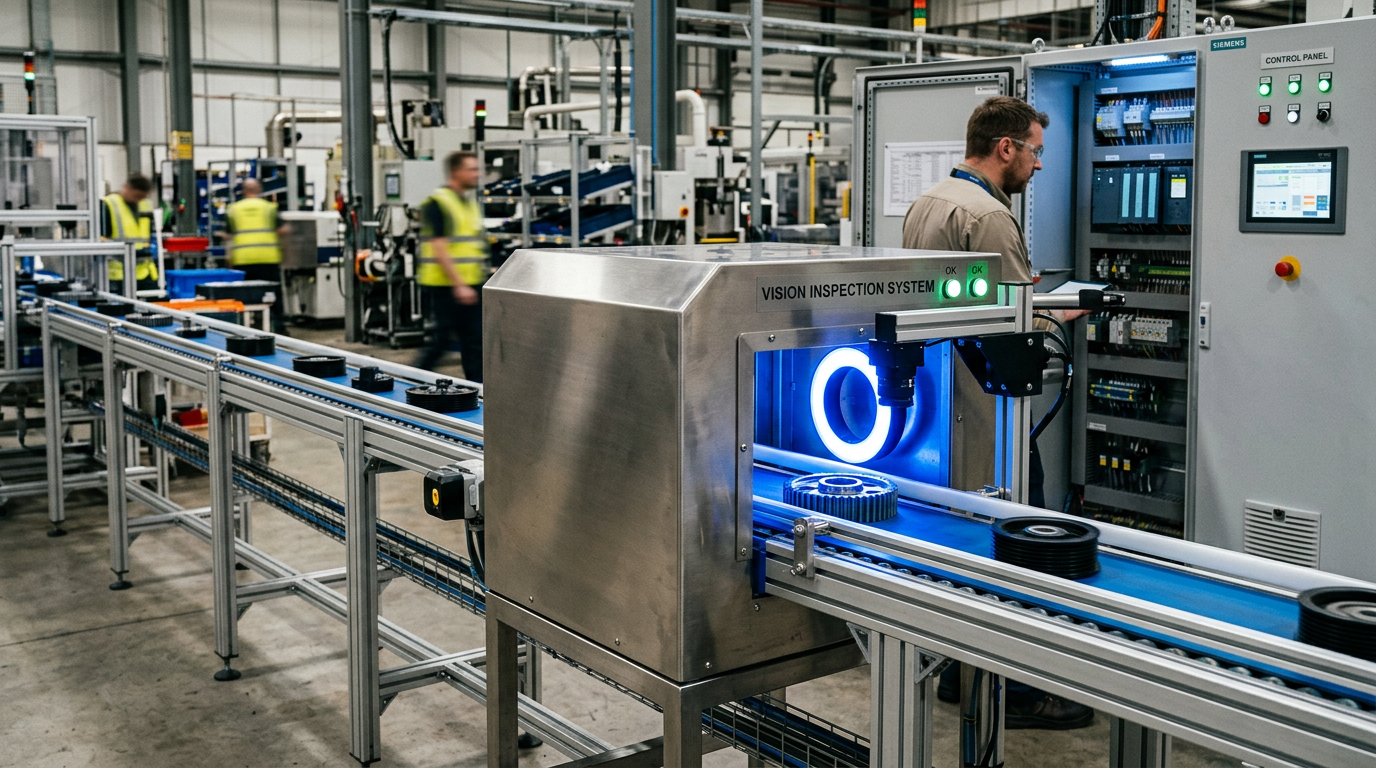
Integrating PLC and machine vision systems on packaging conveyor lines requires a high-speed communication backbone—typically EtherNet/IP or PROFINET—to achieve trigger-to-action latencies of under 10 milliseconds. In modern high-volume packaging environments, this integration allows for 100% inspection rates at speeds exceeding 600 parts per minute (PPM), ensuring that defect detection, label verification, and sorting occur in real-time without compromising throughput.
The Architecture of Integrated Control
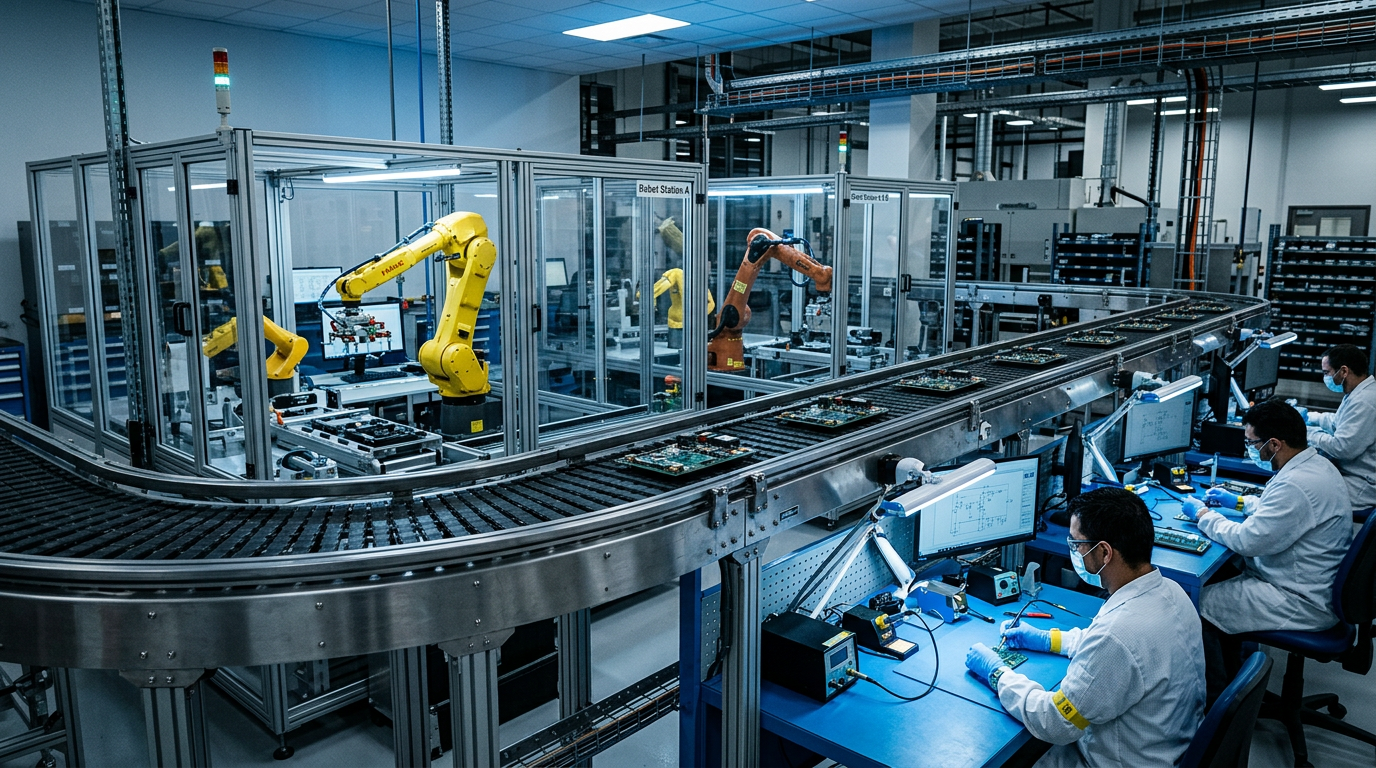
The synergy between a Programmable Logic Controller (PLC) and a Machine Vision (MV) system is the foundation of Industry 4.0 packaging lines. While the PLC acts as the "nervous system," managing motor starters, VFDs, and pneumatic actuators, the Vision System serves as the "eyes," processing complex image data to make qualitative decisions.
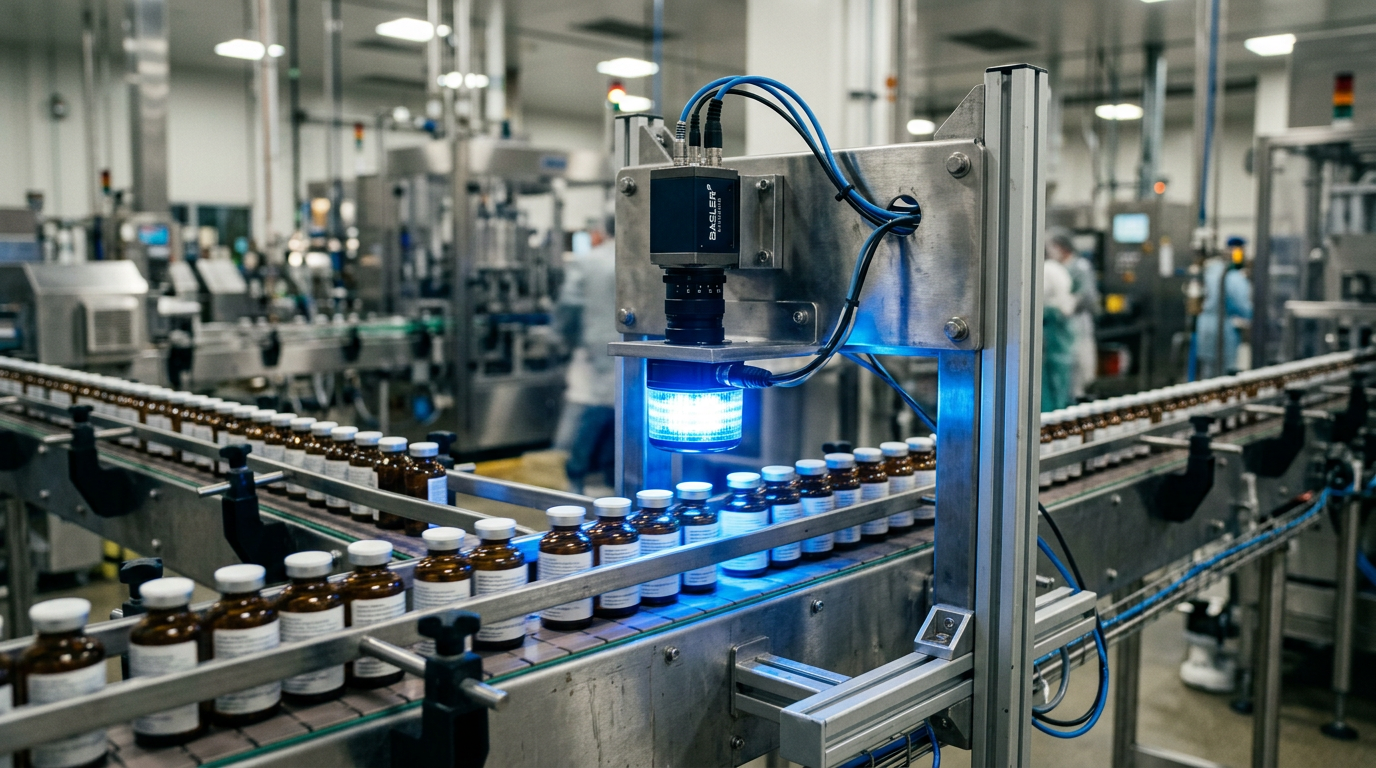
To achieve seamless operation, the integration usually follows a standard handshake protocol. The PLC tracks the position of a product via an encoder on the conveyor belt. When the product reaches a specific coordinate, the PLC sends a high-speed trigger signal to the vision camera. The camera captures the image, analyzes it against pre-set parameters (such as OCR for expiration dates or barcode integrity), and returns a "Pass/Fail" or "Data String" result to the PLC via an industrial protocol like EtherNet/IP.
Key Components of Vision-Conveyor Integration
Successful integration depends on the harmony of four distinct layers:
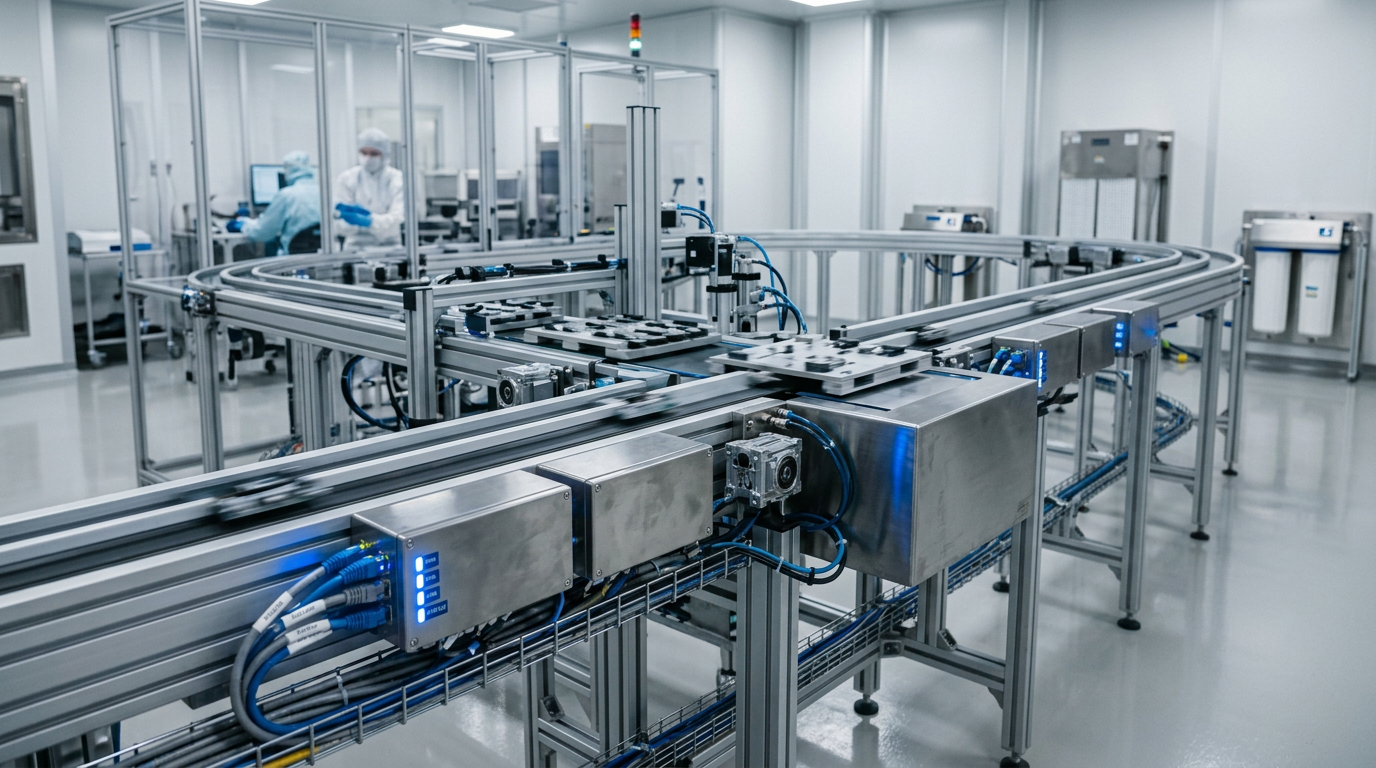
- The Mechanical Layer: The conveyor must provide stable, vibration-free transport. Modular systems, such as those designed by Easy Conveyors, are frequently used because their rigid aluminum or stainless steel frames minimize the mechanical noise that can blur high-speed images.
- The Sensing Layer: Optical encoders and photo-eye sensors provide the "trigger" accuracy required to ensure the camera captures the product at the center of the frame.
- The Vision Layer: Comprising the camera, lens, and lighting (e.g., ring lights or backlights), this layer converts physical attributes into digital data.
- The Logic Layer: The PLC processes the vision result and executes a physical action, such as activating a pneumatic pusher or a divert arm.
Communication Protocols and Latency
The choice of communication protocol is critical for high-speed packaging. Standard digital I/O (24V DC) offers the lowest latency but provides limited data—essentially a simple "Good/Bad" signal. For modern traceability, serial or Ethernet-based communication is required to transmit strings (like serial numbers) or coordinates for robotic picking.
| Protocol Type | Latency Range | Best For | Data Capacity |
|---|---|---|---|
| Hardwired I/O | < 1 ms | Simple Reject/Pass | 1 bit |
| EtherNet/IP / PROFINET | 2 - 10 ms | Sorting & Traceability | High (Cyclic) |
| TCP/IP (Socket) | 10 - 50 ms | Data Logging/OCR | Very High (Acyclic) |
| IO-Link | 5 - 20 ms | Smart Sensor Tuning | Moderate |
Sizing and Selection: The Role of Conveyor Stability
A common failure point in PLC and machine vision integration is not the software, but the mechanical stability of the conveyor. If a belt fluctuates vertically by even 2mm, the focus of a narrow-depth-of-field lens can be lost, leading to false rejects. Engineers should prioritize **conveyor belt track
Easy Conveyors stocks the industrial automation discussed here — ready to ship across Europe.
ing** and vibration damping during the design phase.
When dealing with high-resolution inspection, such as pharmaceutical blister pack verification, utilizing a conveyor with a high-friction belt material (like GripTop POM) ensures the product does not slip relative to the encoder's count. This precision is vital for "downstream rejection," where the PLC must remember which specific item failed and reject it 5 meters later in the process.
Implementation Challenges: Lighting and Triggering
Lighting is often the most overlooked aspect of vision integration. Standard factory overhead lighting is insufficient and introduces "noise." Integrated systems typically use strobed LED lighting, synchronized by the PLC’s high-speed output. According to IEC 62471 standards for photobiological safety, these lighting systems must be shielded to protect operators while providing the intense illumination needed for micro-second shutter speeds.
Advanced Sorting and Data Logging
Integration allows for more than just defect detection; it enables "Mass Customization." A machine vision system can identify a product type and instruct the PLC to change the conveyor’s VFD speed or divert the product to a specific packaging stream. This requires the PLC to maintain a "First-In, First-Out" (FIFO) buffer or a shift register that tracks every item on the belt.
For systems requiring high hygiene, such as food packaging, the vision housing and the conveyor components must meet EHEDG guidelines for washdown compatibility. This ensures that the integration of electronics does not create bacterial traps in the production line.
Future Trends: AI and Edge Computing
We are seeing a shift toward "Smart Cameras" that perform AI inference at the edge. These cameras don't just send a pass/fail signal; they send predictive data to the PLC. For example, if the camera detects a gradual shift in label placement, the PLC can trigger a warning for "preventative maintenance" before the labels exceed tolerance limits. This proactive approach, often utilizing Siemens TIA Portal or similar integrated environments, reduces downtime significantly.
Maintenance and Troubleshooting
Regular calibration is essential. Environmental factors like dust accumulation on lenses or the degradation of LED intensity over time can lead to "false negatives." Integrated systems should include a "Master Part" routine, where a known good and a known bad sample are run through the system at the start of every shift to verify that the PLC logic and vision parameters are still aligned.
When troubleshooting, engineers should first check the encoder alignment. If the PLC's distance-tracking is off by even a few millimeters due to belt stretch or slippage, the vision system will trigger at the wrong time, leading to blank images or partial views. Monitoring the signal integrity of the industrial Ethernet cables—ensuring they are shielded from VFD electromagnetic interference (EMI)—is also a top priority for maintaining system uptime.
By following these integration principles, manufacturers can achieve a robust, high-speed packaging line that minimizes waste and maximizes consumer safety through rigorous automated inspection.
Frequently Asked Questions
What is the best communication protocol for vision-PLC integration?
EtherNet/IP and PROFINET are the industry standards for high-speed, deterministic data exchange between PLCs and smart cameras.
How does communication latency affect conveyor speed?
Standard digital I/O triggers are faster (<1ms) but carry no data. Ethernet protocols take 2-10ms but allow for complex data strings and remote configuration.
Why is conveyor stability important for machine vision?
Vibration is the primary cause of motion blur. Rigid modular conveyor frames and high-friction belts are essential for maintaining a consistent focal plane.
What is a PLC shift register in the context of inspection?
A shift register is a PLC programming technique used to track the status of an item (Pass/Fail) as it moves across different conveyor zones based on encoder pulses.