Optimizing PLC and Machine Vision Integration on Packaging Conveyors
Learn how to integrate PLCs and machine vision for high-speed packaging conveyors. Optimize latencies, communication protocols, and mechanical stability for 100% inspection accuracy.
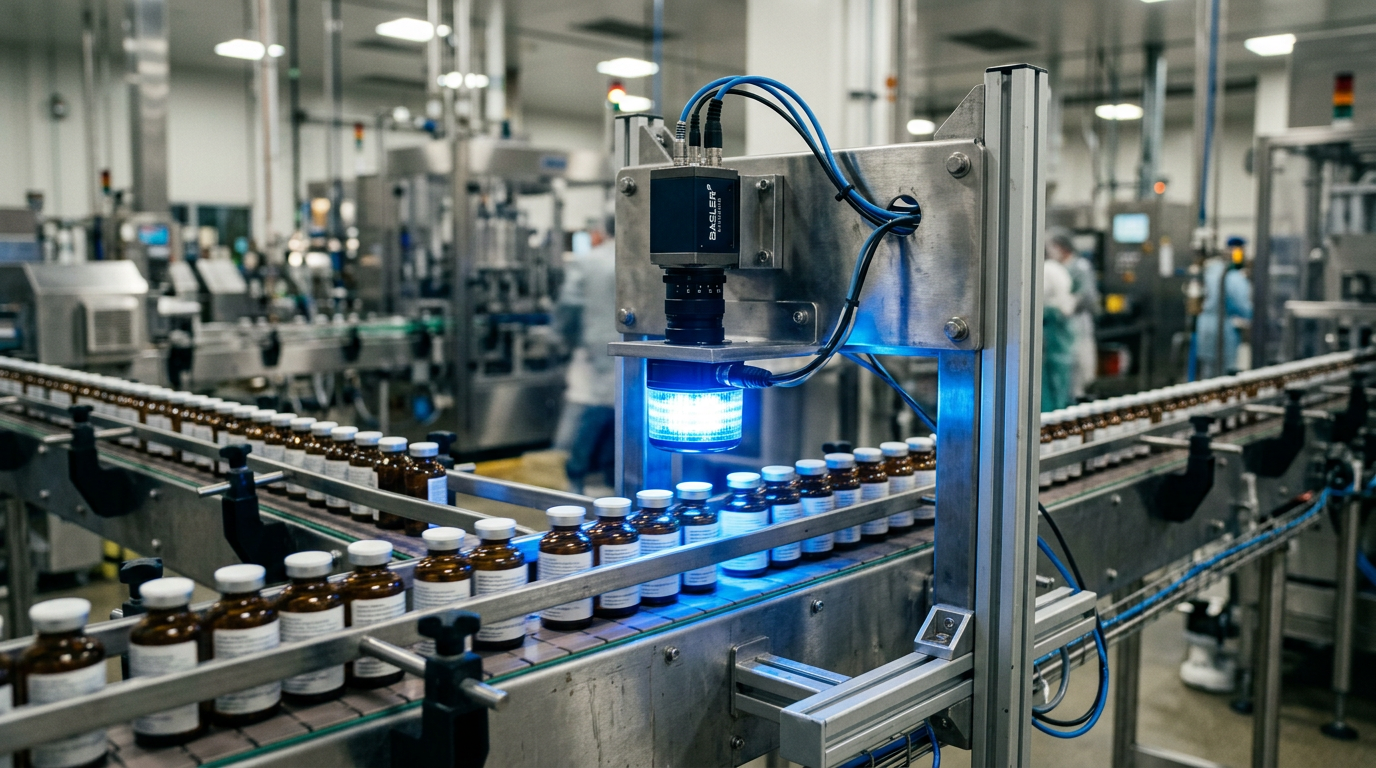
Integrating Programmable Logic Controllers (PLCs) with machine vision systems on packaging conveyor lines requires a low-latency communication protocol, typically achieving response times under 10 milliseconds to ensure sortation accuracy at line speeds exceeding 60 meters per minute. This synergy allows for 100% quality inspection, where the vision system acts as the "eyes" and the PLC as the "brain," executing real-time logic for reject mechanisms, diverters, and variable frequency drive (VFD) speed adjustments.
The Architecture of Integrated Control
The integration of PLC and machine vision is no longer just about a binary "Pass/Fail" signal. Modern industrial automation relies on high-speed data exchange via industrial Ethernet protocols such as PROFINET, EtherNet/IP, or EtherCAT. According to IEC 61131-3, the international standard for programmable controllers, the logic must handle high-speed interrupts to process vision triggers without jitter.
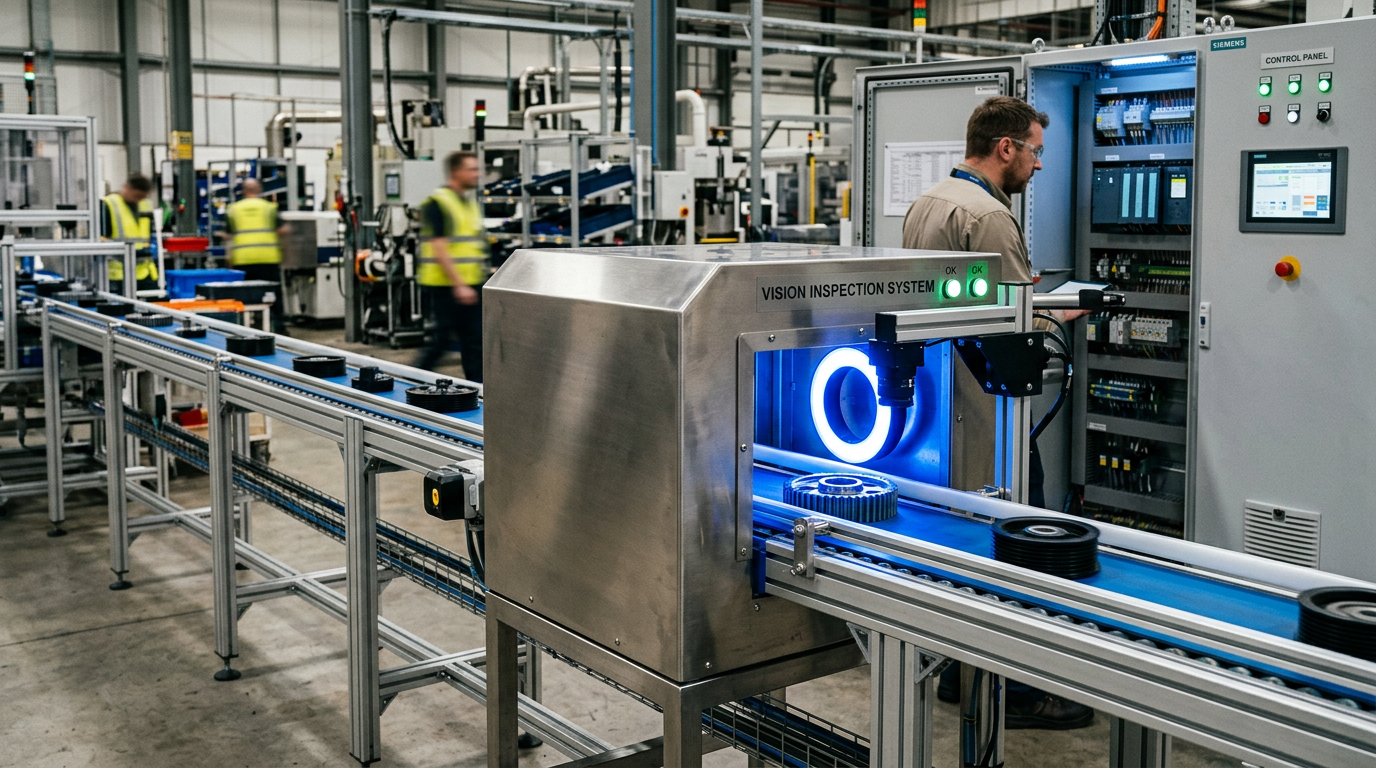
In a typical packaging line, the vision sensor captures an image triggered by a proximity sensor or an encoder pulse. The vision processor analyzes features—such as barcode readability, label alignment, or fill levels—and transmits the results to the PLC. The PLC then references the conveyor's encoder value to track the specific item down the line, activating a pneumatic pusher or an air blast at the precise millisecond the defective product reaches the reject station.
Hardware Selection and Synchronization
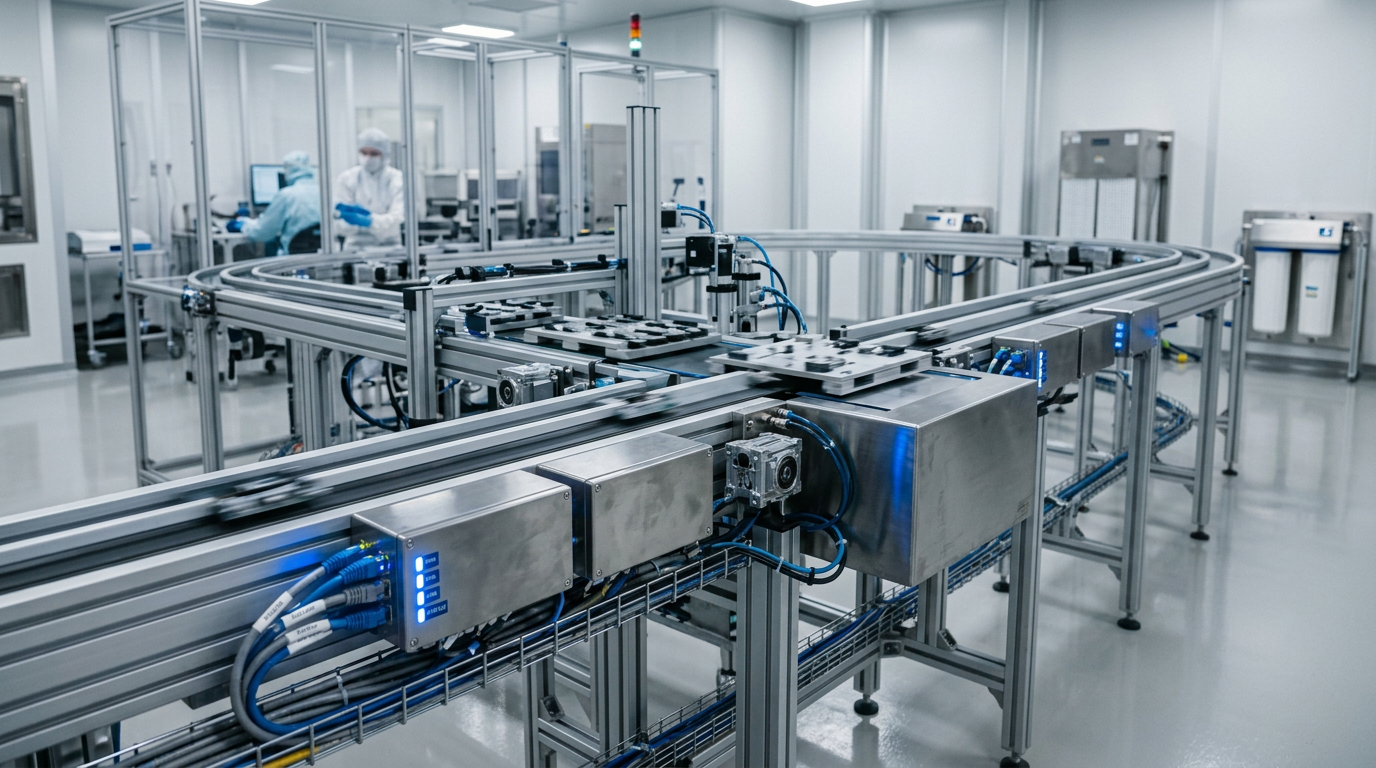
Choosing the right components is critical for system stability. For instance, Easy Conveyors provides modular conveyor frames that offer the structural rigidity required to mount high-resolution cameras without vibration interference, which is a common cause of "false rejects" in vision systems.
Key Component Specifications
| Feature | Standard Requirement | Impact on Performance |
|---|---|---|
| Communication Latency | < 5 ms (EtherCAT/Profinet) | Ensures accurate tracking at high speeds |
| Ingress Protection | IP67 or IP69K (IEC 60529) | Essential for food/pharma wash-down environments |
| Frame Stability | < 0.1 mm vibration amplitude | Prevents image blur and focus issues |
| Lighting | Strobe-synchronized LED | Eliminates ambient light interference |
| Motor Efficiency | IE3 or IE4 (IEC 60034-30-1) | Reduces thermal drift in conveyor components |
Integration Workflows: Logic and Vision
The software integration usually follows a producer-consumer model. The vision system produces a data packet (e.g., a "Job Result" containing a string and a status byte), and the PLC consumes this data to update its internal shift register.
- Triggering: The PLC uses an encoder-based trigger to fire the camera. Th
Easy Conveyors stocks the industrial automation discussed here — ready to ship across Europe.
is ensures that even if the belt speed fluctuates, the image is captured at the exact same physical position. 2. Processing: The vision controller processes the image. In advanced packaging, this may include OCR (Optical Character Recognition) to verify batch codes against a database. 3. Data Mapping: The PLC maps the vision result to a data block. If using Siemens PROFINET or Rockwell EtherNet/IP, GSDML or EDS files are used to define the communication interface. 4. Execution: The PLC calculates the "encoder counts to reject" based on the distance between the camera and the rejecter.
Common Challenges in Packaging Lines
One of the primary hurdles is handling "variable product orientation." If a package rotates on the belt, the vision system may fail to find the region of interest (ROI). This is where modular belt selection becomes vital. Using high-friction modules or tight-radius chains helps maintain product orientation.
Another challenge is lighting consistency. Ambient light from factory windows can change throughout the day, leading to inconsistent inspection results. Implementing "strobe" lighting, where the LEDs fire only during the camera's exposure time, at a brightness that overwhelms ambient light, is the industry standard for 24/7 reliability.
Advanced Quality Control and AI
We are seeing a shift from traditional rule-based vision (measuring pixels) to Deep Learning-based inspection. These AI-driven vision systems can detect "subjective" defects, such as a dented cardboard box or a slightly torn plastic film, which were previously difficult to program. The PLC integration remains similar, but the data payload increases, requiring robust network bandwidth to handle metadata and image logging for FDA 21 CFR Part 11 compliance in pharmaceutical packaging.
Proper VFD soft-start tuning is also necessary to prevent sudden jerks that could displace products after they have been "seen" by the camera but before they have been "acted upon" by the PLC. Integrating motor diagnostics directly into the PLC via the same industrial network allows for predictive maintenance, ensuring the conveyor remains within the alignment tolerances required by the vision system.
Troubleshooting and Optimization
When a system fails to reject defective products, the first check should be the "Time-to-Distance" calculation in the PLC logic. As conveyor belts wear, their effective pitch may change slightly, or slip may occur. Utilizing a high-resolution rotary encoder directly coupled to the drive shaft, rather than relying on motor frequency, provides the most accurate tracking for vision-based sortation.
Furthermore, ensure that the vision system's "Busy" signal is monitored by the PLC. If the line speed is too high for the camera's processing time, the PLC must be programmed to either slow the line down or trigger a "System Fault" to prevent un-inspected products from reaching the customer.
Frequently Asked Questions
What is the typical processing time for a vision inspection?
Standard vision systems typically require 20ms to 100ms for processing. However, high-speed applications using FPGA or dedicated DSPs can achieve results in under 5ms, which is necessary for lines running faster than 1.5 meters per second.
Is it better to use a time-based or encoder-based trigger for the camera?
Encoder-based triggering is far superior for vision because it ties the camera shutter to the physical position of the product, regardless of belt speed fluctuations, whereas time-based triggering leads to tracking errors if the motor speed varies.
Which communication protocol is best for PLC-Vision integration?
PROFINET and EtherNet/IP are the industry standards for packaging. EtherCAT is often preferred for extremely high-speed motion control (e.g., delta robots) due to its sub-millisecond cycle times.
How does conveyor construction affect machine vision accuracy?
Modular conveyors provide the necessary rigidity to prevent vibrations that cause motion blur. They also allow for easy mounting of lights and cameras directly to the T-slots in the aluminum or stainless steel profiles.