Optimizing PLC and Machine Vision Integration on Packaging Conveyor Lines
Master PLC and machine vision integration on packaging lines. Learn about synchronization logic, high-speed protocols, and mechanical stability for 99.9% accuracy.
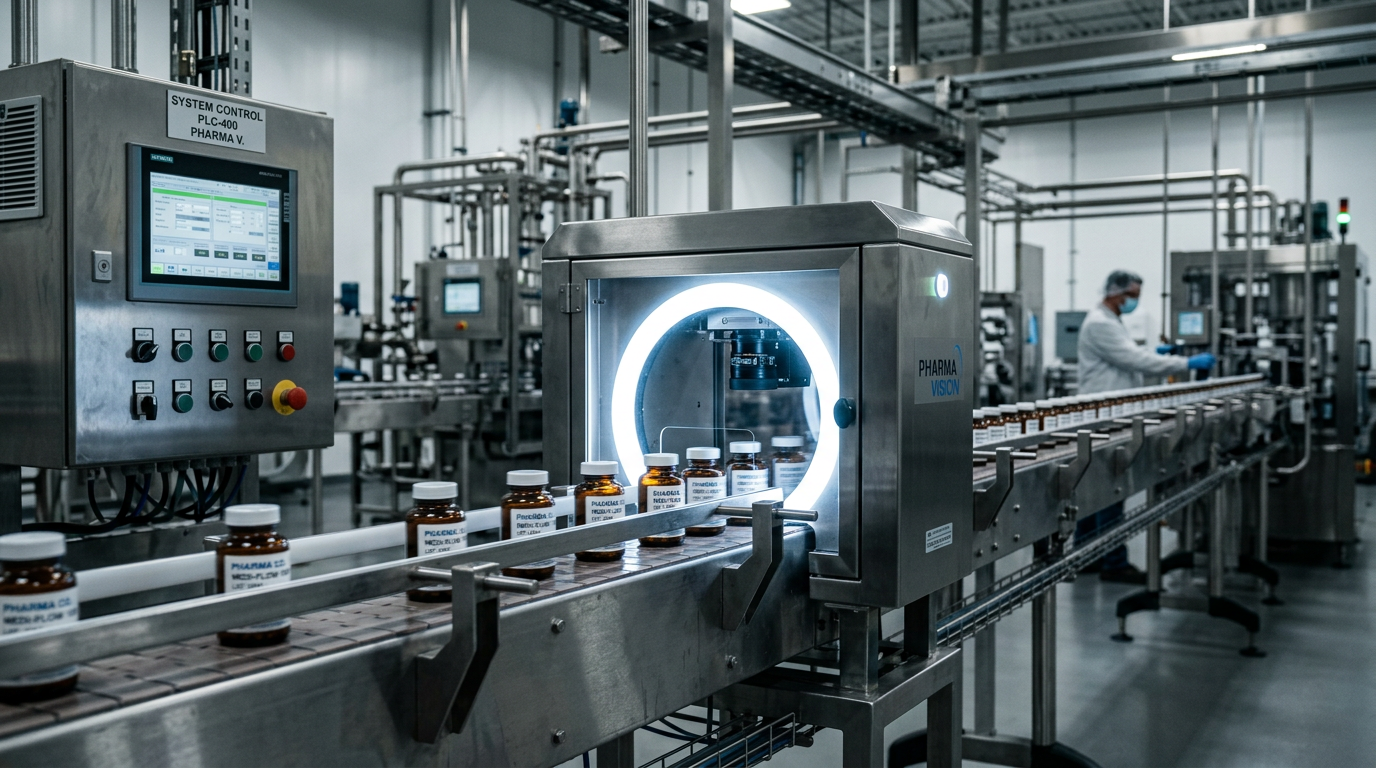
Integration of PLC logic and machine vision on packaging conveyor lines requires a real-time synchronization window of less than 10 milliseconds to ensure 99.9% inspection accuracy at line speeds exceeding 2.0 m/s. Successful implementation hinges on high-speed communication protocols such as PROFINET IRT or EtherNet/IP combined with low-latency trigger sensors that account for the conveyor's mechanical vibrations and belt elongation.
The Architecture of Intelligent Packaging Lines
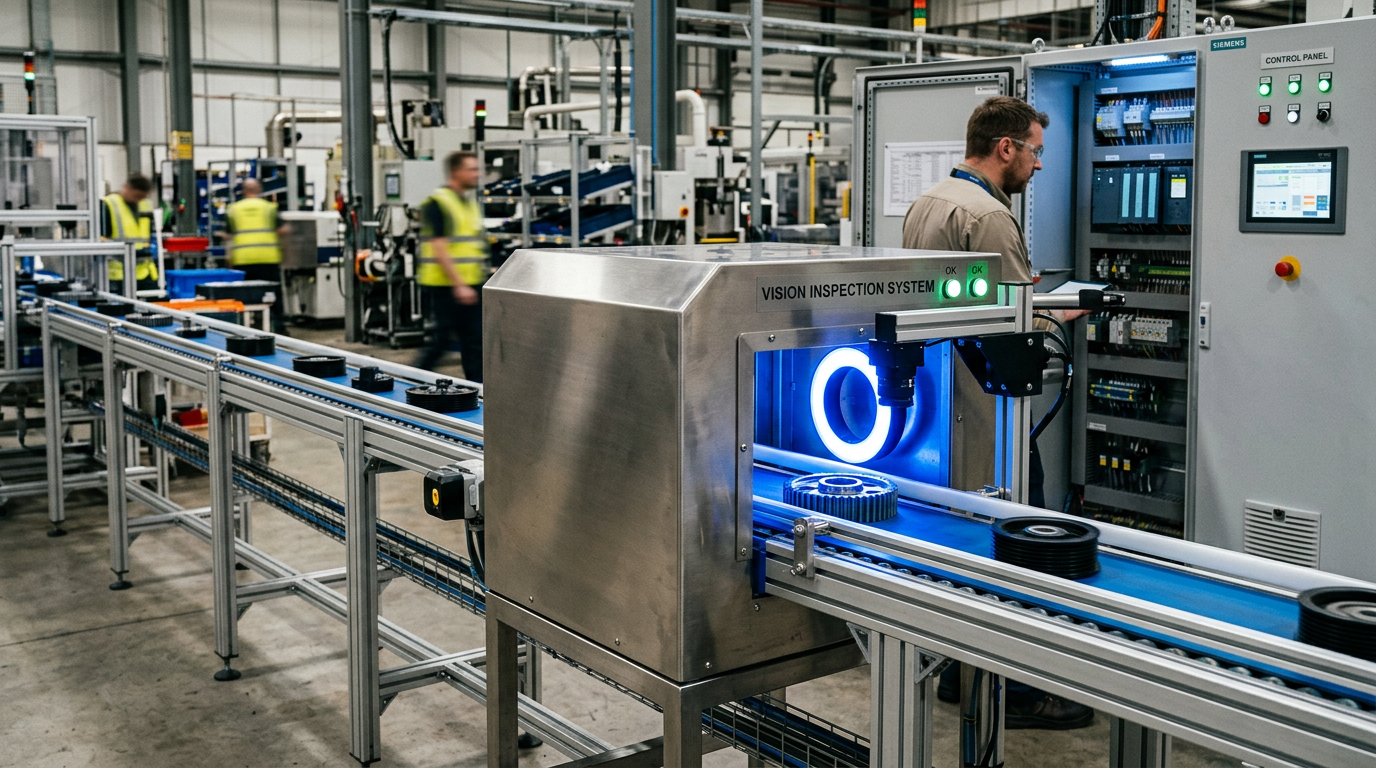
In modern industrial automation, the marriage of Programmable Logic Controllers (PLCs) and Machine Vision (MV) systems transforms a simple transport mechanism into a high-precision quality control asset. In a packaging environment, these systems work in tandem to perform tasks ranging from label orientation and barcode verification to volumetric checks and foreign object detection.
The PLC serves as the "brain," managing the motion control of the conveyor motors and the timing of pneumatic or robotic reject stations. Meanwhile, the machine vision system acts as the "eyes," capturing and processing images to extract data. For these two to communicate effectively, system designers must transition from legacy discrete I/O (where a simple "pass/fail" pulse is sent) to high-bandwidth industrial Ethernet protocols. This allows for the transmission of not just results, but metadata like rejection codes, OCR-read text, and coordinates for robot-guided pick-and-place operations.
Critical Synchronization: The Triggering Mechanism
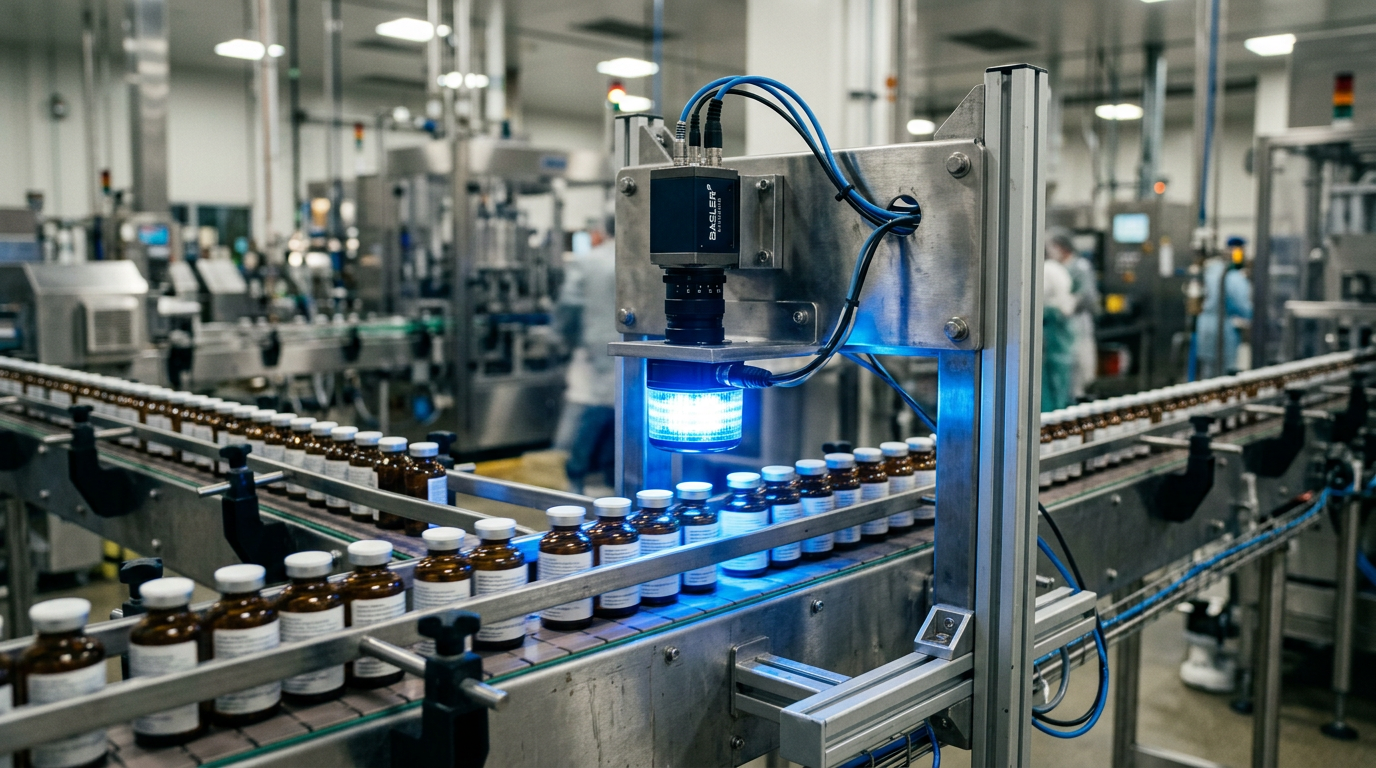
The most common failure point in PLC/Vision integration is inconsistent triggering. If the camera captures an image even 5 milliseconds too late, a bottle moving at high speed may be partially out of the frame, leading to a false rejection or, worse, a "false pass."
Selecting the Right Sensor
While the PLC handles the logic, the physical trigger is usually an inductive or photoelectric sensor. For high-speed packaging, sensors with a response time under 1ms are required. These sensors must be positioned at a "trigger offset" distance that accounts for the vision processor's internal "trigger-to-exposure" delay.
Encoder Integration
For variable-speed lines, "Time-Based Triggering" is insufficient. Instead, engineers use "Position-Based Triggering" by integrating a rotary encoder on the conveyor drive shaft. The PLC tracks the exact millimeter-position of the product. When the encoder count reaches a specific value, the PLC issues a trigger pulse through a high-speed output module. This ensures that even if the conveyor ramps up or down, the camera always fires when the product is centered.
High-Speed Communication Protocols
Modern systems rely on Industrial Ethernet to bridge the gap between the vision controller and the PLC rack. According to standards defined by IEC 61158, these protocols ensure deterministic data delivery.
| Feature | Discrete I/O | EtherNet/IP | PROFINET IRT |
|---|---|---|---|
| Data Depth | 1-bit (Pass/Fail) | Dynamic (Full Metadata) | Dynamic (Full Metadata) |
| Latency | < 1 ms | 10–50 ms | < 1 ms |
| Complexity | Low | Medium | High |
| Best Use Case | Simple sortation | Label verification | High-speed serialized pharma |
| Scalability | Limited | High | High |
For high-speed packaging, PROFINET is often preferred in European markets due to its Isochronous Real-Time (IRT) capabilities, which synchronize the clock cycles of the PLC and the vision sensor.
Easy Conveyors stocks the industrial automation discussed here — ready to ship across Europe.
Mechanical Stability and Lighting
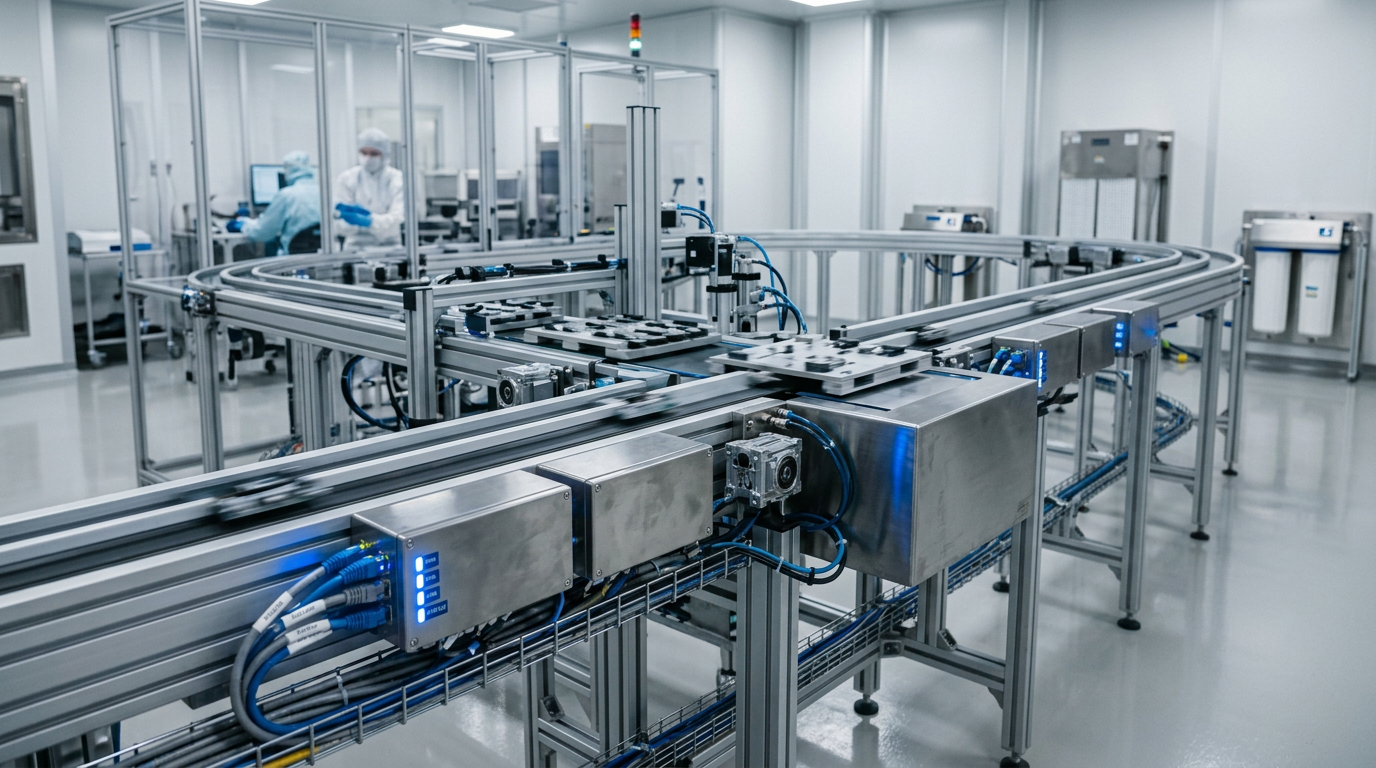
Even the most advanced PLC logic cannot compensate for poor mechanical foundations. Vibration on a conveyor line is the "noise" in a vision system. If the conveyor frame oscillates during a motor's start/stop cycle, the image will suffer from motion blur.
This is where the quality of the conveyor module itself becomes paramount. Utilizing precision-engineered systems from Easy Conveyors ensures a stable, low-vibration platform that is essential for sub-millimeter inspection accuracy. Furthermore, these modular systems allow for the easy mounting of custom lighting brackets—a critical factor, as "Vision is 80% lighting."
- Backlighting: Best for checking liquid levels or silhouette dimensions.
- Ring Lighting: Standard for label inspection and date code reading.
- Coaxial Lighting: Used for reflective surfaces like aluminum cans or foil pouches.
Handling Rejections and Data Logging
Once the vision system determines a "fail," it sends the result to the PLC. The PLC must then track that specific item as it moves toward the reject bin. This is typically handled through a "Shift Register" or "FIFO" (First-In, First-Out) buffer in the PLC's memory.
- Detection: Product A fails inspection at Encoder Position 1000.
- Tracking: The PLC waits until the Encoder reaches Position 2500 (the location of the reject blow-off).
- Action: The PLC triggers the solenoid valve for precisely 50ms.
- Verification: A secondary sensor confirms the product has entered the reject bin, closing the logic loop.
This data is increasingly being pushed to SCADA systems or the cloud for OEE (Overall Equipment Effectiveness) reporting. By analyzing the "Reject Reason Codes" sent via the PLC, operations managers can identify if a specific labeling machine is drifting out of alignment before a total line stoppage occurs.
Future Trends: AI and Edge Computing
The industry is moving toward "Deep Learning" vision sensors. Unlike traditional rule-based vision, AI-driven sensors can handle the high variability found in organic packaging (e.g., fresh produce). In these setups, the PLC's role shifts from simple motion control to being an edge-data gatekeeper, coordinating the massive data flows from AI inference engines back into the plant's Manufacturing Execution System (MES).
Designers should also consider the "VFD soft-start tuning" to prevent sudden jerks that might displace products on the belt, and ensure "hygienic wash-down design" is maintained if the vision system is deployed in a food-grade environment. Proper "drum motor selection" can also minimize electromagnetic interference (EMI), which sometimes disrupts sensitive vision communication cables.
Safety and Standards compliance
Integration must adhere to safety standards such as ISO 13849-1, particularly when a vision system is used for safety-rated presence detection (e.g., ensuring a robotic arm doesn't move if a human reaches onto the belt). While vision is usually used for quality, the PLC must always maintain its role as the primary safety logic controller, ensuring that any vision-triggered emergency stop (E-Stop) occurs within the required "Time to Stop" parameters. Provisions from OSHA also mandate that reject mechanisms be guarded to prevent operator injury during high-speed ejection.
By meticulously planning the trigger timing, choosing the right industrial protocol, and ensuring mechanical stability, manufacturers can achieve a seamless integration that maximizes throughput while virtually eliminating shipping errors.
Frequently Asked Questions
Why should I use Industrial Ethernet instead of discrete I/O for vision?
Industrial Ethernet protocols like PROFINET IRT provide microsecond-level determinism, whereas discrete I/O is limited to a single pass/fail signal. Ethernet allows the PLC to receive detailed failure codes and coordinates for robotic sorting.
How do I handle vision triggers if my conveyor speed changes?
For variable speed lines, use an incremental encoder. The PLC counts pulses to track the product's exact position, triggering the camera at a specific 'distance' rather than a 'time,' which prevents errors during acceleration.
What is the maximum acceptable latency for high-speed rejection?
Latency is the delay between the trigger signal and the result. In packaging, latency >20ms can cause the 'reject' logic to miss the product. Use low-latency cameras and high-speed PLC input cards to minimize this.
How does conveyor vibration affect machine vision?
The camera should be mounted to a frame that is vibrationally isolated from the main drive motor. Even microns of movement during exposure can cause the vision software to fail a good product (false reject).