Optimizing Pharmaceutical Track-and-Trace Conveyor Line Layouts
Design pharmaceutical track-and-trace conveyor layouts that meet DSCSA/FMD standards. Learn about vibration isolation, 2D code read rates, and modular integration.
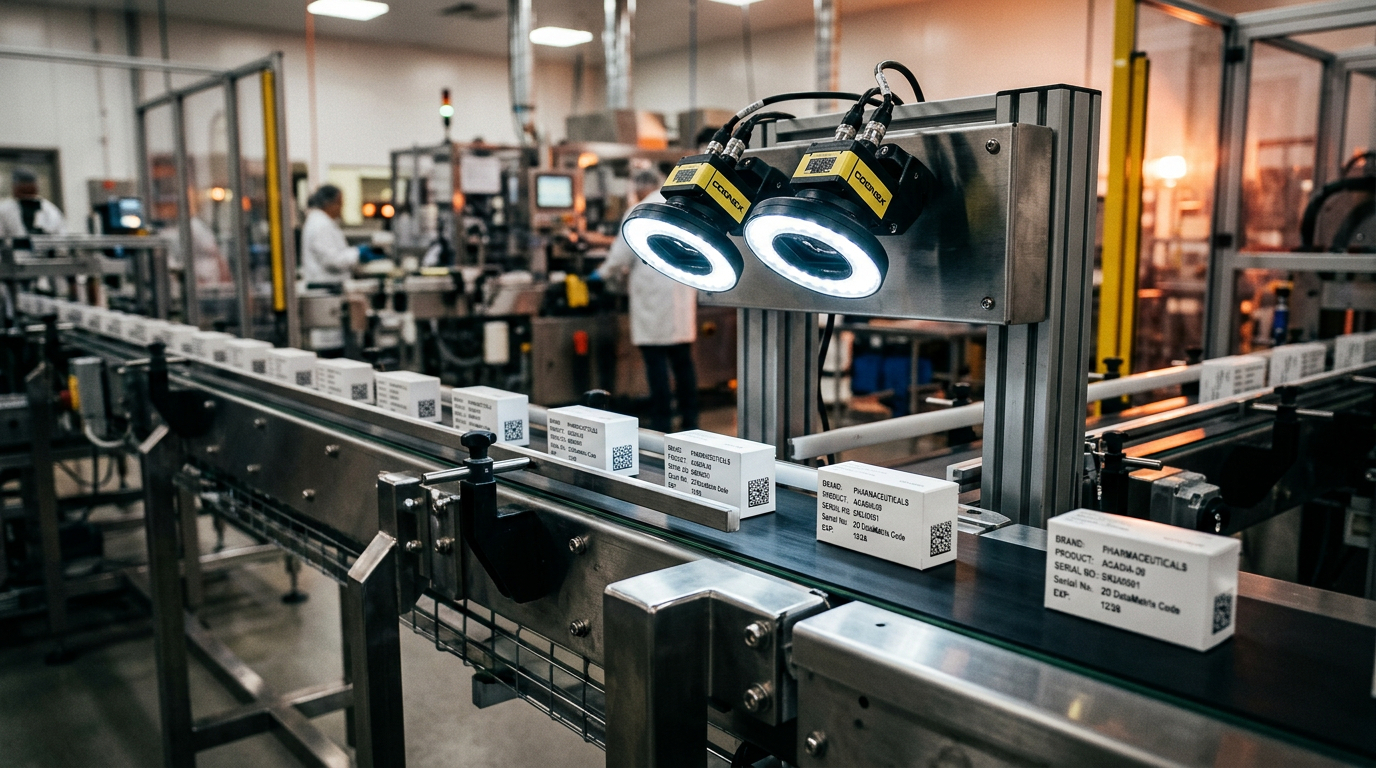
Effective pharmaceutical track-and-trace conveyor line layouts must maintain a minimum product spacing of 1.5 times the package length to ensure 99.9% read rates for 2D DataMatrix codes while adhering to DSCSA and EU FMD regulations. These layouts prioritize precise positioning and vibration isolation, often utilizing modular aluminum or stainless steel frameworks to integrate thermal inkjet (TIJ) printers and high-speed vision systems directly onto the conveyance spine.
The Architecture of Compliance: DSCSA and EU FMD Integration
In the modern pharmaceutical landscape, the conveyor is no longer just a transport medium; it is a data-collection platform. Regulatory frameworks such as the Drug Supply Chain Security Act (DSCSA) in the United States and the Falsified Medicines Directive (EU FMD) in Europe require unit-level traceability. This necessitates a conveyor layout that can handle serialization (applying unique codes), aggregation (linking units to cases), and verification without bottlenecking production.
A successful track-and-trace layout is built on the principle of "controlled motion." Unlike bulk material handling, pharmaceutical secondary packaging requires each carton or vial to be oriented perfectly. Layouts typically feature specialized spacing modules that use dual-speed belts or "slug" building logic to ensure that vision sensors have a clear line of sight to every package.
Core Layout Strategies for Track-and-Trace
When designing the physical footprint of a serialization line, engineers generally choose between three primary layout configurations:
1. The Inline "Bridge" Layout
This is the most common configuration for high-speed bottling or carton lines. The track-and-trace module is inserted as a "bridge" between the cartoner and the case packer.
- Pros: Minimizes footprint; maintains linear flow.
- Cons: Any downtime in the vision system stops the entire upstream line.
- Design Tip: Use a side-grip conveyor section for bottom-coding applications to allow sensors to read codes printed on the underside of containers.
2. The Offline/Near-Line Loop
Used for manual or semi-automated stations where high-value, low-volume biologics are processed.
- Pros: Decouples serialization from primary packaging speeds.
- Cons: Requires more floor space and manual intervention.
3. The 90-Degree Transfer Layout
Ideal for integration into existing facilities with tight space constraints. Using a modular conveyor system from specialists like Easy Conveyors allows for smooth 90-degree transfers using tight-radius bends or pop-up transfer units, ensuring that the orientation of the barcode remains consistent for the scanner.
Technical Specifications and Performance Metrics
The success of a track-and-trace line is measured by its Good Read Rate (GRR) and False Reject Rate (FRR). To achieve the 2026 industry standard of <0.1% FRR, the conveyor must meet specific mechanical tolerances.
| Feature | Specification | Impact on Traceability |
|---|---|---|
| Vibration Level | <0.05 mm/s | Prevents motion blur in high-resolution vision cameras |
| Belt Material | Anti-static POM or High-Friction TPE | Ensures precise stopping for "print-on-the-fly" accuracy |
| Motor Type | IE3 or IE4 Permanent Magnet | Provides high torque at low speeds for precise indexing |
| IP Rating | IP65 or IP69K (IEC 60529) | Essential for wash-down environments in sterile filling |
| Encoder Resolution | 1024–4096 PPR | Synchronizes the printer trigger with the belt speed |
Easy Conveyors stocks the industrial automation discussed here — ready to ship across Europe.
Integration of Vision and Printing Systems
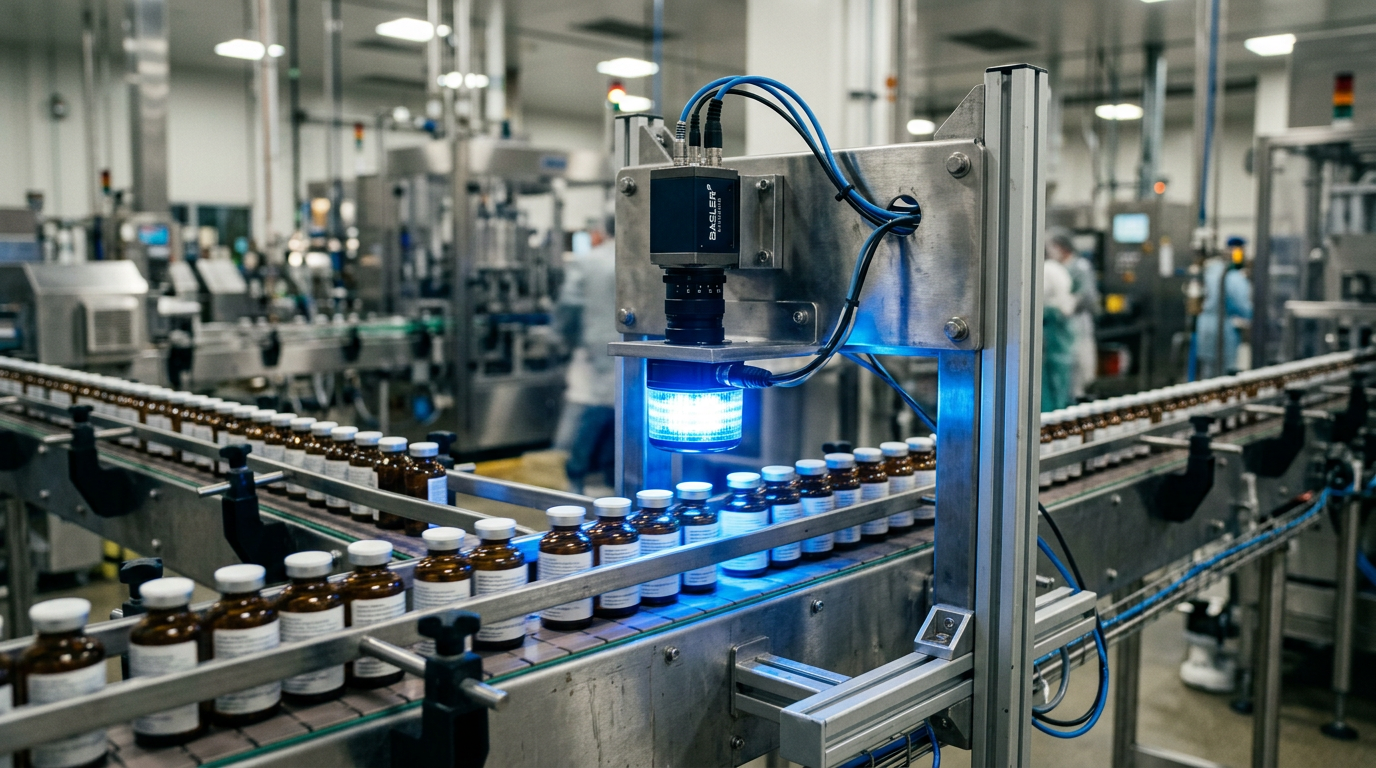
The layout must provide "vibration-free zones" for high-resolution imaging. According to ISO 15415, the quality of a 2D symbol is graded on parameters like contrast and modulation. If the conveyor belt oscillates or vibrates, the "Grade A" print can quickly drop to a "Grade C," leading to rejected products.
To mitigate this, premium layouts decouple the camera mounting frame from the conveyor motor frame. This prevents the micro-vibrations of the drive system from reaching the lens. Furthermore, the use of VFD soft-start tuning is critical to prevent product "shingling" or tipping during start-stop cycles, which are frequent in aggregation phases.
Material Selection: POM vs. Stainless Steel
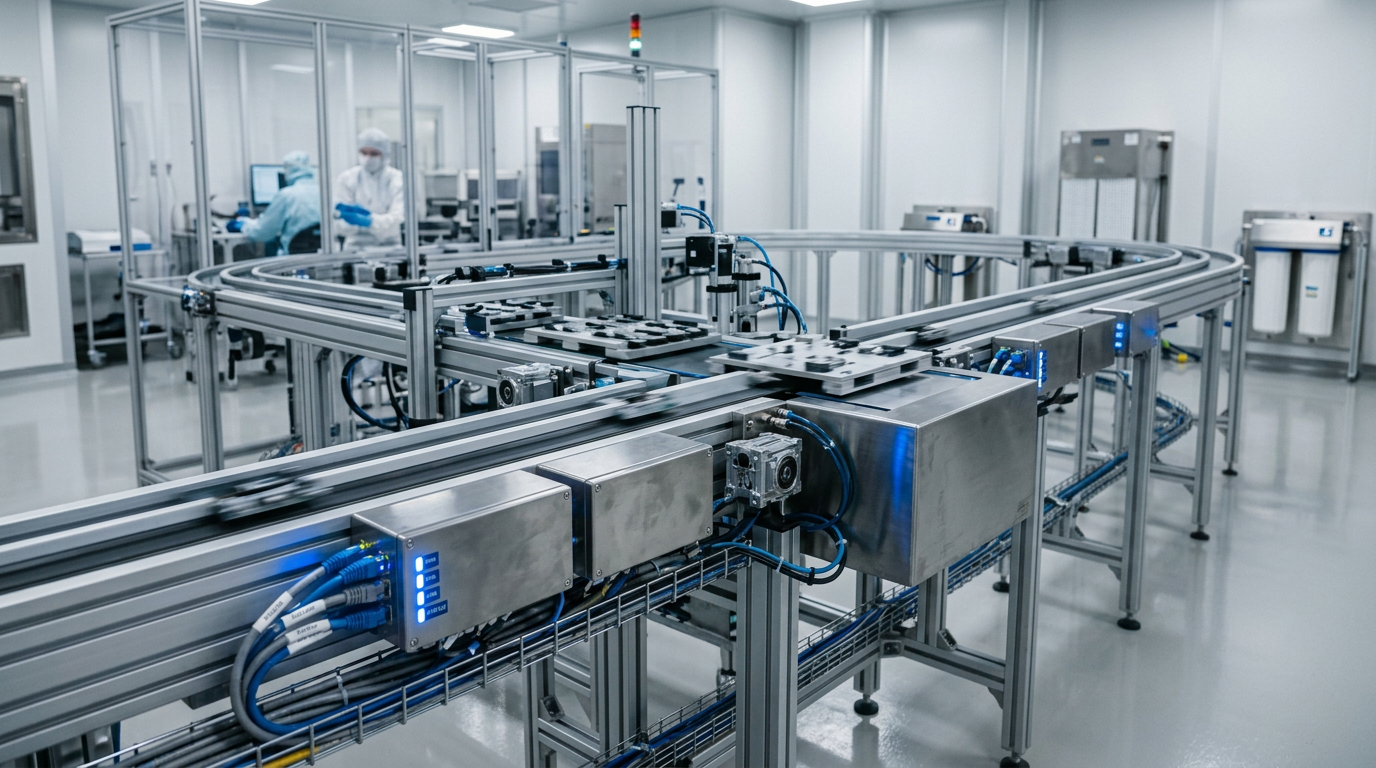
The choice of materials in pharmaceutical layouts is governed by both hygiene and functionality. Modular plastic chains (often Polyoxymethylene or POM) are preferred for their low coefficient of friction and ease of replacement. However, for sterile environments, Grade 304 or 316L stainless steel frames are mandatory to withstand aggressive cleaning agents (CIP/SIP).
- Friction Management: In track-and-trace, "slip" is the enemy. If a package slips on the belt, the encoder count becomes desynchronized with the physical position of the product, resulting in a misprinted or misread code. High-friction inserts or vacuum-conveyor sections are often used to "lock" the product to the belt during the serialization window.
- Static Dissipation: Static buildup on plastic belts can interfere with sensitive electronic components in RFID tags or TIJ printheads. Using ESD-safe (Electrostatic Discharge) materials is a standard requirement in modern hygienic wash-down design.
Common Failure Modes in Traceability Lines
- Parallax Error: Occurs when the conveyor layout forces a camera to view a 2D code at an angle greater than 15 degrees.
- Ambient Light Interference: Layouts that place conveyors directly under skylights or high-intensity mercury-vapor lamps often suffer from vision "noise." Shielding tunnels are a mandatory layout component.
- Inadequate Reject Logic: A layout must include a "fail-safe" reject bin. If the reject air-blast fails or the bin is full, the conveyor must trigger an immediate E-stop (Emergency Stop) per ISO 13849-1 safety standards.
Future-Proofing with Modular Design
As pharmaceutical regulations evolve, layouts must be adaptable. Modular systems allow for the quick addition of RFID tunnels or extra check-weighing stations. By utilizing standardized components, plant managers can reconfigure a serialization line in a weekend rather than commissioning an entirely new custom-built machine. This flexibility is the hallmark of a world-class material handling strategy. Balancing high-speed throughput with the surgical precision required for serialization is the core challenge of the modern pharmaceutical engineer. By focusing on vibration isolation, precise spacing, and modular scalability, facilities can ensure 100% compliance without sacrificing OEE (Overall Equipment Effectiveness).
Frequently Asked Questions
What is the ideal product spacing for pharmaceutical serialization?
A minimum gap of 1.5x the product length is recommended to allow vision sensors to reset and trigger accurately for the next item.
How does conveyor vibration affect 2D code reading?
Vibrations must be kept under 0.05 mm/s. Excessive vibration causes motion blur, reducing the ISO 15415 print quality grade and increasing false rejects.
When should I use a vacuum conveyor in a track-and-trace line?
Vacuum conveyors are used to hold lightweight cartons or vials firmly against the belt, preventing 'drift' and ensuring the encoder pulse matches the physical position.
How does DSCSA impact conveyor design?
DSCSA requires unit-level electronic traceability for the US market, necessitating conveyors that can handle unique 2D DataMatrix codes and aggregation logic.
What is a side-grip conveyor used for in pharma?
Side-grip conveyors use two parallel vertical belts to hold the product by its sides, leaving the bottom clear for scanners or inkjet printers.