Optimizing Pharmaceutical Track-and-Trace Conveyor Line Layouts
High-precision pharmaceutical track-and-trace conveyor layouts require ±0.5mm stability and 360-degree vision integration to meet EU FMD and US DSCSA standards.
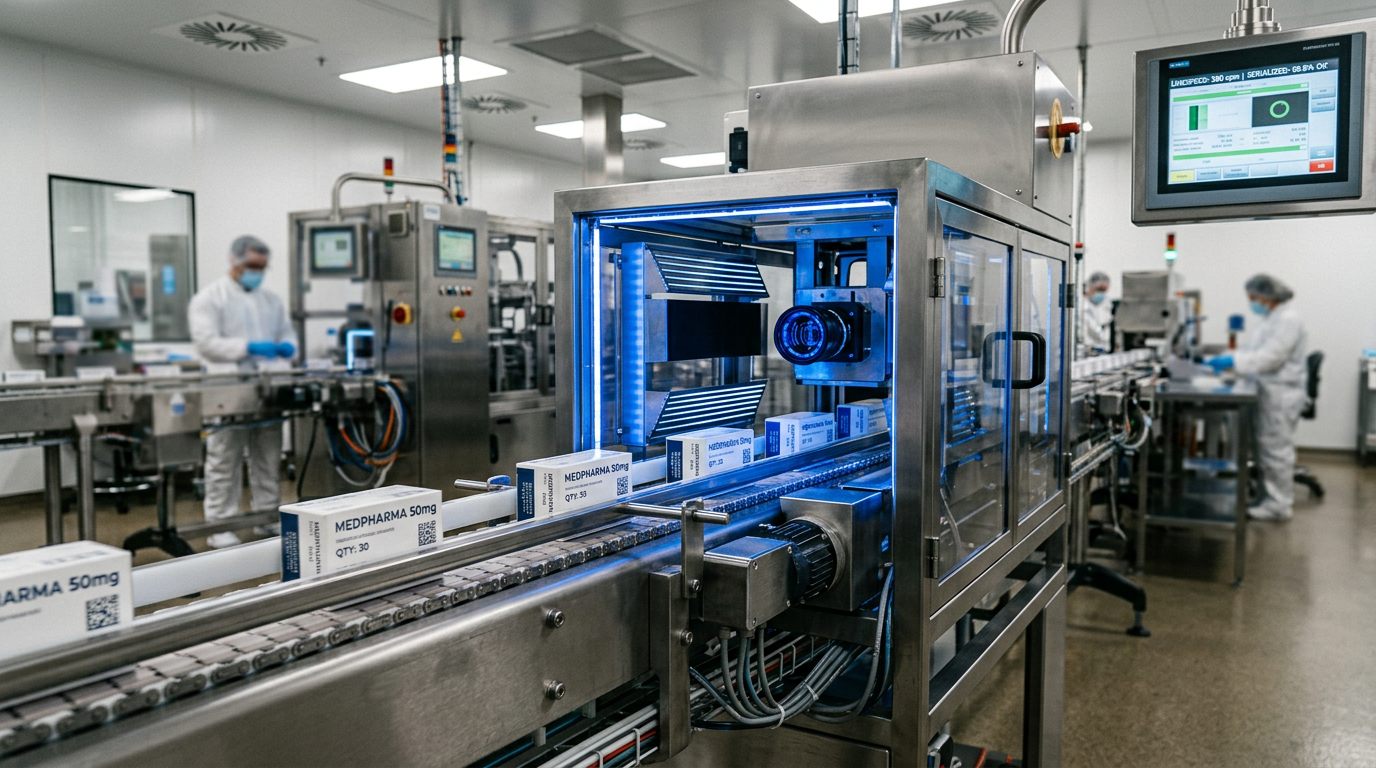
Optimizing pharmaceutical track-and-trace conveyor line layouts requires a minimum stability tolerance of ±0.5mm at the marking station to ensure 100% GS1 DataMatrix code readability at speeds up to 400 products per minute. Effective layouts integrate high-precision modular transport, 360-degree vision inspection tunnels, and fail-safe automated rejection stations to comply with EU Falsified Medicines Directive (Directive 2011/62/EU) and US DSCSA requirements.
The Engineering mandate for Track-and-Trace
In the pharmaceutical industry, the conveyor is no longer a simple transport mechanism; it is the physical backbone of a data-intensive compliance process. Track-and-trace (serialization) requires each individual unit of sale—whether a carton, vial, or bottle—to be marked with a unique identifier and verified by a vision system.
The layout of these lines is dictated by the physics of the optical sensors and the mechanical requirements of the thermal inkjet (TIJ) or laser marking systems. Any vibration, skew, or inconsistent spacing will result in a "No Read" or "False Reject," directly impacting OEE (Overall Equipment Effectiveness).
Primary Layout Configurations for Serialization
1. The Inline Linear Layout (Carton Secondary Packaging)
The most common layout for folding cartons involves a narrow-belt modular conveyor. Here, the product must be precisely constrained.
- Top-Bottom Constraints: Twin-belt stabilizers hold the carton from the top and bottom to prevent "vibration blur" during laser coding.
- Side-Belt Transfers: Used to expose the end-flaps of a carton for side-marking.
- Precision Indexing: Utilizing servo-driven modular belts ensures that the gap between products remains constant, which is critical for triggering the vision camera at the exact millisecond.
2. The U-Shape Configuration (Space Optimization)
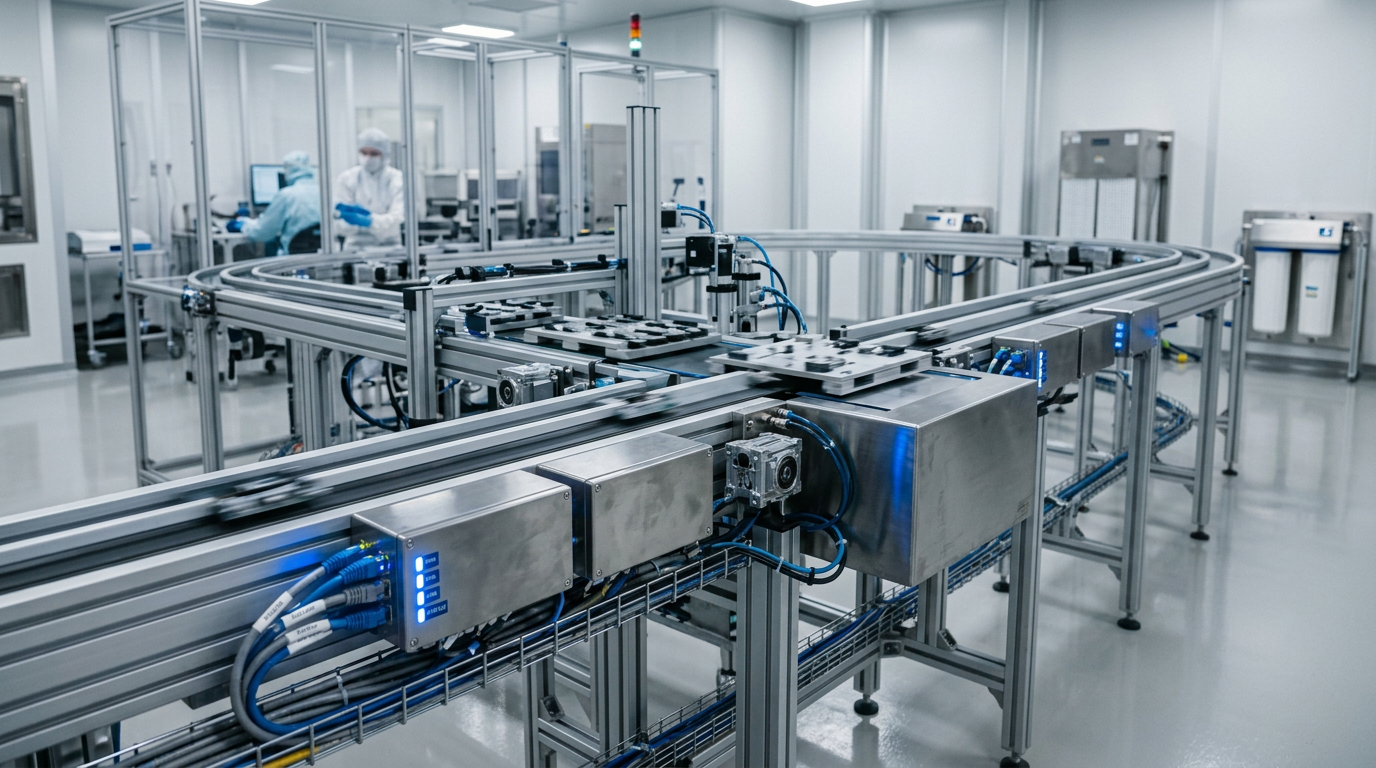
In many European manufacturing facilities where cleanroom floor space is at a premium, U-shaped layouts are preferred. This involves using 90-degree side-flexing chains. However, engineers must account for "chordal action" in the curves, which can cause slight speed fluctuations. To mitigate this, vision inspection should always happen on a straight section at least 1,500mm after a curve to allow the product flow to stabilize.
3. The 360-Degree Bottle Inspection (Primary Packaging)
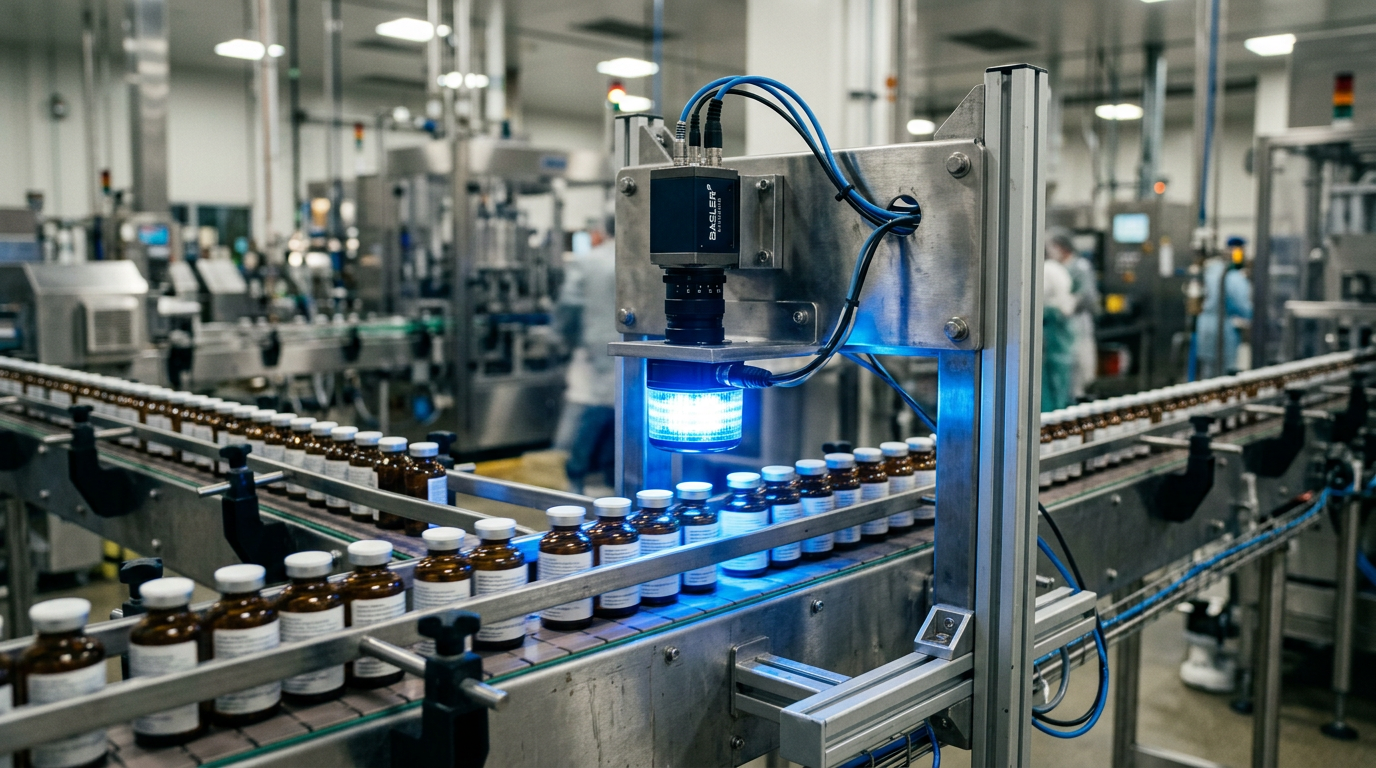
For round containers like vials or HDPE bottles, the layout often includes a star-wheel or a "wrap-around" conveyor module. The goal is to rotate the product in front of a fixed camera or move it through a multi-camera tunnel.
| Layout Feature | Stability Tolerance | Maximum Throughput | Typical Application |
|---|---|---|---|
| Inline Linear | ±0.2 mm | 500 ppm | Folding Cartons / Serialization |
| Side-Grip Transfer | ±0.5 mm | 300 ppm | Bottom-level Coding |
| Star-wheel Rotary | ±0.1 mm | 600 ppm | Vial / Ampoule Inspection |
| Modular S-Curve | ±1.2 mm | 200 ppm | Transport to Case Packer |
Hardware Essentials: Stability and Material Choice
To maintain the hygiene standards required in Grade C or D cleanrooms, pharmaceutical conveyor layouts typically utilize stainless steel (AISI 304 or 316L) frames. For the moving components, low-friction POM (Polyoxymethylene) or anti-static materials are used to prevent dust accumulation.
Precision is the primary differentiator. While a standard distribution conveyor might tolerate a 5mm lateral movement, a track-and-trace layout cannot. Easy Conveyors offers modular systems specifically engineered for these high-tolerance requirements, providing the necessary rigidity to support high-resolution vision sensors without resonance interference.
Easy Conveyors stocks the industrial automation discussed here — ready to ship across Europe.
Integrating the Rejection Station
A critical, often overlooked component of the layout is the rejection zone. According to GAMP5 guidelines, a pharmaceutical line must have a "fail-safe" rejection mechanism. If the vision system detects a poorly printed DataMatrix code, the conveyor must remove that specific unit from the line.
Types of Rejection Modules:
- Air Blast: Fast and efficient for lightweight cartons (under 100g) but requires a localized dust extraction system.
- Pusher Arm: Reliable for heavier products but requires a wider conveyor footprint to accommodate the stroke of the pneumatic cylinder.
- Diverter Gate: Ideal for fragile vials to prevent breakage during the rejection process.
The "Reject Verification" sensor is a mandatory layout inclusion. This sensor confirms that the defective product has actually entered the reject bin. If the sensor is not triggered, the conveyor must perform an emergency stop (E-Stop) to prevent an unverified product from reaching the consumer.
Control Integration: VFDs and Synchronization
Modern track-and-trace lines rely on sophisticated motor control. Selecting the right VFD soft-start tuning parameters is essential to avoid "jerking" at the start of a shift, which could cause products to topple.
Furthermore, the conveyor's encoder must be synced with the serialization software. Every pulse of the encoder corresponds to a specific distance (e.g., 1 pulse = 0.5mm). This allows the software to "track" the position of a rejected carton from the camera to the reject bin, even if the line speed varies. Implementing a drum motor selection strategy can benefit these lines by providing a space-saving, high-torque solution that is easy to clean.
Future-Proofing for Aggregation
The layout should also accommodate future "Aggregation" steps. Aggregation is the process of linking the unique codes of individual cartons to a "parent" code on a shipping case. This requires additional space at the end of the line for a secondary camera system and a label applicator.
When designing the layout, engineers should leave approximately 2,000mm of "buffer" space between the serialization station and the case packer. This allows for manual intervention and provides room for the hardware upgrades required for full-parent-child data relationship mapping. For more on maintaining these systems, refer to our guide on hygienic wash-down design to ensure your track-and-trace line meets ISO 14644-1 cleanroom standards.
Technical Summary of Layout Design Rules
- Vibration Control: Mount marking heads on independent floor-bound stands, not directly on the conveyor frame, to isolate motor frequency resonance.
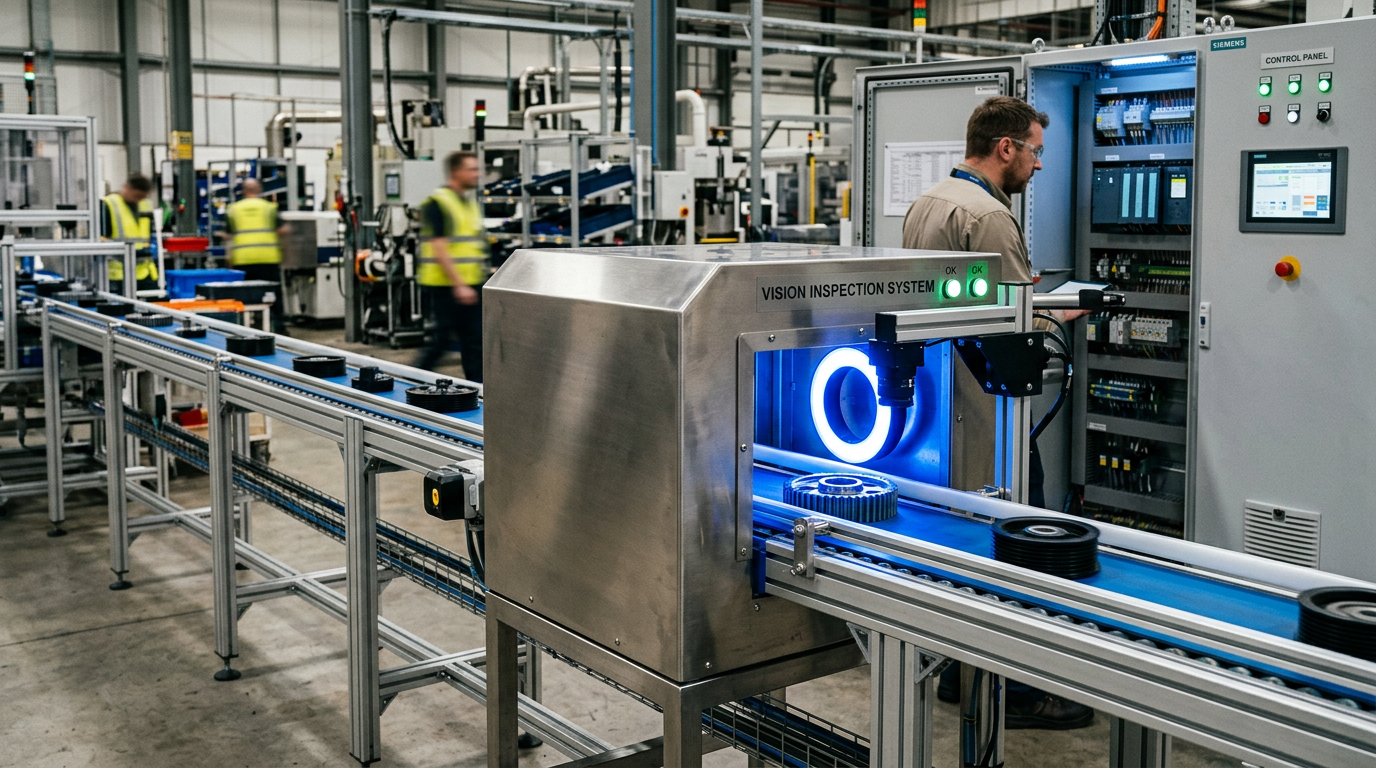
- Lighting Control: The layout should include a "shroud" or "tunnel" over the vision area to prevent ambient factory lighting from interfering with the DataMatrix scan.
- Product Pitch: Ensure a minimum gap of 1.5x the product length between units to allow the rejection gate enough time to reset.
- Height Precision: Use micro-adjustable leveling feet to ensure a perfectly level transfer between the packaging machine and the serialization module. Any "step" in the transition can causes the product to tilt, ruining the scan.
By adhering to these layout principles, pharmaceutical manufacturers can achieve 99.9% read rates and maintain full compliance with global serialization mandates.
Frequently Asked Questions
How does a track-and-trace conveyor differ from a standard packaging conveyor?
Pharmaceutical layouts require extreme mechanical stability (±0.5mm), specialized rejection verification sensors, and materials compliant with FDA/cleanroom standards, unlike standard logistics lines.
What are the main regulatory drivers for these conveyor layouts?
EU Falsified Medicines Directive (FMD) and US DSCSA require unique serial identifiers. The layout must ensure 100% readability of these codes, or the product cannot be sold.
Can serialization happen on a curved conveyor section?
While 90-degree turns are possible, vision inspection should occur on a straight section at least 1.5 meters away from any curve to ensure the product has stabilized.
Is a reject bin sensor mandatory for compliance?
Yes, a verified reject bin with a 'bin full' and 'reject confirmation' sensor is a mandatory safety requirement in pharmaceutical track-and-trace layouts.
What is the ideal product spacing for serialization lines?
A spacing of 1.5 to 2 times the product length is recommended to provide the high-speed vision triggers and pneumatic rejection arms enough time to cycle reliably.
Sources & references
- [1]ISO 13406-2: Ergonomic requirements for work with visual displays based on flat panels
- [2]Serialization and Track & Trace Solutions for Pharmaceutical Industry
- [3]Pharmaceutical Serialization and Traceability Solutions
- [4]Drug Supply Chain Security Act (DSCSA) Implementation and Resources
- [5]Pharmaceutical Packaging and Serialization Systems