Engineering Pharmaceutical Track-and-Trace Conveyor Line Layouts
Design high-speed pharmaceutical track-and-trace conveyor layouts. Learn about 99.9% read accuracy, DSCSA compliance, and vibration-free transport for 2D coding.
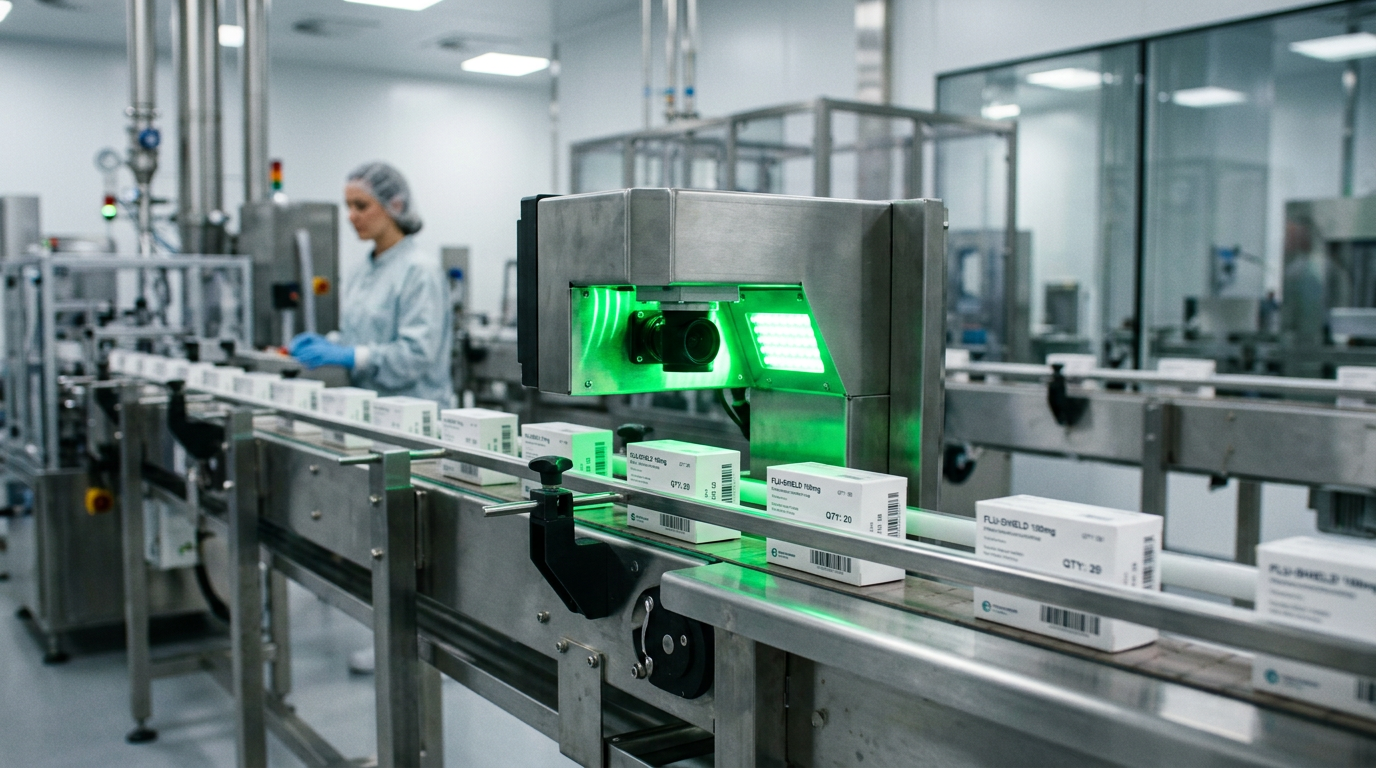
Pharmaceutical track-and-trace conveyor line layouts must achieve a minimum 99.9% read accuracy for 2D DataMatrix codes while maintaining throughputs of up to 400 cartons per minute. Optimized layouts utilize precise pitch control, stabilized product orientation, and integrated inspection zones that comply with DSCSA (Drug Supply Chain Security Act) and EU FMD 2011/62/EU regulations to ensure end-to-end serialization and tamper-evident sealing.
The Engineering Requirements of Serialized Conveyance
In pharmaceutical manufacturing, the conveyor is no longer just a transport mechanism; it is a metrology platform. The shift from batch-level tracking to unit-level serialization requires every individual carton, vial, or bottle to be uniquely identified, verified, and logged into a global database.
To achieve this, the layout must address "The Four Pillars of Serialization":
- Singulation: Ensuring specific gaps between products to prevent overlapping during camera triggers.
- Stabilization: Eliminating vibration or "shingling" that could distort high-speed optical scans.
- Orientation: Maintaining a fixed 90-degree relationship between the scanner and the marking surface.
- Verification: Immediate rejection of any unit that fails the data-validity check.
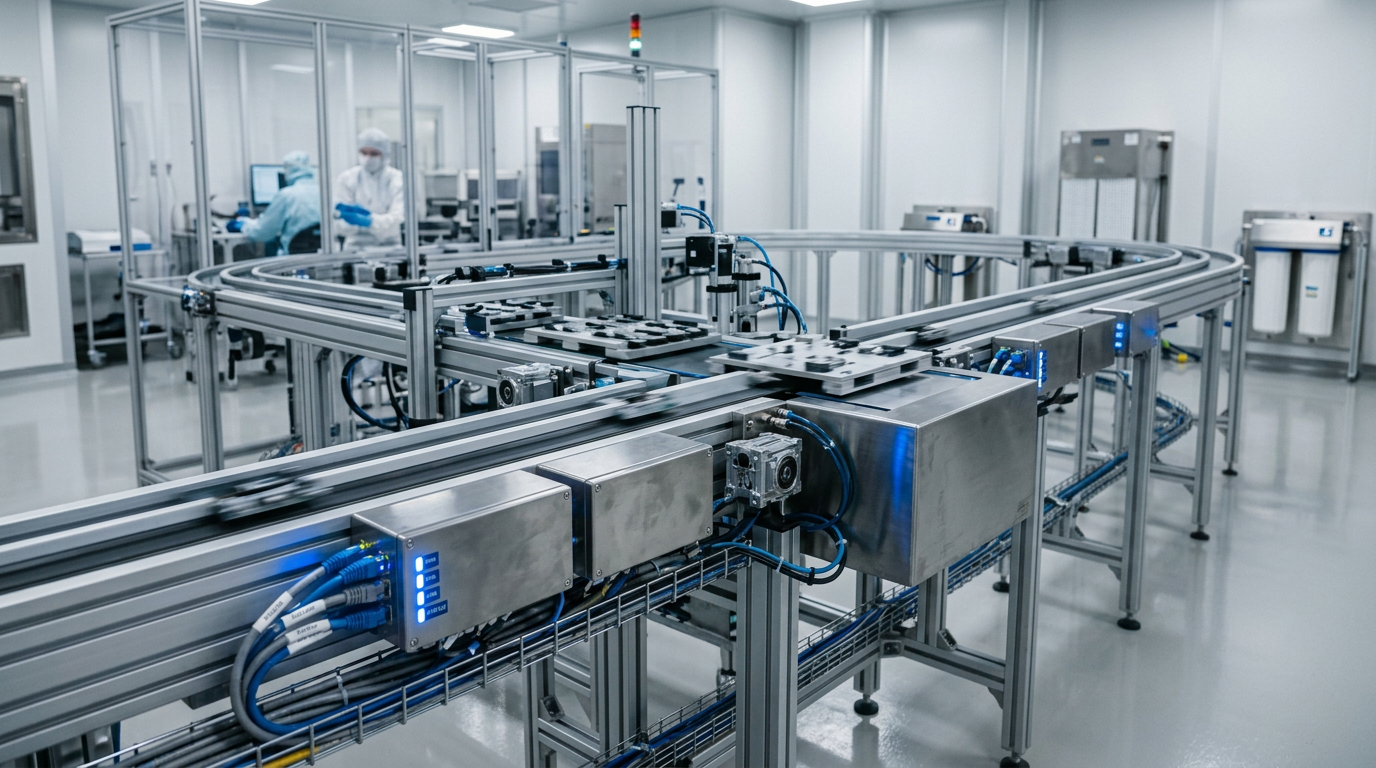
Modern pharmaceutical lines often utilize modular aluminum or stainless steel frameworks. For European-standard modularity and precision, Easy Conveyors provides the structural foundation required for the high-speed vibration-free transport necessary for thermal inkjet (TIJ) or laser marking systems.
Key Layout Configurations for Track-and-Trace
The physical footprint of a track-and-trace module is determined by the packaging format and the required inspection speed. Most layouts fall into three categories:
1. In-Line Serialization Modules
These are compact, stand-alone units integrated between the cartoner and the case packer. They typically feature dual-side belts to grip the product, exposing the top or bottom for marking.
- Best for: Standardized folding cartons.
- Critical Spec: Belt synchronization must be within ±0.5mm to avoid rotating the carton during transport.
2. Side-Grip (Bottom-Coding) Layouts
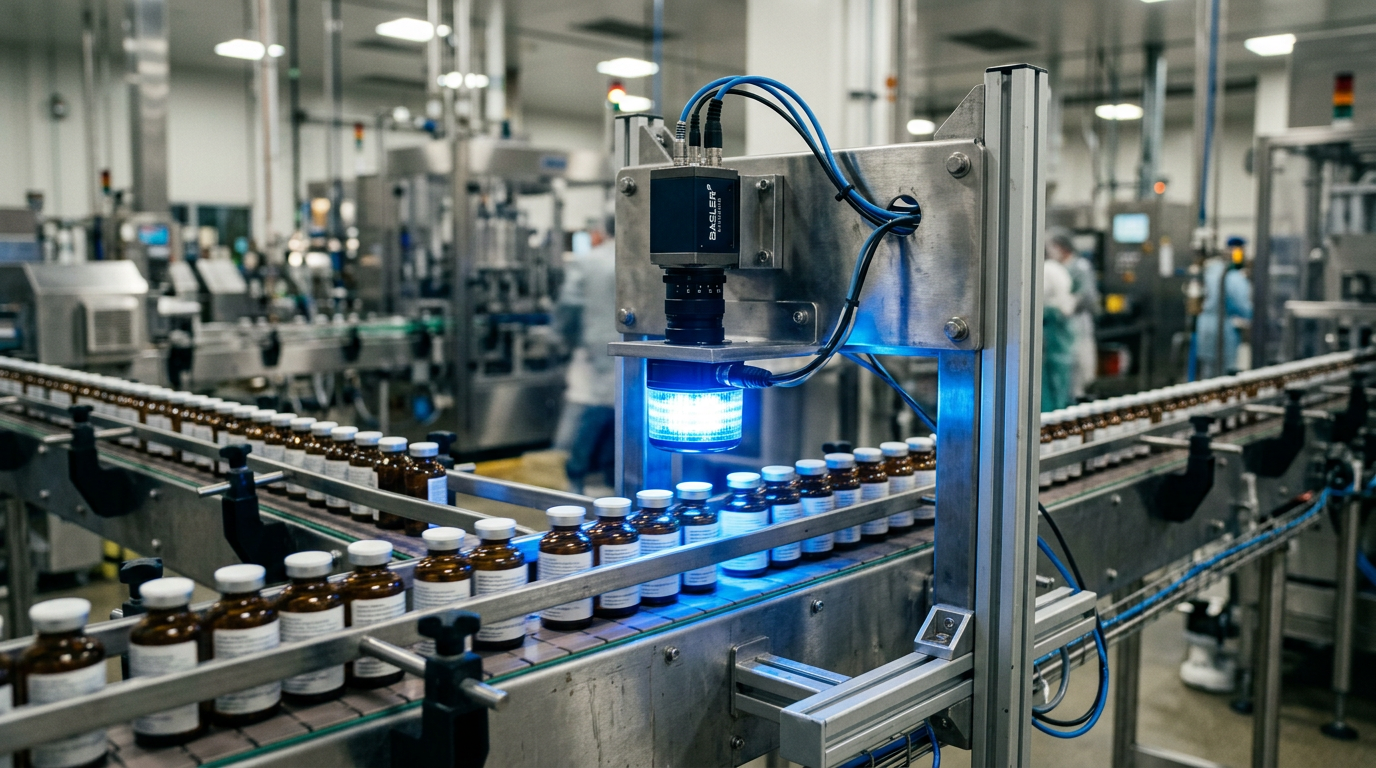
For round containers like vials or bottles, a side-grip conveyor layout is essential. Two parallel belts suspended over a gap allow sensors and lasers to read or mark the bottom of the container.
- Standard Compliance: Must meet IP69K ratings if wash-down procedures are required for liquid filling lines.
3. Corner Turn Inspection
When space is limited, track-and-trace is often integrated into 90-degree turns. However, this is technically challenging because centrifugal force can shift product orientation. Engineers use "active-curve" technology or guide rails with low-friction POM (Polyoxymethylene) surfaces to maintain the required pitch.
Technical Comparison: Conveyor Types for Serialization
| Feature | Flat Belt Conveyor | Side-Grip Timing Belt | Modular Plastic Chain |
|---|---|---|---|
| Pitch Precision | Moderate | Very High | High |
| Vibration Level | Low | Ultra-Low | Moderate |
| Hygiene Rating | Up to IP65 | Up to IP69K | Up to IP69K |
| Speed Range | 20–60 m/min | 40–100 m/min | 10–50 m/min |
| Primary Use Case | General transport | High-speed printing | Heavy secondary packaging |
Easy Conveyors stocks the industrial automation discussed here — ready to ship across Europe.
Integrating Vision Systems and Rejection Mechanisms
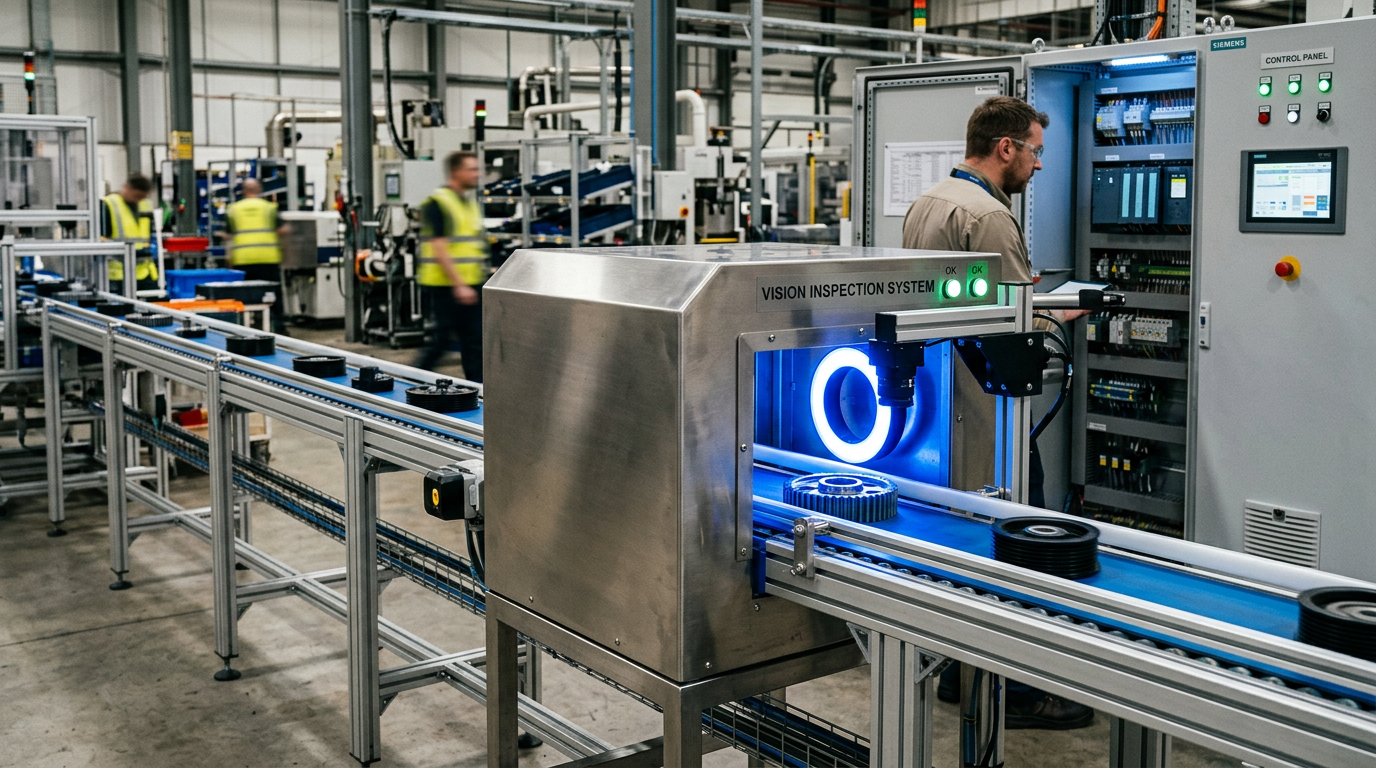
The layout must account for the "Rejection Buffer." According to ISO 13849-1 safety standards, the rejection zone must be guarded and monitored.
Inspection Zone Length
The inspection zone length ($L$) is calculated as: $L = (v \times t) + S$ Where:
- $v$ = Line speed (m/s)
- $t$ = Vision processing time (typically 50–200ms)
- $S$ = Safety margin for the physical rejecter arm or air blast.
If a line runs at 1 m/s and the system requires 100ms to process a code, the physical distance between the camera and the rejecter must be at least 100mm plus the length of one product. In practice, engineers double this to ensure the rejecter has reset before the next unit arrives.
Rejection Methods
- Air Blast: Ideal for lightweight vials or small cartons (<100g).
- Pusher Arm: Used for medium-weight products; requires precise timing to avoid damaging the carton.
- Divert Gate: Best for heavy cases or fragile glass containers to ensure a smooth transition to the reject bin.
Advanced Control: VFDs and Servo Integration
To maintain the strict timing required for track-and-trace, the conveyor drive system must be highly responsive. Utilizing VFD soft-start tuning is critical to prevent sudden jerks that could cause bottles to topple. For the highest precision, servo-driven conveyors are used, allowing the PLC to "know" the exact position of every carton on the belt at any millisecond.
This level of control is often paired with hygienic wash-down design principles, especially in primary packaging areas where sterile conditions are mandatory. Using 304 or 316L stainless steel prevents bacterial growth and withstands aggressive cleaning agents used in pharmaceutical environments.
Maintenance and Validation (IQ/OQ/PQ)
Pharmaceutical lines require rigorous validation. The track-and-trace conveyor layout must pass:
- Installation Qualification (IQ): Verifying the conveyor is installed according to the P&ID (Piping and Instrumentation Diagram).
- Operational Qualification (OQ): Testing the "Fail-Safe" logic. If the reject bin is full, or the air pressure drops, the conveyor must stop immediately.
- Performance Qualification (PQ): Demonstrating that the system maintains a <0.1% False Reject Rate (FRR) over a 24-hour production run.
Regular maintenance of the conveyor belt tension and tracking is vital. A slipping belt will cause "jitter" in the printed DataMatrix code, leading to failed reads and expensive product waste. Engineers should specify belts with low-stretch aramid or steel cords to minimize elongation over time.
Future Trends: Smart Conveying
We are seeing a shift toward independent mover technology (linear motor conveyors). These systems allow each individual pallet or carrier to move independently. In a track-and-trace layout, this means a carton can be slowed down for a high-resolution 360-degree camera inspection and then accelerated to catch up with the rest of the line, maximizing throughput without compromising quality.
Regardless of the technology, the fundamental goal remains the same: total visibility of the pharmaceutical supply chain to protect patient safety. Selecting the right conveyor components and layout is the first step in building a compliant, efficient, and future-proof production line.
Frequently Asked Questions
What is singulation in pharmaceutical conveyor layouts?
In pharmaceutical serialization, singulation refers to creating a distinct physical gap between individual products (cartons or vials). This ensures that vision systems can trigger correctly for each unit and that rejection mechanisms can isolate a single faulty item without affecting adjacent good products.
Why is conveyor vibration critical for 2D DataMatrix printing?
Belt vibration must be minimized to avoid 'motion blur' or 'skew' during the printing and scanning process. High-precision track-and-trace modules use machined wear strips and balanced pulleys to ensure the product remains perfectly stable, allowing for 300-600 DPI print quality at high speeds.
How does a 'Fail-Safe' reject mechanism work?
A 'Fail-Safe' reject mechanism ensures that if the rejection system fails (e.g., loss of air pressure or power), the entire conveyor stops or defaults to a state where no unverified product can pass to the next stage. This is a core requirement of GAMP5 and FDA regulations.
When should a side-grip conveyor be used instead of a flat belt?
Side-grip conveyors are ideal for cylindrical containers like vials. They grip the sides of the container, leaving the top and bottom clear for optical inspection or bottom-coding, which is often required for secondary tracking and tamper-evident verification.