Optimizing Pharmaceutical Track-and-Trace Conveyor Line Layouts for Serialization
Engineering precise track-and-trace conveyor layouts for pharmaceutical serialization. Learn about stability, vision integration, and hygienic design standards.
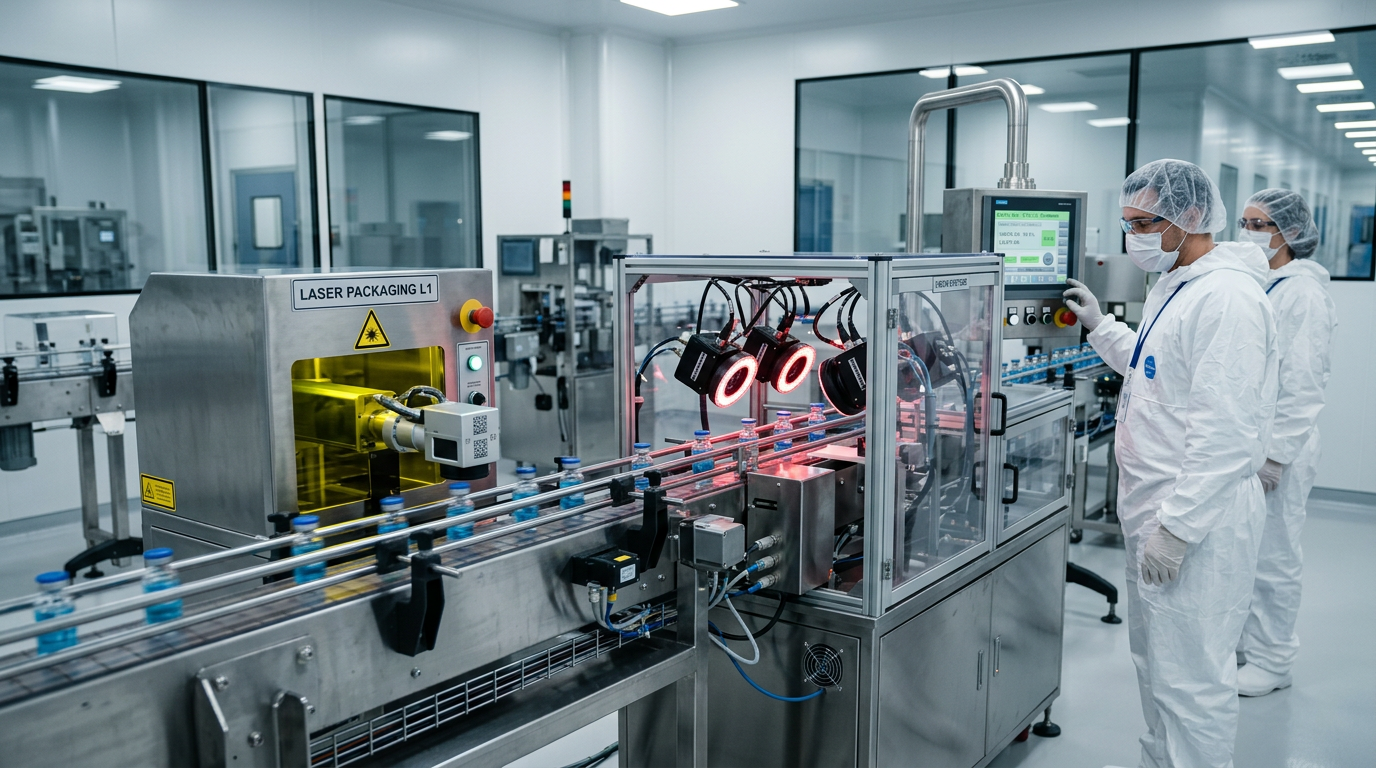
Pharmaceutical track-and-trace conveyor line layouts are specialized material handling configurations designed to integrate high-speed serialization, aggregation, and verification hardware into a continuous production flow. These layouts ensure that every individual unit of medication can be uniquely identified and traced throughout the global supply chain, complying with stringent regulations like the EU Falsified Medicines Directive (FMD) and the US Drug Supply Chain Security Act (DSCSA).
The engineering of these lines goes beyond simple transport; it requires sub-millimeter precision in product positioning to accommodate high-resolution industrial cameras and laser marking systems. In the pharmaceutical sector, the conveyor is the backbone of data integrity.
Core Requirements for Track-and-Trace Layouts
Designing a layout for pharmaceutical serialization involves balancing throughput with technical constraints. Most modern systems operate at speeds between 15 and 60 meters per minute, but the conveyor must maintain absolute stability. Vibration or lateral movement can lead to "unreadable" codes, resulting in expensive false rejects.
1. Stability and Precision
Unlike standard packaging lines, track-and-trace conveyors utilize high-friction belts or vacuum-assisted bed plates. This prevents the product from sliding or rotating during the "print and check" phase. The layout must provide a dedicated section, typically 1,000mm to 1,500mm in length, where the product is mechanically constrained for optimal focal depth of the vision system.
2. Integration of Inspection Zones
A standard layout includes three distinct zones:
- The Infeed Zone: Regulates the gap between products (pitch control) using timing belts or scroll feeders.
- The Marking Zone: A stabilized section where thermal inkjet (TIJ) or CO2 laser markers apply the 2D DataMatrix code.
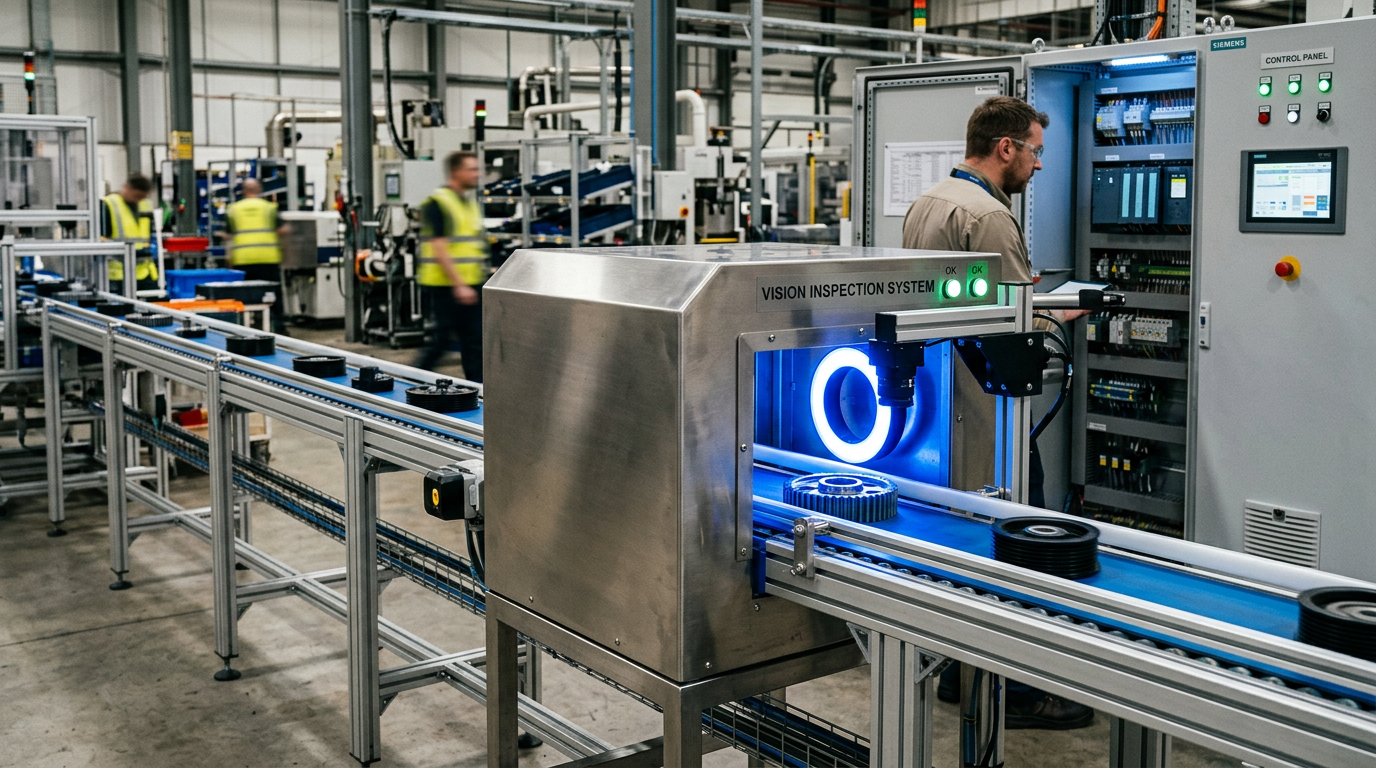
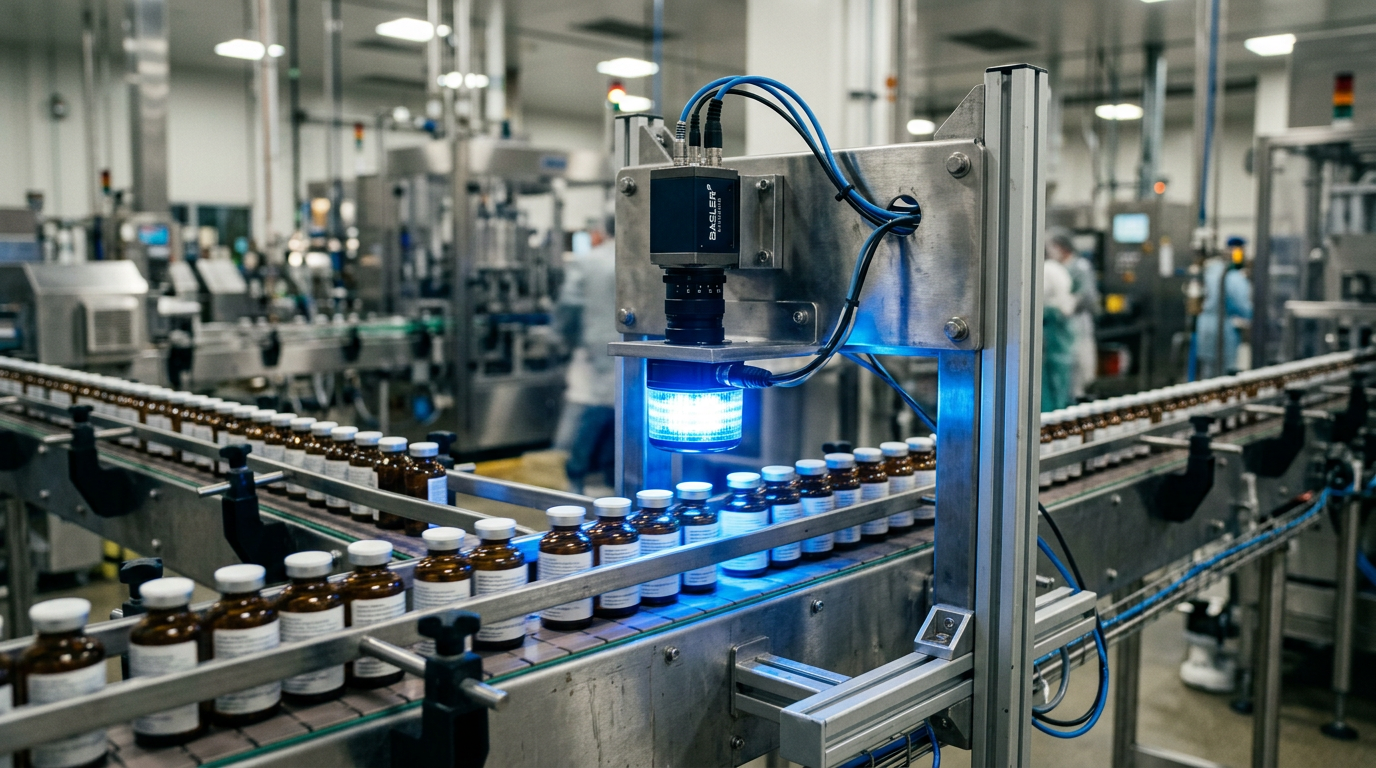
- The Verification Zone: An enclosed area with controlled lighting where high-speed cameras verify the print quality against ISO/IEC 15415 standards.
3. Reject Handling and Reconciliation
A critical feature of any pharmaceutical layout is the "failed product" routing. If a code fails verification, the conveyor must trigger a pneumatic pusher or air blast. The layout must include a locked reject bin with a "bin-full" sensor to prevent unverified products from re-entering the stream.
Common Layout Configurations
Choosing the right layout depends on the facility's footprint and the level of automation required. Most global manufacturers partner with specialist firms like Easy Conveyors to design modular systems that can fit into existing brownfield sites or new cleanroom environments.
The Linear Inline Layout
This is the most common configuration for primary packaging (bottles or cartons). It is a straight-line system where the product enters from the cartoner and exits toward the case packer.
- Pros: Simplest to validate, highest throughput.
- Cons: Requires a significant "straight run" of floor space.
The U-Turn or "Space-Saver" Layout
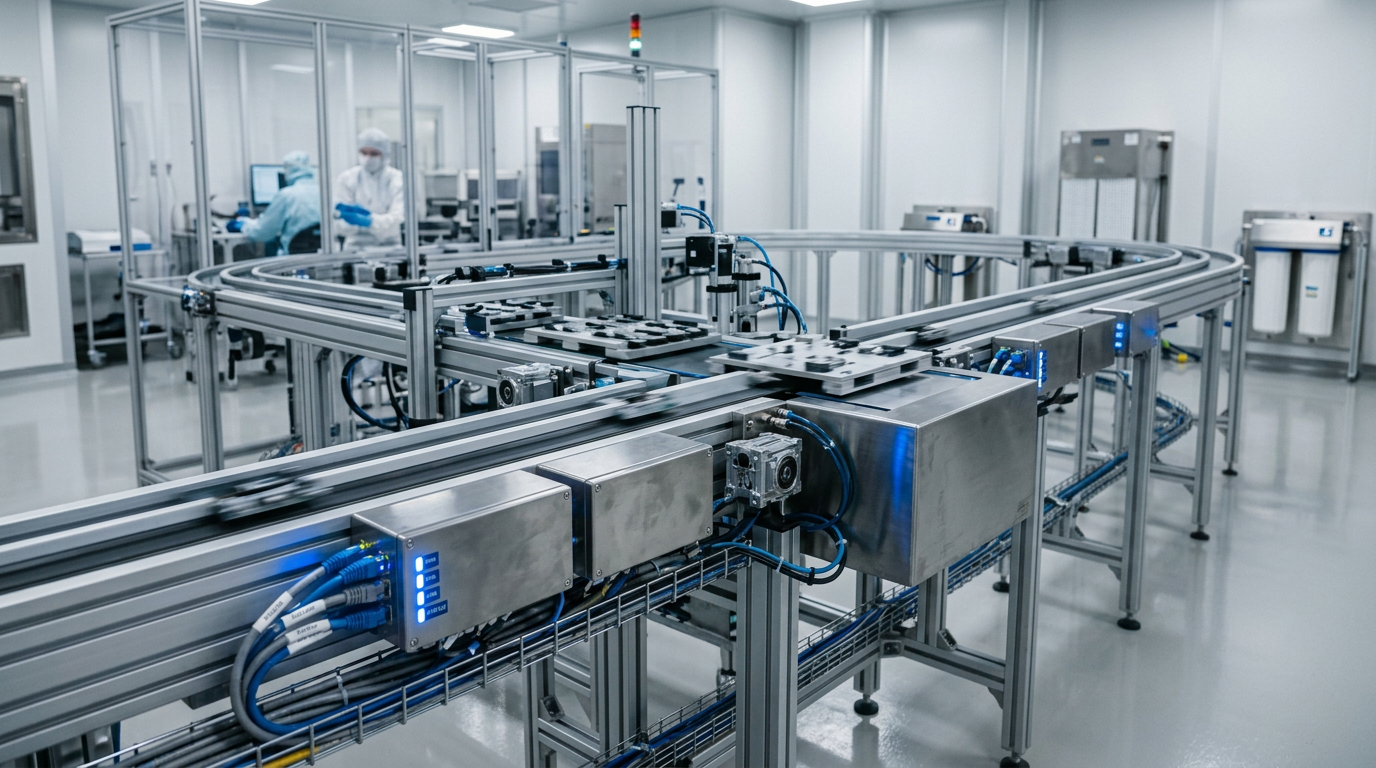
In facilities where floor space is at a premium, the track-and-trace system is integrated into a 180-degree curve. The serialization occurs on the first leg, and the aggregation (linking individual units to a shipper case) occurs on the return leg.
- Pros: Compact footprint.
- Cons: Precise belt-to-belt transfers are required to maintain product orientation.
Comparison of Pharmaceutical Conveyor Types
| Feature | Aluminum Profile Conveyor | Stainless Steel (Hygienic) | Vacuum Belt System |
|---|---|---|---|
| Material | Anodized Aluminum | 304/316 Stainless Steel | Reinforced Polymer |
| Cleanroom Rating | ISO Class 7/8 | ISO Class 5/6 | ISO Class 6 |
| Primary Use | Secondary Packaging | Primary Fill & Finish | High-speed Serialization |
| Vibration Level | Low | Very Low | Minimal |
| ESD Safety | Optional | Standard | Standard |
Integration with Industrial Automation
Modern layouts are no longer "dumb" mechanical assets. They are fully integrated into the plant's Manufacturing Execution System (MES). The conveyor's PLC (Programmable Logic Controller) must communicate in real-time with the vision system and the serialization server.
Speed Synchronization and Encoder Feedback
To ensure the laser marks exactly the right spot on a moving carton, the conveyor must be equipped with high-resolution incremental encoders. This allows the automation system to "track" the position of the product relative to its distance from the sensor trigger. Utilizing VFD soft-start tuning is essential here to prevent jerky movements that could cause products to topple during acceleration or deceleration.
Hygienic Design and Maintenance
In pharmaceutical environments, conveyors must comply with FDA and EHEDG guidelines. This includes open-frame designs that prevent dust accumulation and the use of food-grade lubricants. When considering hygienic wash-down design, engineers often look for tool-less belt removal systems to facilitate rapid cleaning between batches.
Easy Conveyors stocks the industrial automation discussed here — ready to ship across Europe.
Modular Components in Track-and-Trace
The shift toward modularity has revolutionized how track-and-trace lines are built. Instead of custom-welded frames, engineers use modular aluminum or stainless steel profiles. This allows for the easy addition of components such as:
- Top-pressure belts: To hold lightweight empty cartons steady.
- Side-grip conveyors: For "bottom-coding" scenarios where the underside of a vial or bottle must be marked.
- Adjustable guide rails: Essential for lines that run multiple product sizes (SKUs), allowing for changeovers in minutes rather than hours.
For manufacturers looking at the long-term efficiency of their lines, focusing on drum motor selection can significantly reduce the footprint of the conveyor by eliminating external motors and gearboxes, which are notorious for collecting dust and interfering with line-of-sight for inspection cameras.
Security and Compliance Standards
Every layout must facilitate a "closed-loop" validation process. This means the system must account for every serialized number generated. If a conveyor jam occurs, the layout must be designed so that an operator can safely clear the jam without the risk of a "good" product bypassing the inspection zone.
Commonly, this involves "tunnel guarding" over the inspection area to prevent ambient light interference and unauthorized manual removal of products. The hardware must support 21 CFR Part 11 compliance, ensuring that all electronic records of the conveyor's status and reject history are tamper-proof and auditable.
Conclusion
The layout of a pharmaceutical track-and-trace conveyor is a precision engineering task that bridges the gap between mechanical transport and digital data integrity. By selecting stable, modular components and integrating high-accuracy sensors, manufacturers can ensure 100% compliance with global serialization laws while maintaining high operational efficiency. Whether deploying a simple linear line or a complex multi-level aggregation station, the focus must remain on stability, visibility, and controlled reject handling.
Frequently Asked Questions
Why is an encoder critical for track-and-trace conveyors?
An incremental encoder tracks the belt's exact position in real-time, allowing the serialization software to trigger the laser marker at the precise millisecond the product passes, ensuring perfectly centered codes.
What are the benefits of using a vacuum belt in serialization?
Vacuum belts use suction to 'lock' the product against the belt surface. This eliminates vibration and slippage, which is essential for high-resolution 2D DataMatrix printing at speeds exceeding 40m/min.
Which regulatory standards govern pharmaceutical conveyor layouts?
Common standards include ISO/IEC 15415 for print quality, 21 CFR Part 11 for electronic records, and EHEDG or FDA guidelines for mechanical hygienic design.
How does a pharmaceutical reject station differ from standard conveyors?
A secure reject system must include a pneumatically powered rejector, a locked collection bin, and sensors to verify that the 'bad' product actually entered the bin, preventing it from proceeding to packaging.
Sources & references
- [1]ISO 21976:2018 - Packaging — Tamper verification features for medicinal product packaging
- [2]Hygienic Design of Conveyors for Food and Pharma
- [3]Life Science Serialization and Track & Trace Solutions
- [4]Pharma Solutions: Track and Trace for Pharmaceutical Serialization
- [5]Track and trace (pharmaceuticals) - Wikipedia