Pallet Handling Conveyors for End-of-Line Automation: A Technical Guide
Learn how to optimize end-of-line automation with heavy-duty pallet handling conveyors, featuring technical comparisons, safety standards (ISO 13849-1), and integration tips.
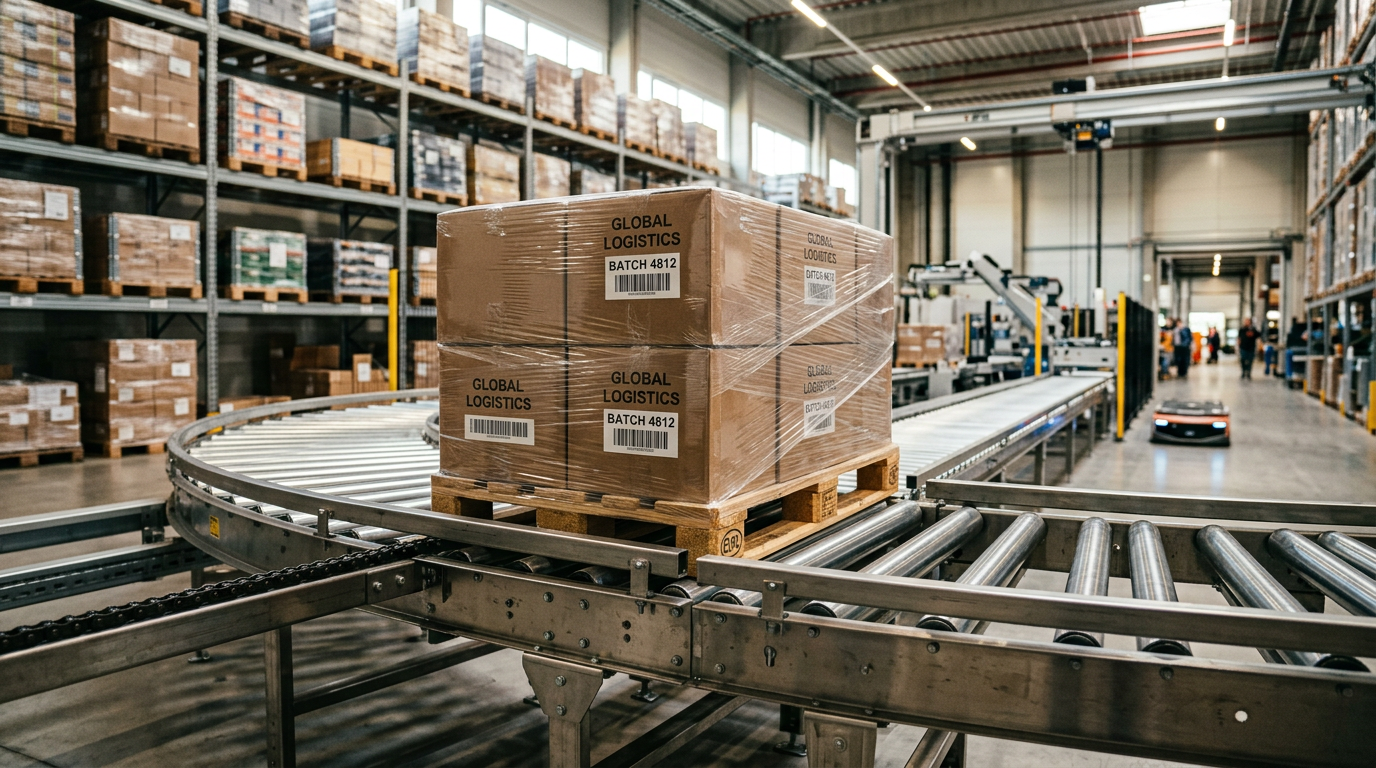
Modern pallet handling conveyors for end-of-line automation are designed to bridge the gap between production and logistics, typically handling loads from 500 kg to 1,500 kg at standard speeds of 12 to 18 meters per minute. These systems utilize standardized modular components—specifically roller, chain, and modular belt configurations—to ensure seamless integration with robotic palletizers and Automated Storage and Retrieval Systems (AS/RS) while adhering to safety standards like ISO 13849-1 for machinery control systems.
The Strategic Importance of End-of-Line Pallet Handling
In the contemporary "smart factory," the end-of-line (EOL) section is no longer just a transport zone; it is a critical buffer and data-collection point. As manufacturers shift toward high-mix, low-volume production, the conveyor system must accommodate varying pallet footprints (Euro, UK, or Stringer pallets) and weight distributions without manual reconfiguration.
Efficient pallet handling relies on the synchronization of three core conveyor types: roller conveyors for heavy-duty transport, chain conveyors for multidirectional transfers, and specialized modular belt conveyors for high-stability requirements. Implementing these systems correctly reduces fork truck traffic, significantly lowering the risk of workplace accidents and improving overall equipment effectiveness (OEE).
Core Pallet Conveyor Technologies
1. Driven Roller Conveyors (CDLR)
Chain Driven Live Roller (CDLR) conveyors are the workhorse of pallet handling. They are ideal for transporting heavy pallets where the underside is flat and consistent.
- Capacity: Typically rated for 1,500 kg per pallet.
- Efficiency: Modern systems utilize IE3 or IE4 efficiency class motors (IEC 60034-30-1) to minimize energy consumption during continuous operation.
- Maintenance: CDLR systems require periodic lubrication of the drive chains, though many "lubed-for-life" options are now available for cleanroom or food-grade environments.
2. Multi-Strand Chain Conveyors
When pallets have irregular undersides or need to be moved perpendicular to their longest dimension, multi-strand chain conveyors are the preferred choice. These usually consist of two or three strands of high-strength roller chain.
- Precision: They provide excellent positioning accuracy, essential for robotic palletizing cells.
- Stability: The narrow contact surface reduces friction but requires the pallet runners to be oriented correctly relative to the chain path.
3. Modular Belt Pallet Conveyors
For applications requiring the highest level of stability—such as tall, unstable loads or delicate pharmaceutical products—modular belt conveyors offer a continuous support surface. Using heavy-duty acetal (POM) or polyethylene (PE) belts, these systems eliminate the "gaps" found in roller or chain conveyors. Easy Conveyors offers robust modular pallet solutions that integrate these high-stability belts into standard aluminum or steel frames, allowing for rapid deployment in automated lines.
Technical Comparison: Roller vs. Chain vs. Modular Belt
| Feature | CDLR Roller Conveyor | Multi-Strand Chain | Modular Belt (POM) |
|---|---|---|---|
| Max Load (kg) | 2,000+ | 1,500 | 1,200 |
| Drive Efficiency | High (IE3/IE4) | Medium | Medium |
| Hygienic Rating | Low to Medium | Low | High (Wash-down) |
| Noise Level | 75-80 dB | 70-75 dB | < 70 dB |
| Maintenance | Chain tensioning | Chain lubrication | Modular link repair |
| Price Tier |
Easy Conveyors stocks the material handling discussed here — ready to ship across Europe.
| $$$ | $$ | $$$$ |
Integration with Robotics and AS/RS
End-of-line automation is increasingly defined by its connectivity. Pallet conveyors must communicate with Warehouse Management Systems (WMS) and Programmable Logic Controllers (PLCs) via protocols like PROFINET or EtherNet/IP.
Precision Positioning for Robotics
In a robotic palletizing cell, the conveyor must deliver the pallet to a repeatable "stop" position within ±2mm. This is often achieved using variable frequency drive (VFD) soft-start tuning and precision mechanical stops or laser-based positioning sensors. If the conveyor cannot provide this precision, the robot's cycle time increases as it searches for the pallet, or worse, results in palletizing errors that cause line stoppages.
Buffering and Accumulation
Effective EOL systems include zero-pressure accumulation (ZPA). ZPA allows pallets to move independently along the line, stopping before they touch the pallet ahead. This prevents product damage and allows the system to act as a buffer during downstream pallet wrapper or AGV (Automated Guided Vehicle) downtime.
Safety and Compliance Standards
Safety in pallet handling is governed by strict international standards. Because of the high inertia of a 1,000 kg pallet, emergency stops and guarding are non-negotiable.
- ISO 13849-1: Defines the required performance levels (PL) for safety-related parts of control systems. Most EOL pallet lines require PLd or PLe at the robotic interface.
- EN 415: Specific safety requirements for packaging machines and associated pallet conveyors.
- NEMA/IP Ratings: For food or beverage applications, motors and sensors must meet IP66 or IP69K standards to withstand high-pressure wash-downs (NEMA standards).
Common Failure Modes and Prevention
- Chain Stretch and Misalignment: In chain-driven systems, uneven wear can lead to the pallet "tracking" to one side, potentially causing a jam. Implement a quarterly schedule for checking chain tension and sprocket alignment.
- Sensor Failure: In dusty warehouse environments, photo-eyes can become obscured. Using "background suppression" sensors or high-intensity LED sensors can mitigate nuisance trips.
- Motor Overheating: Often caused by improper VFD settings where the motor is run at low frequencies for too long without auxiliary cooling. Ensure the motor is rated for the duty cycle of the EOL line.
Future Trends: Intelligence and Flexibility
The next generation of pallet conveyors will likely move away from fixed AC motors toward decentralized drive technology and "smart" rollers with integrated diagnostic chips. These systems can predict a bearing failure before it occurs, allowing for predictive maintenance that aligns with Industry 4.0 goals. Furthermore, the integration of 24V DC technology into heavier pallet loads is beginning to gain traction for lighter pallet applications (up to 500 kg), offering significant energy savings and simplified wiring.
In conclusion, selecting the right pallet handling conveyor for end-of-line automation requires a balance of load requirements, environmental factors, and integration needs. By focusing on modularity and high-efficiency components, manufacturers can build a future-proof foundation for their logistics operations. Conveyor selection should always consider the long-term OEE, prioritizing ease of maintenance and energy efficiency over the lowest initial capital expenditure. Areas such as "hygienic wash-down design" and "drum motor selection" are also becoming more prevalent in pallet handling as food safety regulations tighten globally.
Frequently Asked Questions
What is the standard speed for a pallet conveyor in an automated line?
Standard pallet conveyors typically move at 12 to 18 meters per minute (m/min), which balances throughput with the mechanical stability of heavy loads.
When should I use a chain conveyor instead of a roller conveyor?
CDLR (Chain Driven Live Roller) is best for standard flat-bottom pallets. Multi-strand chain conveyors are better for pallets moved perpendicular to their runners or those with irregular undersides.
What is Zero Pressure Accumulation in pallet handling?
ZPA (Zero Pressure Accumulation) uses sensors and logic to ensure pallets never touch each other while queuing, preventing product damage and reducing motor wear.
Can pallet conveyors be used in wash-down environments?
Yes, for pharmaceutical or food industries, pallet conveyors can be built with stainless steel frames and modular belts to meet EHEDG and FDA wash-down requirements.
What is the maximum weight capacity of a standard modular pallet conveyor?
Standard industrial pallet conveyors are typically rated for loads between 500 kg and 1,500 kg, though heavy-duty custom systems can exceed 2,500 kg.