Advanced Pallet Handling Conveyors for End-of-Line Automation
Optimize your end-of-line automation with high-capacity pallet conveyors. Learn selection criteria for roller, chain, and modular systems to move 1,500kg loads safely.
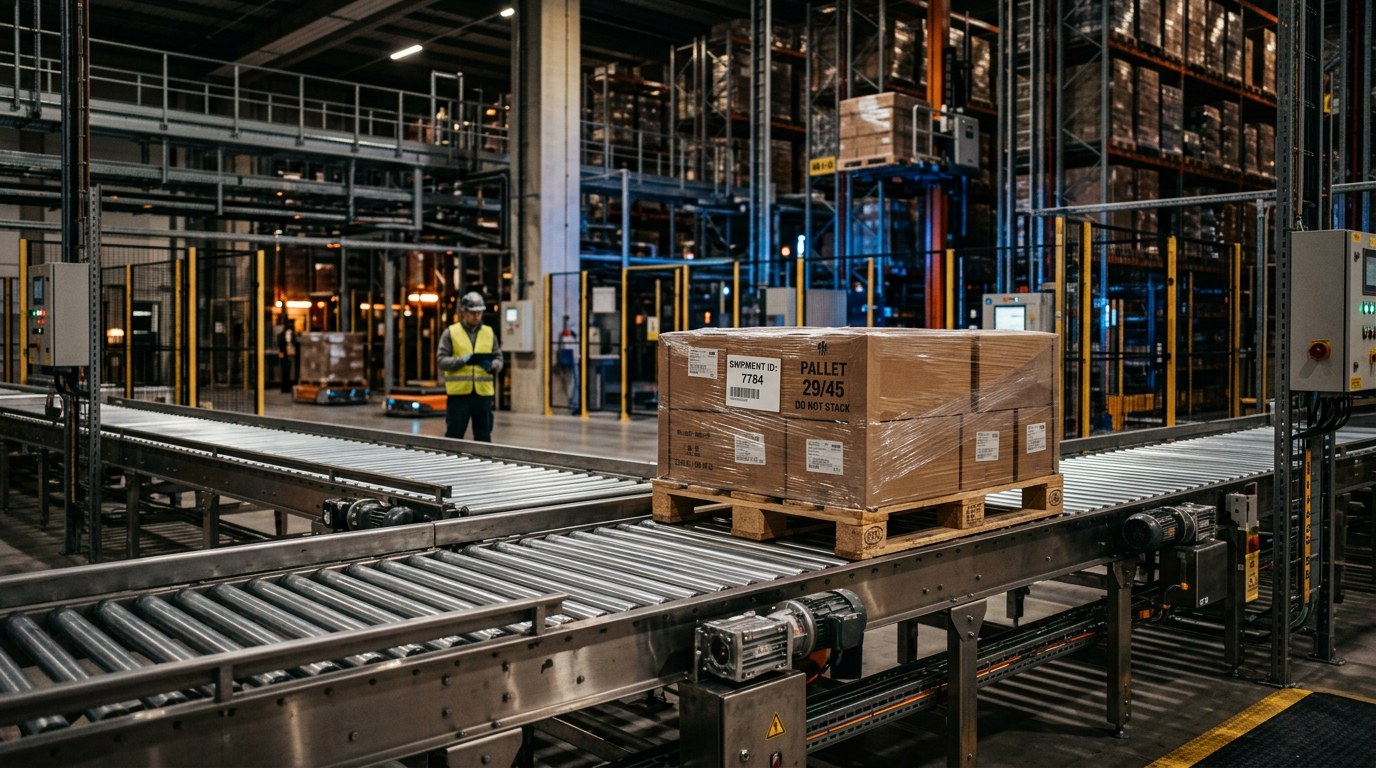
The transition to high-throughput end-of-line automation requires pallet handling conveyors capable of moving loads typically ranging from 500 kg to 1,500 kg at speeds up to 18 meters per minute while maintaining strict safety standards such as ISO 13849-1. Modern pallet handling systems must integrate seamlessly with robotic palletizers and autonomous mobile robots (AMRs) to eliminate manual forklift interventions and maximize floor space efficiency.
The Role of Pallet Handling in Modern End-of-Line Systems
In the hierarchy of material handling, the end-of-line (EOL) phase represents the critical bottleneck where primary and secondary packaging meets tertiary logistics. Pallet handling conveyors serve as the arterial system for this transition. Unlike lightweight package conveyors, these systems are engineered for high structural rigidity and high torque requirements.
The primary objective of a pallet handling system is to manage the flow of loaded pallets—usually Euro-pallets (800 x 1200 mm) or industrial pallets (1000 x 1200 mm)—from the palletizing cell to the stretch wrapper, labeling station, and finally to the warehouse outfeed. Robustness is non-negotiable; a single mechanical failure at the end-of-line can halt an entire production plant.
Core Technologies in Pallet Conveying
Choosing the right transport medium depends on the pallet type, load weight, and environmental conditions. The three dominant technologies are roller conveyors, chain conveyors, and modular belt systems.
1. Pallet Roller Conveyors
Roller conveyors are the workhorses of the industry. They utilize heavy-duty steel rollers, often 60mm to 89mm in diameter, driven by a tangential chain or a "chain-to-chain" loop.
- Design Advantage: Extremely durable and cost-effective for long straight runs.
- Best For: Pallets with solid runners or bottom boards oriented perpendicular to the rollers.
- Motorization: Typically powered by IE3-class geared motors (IEC 60034-30-1).
2. Multi-Strand Chain Conveyors
When pallets must be moved across the runners (longitudinal orientation) or when the bottom of the pallet is uneven, multi-strand chain conveyors are the preferred solution. They usually consist of two or three strands of 3/4-inch or 1-inch pitch precision roller chains.
- Design Advantage: Minimal contact surface reduces friction on heavy loads.
- Best For: Integration with chain transfers and heavy-duty load positioning.
3. Modular Belt Pallet Conveyors
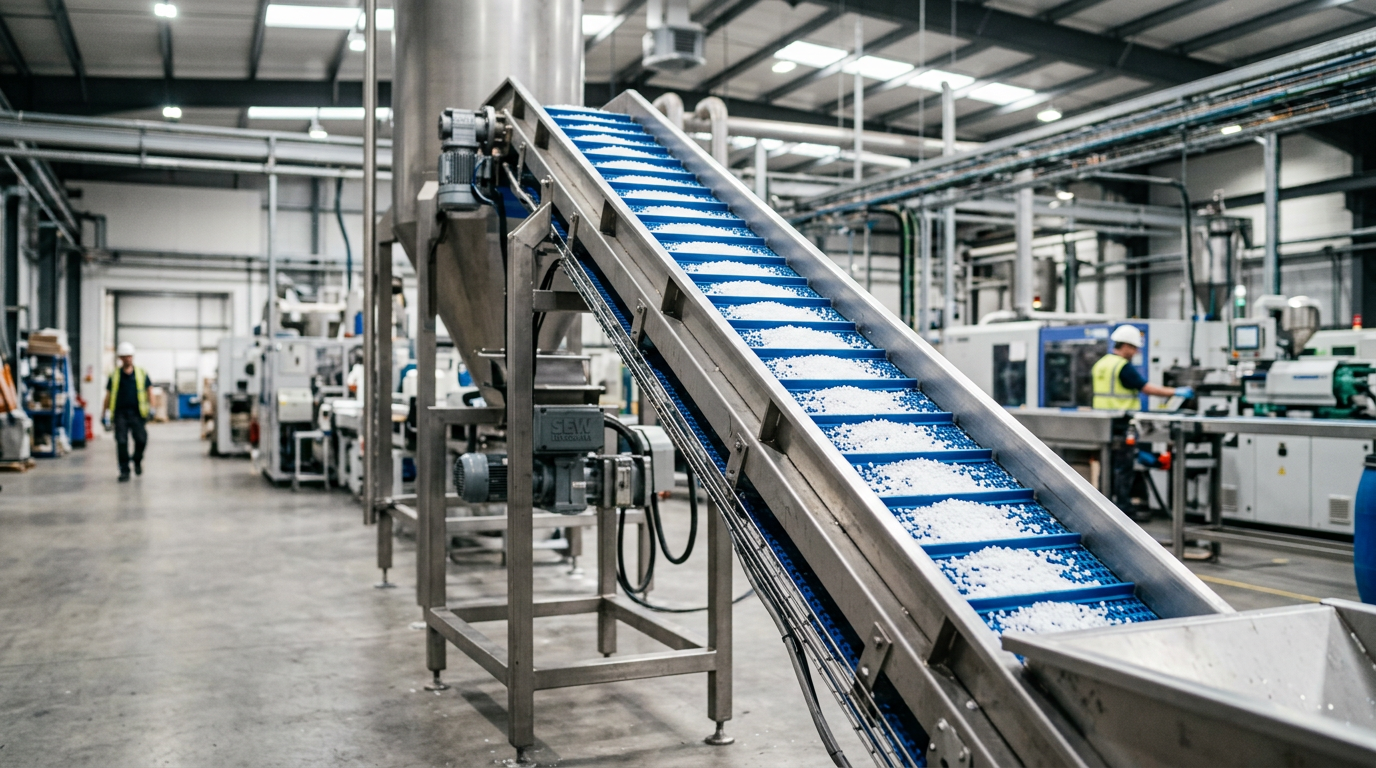
For pharmaceutical or food-grade environments where hygiene or noise reduction is paramount, modular plastic belts are increasingly used. These systems offer full-surface support, which is critical for damaged pallets or non-standard plastic pallets. Easy Conveyors provides specialized modular systems that bridge the gap between light-load packaging and heavy-duty pallet handling, offering flexibility in layout design.
Technical Comparison of Pallet Handling Technologies
| Performance Metric | Roller Conveyor | Chain Conveyor | Modular Belt |
|---|---|---|---|
| Max Load Capacity | Up to 2,000 kg | Up to 2,500 kg | Up to 1,500 kg |
| Typical Speed | 12–18 m/min | 10–15 m/min | 15–20 m/min |
| Noise Level | Medium (65-75 dB) | High (75-85 dB) | Low (<65 dB) |
| Maintenance Need | Low (Lubrication) | Moderate (Tensioning) | Low (Modular) |
| Hygiene Rating | Standard | Industrial | High (Washdown) |
| Cost Tier | Economy to Mid | Mid-Range | Premium |
Easy Conveyors stocks the material handling discussed here — ready to ship across Europe.
Essential Modules for End-of-Line Automation
A complete pallet handling circuit is more than just straight runs. It requires specialized modules to change direction, orient loads, and interface with other machinery.
Rotary Turntables
Turntables allow for 90-degree or 180-degree changes in direction while maintaining the pallet’s leading edge. This is crucial when the palletizer outputs a pallet in one orientation, but the stretch wrapper requires another. High-end turntables use precision slewing rings to ensure smooth acceleration and deceleration, preventing load shifting.
Right-Angle Transfers (Pop-up Transfers)
Standard transfers use a lifting mechanism to raise a set of chains between rollers (or vice versa). According to VDMA guidelines for intralogistics, these transfers must include precise mechanical stops and soft-start VFD tuning to prevent the "toppling effect" on tall, unstrapped loads.
Pallet Dispensers and Stackers
Automating the infeed of empty pallets is vital. Pallet dispensers store a stack of 15-20 pallets and release them one at a time onto the conveyor line. This removes the need for forklift operators to manually place individual pallets into the palletizing cell, significantly increasing safety and cycle times.
Sizing and Engineering Considerations
When engineering a pallet conveyor system, four factors dictate the success of the installation:
- Back-Pressure Management: In accumulation zones, the "line pressure" of multiple 1,000 kg pallets can crush the leading pallet or damage the conveyor frame. Zero Pressure Accumulation (ZPA) logic, facilitated by intelligent sensors and decentralized drives, is essential here.
- Motor Selection and VFDs: Using IE4 or IE5 ultra-high efficiency motors (SEW-Eurodrive) paired with variable frequency drives allows for controlled S-curve acceleration. This is vital for "top-heavy" loads typical in the beverage industry.
- Safety and Guarding: Under ISO 13849-1, end-of-line systems must be zoned. Emergency stops (E-stops) and light curtains must be integrated to prevent human entry into the palletizing and wrapping zones while the system is live.
- Environmental Factors: Cold storage environments (down to -30°C) require specialized lubricants, stainless steel components, and heated control panels to prevent condensation and component embrittlement.
Integration with Industry 4.0
The modern end-of-line is no longer a "black box." With the integration of IO-Link sensors and PLC-based diagnostics, maintenance teams can monitor motor current, vibration, and cycles in real-time. This data-driven approach enables predictive maintenance, where a failing bearing in a roller can be identified before it causes a line stoppage.
Furthermore, the rise of AMRs has led to the development of "OMNI-directional" transfer stations. These are specialized conveyor sections with integrated docking hardware that allows an AMR to pick or drop a pallet without a manual handover.
Common Failure Modes and Prevention
Failure at the end-of-line is often traced to three sources:
- Chain Stretch: In chain-driven roller systems, uneven chain stretch can cause rollers to slip or bind. Regular lubrication and tensioning schedules are mandatory.
- Sensor Misalignment: Pallets are often made of dark or weathered wood. Standard diffuse sensors can struggle with detection. High-performance polarized retro-reflective sensors or laser scanners are recommended for 99.9% detection reliability.
- Overloading: Exceeding the rated capacity of the roller bearings (typically specified by Interroll) leads to premature core failure and increased motor heat. Always size for at least a 20% margin over the heaviest anticipated load.
Through careful selection of modular components and a focus on robust control logic, manufacturers can transform their end-of-line from a potential bottleneck into a high-efficiency asset that supports 24/7 autonomous operation.
Frequently Asked Questions
How do I choose between a roller or chain conveyor for pallets?
For standard Euro-pallets with bottom runners, a roller conveyor with 60mm diameter steel rollers is usually the most cost-effective. If the pallet is oriented with runners perpendicular to the direction of travel, a three-strand chain conveyor is often required.
What is Zero Pressure Accumulation (ZPA) in pallet handling?
ZPA is a control logic that ensures pallets never touch each other on the line. Each pallet 'zone' has its own motor or clutch; the system only moves a pallet forward if the next zone is empty, preventing product damage and motor strain.
What is the standard speed for a pallet handling conveyor?
Most heavy-duty pallet handling systems are designed for speeds between 12 and 18 meters per minute. While higher speeds are possible, they increase the risk of load instability and require much more expensive braking and control systems.
Can pallet conveyors operate in cold storage environments?
Yes, but you must use low-temperature lubricants, stainless steel chains or specialty plated components, and motors with IP66 ratings or internal heaters to prevent frost and condensation damage.
When should I use a turntable vs a right-angle transfer?
A turntable rotates the pallet on its center axis to change direction, while a right-angle transfer (pop-up) shifts the pallet 90 degrees by lifting it from one medium (e.g., rollers) to another (e.g., chains).