Mastering OPC UA Integration for Smart Conveyor Modules
OPC UA integration for smart conveyor modules enables vendor-neutral data exchange, standardized information models, and secure IIoT connectivity in automation.
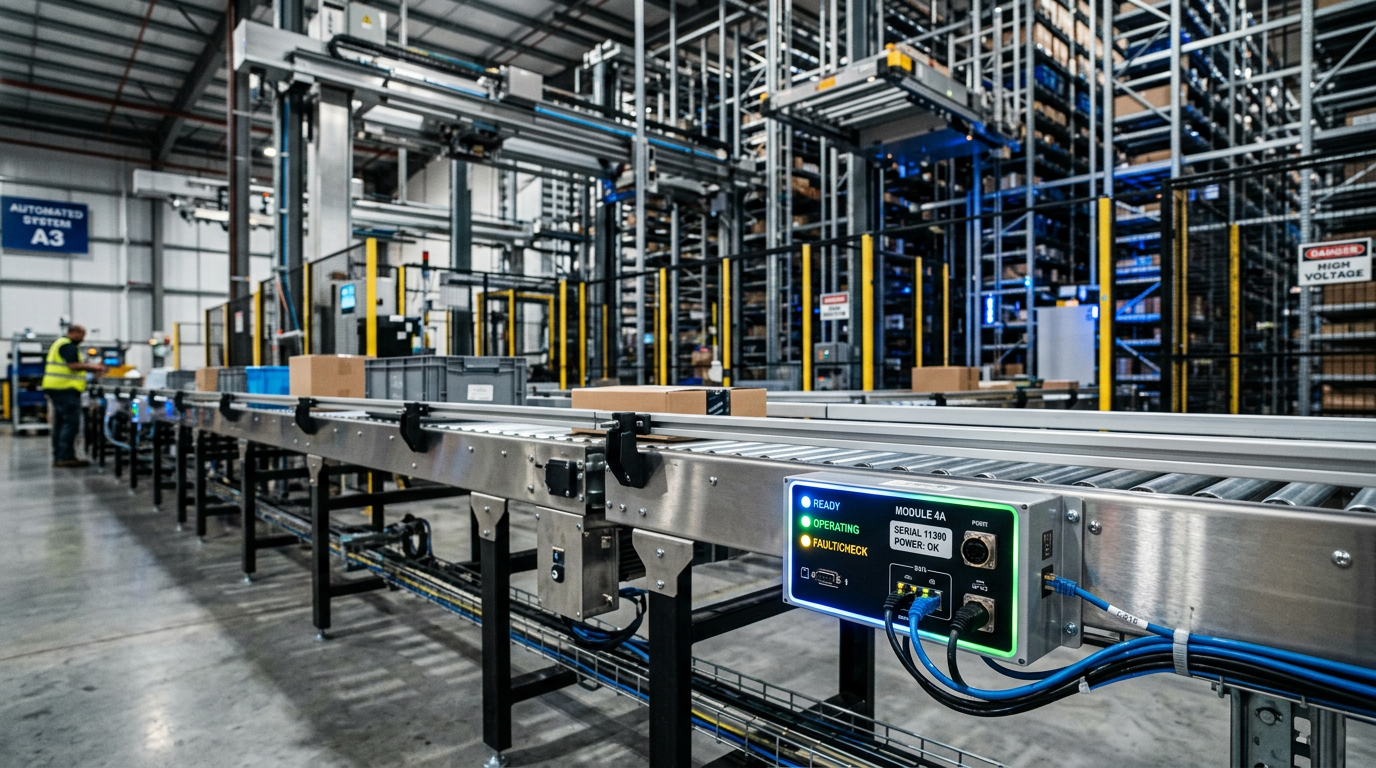
Implementing OPC UA integration for smart conveyor modules allows for manufacturer-independent data exchange with a standardized communication latency of less than 10-50ms in Time-Sensitive Networking (TSN) environments. By utilizing the OPC UA Information Models (Companion Specifications), plant engineers can achieve plug-and-play interoperability between conveyor drives, sensors, and PLC systems, reducing commissioning time by up to 30% compared to legacy fieldbus protocols.
The Shift Toward Information-Centric Conveyance
In modern smart factories, the conveyor is no longer a "dumb" mechanical asset but a data-generating node. OPC UA (Open Platform Communications Unified Architecture) has emerged as the backbone of this transformation, defined by the IEC 62541 standard. Unlike traditional cyclic fieldbus protocols that only transmit raw bits and bytes, OPC UA transmits "information objects" that include metadata, units, and diagnostic status.
For a conveyor module, this means a motor controller doesn't just send the hex value 0x45; it sends a variable named Motor_Speed with a value of 45.0, a unit of Hz, and a status of Good. This semantic interoperability is what enables the "Smart" in smart conveyor modules.
Why OPC UA for Modular Conveyor Systems?
Modular conveyor systems thrive on flexibility. When adding a new transfer module or an 180-degree turn, the integration effort at the PLC level can be a significant bottleneck.
- Platform Independence: OPC UA works across Windows, Linux, and embedded RTOS platforms. This allows a conveyor system to communicate directly with a cloud-based SCADA or an on-premise MES without requiring a protocol converter.
- Security by Design: With built-in support for X.509 certificates and 256-bit encryption, OPC UA addresses the vulnerabilities inherent in older protocols like Modbus TCP or standard EtherNet/IP.
- Companion Specifications: The industry has developed specific "Companion Specs" for robotics and machine vision. For material handling, the VDMA and OPC Foundation are working on standardized models that define how a "conveyor" should look to a software system, regardless of the brand.
Hardware Requirements for Smart Integration
To leverage OPC UA, conveyor modules must be equipped with intelligent edge devices or "Smart Motor Controllers." These devices act as OPC UA Servers. Easy Conveyors specializes in modular systems that can be integrated with these advanced control architectures, ensuring that mechanical modularity is matched by digital flexibility.
| Feature | Legacy Fieldbus (Profinet/EtherNet/IP) | OPC UA (Client/Server) | OPC UA over TSN (Pub/Sub) |
|---|---|---|---|
| Communication Model | Master/Slave (Cyclic) | Client/Server (Request/Response) | Publisher/Subscriber |
| Data Context | Raw IO Mapping | Semantic Information Models | Semantic Information Models |
| Standard | Vendor-specific extensions | IEC 62541 | IEEE 802.1 / IEC 60802 |
| Security | Minimal / Perimeter-based | Integrated (Certificates/TLS) | Integrated (Certificates/TLS) |
| Determinism | High (Hard Real-time) | Medium (Asynchro |
Easy Conveyors stocks the industrial automation discussed here — ready to ship across Europe.
nous) | Ultra-High (Deterministic) |
Implementation Strategies: Client/Server vs. Pub/Sub
When designing a conveyor automation cell, you must choose between two OPC UA communication patterns:
1. Client/Server (The Traditional Way)
In this model, an MES or PLC (the Client) asks the conveyor module (the Server) for data. This is ideal for non-time-critical tasks like "VFD soft-start tuning" or monitoring energy consumption (IE3/IE4 motor efficiency classes).
2. Pub/Sub (The Real-Time Future)
For high-speed sortation where timing is critical, OPC UA Pub/Sub over TSN is required. This allows conveyor modules to "publish" their status to a multicast group. Any other module (a pusher or a gate) can "subscribe" to that data, enabling peer-to-peer communication without the round-trip delay of a central PLC. This is essential for achieving the synchronization levels defined in IEC 60034-30-1 for motor efficiency and control.
Leveraging the Information Model
The true power of OPC UA integration lies in the Information Model. Instead of manual "drum motor selection" and tag mapping in your PLC, the system uses discovery services.
- Address Space: A hierarchy of objects (e.g.,
Conveyor_Line_1>Belt_Section_A>Drive_Motor). - Methods: You can trigger actions via code, such as
Reset_E_Stop()orCalibrate_Sensor(), rather than toggling bits. - Events: The conveyor can push an event notification if a motor exceeds a certain temperature threshold, providing predictive maintenance data before a failure occurs.
Common Failure Modes in OPC UA Integration
Even with standardized protocols, things can go wrong. Engineers often encounter:
- Certificate Expiration: If the X.509 certificates used for security expire, the conveyor module will stop communicating with the PLC. Automated certificate management is a requirement for 24/7 operations.
- Network Jitter: In non-TSN networks, heavy traffic from high-definition cameras can delay OPC UA packets, causing "heartbeat timeouts" in the conveyor control logic.
- Namespace Clashes: When mixing different vendors, ensure that their OPC UA namespaces do not conflict, which can happen if two manufacturers use the same default URI for their information models.
Integration with Industrial IoT (IIoT)
Smart conveyor modules acting as OPC UA servers can simultaneously feed data to a local PLC for real-time control and to a cloud platform like Azure or AWS for long-term analytics. This "dual-path" communication is a hallmark of Industry 4.0. By monitoring variables like torque-to-speed ratios, maintenance teams can identify worn bearings or slipping belts (see our guide on "VFD soft-start tuning" for more on drive optimization) before they cause downtime.
Conclusion
OPC UA integration is the bridge between the physical modularity of a conveyor system and the digital requirements of a modern enterprise. By moving away from vendor-locked protocols and adopting the semantic standards of IEC 62541, manufacturers gain the agility to reconfigure lines at the speed of software. Whether you are optimizing a small packaging cell or a massive e-commerce fulfillment center, the move to OPC UA ensures your material handling infrastructure is future-proof.
Frequently Asked Questions
How does OPC UA differ from Profinet in conveyor applications?
OPC UA provides a semantic information model and built-in security (encryption/authentication), whereas Profinet is a lower-level, hardware-centric protocol designed primarily for cyclic real-time control.
Do I need a special network for OPC UA conveyor control?
For standard monitoring and slow-speed control, OPC UA over standard Ethernet is sufficient. For high-speed sortation or precision synchronization, OPC UA over TSN (Time-Sensitive Networking) is recommended to ensure determinism.
Can OPC UA help integrate conveyors from multiple different manufacturers?
Yes, most modern OPC UA-enabled conveyor controllers support 'Companion Specifications,' which provide a standardized data structure for machines, making it easier to integrate different brands into one MES.
Is OPC UA secure enough for pharmaceutical or food manufacturing?
OPC UA uses X.509 certificates for authentication and supports AES-256 encryption, making it significantly more secure than legacy protocols like Modbus or early EtherNet/IP versions.