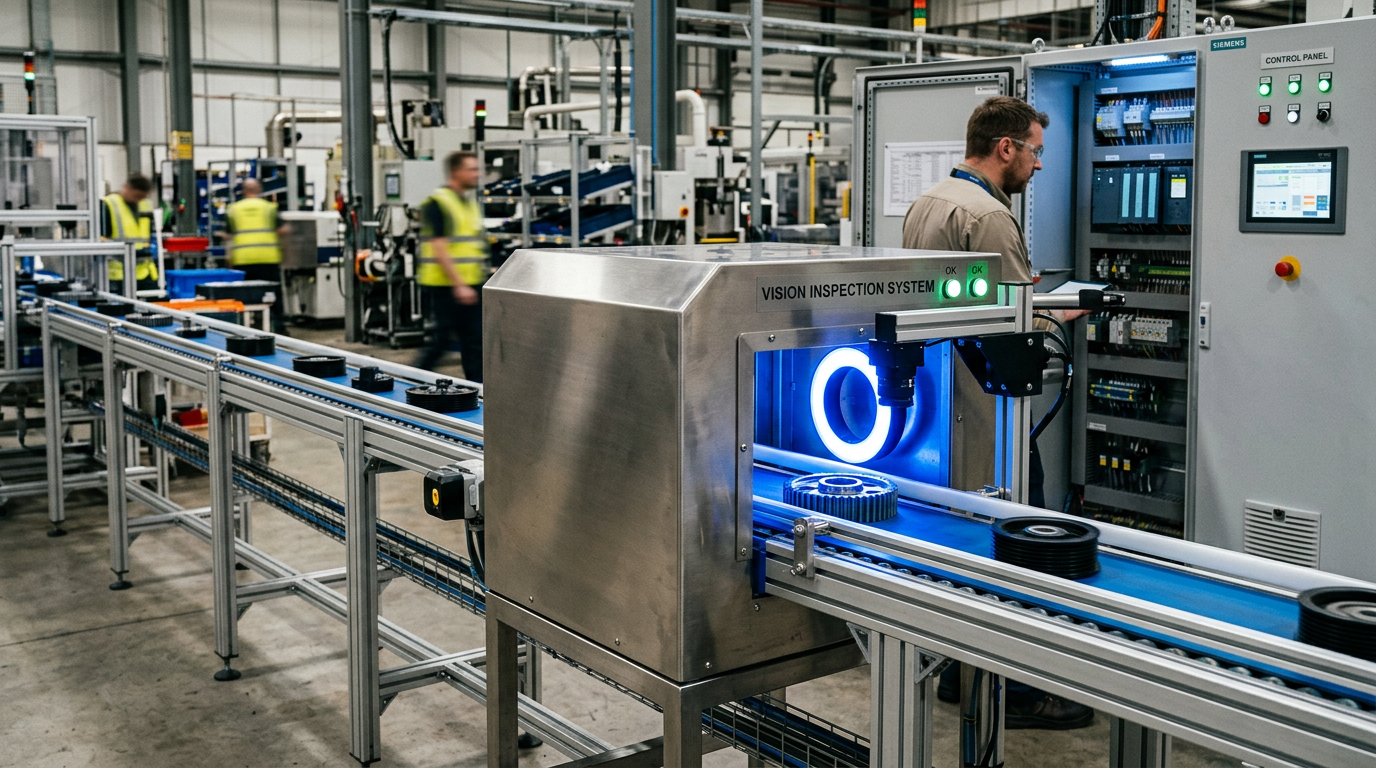
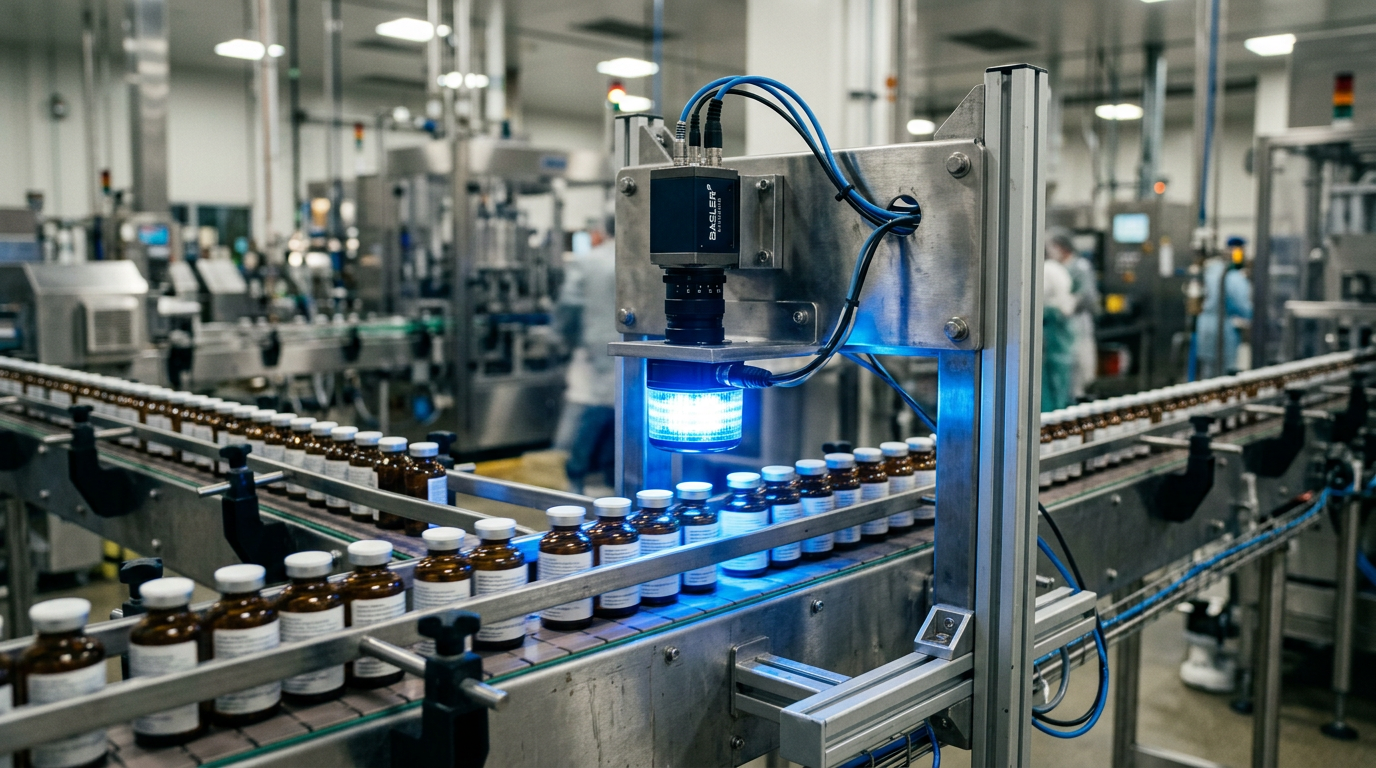
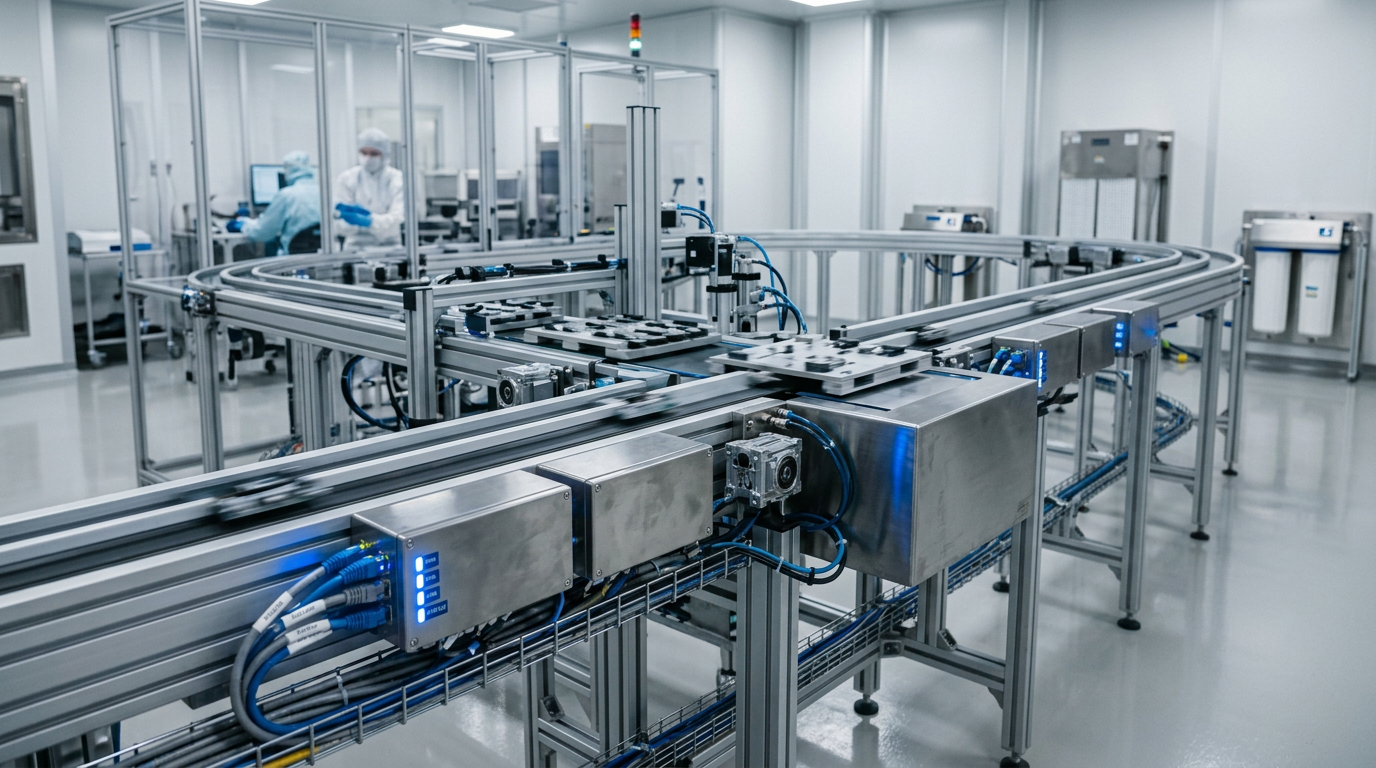
Mastering OPC UA Integration for Smart Conveyor Modules
OPC UA integration transforms modular conveyors into smart, data-driven systems. Learn how IEC 62541 standards enable predictive maintenance and seamless automation.
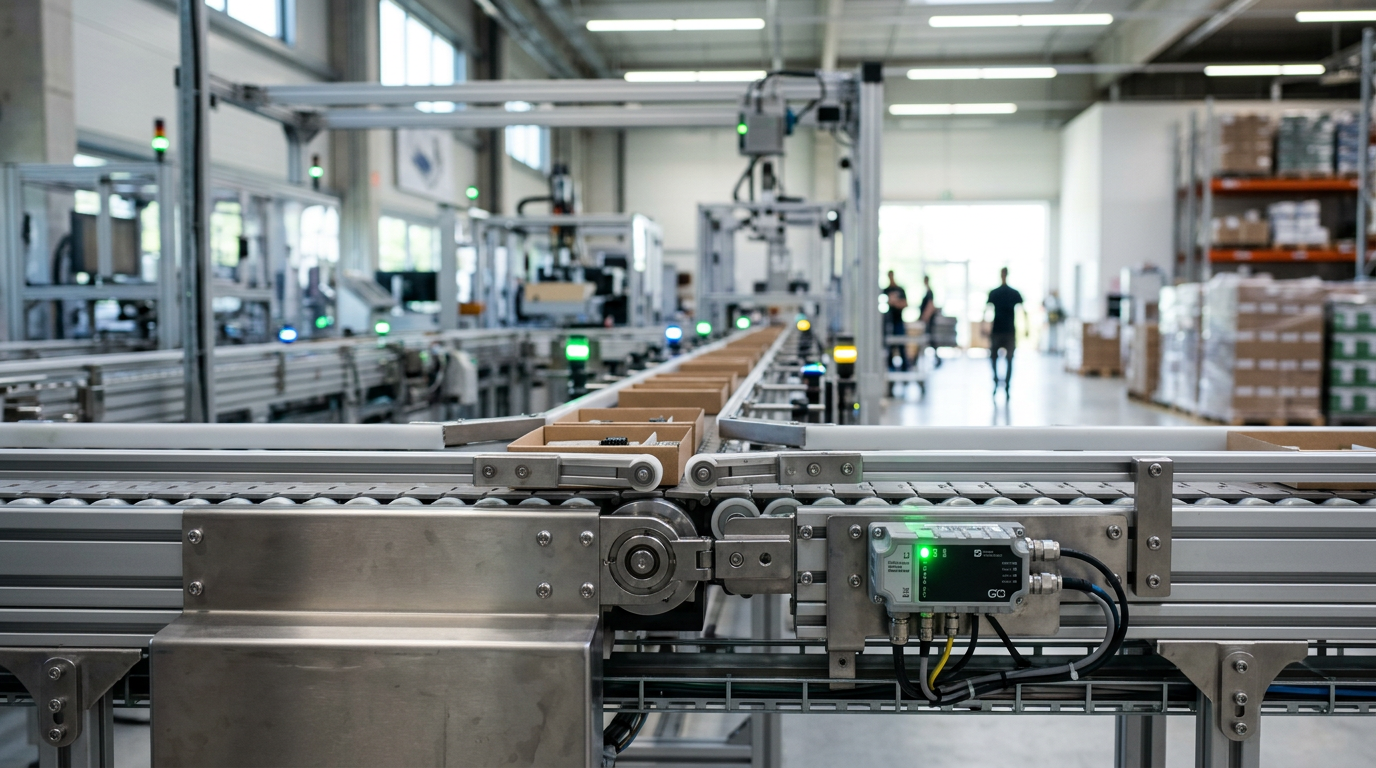
OPC UA integration for smart conveyor modules allows for manufacturer-independent data exchange with a standardized communication latency of less than 10 to 50 milliseconds in TSN-enabled environments. By utilizing the IEC 62541 standard, modular conveyor systems can transition from passive mechanical components to active Cyber-Physical Systems (CPS) that provide real-time telemetry on motor temperature, belt tension, and throughput directly to ERP and SCADA systems without intermediate gateways.
The Role of OPC UA in Modern Intralogistics
The shift toward Industry 4.0 has transformed the humble conveyor from a simple transport medium into a critical data node. OPC Unified Architecture (OPC UA) serves as the backbone of this transformation. Unlike legacy fieldbus protocols that were often proprietary or limited to the physical layer, OPC UA is platform-independent and focuses on semantic interoperability.
For a plant engineer, this means a pallet conveyor module from one vendor can communicate seamlessly with a robotic palletizer from another, provided both adhere to the same companion specifications. This is particularly vital in modular setups where lines are frequently reconfigured to meet changing production demands.
Why OPC UA for Modular Systems?
Modular conveyor systems rely on "plug-and-produce" capabilities. When adding a new 90-degree transfer module or an accumulation zone, the automation layer must recognize the new hardware instantly. OPC UA supports this through:
- Information Modeling: Defining not just data points (bits and bytes) but objects (Motor, Sensor, Lifespan).
- Scalability: From small embedded sensors using OPC UA Micro Embedded Profiles to high-end PLC controllers.
- Security: Integrated encryption and authentication (X.509 certificates) as defined in IEC 62541-2.
Technical Architecture: From Field to Cloud
Integrating OPC UA into smart conveyor modules typically follows a three-tier architecture. At the local level, decentralized motor starters or integrated drum motors act as OPC UA servers.
- Field Level: Devices like the SEW-Eurodrive MOVIMOT series now feature integrated interfaces that expose drive diagnostics via OPC UA.
- Control Level: A central PLC (e.g., Siemens S7-1500) aggregates data from multiple modules, acting as both a client (to the modules) and a server (to the SCADA).
- Enterprise Level: Cloud platforms or on-premise MES systems subscribe to specific data nodes for predictive maintenance analytics.
Information Models and Companion Specs
The real power of OPC UA lies in "Companion Specifications." For conveyor technology, the OPC UA for Material Handling (jointly developed by VDMA) provides a standardized dictionary. Instead of mapping register 40001 to "Motor Speed," the system uses a standardized object named Speed, which includes units, ranges, and status.
Comparison: OPC UA vs. Traditional Fieldbus
| Feature | Legacy Fieldbus (Profinet/EtherNet/IP) | OPC UA (IEC 62541) |
|---|---|---|
| Data Structure | Unstructured (Flat I/O) | Object-Oriented (Information Models) |
| Security | Minimal (Relies on Network Segregation) | Built-in (Encryption, Signing, User Auth) |
| Interoperability | Vendor-specific Profiles | Cross-vendor / Platform Independent |
| Configuration | Manual GSDML/EDS Mapping | Self-descriptive / Browsable Nodes |
| Latency | < 1ms (Hard Real-time) | 10-100ms (Soft Real-time / TSN dependent) |
While legacy protocols remain superior for high-speed motion control (coordinated axes), OPC UA is the preferred choice for monitoring, diagnostics, and horizontal machine-to-machine (M2M) communication.
Easy Conveyors stocks the industrial automation discussed here — ready to ship across Europe.
Implementation Case: Smart Sorters and Diverters
Consider a high-speed sorter module. Traditionally, a jam would trigger a generic "Error" signal. In an OPC UA-enabled system, the module sends a rich data packet: "Obstruction detected at Divert Arm 4; Torque exceedance 15%; Visual sensor 002 blocked."
This level of detail allows for Predictive Maintenance. By monitoring the current draw and temperature of a drum motor over time, algorithms can predict a bearing failure before it occurs. High-quality modular solutions, such as those designed by Easy Conveyors, are increasingly being integrated with these smart sensors to reduce Total Cost of Ownership (TCO) for end-users.
Integrating Drum Motors and VFDs
When selecting components, ensure the Variable Frequency Drive (VFD) or drum motor controller supports the "Embedded UA Server" profile. This removes the need for expensive protocol converters. For wash-down environments, search for components with at least IP66 or IP69K ratings that also house the communication stack internally to minimize cabling.
Best Practices for Conveyor Automation
- Network Segmentation: Even though OPC UA is secure, keep control traffic on a separate VLAN from office traffic to prevent Jitterness.
- Use Pub/Sub for Large Scale: For systems with hundreds of conveyor modules, use the OPC UA Pub/Sub model (Part 14) over UDP or MQTT to reduce the overhead of traditional Client/Server polling.
- Standardize Naming: Follow the VDMA/OPC Foundation companion specs strictly to ensure future-proofing.
Troubleshooting and Maintenance
Common failure modes in OPC UA conveyor integrations often stem from certificate expiration or network congestion.
- Certificate Management: Ensure your GDS (Global Discovery Service) is configured to renew security certificates automatically.
- Sampling Intervals: Do not set every conveyor sensor to a 10ms sampling rate. Only mission-critical positioning sensors require high frequency; motor temperatures or totalized counts can safely reside in the 500ms to 1000ms range, saving significant network bandwidth.
By implementing VFD soft-start tuning and utilizing standardized telemetry, manufacturers can achieve up to a 20% reduction in energy consumption by optimizing conveyor speeds based on real-time downstream demand communicated via the OPC UA layer. Over-specifying network speed is rarely necessary, but ensuring reliable "heartbeat" signals between modular segments is non-negotiable for system safety and uptime.
Frequently Asked Questions
Is OPC UA fast enough for high-speed conveyor sorting?
While OPC UA is excellent for data modeling and diagnostics, standard Client/Server architecture may have higher latency than Profinet. However, using OPC UA over TSN (Time-Sensitive Networking) allows for real-time performance suitable for all but the most demanding high-speed motion control.
Does OPC UA support true 'plug-and-produce' for conveyor modules?
Yes, OPC UA's Information Modeling allows you to define standardized objects. This means you can swap a module from Vendor A with Vendor B with minimal reconfiguration, as long as both follow the VDMA Companion Specification for Material Handling.
How secure is OPC UA for industrial conveyor networks?
OPC UA has built-in security features including X.509 certificate exchange, 128-bit or 256-bit encryption, and user authentication, making it significantly more secure than old-school Modbus or Profibus protocols.
What are OPC UA Companion Specifications?
Companion specifications are standardized information models for specific industries. For conveyors, they ensure that every 'Drive' or 'Photoelectric Sensor' reports its data using the same names and units across different manufacturers.
What hardware is required to enable OPC UA on a standard conveyor?
You usually need a PLC or a dedicated Edge Gateway that supports OPC UA. Many modern motor starters and VFDs have OPC UA servers built directly into their firmware, eliminating the need for extra hardware.